# Buy Now, Pay Later Is Everywhere in 2026. Here’s When It Starts to Get Expensive.
There is a very specific kind of purchase that feels almost too easy now. You find the thing, you add it to the cart, and right before the total starts to sting, the checkout page offers a softer version of reality: four smaller payments, no big hit today, no long credit card statement staring back at you.
That is the appeal of Buy Now, Pay Later. It does not feel like taking out a loan. It feels like smoothing out a week. It feels like keeping your checking account from dropping too fast. It feels like a way to buy the shoes, book the trip, replace the broken appliance, or get through a grocery run without swallowing the whole cost at once.
And for some people, used carefully, it can be fine. The problem is not one installment plan. The problem is what happens when four payments become eight, then twelve, then a little private calendar of future charges that your bank account has to survive.
In 2026, Buy Now, Pay Later is not a niche checkout trick anymore. It is part of how Americans shop. People use it for clothes, electronics, furniture, travel, concert tickets, beauty products, car repairs, groceries, and gas. That last part is the one worth paying attention to. When a tool built for splitting purchases starts helping people cover everyday essentials, it stops being just a convenience. It becomes a signal.

The reason BNPL feels so harmless
Credit cards come with baggage. Most people understand, at least vaguely, that credit card debt can get ugly. Interest builds. Minimum payments drag on. A balance can follow you for months or years.
Buy Now, Pay Later feels different. The language is softer. The timeline is shorter. The numbers look smaller. A $240 purchase becomes $60 today. A $96 order becomes four payments of $24. There may be no interest if you pay on time. There may be no hard credit check. It can feel less like debt and more like a budgeting feature.
That feeling is exactly why it is so powerful.
The human brain reacts differently to a smaller number. A $38 payment next Friday does not create the same emotional pause as a $152 charge today. You can tell yourself, reasonably, that future-you will handle it. Future-you always seems more organized, better paid, and less tired than current-you.
But future-you has rent. Future-you has groceries. Future-you has gas, insurance, subscriptions, a dentist bill, a birthday dinner, and maybe three other installment payments you forgot about.
BNPL becomes risky when it makes the real cost of your month harder to see.
The hidden issue is not one plan. It is stacking.
The phrase to know is loan stacking. That is when someone has several installment plans active at the same time, often across different apps or retailers. None of the individual payments looks scary. Together, they can quietly eat a paycheck.
Maybe it is $18 for a jacket, $42 for a phone repair, $31 for a home item, $64 for a weekend trip, and $27 for a grocery order. On paper, each one is manageable. In real life, they all hit within the same two-week stretch.
This is where BNPL can become more stressful than a credit card. With a credit card, at least the damage is usually visible in one place. With BNPL, the debt can be scattered. Different apps. Different dates. Different emails. Different bank pulls. You may not feel broke when you agree to the plans, but you may feel trapped when they start landing.
That is why people are increasingly calling BNPL “hidden debt.” It is not always visible in the same way traditional credit is visible. It may not show up clearly on a credit report. A lender, landlord, or even the consumer may not have a clean picture of how many obligations are already waiting in the background.
When BNPL is a convenience — and when it is a warning light
There is nothing automatically irresponsible about splitting a purchase. If you have the cash, understand the schedule, and choose installments because it helps timing, that is different from using BNPL because you cannot afford the purchase at all.
A good gut check is simple: if the full purchase price showed up today, would it be annoying or impossible?
Annoying is normal. Impossible is information.
If you are using BNPL for a planned expense and the payments fit comfortably inside your budget, that may be fine. If you are using it because your account would overdraft otherwise, that is a warning light. If you are using it for groceries, gas, utility bills, or basics because payday is too far away, the issue may not be the app. The issue may be that your monthly cash flow is already stretched too thin.
That distinction matters because shame does not help. Plenty of people are not using BNPL because they are reckless. They are using it because rent is high, food is expensive, wages are uneven, and life keeps happening. But even when the reason is understandable, the math still has to work.
The late fee is not the only cost
People often focus on whether BNPL charges interest or late fees. Those matter, but they are not the whole story.
The bigger cost can be loss of flexibility. Every future payment is a little piece of your next paycheck that is already spoken for. That means less room for surprises. Less room to say yes to something you actually care about. Less room to cover a bill without panic.
There is also the mental cost. Tracking multiple payment plans takes attention. Missing one can lead to fees, account restrictions, overdraft problems, or collections depending on the provider and the situation. Even if everything gets paid, the feeling of being chased by tiny payments can wear you down.
And then there is the spending behavior. BNPL can make a purchase feel smaller at the exact moment you most need the real number. That is not a character flaw. That is product design. Checkout is built to reduce friction. Your job is to add just enough friction back in.
A simple rule before you click “Pay in 4”
Before using BNPL, ask three questions.
First: would I still buy this if I had to pay the full amount today?
Second: do I already have other installment payments coming up?
Third: will this payment hit during a week when rent, insurance, childcare, student loans, or credit card payments are also due?
If you cannot answer those questions quickly, pause. Not forever. Just long enough to check your calendar and bank account.
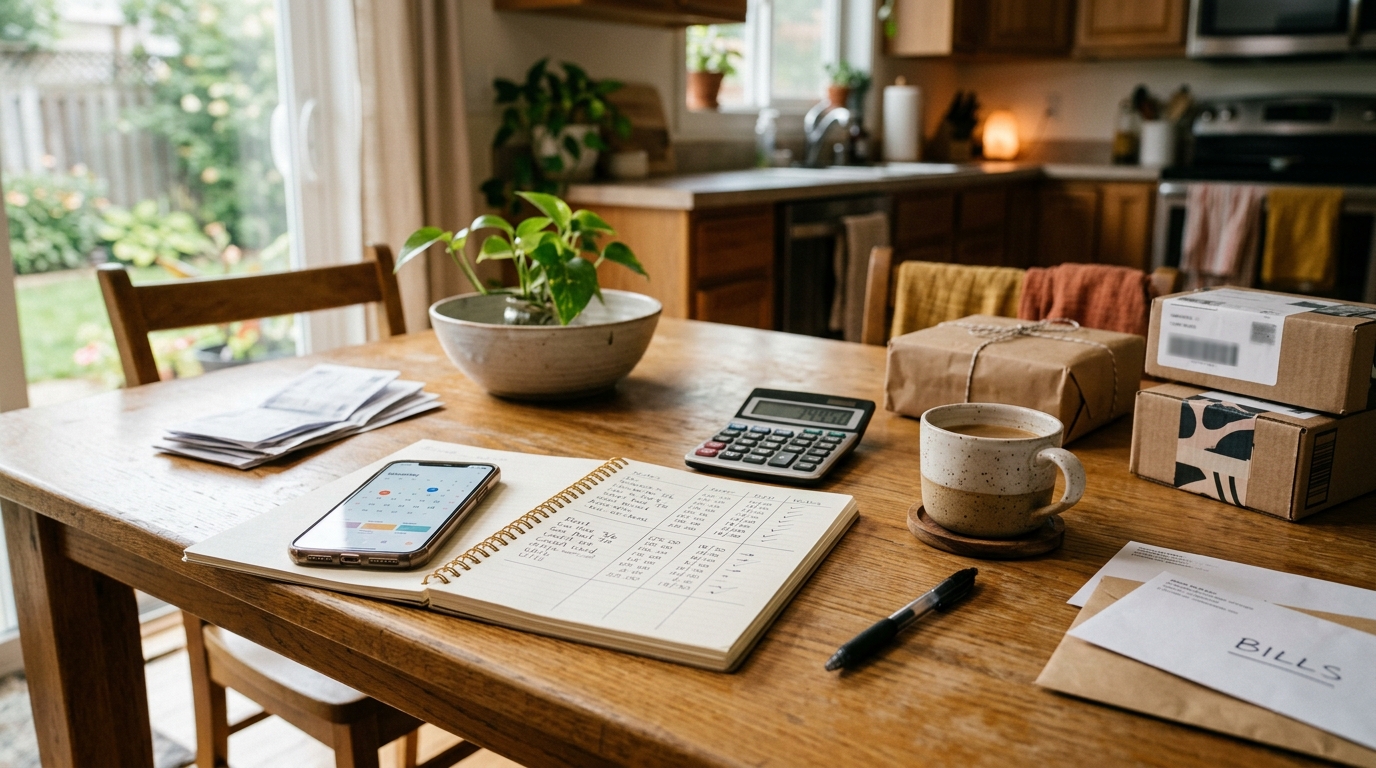
One small habit can help a lot: create a note on your phone called “Future Payments.” Every time you use BNPL, write down the merchant, total amount, payment dates, and payment amount. If that note starts looking crowded, that is your signal to stop adding new plans until the old ones are gone.
It sounds basic because it is. But basic works. Most debt problems do not start because people are bad at math. They start because the numbers are spread across too many places.
What to do if you already have too many BNPL payments
If you opened this article because you already feel behind, the first step is not to beat yourself up. The first step is to get everything in one view.
Open every BNPL app or account you use. Check your email for upcoming payment reminders. Look at your bank account for recent installment withdrawals. Then write down the full list: provider, merchant, remaining balance, next due date, and final payment date.
Once you can see the whole picture, sort the payments by due date. Your goal is not to become perfect overnight. Your goal is to avoid late fees, overdrafts, and surprises.
If you have enough money to cover everything but the timing is messy, move cash into the account before the payment dates. If you do not have enough, contact the provider before the payment fails. Some companies may offer options, but they are usually easier to deal with before you miss the payment.
Then stop opening new plans for a while. Make it a 30-day freeze. Not forever. Just long enough to let your paycheck catch up to your past purchases.
BNPL vs. credit cards: which is worse?
The honest answer is: it depends on behavior.
Credit cards can be expensive because interest can compound for a long time. BNPL can be dangerous because it feels smaller and encourages stacking. A credit card balance is one big number you may hate looking at. BNPL is a group of little numbers you may forget to add together.
If you pay a credit card in full every month, it can be a useful payment tool. If you carry a balance at a high interest rate, it can become costly fast. If you use BNPL for one planned purchase and pay on time, it can be manageable. If you use it repeatedly to cover a lifestyle your income cannot support, it becomes a problem.
The tool matters less than the pattern. Are you buying something because it fits your plan, or because the payment option makes it feel like it fits?
That question is uncomfortable, but useful.
The “little treat” trap is real
A lot of personal finance advice sounds like it was written by someone who has never had a bad week. People are not robots. Sometimes you want the hoodie, the dinner, the upgraded seat, the concert, the skincare, the new gadget, or the small thing that makes life feel less like a spreadsheet.
The issue is not joy. The issue is financing every bit of joy until your future paycheck has no oxygen left.
A healthier approach is to build a guilt-free spending lane. Pick an amount each paycheck that you can spend without explaining it to yourself. When it is gone, it is gone. That boundary may feel restrictive at first, but it actually protects joy. Buying something with money you already set aside feels very different from buying it with four future payments you will resent later.
BNPL becomes less tempting when you have a small amount of money that is truly yours to spend.
A practical reset for the next 30 days
If BNPL has gotten too comfortable, try a 30-day reset.
For the next month, do not open any new installment plans. Pay down the ones already active. Delete saved payment methods from shopping apps if you need to. Unsubscribe from retail texts that push flash sales. Move tempting apps off your home screen.
Then choose one money check-in day each week. Ten minutes is enough. Look at your bank balance, upcoming bills, BNPL payments, credit card due dates, and any automatic subscriptions. The point is not to create the perfect budget. The point is to stop being surprised.
If you want a simple rule, use this: no installment plan for anything you will use up before the payments are finished. That means groceries, gas, restaurant meals, and most everyday basics should generally not be split into future payments. If the item will be gone before the debt is gone, that is usually a bad trade.

The bottom line
Buy Now, Pay Later is not evil. It is also not magic. It is credit dressed in friendlier clothes.
Used once in a while, with a clear plan, it can help manage timing. Used constantly, especially for everyday expenses, it can turn into a quiet drain on your next paycheck. The danger is not always interest. Sometimes the danger is forgetting how much of your future money is already gone.
The fix is not shame. It is visibility. Put every payment in one place. Stop stacking. Give yourself a short reset. Keep a little guilt-free spending money if you can. And before you split the next purchase into four easy payments, ask the question checkout pages never ask for you: easy compared to what?
If the answer is “easy compared to facing the real price,” it may be time to close the tab.