
# The Ultimate First-Time Homebuyer Guide in America: Navigating Mortgages, Hidden Closing Costs & Smart Bidding Strategies
For generations of Americans and immigrants alike, nothing symbolizes personal freedom and financial security quite like holding the keys to your very first home. Stepping across your own front threshold, planting a garden in your private backyard, and watching your equity accumulate month after month represents the crown jewel of the American Dream.
Yet navigating the modern American housing market can feel like traversing a financial minefield. Between fluctuating mortgage interest rates, bewildering loan acronyms (FHA, DTI, PMI, APR), aggressive bidding wars, and thousands of dollars in surprise "closing costs," many prospective buyers find themselves paralyzed by complexity.
The truth is that homeownership in the United States does not require millions in the bank or a Wall Street background. It requires a clear, disciplined strategy and a firm grasp of the homebuying rules.
Whether you are looking for a suburban single-family home in California, a spacious brick house in Texas, or a starter townhome in Washington, this masterclass breaks down the entire process from credit repair to escrow closing.

Phase 1: Financial Preparation (6 to 12 Months Before You Shop)
The biggest mistake first-time buyers make is browsing real estate websites like Zillow or Redfin before their financial foundation is rock solid. Mortgage lenders will scrutinize your financial life under a microscope:
1. Credit Score Benchmarks
Your FICO score directly determines your mortgage interest rate. Even a 0.5% rate difference on a \$400,000 loan costs tens of thousands of dollars over a 30-year term:
- 580 FICO: Minimum for an FHA loan with 3.5% down payment.
- 620 FICO: Baseline for a standard Conventional loan.
- 740+ FICO: The "Sweet Spot" unlocking the lowest possible mortgage interest rates and cheapest private mortgage insurance (PMI).
Pro-Tip: Do not open new credit cards, finance a new car, or close old credit lines in the six months leading up to your home purchase.
2. The Debt-to-Income (DTI) Ratio Rule
Lenders evaluate your Debt-to-Income (DTI) ratio—the percentage of your gross monthly income consumed by recurring debts (car loans, student loans, minimum credit card payments, and your projected new mortgage payment).
- The Ideal Target: Aim for a total DTI under 43% (many conventional lenders cap approvals at 45%–50%).
- Calculation Example: If your household earns \$10,000 monthly before taxes, your total debt obligations (including your new mortgage, property taxes, and insurance) should ideally stay below \$4,300 per month.
3. "Seasoning" Your Down Payment Funds
Lenders legally require that your down payment and closing funds be "seasoned"—meaning the money must have sat in your verified bank accounts for at least 60 consecutive days. Large, unexplained cash deposits appearing right before closing will trigger intense anti-money-laundering audits. If receiving a financial gift from family, ensure you obtain a formal, signed Gift Letter certifying the money is not a loan.
Phase 2: Debunking the Down Payment Myth: FHA vs. Conventional
One of the most damaging financial myths in America is that you must save a 20% down payment to purchase a home. In reality, the vast majority of first-time buyers put down far less:
| Loan Type | Minimum Down Payment | Minimum Credit Score | Key Advantages & Trade-Offs |
|---|---|---|---|
| Conventional Loan | 3% to 5% | 620 (720+ preferred) | Private Mortgage Insurance (PMI) automatically cancels once you reach 20% home equity. |
| FHA Loan (Government-Backed) | 3.5% | 580 | Forgiving credit standards; however, Mortgage Insurance Premium (MIP) typically lasts for the entire loan life. |
| VA Loan (Military & Veterans) | 0% Down | None set by VA | No mortgage insurance, highly competitive interest rates for qualified service members. |
| USDA Loan (Rural Areas) | 0% Down | Typically 640 | Zero down payment for designated suburban/rural regions below certain income thresholds. |
What is Private Mortgage Insurance (PMI)?
If you put down less than 20% on a Conventional loan, your lender will charge an extra monthly fee called PMI (typically \$75 to \$200 per month depending on loan size and credit score). PMI does not protect you; it protects the lender against default. The beauty of Conventional PMI is that once your home value appreciates and your loan balance drops to 78%–80% of the home's value, the monthly fee drops off completely.
Phase 3: The "Hidden Cost" Shock: Budgeting for Closing Costs
Many buyers save up their 3.5% or 5% down payment and celebrate—only to be blindsided at the closing table by an additional invoice called Closing Costs.
Closing costs typically run between 2% and 5% of the total loan amount (on a \$500,000 purchase, expect \$10,000 to \$20,000 in closing costs). These mandatory transaction fees cover:
- Loan Origination & Processing Fees: Paid to your mortgage lender or broker (0.5%–1%).
- Home Appraisal Fee: (\$500–\$800) for an independent appraiser to confirm the home's fair market value.
- Title Search & Lender's Title Insurance: (\$1,500–\$3,000) ensuring the property is free of old liens, back taxes, or competing ownership claims.
- Escrow Prepaids & Impounds: Lenders require 6 to 12 months of property taxes and homeowner insurance collected upfront to fund your impound escrow account.
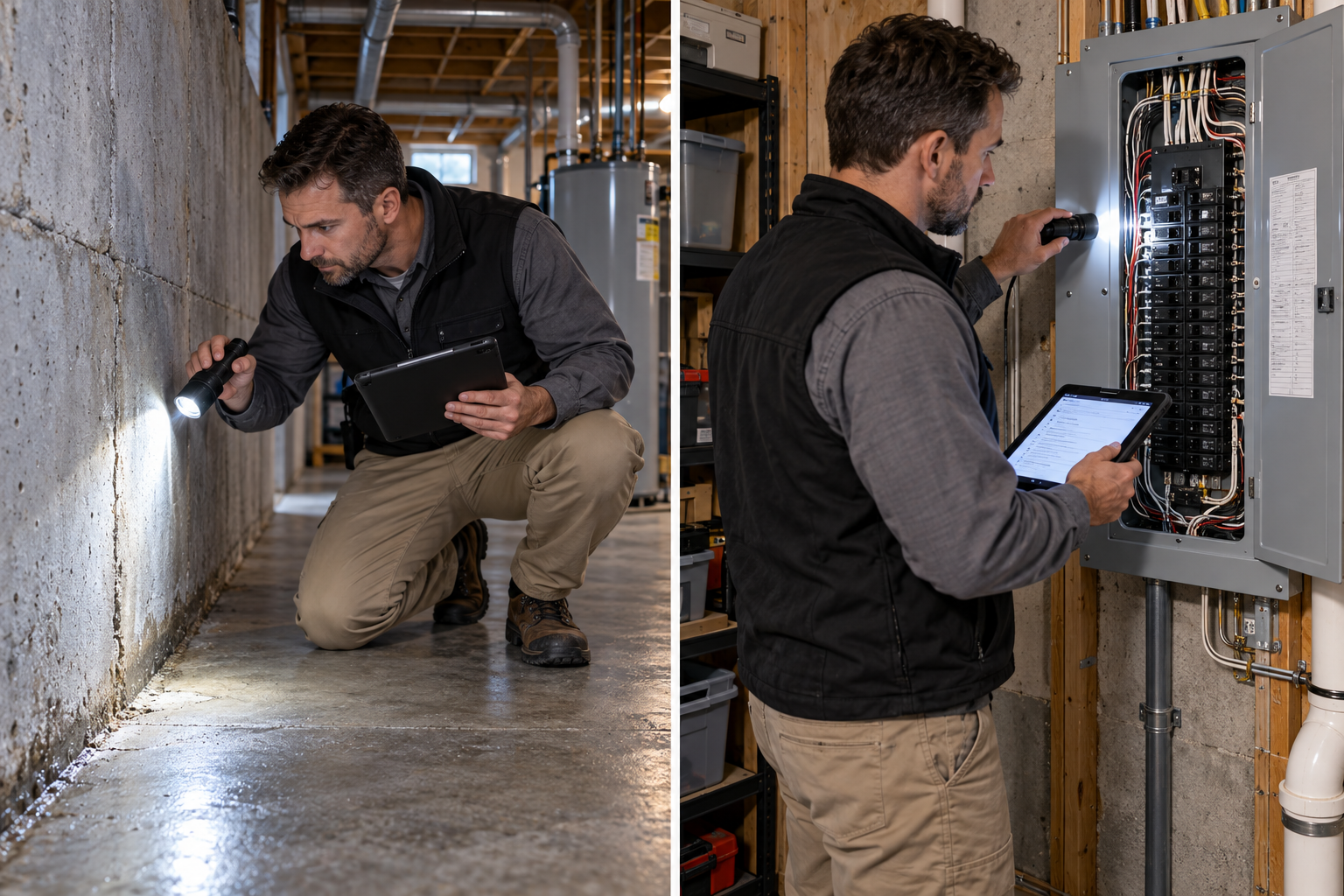
Phase 4: The Home Inspection Contingency (Your Ultimate Shield)
Never, under any circumstances, waive your Home Inspection Contingency—even in a competitive seller's market.
A licensed home inspector will crawl into the attic, test the electrical panel, run the plumbing lines, and inspect the foundation. If major structural issues are discovered:
- Foundation Cracks: Uneven settling or foundation repairs can easily cost \$20,000 to \$50,000.
- Roof Age & HVAC Failure: A roof over 20 years old or a broken central air conditioning/furnace unit requires immediate \$10,000+ replacement.
- Termite & Pest Infestation: Subterranean termites can destroy internal wooden framing silently over years.
Armed with an inspection report, you can legally demand that the seller repair the defects before closing, request a closing cost credit (seller concession), or walk away from the deal with your earnest money deposit fully refunded.

Regional Realities: California vs. Texas Housing Rules
Depending on where you establish roots, state laws create dramatically different financial dynamics:
- California Homebuyers: Property prices are higher, but California's famous Proposition 13 caps annual property tax increases at a modest 2% per year based on your original purchase price. This provides long-term predictability.
- Texas Homebuyers: While homes offer significantly more square footage and Texas imposes zero state income tax, property taxes are among the highest in the nation—frequently ranging from 1.8% to 2.5% of assessed value each year. A \$450,000 home in suburban Houston or Dallas can incur \$9,000+ annually in property taxes alone.
4 Rules to Win Your Home Without Regret
- Secure a Verified "Pre-Approval", Not Just Pre-Qualification: A basic pre-qualification is an automated estimate. A verified Pre-Approval letter—where an underwriter has reviewed your W-2s, tax returns, and bank statements—proves to sellers that your financing is ironclad.
- Shop Multiple Lenders on the Same Day: Mortgage rates change daily. Request Loan Estimates from at least three different sources (a major national bank, a local credit union, and an independent mortgage broker) within a 14-day window. All inquiries count as a single credit pull.
- Protect Your Home with Comprehensive Homeowners Insurance: In regions prone to severe weather or wildfires, securing reliable home insurance early in escrow is mandatory before loan funding.
- Maintain an Emergency Reserve Fund: Never deplete your bank account to zero at the closing table. Always keep 3 to 6 months of living expenses safely preserved in savings for unexpected repairs, water heaters, or routine landscaping.
Owning a home is more than an investment in brick and mortar; it is the foundation where family memories are forged and generational wealth begins.
Find licensed real estate professionals, trusted loan officers, and reputable insurance agents in your area on the FindALoco Vietnamese Business & Services Directory.