
# How to Pass the US DMV Behind-the-Wheel Driving Test on Your First Try: The Ultimate Checklist & Critical Automatic Fails
Few rites of passage in American life carry as much visceral tension as the DMV behind-the-wheel driving test. The moment your examiner opens the passenger door with a clipboard and a stoic expression, your pulse quickens.
In the United States, a driver's license is infinitely more than an authorization to operate a motor vehicle. It is your primary national photo identification (Real ID), your passport to economic independence, and your literal set of legs in sprawling metropolitan areas like Los Angeles, Houston, Dallas, Atlanta, and Seattle.
Yet according to national Department of Motor Vehicles (DMV) statistics, between 40% and 55% of applicants fail their behind-the-wheel road test on their very first attempt. The tragedy is that the vast majority of failures do not stem from poor steering or bad parking—they occur because of minor technical infractions classified as "Critical Driving Errors" that trigger an immediate, non-negotiable automatic failure.
Whether you are a teenager taking the test for the first time, an immigrant transferring your foreign driving habits to American roadways, or a licensed driver needing to re-qualify, this comprehensive guide provides the exact roadmap to earning your license on attempt number one.
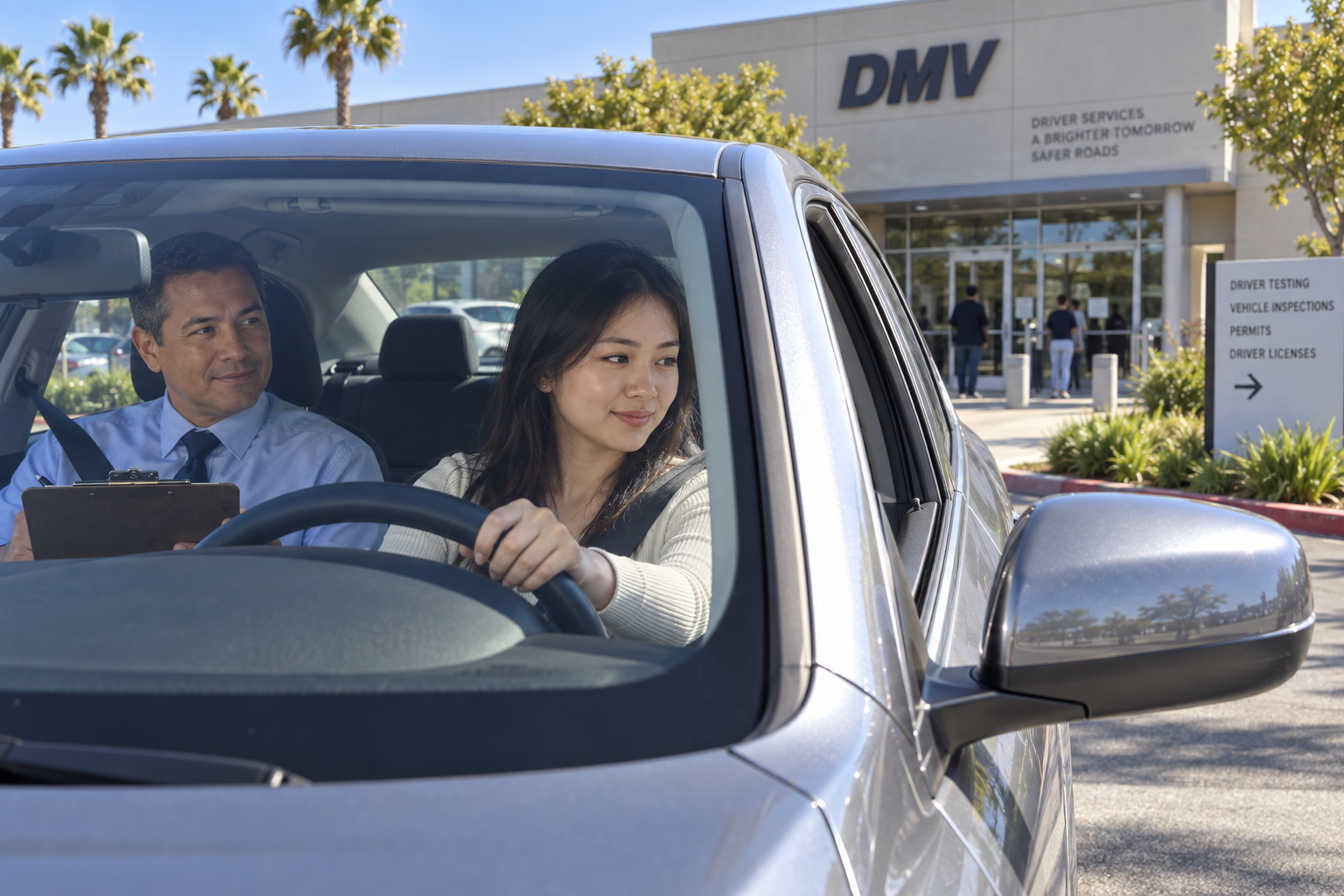
Phase 1: The Pre-Drive Vehicle Inspection (The Test Before the Test)
Before the examiner ever tells you to start the engine, they will conduct a mandatory pre-drive safety checklist outside your vehicle. If any safety feature on your car fails to function, your appointment is immediately canceled, and you will be sent home without driving a single foot:
Vehicle Requirements You Must Check Before Arrival
- Valid Registration & Auto Insurance: You must provide original, physical documents showing active vehicle registration and valid liability insurance card listing the vehicle.
- Tires: Adequate tread depth with no bald spots or visible steel cords.
- Brake Lights & Turn Signals: Both front and rear left/right turn signals and all three brake lights must illuminate brightly.
- Windshield & Wipers: Clear windshield with no cracks obstructing the driver's line of sight, with operational windshield wipers and fluid.
- Seatbelts & Horn: Working driver and passenger seatbelts that latch and retract cleanly, and a loud, functioning horn.
- Passenger Door & Windows: Both front power windows must roll down completely, and the passenger door must open smoothly from both the inside and outside.
Hand Signals Demonstration
When asked by the examiner with your driver's side window rolled down and the engine off, you must correctly demonstrate all three standard hand signals:
- Left Turn: Arm pointed straight out horizontally.
- Right Turn: Arm bent upward at a 90-degree elbow angle with hand pointing to the sky.
- Slow or Stop: Arm bent downward at a 90-degree elbow angle with open palm facing back.
Phase 2: The 8 "Critical Driving Errors" (Instant Automatic Fails)
On a standard DMV road test scorecard (such as California Form DL-640 or Texas DPS equivalents), you are allowed up to 15 minor deduction points. However, committing even one single Critical Driving Error results in an immediate failure, regardless of how flawlessly you drove the rest of the course:
| Critical Driving Error | How It Happens | How to Prevent It |
|---|---|---|
| 1. Intervention by Examiner | Any action where the examiner must physically grab your steering wheel or slam on their dual passenger brake. | Scan 12–15 seconds ahead and maintain safe following distances. |
| 2. Striking an Object or Curb | Mounting or scraping the concrete curb during turning, parking, or curb backing. | Never rush curbside maneuvers; adjust side mirrors so you can see rear wheel clearance. |
| 3. Rolling a STOP Sign | Failing to bring the vehicle to a complete, 100% dead stop before the white limit line or crosswalk. | Count to a full "three Mississippi" after feeling the car's weight settle back before creeping forward. |
| 4. Red Light Infraction | Entering an intersection on a solid red light or failing to stop completely before making a right turn on red. | Treat every right turn on red as an unyielding STOP sign: full stop, scan crosswalk, creep for traffic. |
| 5. Dangerous Speeding / Driving Too Slow | Exceeding the speed limit by even 1 mph in a school zone (25 mph) or driving 10+ mph below traffic flow. | Match residential limits (25 mph) and commercial arterials (35–45 mph) strictly. |
| 6. Failure to Yield Right-of-Way | Cutting off oncoming traffic or failing to wait for a pedestrian whose foot is anywhere on your half of the crosswalk. | When in doubt, yield. Never assume pedestrians or oncoming cars will stop for you. |
| 7. Blind Spot / Shoulder Check Omission | Changing lanes or merging without turning your head 90 degrees over your shoulder to check blind spots. | Turn your head visibly—do not rely solely on rear-view and side mirrors! |
| 8. Disobeying Traffic Signs & Markings | Crossing solid double yellow lines or turning from an incorrect lane. | Memorize pavement arrows and lane designation signs well ahead of turns. |
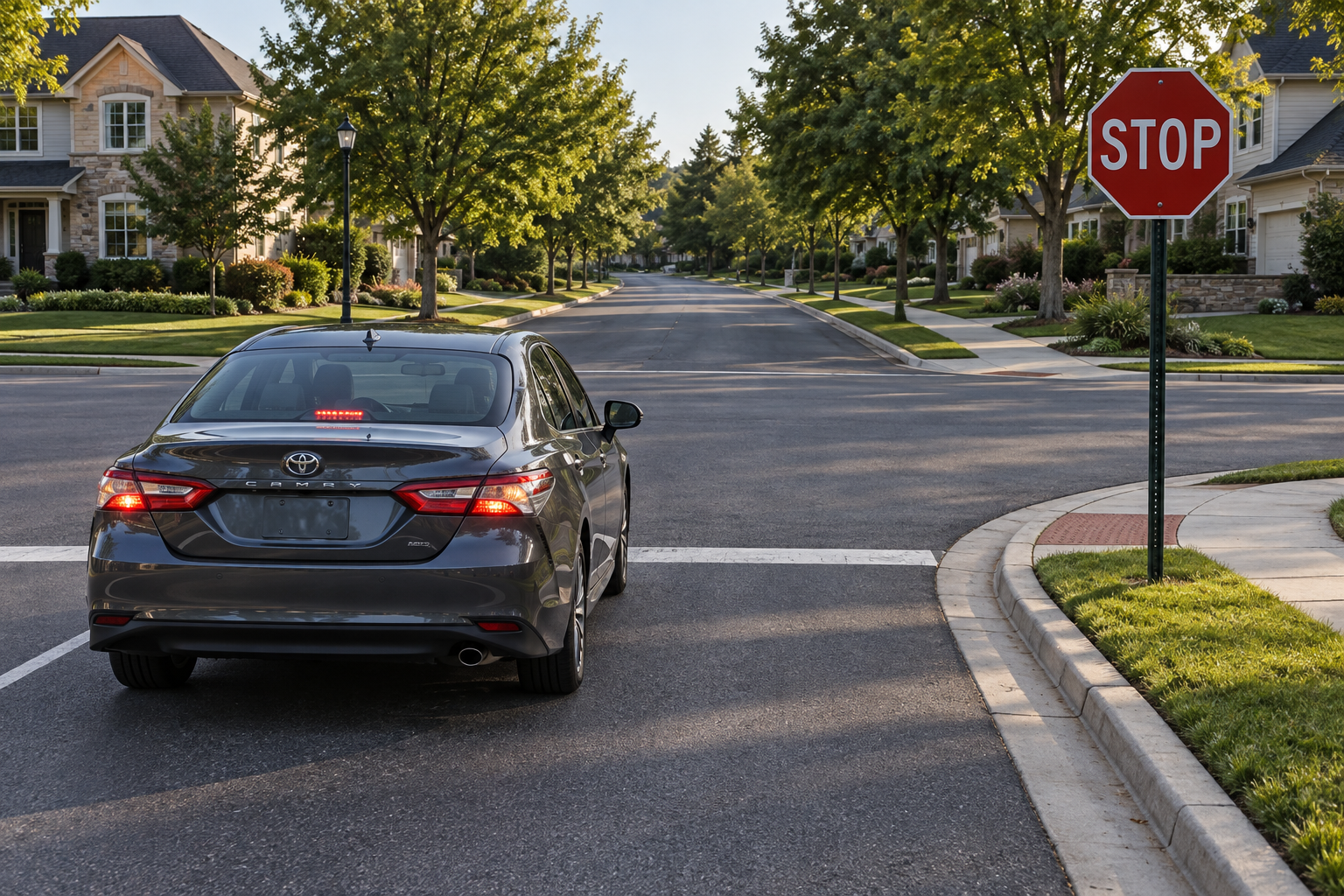
Phase 3: Mastering Key Road Test Maneuvers
Examiners evaluate your defensive driving habits through specific technical maneuvers:
1. The SMOG Rule for Lane Changes
Whenever you are instructed to change lanes, follow the universal SMOG formula:
- S – Signal: Turn on your indicator at least 100 feet before moving (roughly 3 to 4 seconds).
- M – Mirrors: Check your center rear-view mirror and outside side mirror.
- O – Over-the-Shoulder: Turn your chin fully toward your shoulder to inspect the blind spot zone.
- G – Go: Glide smoothly across into the adjacent lane while maintaining a constant forward speed (do not tap the brakes while merging).
2. The 4-Way STOP Sign Decoded
Navigating uncontrolled or all-way STOP sign intersections terrifies many test-takers. Remember the two golden rules of priority:
- First to Arrive, First to Proceed: The vehicle that reaches its limit line and comes to a full stop first has the legal right-of-way.
- Tie Goes to the Right: If two vehicles arrive and stop at the exact same split-second, the vehicle to the right proceeds first. If you are turning left across oncoming traffic, you must always yield to the oncoming driver going straight or turning right.
3. Backing Along the Curb (Reverse Maneuver)
The examiner will ask you to pull over to the curb in a quiet residential neighborhood, come to a complete stop, and reverse in a straight line for three car lengths:
- Place your right arm over the passenger seat backrest, turn your torso, and look out the rear window.
- Check your front side periodically to ensure your front end doesn't swing out.
- Keep the car parallel, between 1 to 3 feet from the curb, at a slow walking speed. Never touch the curb.
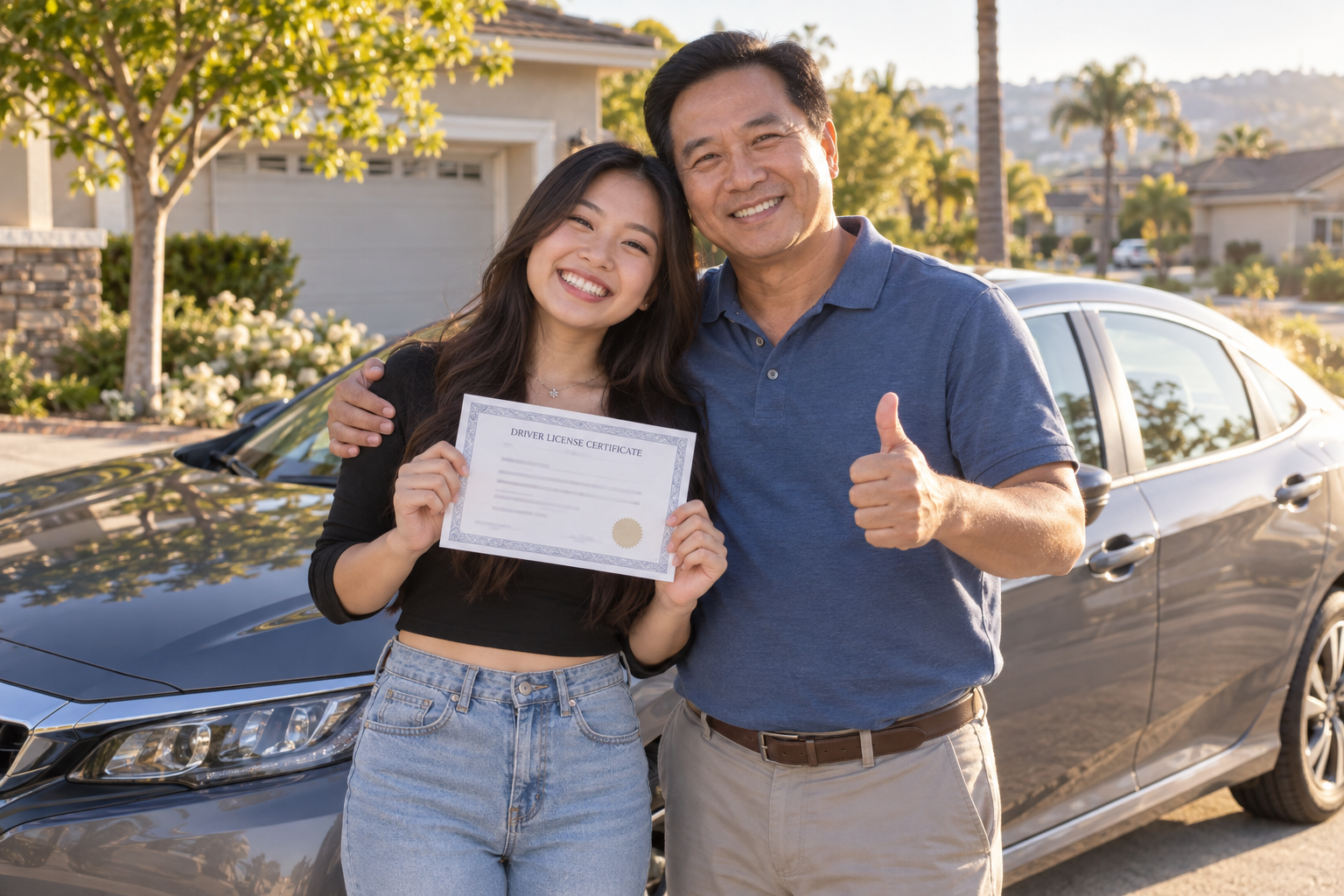
5 Practical Tips to Conquer Road Test Anxiety
- Practice the Neighborhood Around Your Specific DMV: Examiners use 2 to 3 standard routes starting from the DMV parking lot. Spend two or three weekends driving every residential street, school zone, and intersection within a 2-mile radius of the testing center.
- Exaggerate Your Head Movements: Examiners cannot see where your eyes are looking if you only glance sideways. Wear a baseball cap or move your chin visibly toward each mirror and over your shoulder so the examiner registers every single safety check.
- Mind the "Creep" Technique: At blind intersections with bushes or parked vans blocking your view, come to a complete stop behind the white line first. Then release the brake slightly to "creep" forward 2 to 3 feet until you have a clear sightline before proceeding.
- Choose Mid-Morning Appointment Times: Schedule your behind-the-wheel exam between 9:30 AM and 11:30 AM on Tuesday through Thursday. You will bypass morning school zones, rush-hour traffic jams, and fatigued late-afternoon examiners.
- Protect Your Ride with Proper Auto Insurance: Having valid, state-approved insurance is legally required to take the test and drive home safely afterward.
Explore verified auto insurance agents, driving schools, and bilingual services on the FindALoco Vietnamese Business Directory.