
For many Vietnamese newcomers, "Little Saigon" is more than a shopping district. It is the first place where the language feels familiar, the food tastes like home, and practical help is easier to find. Across the United States, Vietnamese American communities have built neighborhoods where restaurants, markets, temples, churches, legal offices, nail salons, tax services, real estate agents, doctors, dentists and community groups sit close together. If you know how to use these local networks wisely, Little Saigon can help you settle faster and avoid expensive mistakes.
This guide explains the biggest Little Saigon communities in the US, what you can realistically find there, how to connect with people, and how to search for jobs, housing and services without relying on rumors alone.
What "Little Saigon" really means
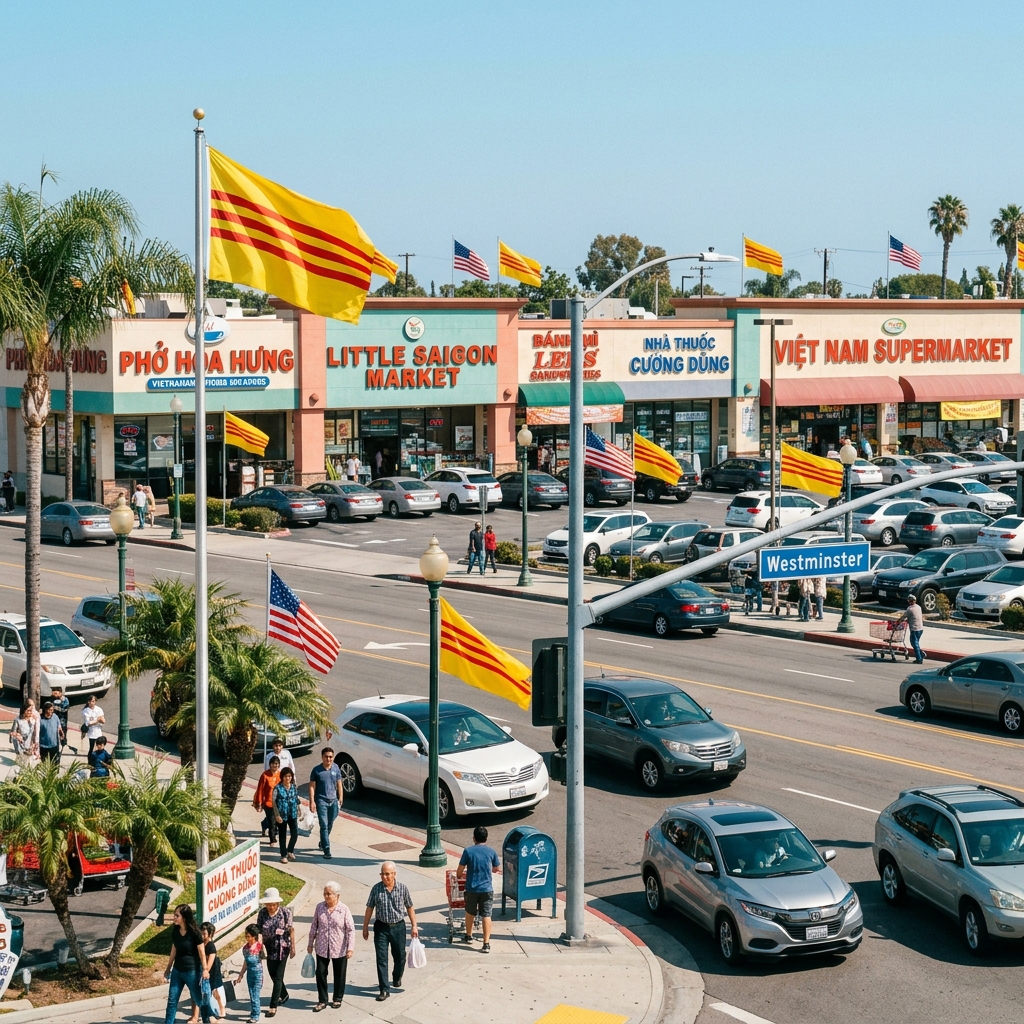
"Little Saigon" usually refers to a Vietnamese American business and cultural district. Some are large, famous and clearly marked on maps. Others are looser clusters of Vietnamese restaurants, markets and services spread across several streets. They are not all the same.
A strong Little Saigon community usually has four things:
- Daily-life businesses — phở restaurants, bánh mì shops, cafés, supermarkets, pharmacies, hair and nail salons.
- Professional services — Vietnamese-speaking doctors, dentists, accountants, immigration attorneys, insurance agents and real estate agents.
- Community anchors — Buddhist temples, Catholic churches, community centers, veterans groups, youth organizations and cultural associations.
- Information networks — local Vietnamese media, Facebook groups, bulletin boards, family referrals and word-of-mouth recommendations.
For a newcomer, the most valuable part is not only shopping. It is access to people who understand the immigrant experience: how to find a first room to rent, which employer is fair, which tax preparer is reliable, what school district to look at, and which local agency can help with paperwork.
The biggest Little Saigon communities in the US
Orange County, California — Westminster and Garden Grove
The best-known Little Saigon is in Orange County, especially Westminster and Garden Grove. It is often described as the largest Vietnamese community outside Vietnam. The core area includes Bolsa Avenue, Brookhurst Street and Magnolia Street, with major plazas, Vietnamese supermarkets, restaurants, jewelry shops, professional offices, media outlets and community organizations.
This area is especially useful if you are looking for:
- Vietnamese restaurants and specialty food at every price level.
- Vietnamese-speaking professional services.
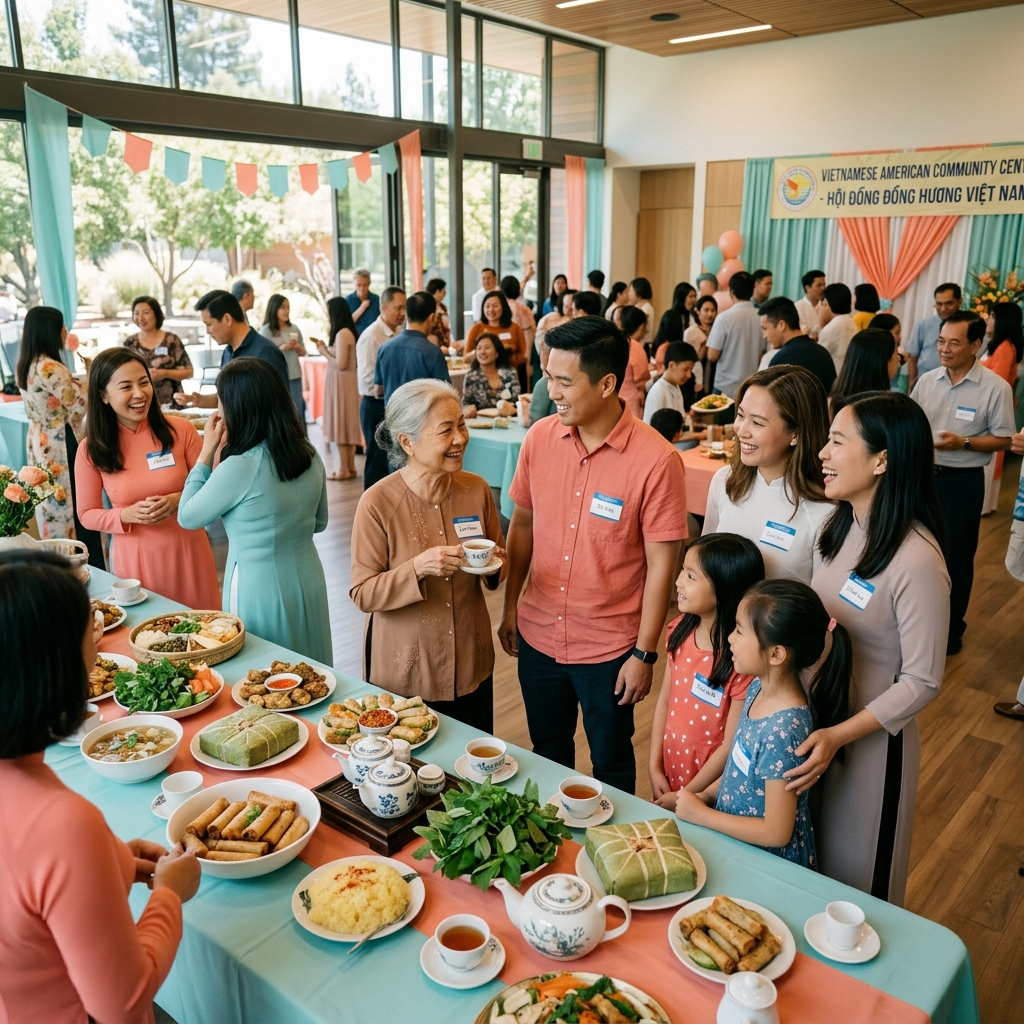
- Community events, Tết festivals, memorial gatherings and cultural programs.
- Jobs in restaurants, markets, salons, healthcare offices and service businesses.
- A deep network of families who have been in the US for decades.
Orange County is also culturally important. Many community events use the yellow Vietnamese heritage flag with three red stripes, often called the Cờ Vàng Ba Sọc Đỏ or the Republic of Vietnam Heritage and Freedom Flag. For many Vietnamese Americans, especially refugees and their families, this symbol carries historical and emotional meaning. If you use images for community content, this detail must be handled accurately and respectfully.
San Jose, California — Story Road and Senter Road
San Jose has one of the largest Vietnamese populations in the US. The community is spread across East San Jose, especially around Story Road, Senter Road and Tully Road. Compared with Orange County, San Jose feels more integrated into a large tech-region city, but the Vietnamese business presence is still very strong.
Newcomers often look here for:
- Bay Area job networks, including service jobs and small business opportunities.
- Vietnamese grocery stores, restaurants and cafés.
- Community organizations and youth programs.
- Professional services for families buying homes, filing taxes or navigating immigration questions.
The cost of living is high, so newcomers should be careful with rent expectations. A first step may be renting a room, sharing housing with relatives, or living outside the densest areas while using the Vietnamese business district for services and community.
Houston, Texas — Bellaire Boulevard and Asiatown
Houston's Vietnamese community is large, entrepreneurial and diverse. Much of the business activity is around Bellaire Boulevard in the broader Asiatown area. Houston is popular because housing can be more affordable than coastal California, and there are strong job networks in restaurants, nail salons, logistics, construction, healthcare and small business.
Houston is especially practical for newcomers who want:
- Lower cost of living compared with California.
- A large nail salon and beauty industry network.
- Vietnamese churches, temples and community groups.
- Access to both Vietnamese and broader Asian shopping districts.
Because Houston is spread out, transportation matters. If you do not have a car yet, ask about bus routes, commute time, and whether a job requires driving between locations.
San Diego, California — Mira Mesa, City Heights and Linda Vista
San Diego does not have one massive Little Saigon like Orange County, but it has strong Vietnamese clusters. Important areas include Mira Mesa (92126), City Heights along El Cajon Boulevard (92105), Linda Vista (92111) and parts of Kearny Mesa / Convoy (92123). The community is more spread out, so newcomers should think by neighborhood rather than expecting one single district.
San Diego is useful for:
- Vietnamese restaurants, markets and cafés near Mira Mesa and City Heights.
- Nail salon jobs across Mira Mesa, Chula Vista, National City and inland communities.
- Military families, students and working families who need practical local services.
- A warmer, smaller-city feel compared with Los Angeles or San Jose.
If you are searching for work or housing in San Diego, pay close attention to commute time. A job that looks close on a map may still be difficult if it crosses freeway traffic during peak hours.
Northern Virginia — Falls Church and Eden Center
On the East Coast, Eden Center in Falls Church is one of the most recognizable Vietnamese commercial hubs. It is smaller than Orange County but very concentrated, with restaurants, shops, bakeries, jewelry stores and cultural events in one walkable area.
This community is helpful for:
- Vietnamese food and services near Washington, DC.
- East Coast families who want a strong cultural hub.
- Students, government workers and professionals in the DC metro area.
- Community events that bring Vietnamese Americans together across Virginia, Maryland and DC.
The DC metro area can be expensive, so newcomers should compare rent in Falls Church, Annandale, Arlington, Fairfax and nearby Maryland suburbs before choosing where to live.
Seattle, Portland, Dallas, Atlanta and other growing communities
Not every Vietnamese American community is officially called "Little Saigon," but many cities have strong Vietnamese corridors. Seattle, Portland, Dallas-Fort Worth, Atlanta, New Orleans, Philadelphia and Boston all have Vietnamese restaurants, markets, faith communities and business networks. In smaller cities, the community may be less visible online, so places of worship and local markets become even more important.
What you can find in a Little Saigon community
A good Little Saigon is like a practical landing map. Instead of searching randomly across a new city, you can solve many first-month problems in one area.
| Need | Where to start | What to ask |
|---|---|---|
| Food and groceries | Vietnamese market, bakery, phở shop | Which market has fresh herbs? Which restaurant is good for families? |
| Jobs | Salon owners, restaurants, community boards, classifieds | Is pay hourly, commission or cash? Is the schedule stable? |
| Housing | Local classifieds, Facebook groups, real estate agents | Is utilities included? Is parking available? Who is on the lease? |
| Paperwork | Tax office, immigration attorney, nonprofit group | What documents should I bring? What fees are normal? |
| Healthcare | Vietnamese-speaking doctor or clinic | Do they accept your insurance? How long is the wait? |
| Community | Temple, church, Tết event, volunteer group | Are there newcomer programs or youth activities? |
The key is to ask specific questions. "Do you know a good place?" is too broad. Better questions are: "Do you know a Vietnamese-speaking dentist who accepts my insurance?" or "Which apartment areas are safe for a family without a long freeway commute?"
How newcomers should use local networks safely
Vietnamese communities are famous for word of mouth. That can be a strength, but it can also create risk if you accept advice without checking details. Use community recommendations as a starting point, not the final proof.
Before you accept a job, rent a room, hire a service provider or pay a deposit, check:
- Names and addresses — make sure the business or person is real.
- Written terms — rent, pay rate, schedule, commission, tip sharing and cancellation rules.
- Licenses — especially for legal, tax, medical, beauty and real estate services.
- Reviews and referrals — ask at least two sources if the decision involves money.
- Receipts — never hand over cash for a deposit without proof.
Tip: Trust is important, but paperwork protects both sides. A professional person will not be offended when you ask for written details.
Jobs commonly found through Little Saigon networks
Many newcomers find their first US job through family, friends, local businesses or Vietnamese classifieds. Common categories include:
- Nail salons — manicurist, pedicurist, receptionist, waxing or eyelash services.
- Restaurants and cafés — server, kitchen helper, cashier, baker, dishwasher, manager.
- Markets and retail — cashier, stocker, meat/seafood counter, delivery helper.
- Home services — cleaning, caregiving, repair, landscaping and moving help.
- Professional offices — receptionist, assistant, translator, insurance or tax office support.
For nail salon work, rules vary by state. In California, for example, manicurists are regulated by the California Board of Barbering and Cosmetology. Do not assume experience from another country automatically transfers. Ask what license is required, whether the salon helps new workers train, and how pay is calculated.
Housing: what to know before renting
Housing is one of the most common reasons people turn to Little Saigon networks. A room for rent through a Vietnamese family can be more flexible than a formal apartment, but you still need clarity.
Ask these questions before moving in:
- Is the rent monthly or weekly?
- Are utilities, internet and laundry included?
- Is cooking allowed? Are there kitchen rules?
- Is parking included?
- Can you receive mail at the address?
- Is there a written agreement?
- How much notice is required before moving out?
If you are renting a room in a family home, also ask about quiet hours, guests, pets and shared bathroom rules. Many conflicts happen not because people are bad, but because expectations were never discussed.

Community events: the fastest way to feel at home
If you only visit Little Saigon to shop, you will miss the deeper community. Events are where newcomers meet people, learn local norms and build real relationships.
Look for:
- Tết festivals — Lunar New Year celebrations with food, music, lion dance and cultural performances.
- Mid-Autumn events — family-friendly festivals for children.
- Temple and church gatherings — weekly services, charity programs and holiday events.
- Veterans and memorial events — important in many Vietnamese American communities.
- Language and youth programs — Vietnamese language classes, tutoring and cultural clubs.
- Small business mixers — useful for owners, freelancers and service providers.
Volunteering is one of the best ways to build trust. Helping at a booth, temple kitchen, church fundraiser or youth event can create more real connections than simply asking strangers for favors.
How to find reliable Vietnamese businesses
A Vietnamese sign does not automatically mean a business is the right fit. Compare options like you would anywhere else.
For restaurants and markets, check freshness, cleanliness, prices and how busy the business is. For professional services, check credentials, fees and whether they explain things clearly. For medical or legal matters, never choose only because someone speaks Vietnamese. Language helps, but expertise matters more.
A simple process works well:
- Search a directory or local group for 3–5 options.
- Read recent reviews, not only old ratings.
- Call and ask specific questions.
- Compare price, location and communication style.
- Keep records of appointments, quotes and receipts.
You can use the FindALoco directory to discover Vietnamese businesses near you, and the classifieds to check local job, housing and service listings.
Cultural notes newcomers should understand
Little Saigon communities were built by refugees, immigrants, veterans, students, workers and entrepreneurs across many decades. That history shapes daily life. Some topics are sensitive, especially political symbols, war memory and refugee identity.
Practical etiquette:
- Be respectful around memorials, flags and veteran events.
- Do not assume all Vietnamese Americans share the same politics or religious background.
- Use family titles politely when speaking Vietnamese, such as cô, chú, anh, chị, bác.
- If you are unsure, ask gently instead of debating.
- Support small businesses by buying something when you use their space or bulletin board.
For community content and imagery, avoid mixing Vietnam-based tourist scenes with Vietnamese American neighborhoods. Little Saigon in the US should look like an American city or suburb with Vietnamese businesses, not like a street in Vietnam.
First-week checklist for a newcomer
If you just arrived near a Little Saigon community, use this simple first-week plan.
Day 1–2: Map essentials
- Find the nearest Vietnamese market.
- Save 2–3 affordable restaurants near your home.
- Join one or two local Vietnamese Facebook groups.
- Ask relatives or friends which areas are safe and practical for commuting.
Day 3–4: Handle services
- Look for a Vietnamese-speaking doctor or clinic if needed.
- Identify a reliable tax or paperwork service before deadlines.
- Check where to print, scan or notarize documents.
- Save emergency contacts and local nonprofit resources.
Day 5–7: Build connections
- Visit a temple, church, community center or event.
- Talk to business owners politely and ask specific questions.
- Browse classifieds for jobs or rooms, but verify details before paying.
- Make a short list of trusted people you can call for advice.
Common mistakes to avoid
- Choosing housing only because it is cheap — commute, safety and house rules matter.
- Taking a job without understanding pay — ask about hourly rate, commission, tips, supply deductions and schedule.
- Paying deposits too quickly — get receipts and written terms.
- Assuming every recommendation is reliable — even kind people may repeat outdated information.
- Ignoring English completely — Vietnamese networks help you start, but English opens more options long term.
- Using inaccurate cultural images — for Vietnamese American Little Saigon content, use US-based community imagery and be careful with flags.
Frequently asked questions
Which Little Saigon is the biggest in the US?
Orange County, California — especially Westminster and Garden Grove — is generally recognized as the largest and most established Vietnamese American Little Saigon community.
Is Little Saigon only in California?
No. California has the most famous communities, but strong Vietnamese American hubs also exist in Texas, Virginia, Washington, Oregon, Georgia, Louisiana, Massachusetts and many other states.
Can newcomers find jobs through Little Saigon networks?
Yes. Many first jobs are found through salons, restaurants, markets, churches, temples, Facebook groups and local classifieds. Always confirm pay, schedule and working conditions before accepting.
Is it safe to rent a room through community referrals?
It can be, but you still need written terms. Ask about rent, utilities, parking, guests, kitchen use, deposit, move-out notice and whether you can receive mail at the address.
Do I need English if I live near Little Saigon?
You can handle many basics in Vietnamese, especially food, shopping and some services. But learning English will expand your job options, protect you in paperwork situations and help you interact outside the community.
How do I find Vietnamese businesses near me?
Use a mix of local directories, Google Maps, Vietnamese Facebook groups, community bulletin boards and referrals. On FindALoco, start with the directory for businesses and classifieds for jobs, housing and community listings.
Final advice
Little Saigon can make a new city feel less lonely. Start with food and practical services, then go deeper: attend events, volunteer, ask careful questions and build relationships slowly. The strongest network is not the largest Facebook group — it is a handful of trustworthy people and businesses you can rely on when decisions matter.