
Searching for a Vietnamese grocery store near me usually means you want more than a supermarket aisle with soy sauce and instant noodles. You may be looking for fresh Thai basil for phở, real fish sauce, rice paper for spring rolls, bánh mì bread, frozen lemongrass, pandan leaves, fresh rice noodles, or the right cut of beef bones for broth. A good Vietnamese market is not just a place to buy ingredients. It is part grocery store, part cultural map, part community bulletin board.
If you grew up around Vietnamese food, a Vietnamese market feels normal: the smell of herbs, fish sauce, roast meats, fruit, bakery bread and hot food near the entrance. If you are new, it can feel overwhelming. Shelves are crowded, labels may be in Vietnamese, Chinese, Thai or Korean, and the best items are not always in the obvious place. This guide explains how Vietnamese and Asian grocery stores work in the US, what to buy first, how to compare quality, and how to avoid wasting money.
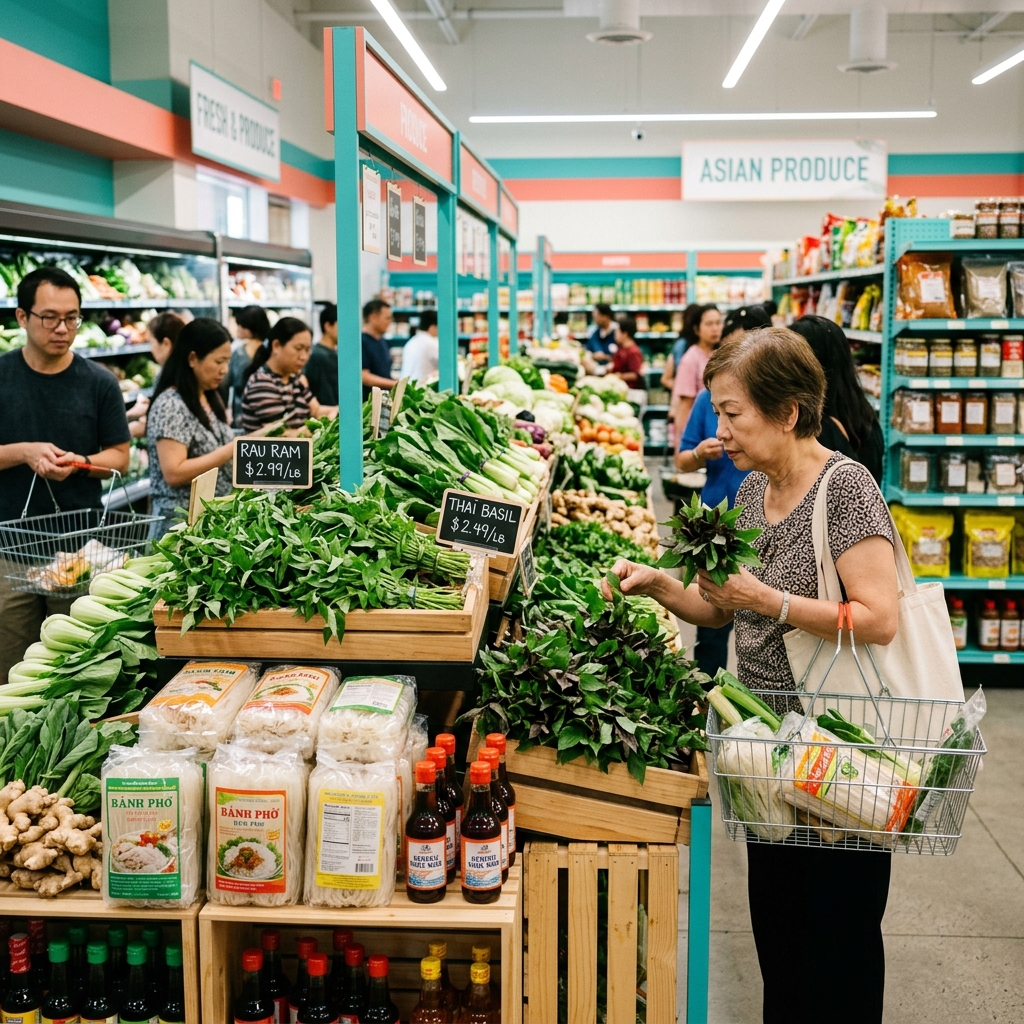
How to choose the right Vietnamese market
A good Vietnamese grocery store is not just a place to grab rice noodles. People are often ready to drive, shop and cook, so a useful guide should answer practical questions:
- Which market has fresh herbs?
- Where can I find bánh phở noodles?
- Which fish sauce should I buy?
- Is an Asian supermarket the same as a Vietnamese market?
- What should a beginner buy for Vietnamese cooking?
- How do I know if produce, seafood or meat is fresh?
Use the FindALoco directory to search Vietnamese markets, Asian supermarkets, bakeries and food shops by city. Then use this guide to shop with confidence once you arrive.
Vietnamese market vs Asian supermarket: what is the difference?
In the US, the terms overlap. A Vietnamese market may be a small family-owned grocery store focused on Vietnamese ingredients. An Asian supermarket may be larger and carry Chinese, Korean, Japanese, Filipino, Thai and Vietnamese products under one roof. Both can be useful, but they do not always serve the same purpose.
| Store type | Best for | What to watch |
|---|---|---|
| Small Vietnamese market | Herbs, fish sauce, bánh mì bread, Vietnamese snacks, local advice | Smaller selection, hours may be limited |
| Large Asian supermarket | Bulk rice, produce, seafood, frozen goods, broad pan-Asian brands | Not every brand is Vietnamese; quality varies by department |
| Vietnamese bakery / deli | Bánh mì, pâté chaud, roast pork, desserts, party trays | Go early for best bread and popular items |
| Korean or Chinese market | Produce, seafood, meat, noodles, hot pot items | Great backup, but Vietnamese-specific items may be limited |
| Costco / mainstream grocery | Bulk rice, meat, some herbs, pantry basics | Rarely has all Vietnamese essentials |
A long-time Vietnamese home cook usually uses more than one store. For example: Costco for bulk paper goods and meat, a Vietnamese market for herbs and fish sauce, a bakery for bánh mì, and a Korean or Chinese supermarket for seafood or produce when quality is better that week.
What a good Vietnamese market should have
A strong Vietnamese market does not need to be fancy. It needs to be fresh, practical and stocked for real cooking.
Look for these departments:
- Fresh herbs and vegetables — Thai basil, mint, cilantro, rau răm, perilla, bean sprouts, lemongrass, banana blossom, bitter melon, daikon, Asian eggplant.
- Rice and noodles — jasmine rice, broken rice, rice vermicelli, bánh phở, hủ tiếu noodles, egg noodles, rice paper.
- Sauces and seasonings — fish sauce, hoisin, oyster sauce, soy sauce, shrimp paste, chili garlic sauce, sate, fermented bean curd.
- Frozen section — pandan leaves, banana leaves, grated coconut, dumplings, fish cakes, beef balls, pork paste, frozen herbs.
- Meat and bones — oxtail, beef bones, pork bones, pork belly, thin-sliced meats, chicken feet, specialty cuts.
- Seafood — whole fish, shrimp, squid, clams, fish sauce-friendly seafood options.
- Deli and bakery — bánh mì, pâté chaud, chả lụa, roast pork, prepared foods, chè.
- Household and community area — rice cookers, bowls, chopsticks, altar items, local flyers and business cards.
A market with busy turnover is usually better. Herbs and seafood need movement. If a market is quiet all day, check freshness carefully.
Beginner Vietnamese pantry list
If you are setting up a Vietnamese kitchen in the US, do not buy everything at once. Start with ingredients you will actually use. Many beginners waste money buying sauces for one recipe and never touching them again.
| Goal | Buy first | Why it matters |
|---|---|---|
| Everyday cooking | Fish sauce, soy sauce, oyster sauce, sugar, black pepper | Base seasoning for many dishes |
| Noodle soups | Rice noodles, star anise, cinnamon, cloves, beef or chicken bones | Foundation for phở-style cooking |
| Fresh meals | Rice paper, vermicelli, lettuce, herbs, cucumber, carrots | Spring rolls and bún bowls are flexible |
| Quick meals | Jasmine rice, eggs, chả lụa, pickled vegetables, chili sauce | Easy lunches and late-night meals |
| Vietnamese coffee | Ground dark roast coffee, phin filter, condensed milk | Simple and inexpensive at home |
| Family gathering | Bánh mì bread, pâté, cold cuts, pickles, herbs | Easy party tray or picnic food |
A smart first basket might include: fish sauce, jasmine rice, rice vermicelli, rice paper, Thai basil, mint, cilantro, lime, garlic, shallots, chili sauce, hoisin, oyster sauce and a small bag of phở spice. That is enough to cook several meals without overbuying.
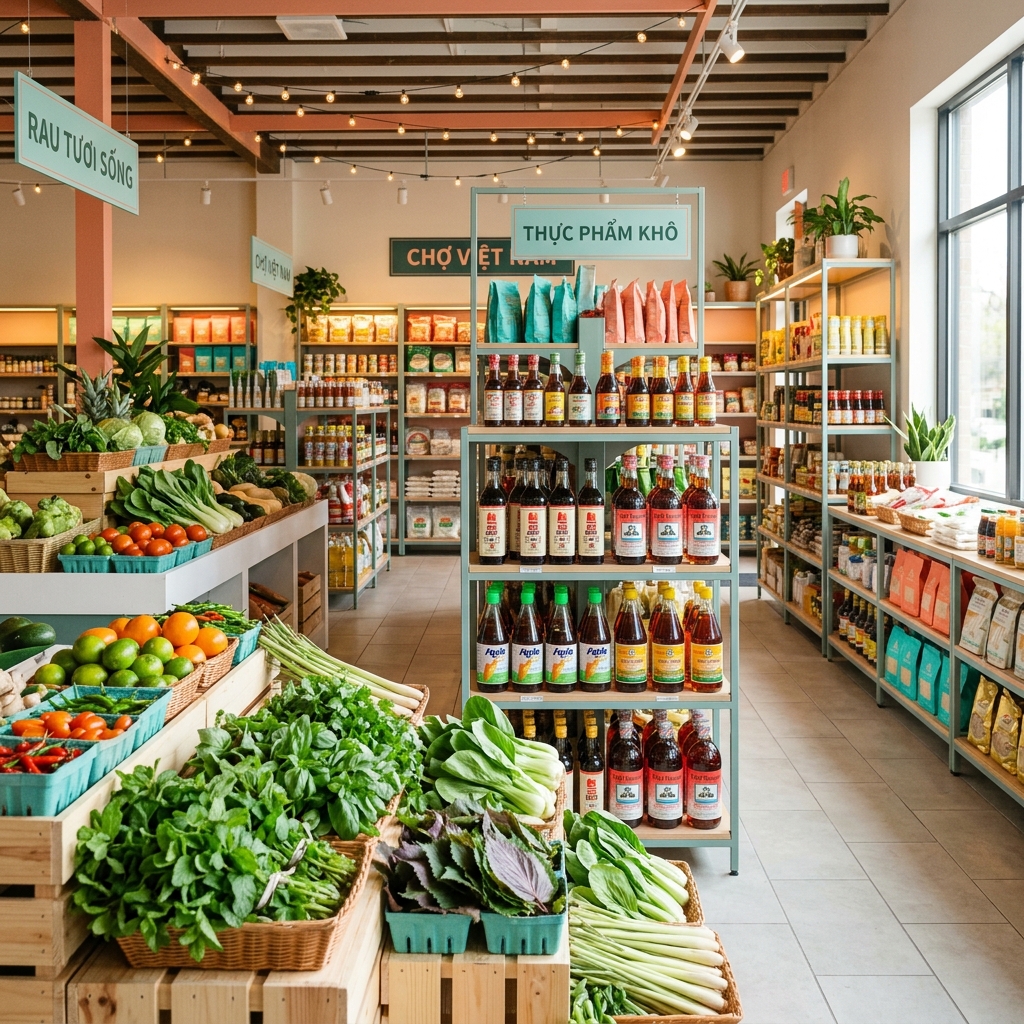
How to choose fish sauce
Fish sauce is the backbone of Vietnamese cooking. The best bottle for you depends on budget and use.
For dipping sauce and recipes where flavor is obvious, choose a cleaner, higher-quality fish sauce. For marinades or large family cooking, a reliable everyday bottle is fine. Look for:
- Anchovy-based fish sauce.
- Protein level listed on the label when available.
- A clean amber color, not muddy or cloudy.
- Ingredient lists that are not overloaded with additives.
- A taste that is savory and aromatic, not only salty.
Popular Vietnamese households often keep more than one bottle: a nicer one for dipping nước chấm and a cheaper everyday one for cooking. If you are new, buy a medium-sized bottle first. Fish sauce lasts, but your taste may change after you try different brands.
Fresh herbs: the biggest reason to visit a Vietnamese market
Fresh herbs are what mainstream supermarkets often get wrong. Vietnamese food depends on herbs: Thai basil for phở, mint and lettuce for rolls, rau răm for certain salads, perilla for wraps, cilantro and scallions for soups.
When choosing herbs:
- Leaves should be bright, not blackened.
- Stems should not be slimy.
- Bags should not have too much trapped moisture.
- Smell matters. Fresh herbs should smell alive.
- Buy only what you will use in a few days.
At home, wrap herbs loosely in paper towel and store them in a container or bag in the fridge. Do not crush them under heavy groceries. If you shop far from home, bring a cooler bag in summer.
Noodles and rice: do not grab the first package
Vietnamese cooking uses many noodle types. Buying the wrong one can ruin texture even if the flavor is good.
| Dish | Look for | Common mistake |
|---|---|---|
| Phở | Flat rice noodles labeled bánh phở | Buying vermicelli instead of phở noodles |
| Bún bowls | Thin rice vermicelli | Overcooking until mushy |
| Bún bò Huế | Thicker round rice noodles | Using thin bún and losing the dish's texture |
| Gỏi cuốn | Rice paper wrappers | Buying wrappers too thick or cracked |
| Cơm tấm | Broken rice if available | Using regular rice and expecting same texture |
| Hủ tiếu | Clear or chewy hủ tiếu noodles | Confusing with phở noodles |
If you are unsure, show a photo of the dish to a store employee or another shopper. Vietnamese market staff are often busy, but many will point you to the right aisle if you ask specifically.
Meat, bones and seafood: practical shopping tips
For phở, bún bò Huế or cháo, ask the butcher what people usually use for soup bones. In Vietnamese-heavy markets, staff may understand terms like phở bones or oxtail. If not, ask for beef marrow bones, neck bones or knuckle bones depending on the recipe.
For seafood, check smell first. Fresh seafood should smell like the sea, not ammonia. Whole fish should have clear eyes and firm flesh. For shrimp, avoid packages with too much ice burn unless you are buying budget frozen shrimp for soup or stir-fry.
Meat and seafood prices can vary. Do not assume Vietnamese markets are always cheaper than Costco or mainstream supermarkets. They are often better for specialty cuts and convenience, not always bulk pricing.
Shopping rhythm: when locals go
Many Vietnamese families shop with a rhythm:
- Early morning for freshest herbs, bakery items and prepared foods.
- Weekend mornings for big family shopping, but parking can be difficult.
- Weekday afternoons for quieter aisles and easier questions.
- Before holidays for specialty items, but expect crowds and higher demand.
Before Tết or major family events, shop early. Popular items like banana leaves, coconut, specialty fruits, bánh chưng/bánh tét, roast meats and party trays may sell out.
Red flags inside a market
Most small markets work hard with thin margins, so do not expect luxury. But you should still watch for quality problems:
- Herbs smell sour or are visibly slimy.
- Freezer items are covered in heavy ice crystals.
- Expiration dates are old or scratched out.
- Seafood smells strong from several feet away.
- Prices are missing on many items.
- Deli food looks dry or has been sitting too long.
- The store is careless with raw meat and ready-to-eat food separation.
If one department looks weak, you can still buy other items. Many locals know exactly what each market is good for.
How to save money without buying low quality
Vietnamese markets can help you eat well on a budget, but only if you shop intentionally.
- Buy herbs for specific meals, not because they look cheap.
- Compare rice prices by pound, not just bag size.
- Use frozen lemongrass or pandan when fresh quality is poor.
- Buy sauces slowly; do not collect every bottle at once.
- Check bakery day-old sections only if you will eat soon.
- Split bulk items with family or roommates.
- Plan two or three meals around the same herbs to reduce waste.
A simple example: buy mint, lettuce, cucumber, vermicelli and grilled meat once, then use them for spring rolls one day and bún bowls the next.
What to ask at a Vietnamese grocery store
Specific questions get better answers:
| Need | Better question |
|---|---|
| Herbs | Which day do fresh herbs usually arrive? |
| Phở | Which bones do people buy for phở broth? |
| Bánh mì | What time does fresh bread come out? |
| Fish sauce | Which bottle do families use for nước chấm? |
| Party food | How early should I order trays for the weekend? |
| New city | Which nearby market has the best produce? |
People may not have time for a long conversation at checkout. Ask quickly and politely. If you become a regular, you will learn much more.
Finding Vietnamese markets on FindALoco
Use FindALoco to search the directory for Vietnamese markets, Asian grocery stores, bakeries and cafés. If your city has few listings, broaden your search to nearby suburbs or community hubs. Vietnamese communities often cluster around practical rent, freeway access and older shopping plazas, not just downtown areas.
If you also want to eat out, read the San Diego Vietnamese restaurants guide. Food businesses and grocery stores usually support each other: a good market district often has good phở, bakery, coffee and dessert nearby.
Frequently asked questions
What is the best Vietnamese grocery store near me?
The best store depends on what you need. For herbs and Vietnamese pantry items, choose a Vietnamese-focused market. For seafood, bulk produce or broader Asian brands, a larger Asian supermarket may be better.
What should I buy first for Vietnamese cooking?
Start with fish sauce, jasmine rice, rice noodles, rice paper, fresh herbs, garlic, shallots, lime, hoisin, oyster sauce and chili sauce. Add specialty items only when you know what you want to cook.
Are Vietnamese markets cheaper than regular supermarkets?
They are often cheaper and better for herbs, rice noodles, fish sauce and specialty produce. For bulk meat, paper goods or mainstream items, Costco or regular supermarkets may be cheaper.
Can I find Vietnamese ingredients at Korean or Chinese markets?
Yes, many ingredients overlap. But Vietnamese-specific items such as certain herbs, bánh mì bread, fish sauce brands, bún bò Huế noodles or prepared Vietnamese foods may be easier at a Vietnamese market.
How do I keep Vietnamese herbs fresh?
Remove damaged leaves, wrap herbs loosely in paper towel, and store them in a container or bag in the refrigerator. Buy small amounts often instead of one large bundle that wilts before you cook.
Final advice
A Vietnamese grocery store is one of the fastest ways to understand a community. You learn what people cook, what holidays matter, what businesses are nearby, and how families live day to day. Start with a small basket, ask practical questions, compare freshness, and build your own list of trusted markets. Once your pantry has fish sauce, rice, noodles and herbs, Vietnamese cooking becomes much less intimidating.