
# Miami During the 2026 World Cup: What Travelers Should Know Before They Go
Miami is already the kind of place that can make a simple weekend feel like a full production. Add a global soccer tournament, summer humidity, packed hotels, road closures, airport crowds, and thousands of fans trying to get to the same stadium, and the city becomes something else entirely.
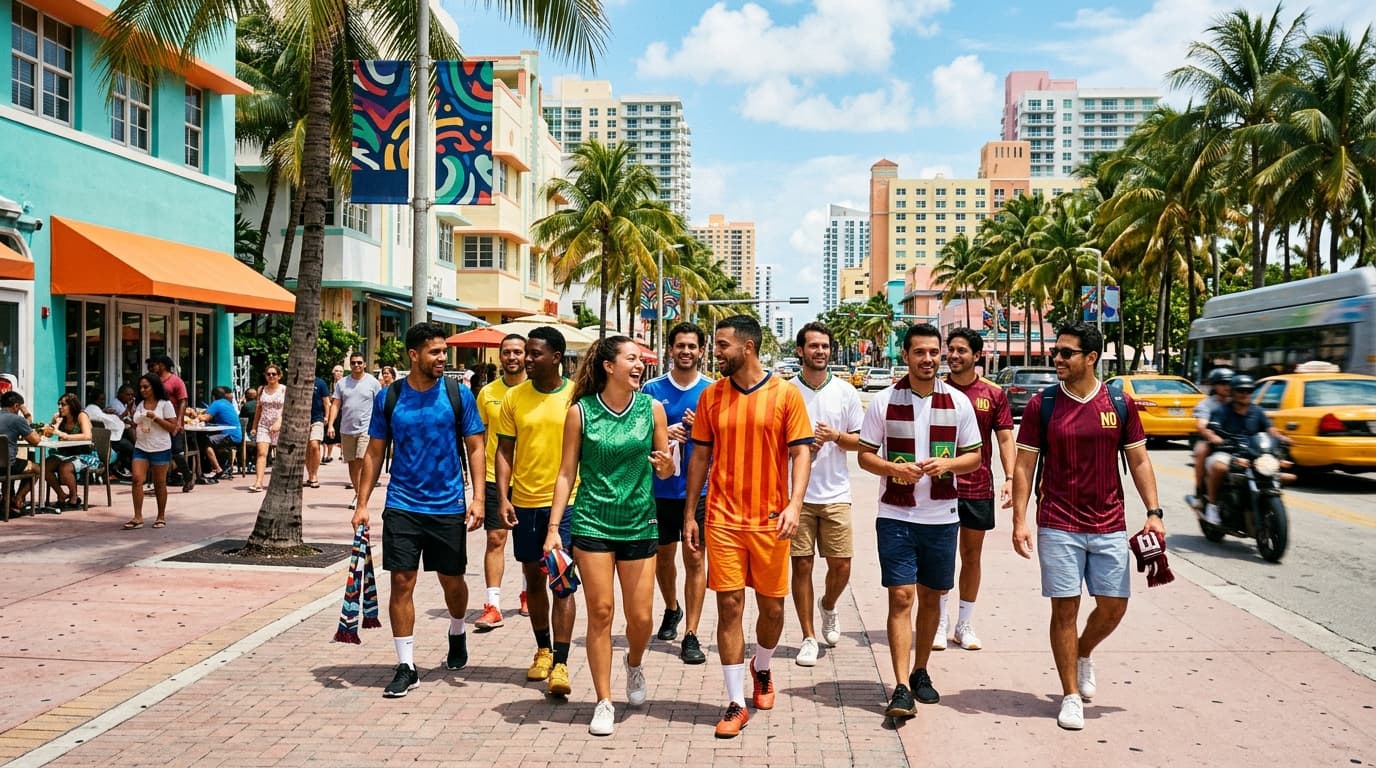
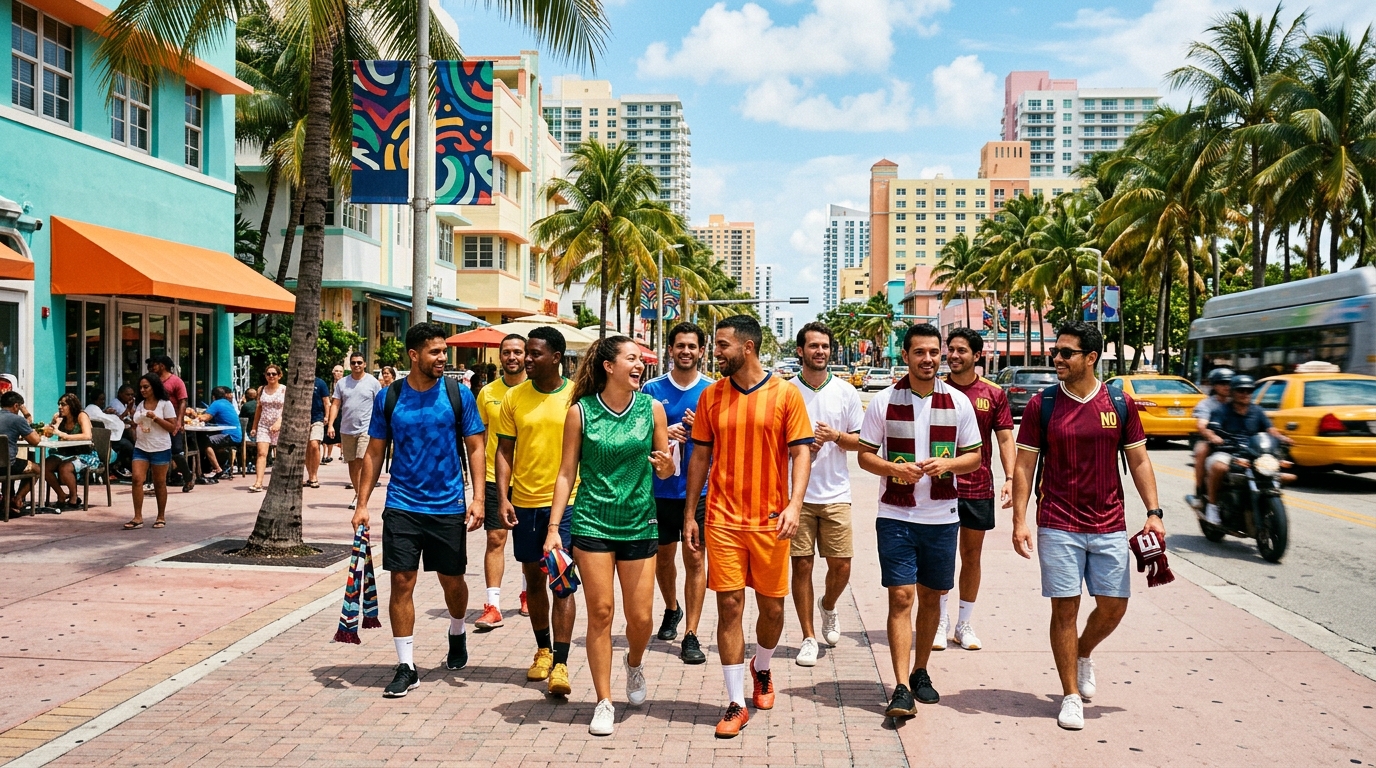
That does not mean you should avoid it. Miami during the 2026 World Cup could be one of the most exciting travel experiences in the United States. The city has the beaches, the food, the nightlife, the Latin American energy, the international crowd, and the kind of big-event atmosphere that makes even people without match tickets want to be nearby.
But Miami rewards people who plan ahead. It is not the city where you want to land, grab your bag, and “figure it out.” The stadium is not in South Beach. Summer storms can roll in fast. Traffic can turn a short ride into a long one. A hotel that looks perfect on a map might be nowhere near the shuttle or the neighborhood you actually want.
So if you are thinking about Miami for the 2026 World Cup, here is the practical version: go for the energy, but plan for the logistics.
First, know where the match actually is
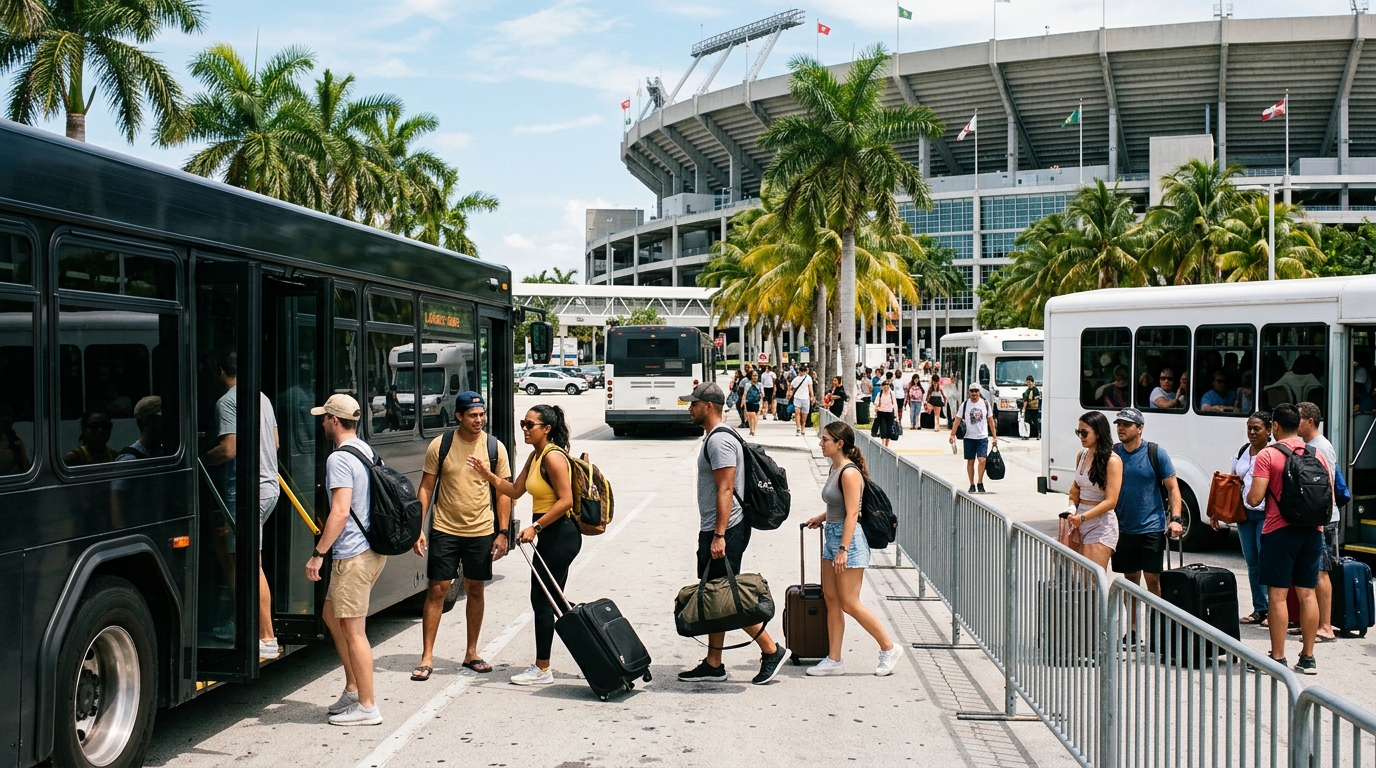
Miami’s World Cup matches are scheduled for Hard Rock Stadium in Miami Gardens. During the tournament, the venue may be referred to by a tournament-specific name, but travelers should understand the real-world location: it is north of downtown Miami and far from Miami Beach.
That matters more than people think.
A first-time visitor may look at “Miami” and assume the stadium is close to South Beach, Brickell, Wynwood, Little Havana, or downtown. It is not. Depending on traffic, where you stay, and how you travel, getting to the stadium can take real time. On match days, that time can stretch.
If you are going to a match, build your day around the stadium. Do not plan a beach morning, a long lunch, a quick hotel change, and a casual rideshare to the game like everything will move smoothly. Miami traffic has never been famous for being gentle, and tournament crowds will not make it better.
The match is the anchor. Everything else should work around it.
Do not assume rideshare will save you
In normal travel, many visitors treat rideshare as the backup plan. In Miami during a major event, that can become expensive, slow, and frustrating. Stadium areas often have restricted access, designated pickup zones, road closures, heavy police presence, and surge pricing.
That does not mean you can never use rideshare. It means you should not rely on it as your only plan.
Look for official transportation guidance before your match day. Shuttle hubs, public transit connections, park-and-ride options, and designated stadium routes may be the difference between a smooth arrival and sitting in a car watching the clock move faster than traffic.
If you are traveling with a group, agree on the transportation plan before the day gets chaotic. Know where you are meeting after the match. Screenshot the route. Keep your phone charged. If the official advice says to arrive early, believe it.
The mistake is not being early. The mistake is thinking Miami traffic will make an exception for you.
Where to stay depends on your trip style
There is no single best neighborhood for every World Cup traveler in Miami. The right area depends on what you care about most: stadium access, nightlife, beach time, restaurants, budget, or convenience.
Miami Beach is the classic choice for visitors who want the oceanfront version of the city. It gives you beach access, nightlife, Art Deco scenery, and the feeling of being on vacation the second you walk outside. The tradeoff is distance from the stadium and potentially higher prices during tournament weeks.
Brickell and downtown are better if you want a more urban base. You get restaurants, bars, high-rises, waterfront areas, and better access to some event hubs. If fan events are centered downtown, staying nearby can make the trip easier even if the stadium still requires a separate travel plan.
Wynwood is good for nightlife, murals, breweries, and a younger social scene, but it may not be the easiest choice if your main goal is match-day efficiency.
Aventura or North Miami can make sense for people who care more about getting toward the stadium or shuttle areas than being in the postcard version of Miami. The tradeoff is that you may spend more time traveling to beaches, nightlife, and downtown restaurants.
The key is to stop asking “Where is the best place to stay in Miami?” and ask “What do I want to be closest to?”
Book hotels early, then keep checking the fine print
Major events make hotel prices weird. A room that looks reasonable one week can jump the next. Cancellation rules can get stricter. Resort fees, parking fees, and taxes can make the final price feel very different from the search result.
Before you book, check the real total. Not just nightly rate. Total.
If you are renting a car, check parking cost. Miami parking can be expensive, and a hotel that looks cheaper may not be cheaper after parking and resort fees. If you are not renting a car, check how you will actually move around. A beautiful hotel with poor transit access can become a daily headache.
Also be careful with too-good-to-be-true vacation rentals. During high-demand events, fake listings and misleading descriptions become more tempting for scammers. Use reputable platforms, read recent reviews, avoid moving payment off-platform, and be suspicious of anyone pressuring you to pay quickly through unusual methods.
A good deal should still feel normal.
Plan for heat like it is part of the itinerary
Miami in June and July is hot, humid, and often stormy in the afternoon. That is not a small detail. It changes what you can comfortably do in a day.
Visitors sometimes plan Miami like it is a breezy beach postcard all day long. Then they arrive and realize that a long walk at 2 p.m. feels like a personal challenge from the atmosphere. Add crowds, alcohol, lines, and stadium energy, and heat becomes something you need to respect.
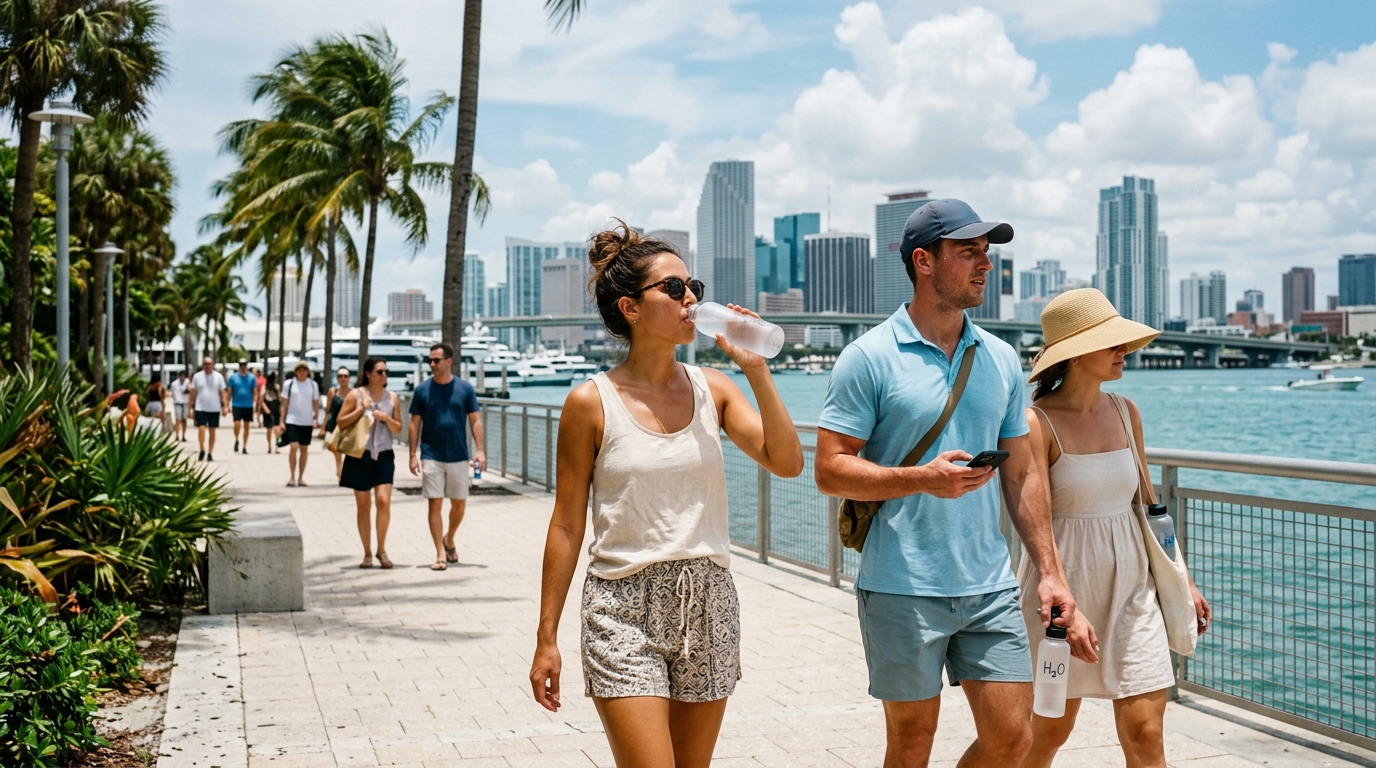
Build your day around it. Do outdoor activities earlier. Save indoor meals, museums, shopping, hotel breaks, or air-conditioned recovery time for the hottest part of the afternoon. Carry water. Use sunscreen. Wear breathable clothes. Do not try to prove anything to the weather.
If you are going to a match, eat and hydrate before you leave. Give yourself more time than you think you need. Summer storms can change traffic and event flow quickly. A compact umbrella or light rain jacket may be more useful than you expect.
Miami is fun. Miami is also humid. Both can be true.
Bayfront Park and fan events may be worth planning around
Even if you do not have a match ticket, Miami can still be a strong World Cup destination because of the fan atmosphere. Official fan festival events, watch parties, public screenings, music, food, and sponsor activations can turn downtown into a tournament hub.
Bayfront Park is expected to be one of the major gathering points for fans. That makes downtown and Brickell more attractive for travelers who want to experience the event without spending every day near the stadium.
But fan events also bring crowds. If you plan to watch a big match at a public event, arrive early. Check bag rules. Check weather. Have a backup bar or restaurant in mind in case the main area is packed.
The best World Cup days are often the ones where you leave enough space to follow the energy. Maybe that means watching a match with strangers from five different countries. Maybe it means staying downtown longer than planned. Maybe it means skipping a tourist stop because the city itself became the event.
That is part of the fun. Just do not leave the basics to chance.
What to do between match days
Miami is a much better trip if you do not treat it as only a stadium visit. Give yourself at least one non-match day if you can.
Little Havana is an easy pick for food, music, coffee, and a sense of Miami beyond the beach. Wynwood is good for murals, bars, and casual exploring. Miami Beach still matters, especially early in the morning before the day gets too hot. Coconut Grove is quieter and greener. The Design District is polished, expensive, and photogenic. Key Biscayne can be a good escape if you want water and a slower pace.
If you are building an itinerary, do not overpack it. Miami is spread out, and traffic can punish ambitious plans. Pick one main area per half-day. Do not bounce from South Beach to Wynwood to Little Havana to the stadium unless you enjoy spending your vacation in transit.
A good Miami day has a theme. Beach morning. Little Havana lunch. Downtown fan event. Wynwood evening. Keep it simple enough that you can actually enjoy it.
Food is part of the reason to go
Miami’s food scene is one of the easiest ways to make the trip feel bigger than the tournament. Cuban coffee, croquetas, empanadas, arepas, ceviche, stone crab when in season, Haitian food, Caribbean flavors, Peruvian spots, seafood, late-night Cuban sandwiches — the city gives you options.
World Cup weeks will make popular restaurants busier, so reservations are smart. But do not make every meal complicated. Some of the best Miami travel moments are casual: a strong coffee, a bakery stop, a quick lunch after the beach, a neighborhood spot you found because your original plan was too crowded.
If you are going with a group, plan at least one sit-down meal in advance and leave the rest flexible. Nobody needs a spreadsheet for every taco, sandwich, and coffee.
Budget for the event version of Miami
Miami is not usually a bargain destination, and a global tournament will not make it cheaper. Expect higher prices for hotels, rides, parking, food near event zones, and last-minute bookings.
That does not mean the trip has to be luxury-only. You can save by staying farther from the beach, using shuttle or transit options when available, booking early, sharing lodging with friends, choosing casual meals, and building in free experiences like beach time, neighborhood walks, and public fan events.
The important thing is to budget for the Miami you are actually visiting. Event Miami is different from random-weekend Miami. If you plan with old prices in your head, the trip can feel stressful fast.
Add a cushion. You will use it.
A quick checklist before you go
Before you fly or drive to Miami for the 2026 World Cup, check these items:
- Match time and stadium entry guidance.
- Official transportation or shuttle information.
- Hotel location compared with your main plans.
- Full hotel cost, including taxes, resort fees, and parking.
- Weather forecast and heat advisories.
- Fan festival schedule and bag rules.
- Restaurant reservations for your busiest nights.
- Phone battery plan or portable charger.
- Screenshots of tickets, hotel confirmations, and transit details.
- Backup plan if storms or delays change your schedule.
None of this removes the spontaneity. It protects it. The more you handle before the trip, the more freedom you have when the city gets loud.
The bottom line
Miami during the 2026 World Cup will not be the easiest trip of the summer. It may be crowded, humid, expensive, and occasionally chaotic.
It may also be unforgettable.
That is Miami’s deal. The city gives you color, noise, food, water, music, heat, traffic, and a little bit of drama. During the World Cup, all of that gets turned up.
Go if you want the atmosphere. Go if you want to feel the tournament outside the stadium. Go if you are willing to plan the boring parts so the fun parts have room to happen.
Just do not treat Miami like a last-minute errand. Treat it like a big-event city in summer, and it will treat you a lot better back.