
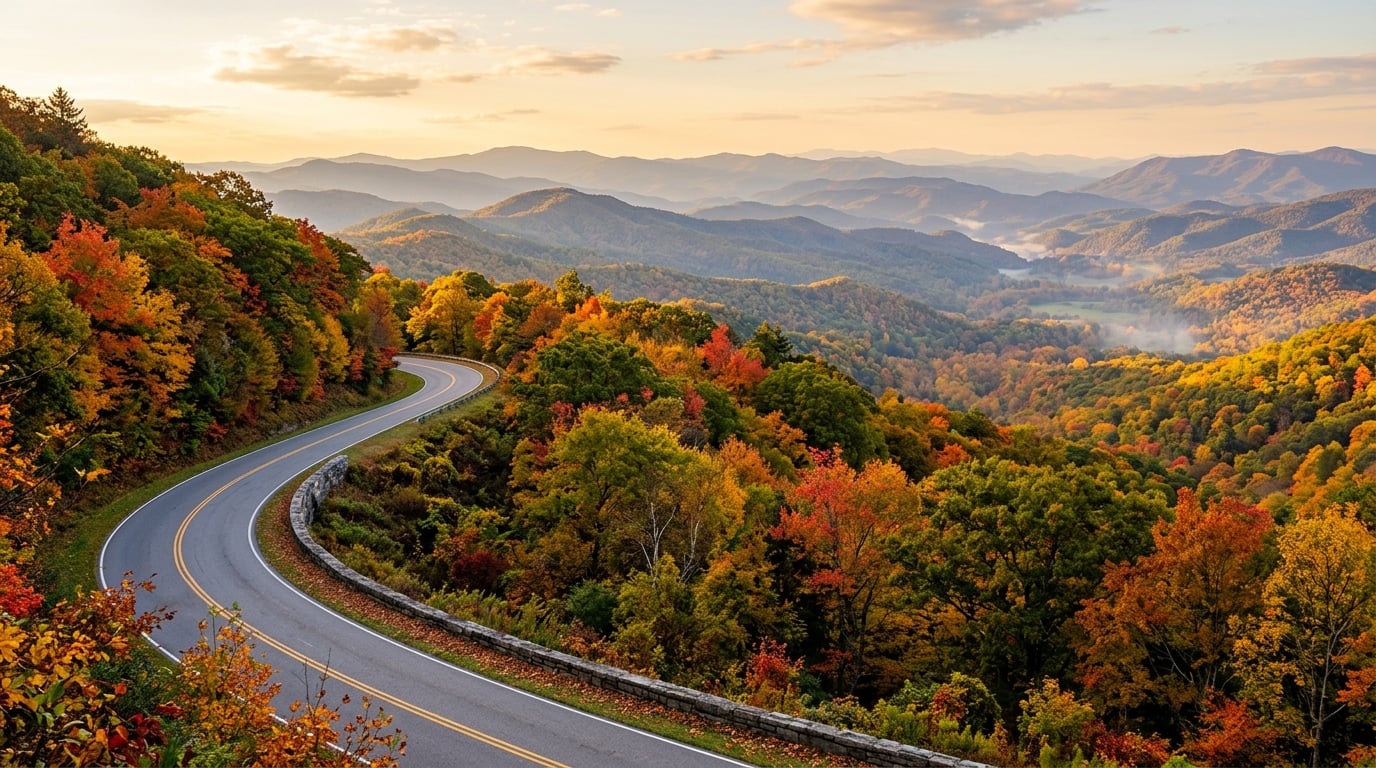
Few road trips on earth awaken the senses quite like driving the Blue Ridge Parkway through the ancient Appalachian highlands of Western North Carolina in mid-October. Here, where rolling mountain ridges have weathered the elements for hundreds of millions of years, autumn arrives not as a fleeting change but as a grand theatrical spectacle. Because the terrain climbs from gentle river valleys at two thousand feet to towering summits exceeding six thousand feet, the forest canopy transforms in rolling cascades of color. Deep scarlet sourwood and blazing red sugar maples set the higher ridges aflame, while golden birches, burnished hickory trees, and russet oaks illuminate the lower hollows, creating a vibrant patchwork quilt of foliage that blankets the ancient Blue Ridge Mountains for weeks.
At the geographic and cultural crossroads of this mountain wilderness lies Asheville, a city that effortlessly bridges Gilded Age architectural opulence, mountain bluegrass heritage, and a fiercely independent culinary and craft brewing scene. Nestled in the French Broad River valley beneath the gentle purple haze of the Great Smoky and Black Mountain ranges, Asheville offers travelers an intoxicating blend of wilderness adventure and refined mountain living. Whether you are coasting along curving parkway overlooks with crisp autumn breezes blowing through your windows, gazing up at the monumental limestone spires of the Biltmore Estate framed by golden leaves, or tucking into a skillet of pan-fried mountain trout followed by warm blackberry cobbler at a fireside tavern, Western North Carolina during autumn is an unforgettable sanctuary. This comprehensive guide unveils the finest scenic drives, historic landmarks, mountain culinary traditions, and insider secrets to help you craft the ultimate autumn mountain journey.
The Legendary Autumn Tapestry of Americas Favorite Scenic Drive
Stretching for four hundred and sixty-nine uninterrupted miles from Shenandoah National Park in Virginia to the Great Smoky Mountains in North Carolina, the Blue Ridge Parkway is widely celebrated as America's Favorite Drive. Designed specifically to harmonize with the natural landscape, the parkway features gentle curves, stone-arched bridges, carefully preserved wooden split-rail fences, and zero commercial billboards or traffic lights, allowing drivers to immerse themselves entirely in the tranquil grandeur of the Appalachian forest.
The stretch of parkway flanking Asheville between Milepost 350 and Milepost 415 offers some of the most dramatic elevation changes and panoramic vistas along the entire route. Driving north toward Mount Mitchell, the highest peak in eastern North America at 6,684 feet, the mountain road snakes through tunnels carved into solid granite and climbs into high-elevation spruce-fir forests reminiscent of Canadian wilderness. At scenic overlooks such as Craggy Gardens (Milepost 364.1), twisted rhododendron branches and wind-sculpted mountain ash frame boundless views of layered mountain ridges fading into a dreamy indigo horizon.
To savor the Blue Ridge Parkway at its autumn best, consider these journeying principles:
- Time your scenic drives for mid-morning and late afternoon when the low autumn sun illuminates the foliage with warm, golden backlighting and casts long, poetic shadows across the valleys.
- Pull completely into designated paved overlooks rather than stopping on the narrow two-lane road shoulder, giving yourself ample space to step out, breathe the cool balsam-scented mountain air, and take in the panoramic silence.
- Remember that parkway driving is meant for slow contemplation; the maximum speed limit is forty-five miles per hour, and in higher scenic curves it drops to thirty-five or twenty-five miles per hour.
- Download offline navigation maps before ascending the ridge, as cellular signals often fade completely once you enter the higher mountain passes.
Wandering the Gilded Age Grandeur of the Biltmore Estate in Full Color
No visit to Asheville is complete without spending a leisurely day exploring the Biltmore Estate, the largest private residence in the United States and a breathtaking marvel of French Renaissance Chateauesque architecture. Completed in 1895 by visionary industrial heir George Washington Vanderbilt II, this sprawling 250-room mansion encompasses four full acres of floor space, eighty thousand acres of historic woodlands and river valleys, and meticulously manicured gardens designed by legendary landscape architect Frederick Law Olmsted, the creative genius behind New York City's Central Park.
Approaching the estate down its three-mile approach road, framed by towering hemlocks, golden beech trees, and mountain laurel, builds a sense of classical anticipation. The limestone mansion itself features intricately carved gargoyles, soaring slate roofs, monumental spiral staircases, and dozens of massive hearths that crackle with warming fires during cool autumn afternoons. Inside, walking through the winter garden, the seventy-foot-high banquet hall adorned with sixteenth-century Flemish tapestries, and the vast library housing ten thousand leather-bound volumes offers an astonishing glimpse into America's Gilded Age.
Stepping outdoors onto the South Terrace reveals sweeping, unobstructed vistas across the French Broad River valley toward Mount Pisgah, bathed in a sea of autumn colors. Wander through Olmsted's Italian Garden with its tranquil reflecting pools, explore the Walled Garden blooming with autumn chrysanthemums, and stroll along quiet woodland paths down to the estate's Bass Pond, where a historic red-brick boathouse sits surrounded by fiery red Japanese maples mirrored in the calm water. Conclude your visit at Antler Hill Village, where the historic Biltmore Winery offers complimentary tastings of estate-crafted Cabernet Sauvignon, Chardonnay, and seasonal spiced mulled wines.

Bohemian Rhythms and Historic Art Deco Charm in Downtown Asheville
While the surrounding mountains provide endless natural wonder, downtown Asheville possesses an infectious, creative pulse all its own. Following the stock market crash of 1929, Asheville's city leaders famously chose to pay back their municipal debts rather than raze and redevelop downtown buildings, inadvertently preserving one of the most remarkable collections of Art Deco, Romanesque Revival, and Neo-Gothic architecture in North America.
Taking a walking tour through the compact, walkable downtown core leads you past the pastel tiled dome of the historic City Hall, the grand arcade of the Grove Arcade with its vaulted stone corridors, and bustling public gathering spots like Pack Square. On Friday evenings, the rhythmic pulse of the famous Asheville Drum Circle fills Pritchard Park, where hundreds of drummers, dancers, and spectators of all ages and backgrounds gather in spontaneous celebration of community and music.
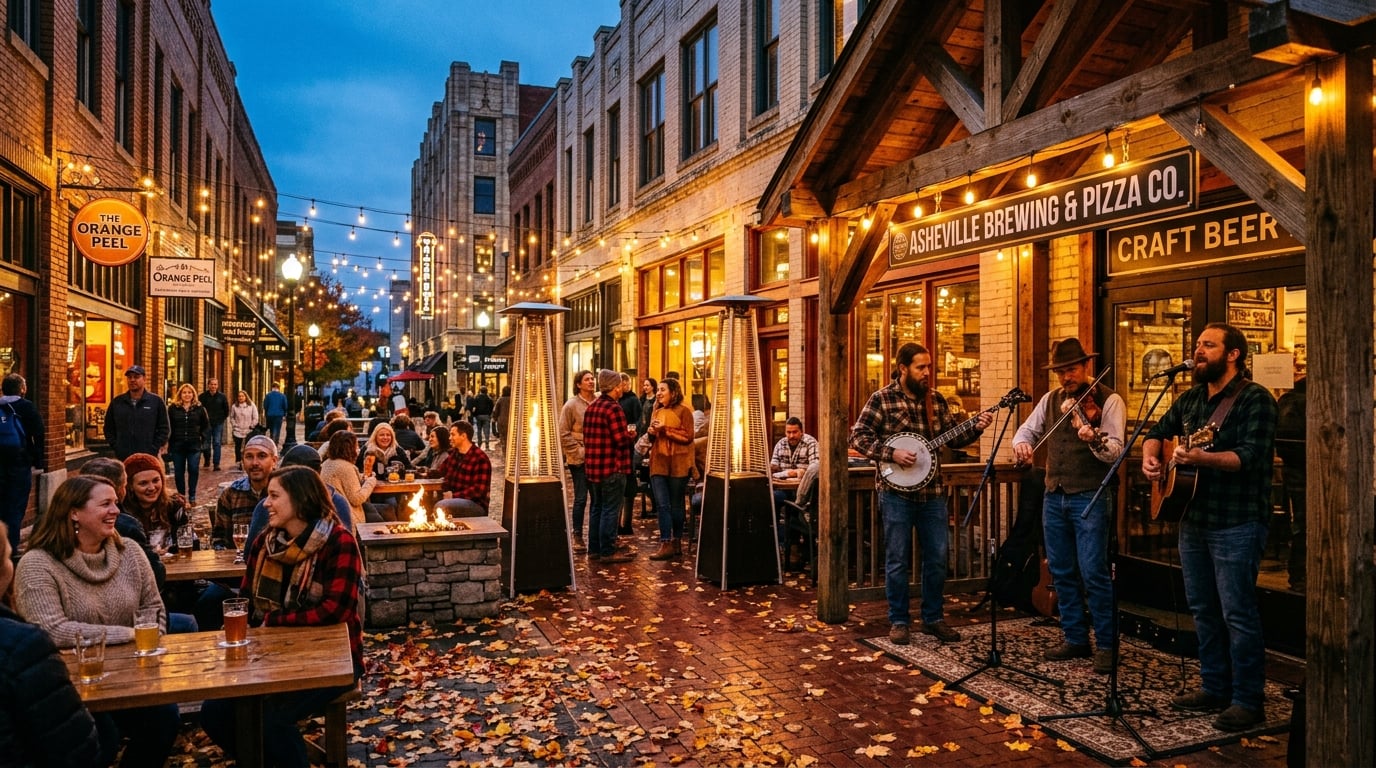
Asheville is also celebrated internationally as Beer City USA, boasting more craft breweries per capita than almost any other city in the country. In the South Slope brewing district, former auto-repair garages and industrial brick warehouses now host world-renowned microbreweries, barrel-aging cellars, and open-air cideries. Here, you can sit beside roaring fire pits on breezy autumn evenings, sampling hazy IPAs infused with local mountain hops, sour ales aged in oak barrels with local blackberries, or crisp, dry hard ciders pressed from heirloom Appalachian apples harvested in nearby Henderson County.
Just southwest of downtown along the banks of the French Broad River, the River Arts District (RAD) occupies dozens of historic brick warehouse buildings once dedicated to tanning, cotton processing, and rail freight. Today, more than two hundred artists work inside these vibrant spaces, producing wheel-thrown pottery, blown glass, hand-forged ironwork, and evocative landscape paintings. Walking through open studio doors allows visitors to watch master ceramists at their wheels, chat with oil painters capturing Blue Ridge autumn scenes, and acquire one-of-a-kind art pieces directly supporting local creators.
Savoring the Rustic Soul of Appalachian Mountain Cuisine
The culinary landscape of Asheville and Western North Carolina is rooted in deep traditions of Appalachian homesteading, seasonal foraging, and honest woodsmoke, elevated today by a passionate community of James Beard Award-winning chefs and organic mountain farmers. In the high valleys of the Blue Ridge, the autumn harvest yields sweet heirloom apples, wild forest mushrooms, mountain honey, sorghum syrup, and nutrient-rich winter squashes, which grace chalkboards across the city's celebrated farm-to-table dining rooms.
Dining in Asheville during autumn is a feast of warming comfort and bold, regional flavors:
- Pan-Fried Mountain Brook Trout: Caught fresh from the rushing, pristine cold-water streams of the Blue Ridge, whole butterflied trout is dusted in finely milled stone-ground cornmeal, fried crisp in a cast-iron skillet, and finished with brown butter, fresh lemon, and mountain herbs.
- Buttermilk Biscuits with Spiced Apple Butter: Tall, impossibly flaky biscuits baked fresh every morning, served steaming hot from the oven with slow-simmered, clove-and-cinnamon-scented apple butter crafted from local mountain orchards and golden wildflower honey.
- Western Carolina Pulled Pork: Slow-smoked over hickory embers for twelve to fourteen hours until melt-in-your-mouth tender, shredded by hand, and tossed in the region's signature tangy, light tomato-and-cider-vinegar barbecue sauce, served alongside creamy coleslaw and crispy hushpuppies.
- Fried Green Tomatoes: Thick slices of tart, firm unripened green tomatoes coated in seasoned cornmeal, fried to a golden crunch, and paired with pimento cheese or spicy Cajun remoulade.
- Warm Wild Blackberry Cobbler: Ripe mountain blackberries baked beneath a sweet, golden drop-biscuit crust until bubbling and fragrant, served in a sizzling cast-iron skillet with a generous scoop of rich vanilla bean ice cream slowly melting into the warm berry juices.
- Craft Mountain Cider and Local Cheeses: Crisp, refreshing hard ciders pressed from heirloom mountain apples, paired with handcrafted artisanal goat and cow cheeses from family-run creameries nestled in the surrounding valleys.
Breathtaking High Elevation Hikes Along the Blue Ridge Ridges
For hikers and nature lovers, autumn in Western North Carolina offers some of the most rewarding mountain trails in the eastern United States, where cool mountain air and sweeping vistas make every climb a pleasure:
- Craggy Pinnacle Trail (Milepost 364.1): A short, rewarding 1.4-mile roundtrip hike that climbs through twisted mountain birch and rhododendron tunnels to a historic stone observation platform offering a 360-degree panoramic view over the North Fork Reservoir and layered autumn ridges.
- Black Balsam Knob and Art Loeb Trail (Milepost 420.2): Located southwest of Asheville, this iconic trail leads across vast, treeless grassy balds situated above six thousand feet. Hiking along the open ridgeline feels akin to walking across the Scottish highlands, surrounded by boundless waves of autumn color stretching into South Carolina and Tennessee.
- Looking Glass Rock Trail (Pisgah National Forest): A moderate to strenuous 6.5-mile roundtrip trek climbing through hardwood forests up to the sheer granite crest of Looking Glass Rock, where hikers can sit atop massive stone cliffs gazing across miles of Pisgah forest canopy ablaze in red, orange, and gold.
- Linville Falls (Milepost 316.4): A series of scenic trails providing dramatic overlooks of the roaring three-tiered Linville River plunging down into the steep, rugged wilderness of the Linville Gorge, known as the Grand Canyon of the Southern Appalachians.
Essential Mountain Travel Tips for an Unforgettable Autumn Getaway
Navigating Western North Carolina during peak autumn foliage season is simple when keeping these local insights in mind:
- Plan Around Peak Foliage Timing: Because elevation dictates color change, autumn in Western North Carolina is remarkably long. The highest peaks above five thousand feet peak during early to mid-October, while the mid-elevations around Asheville and Biltmore peak from mid-to-late October, and the lower river valleys retain glowing colors well into early November.
- Book Accommodations and Biltmore Tickets Well in Advance: Autumn is the most sought-after travel season in the Blue Ridge Mountains. Historic inns, mountain cabins, and downtown boutique hotels often sell out months ahead, as do timed entry tickets for Biltmore House tours. Secure your lodging and attraction reservations early to ensure smooth travel.
- Pack for Shifting Mountain Temperatures: Mountain weather can change rapidly with elevation. While sunny afternoons in downtown Asheville may reach a pleasant sixty-five degrees Fahrenheit, high-elevation ridges along the parkway can easily drop to thirty-five degrees with brisk winds. Dress in warm merino wool layers, carry a windproof fleece or down jacket, and pack a warm knit beanie.
- Drive Cautiously on Winding Roads: Mountain parkway driving requires attentiveness, especially during early morning and late afternoon when dense mountain valley fog can form quickly. Watch for crossing wildlife, including white-tailed deer and black bears, maintain safe following distances, and use low gear on steep descents to prevent brake overheating.
- Support Local Mountain Communities: Western North Carolina prides itself on small independent businesses, generational mountain craftspeople, and organic family farms. Shopping at local roadside farm stands for fresh apples, honey, and handmade quilts directly strengthens the mountain families who keep these Appalachian traditions alive.