
High above the sea, where the Sangre de Cristo Mountains carve jagged purple silhouettes against an impossibly deep cobalt sky, Northern New Mexico hums with a tranquil, ancient energy unlike anywhere else on the American continent. Here in the high desert plateau, sunlight takes on an ethereal, crystalline quality that has lured legendary painters, sculptors, and restless wanderers for generations. As autumn arrives in October, the cottonwood trees along the winding river valleys turn into rivers of molten gold, and the earthy, woodsy scent of burning piñon pine smoke drifts through cool mountain breezes. Hanging outside nearly every timbered doorway, long strings of glossy scarlet chile ristras glow brilliant red against warm, sun-baked adobe walls, welcoming travelers to a land steeped in centuries of Native Pueblo heritage and Spanish colonial history.
Whether you are tracing the quiet flagstone paths of Santa Fe's historic Canyon Road, standing in reverent silence before the sacred multi-tiered mud brick structures of Taos Pueblo, or biting into a piping hot sopaipilla drizzled with wildflower honey after a hearty bowl of steaming green chile stew, this high desert kingdom rewards slow, deliberate exploration. Autumn softens the desert heat, turning midday wanderings into pure delight and ushering in crisp, starlit evenings gathered beside traditional kiva fireplaces. This comprehensive guide uncovers the most unforgettable sights, culinary treasures, scenic mountain drives, and practical secrets for experiencing Santa Fe and Taos during their most magical season.
The Timeless Soul of the High Desert and Ancient Adobe Architecture
At an elevation of seven thousand feet, Santa Fe stands as the oldest capital city in the United States, yet it feels entirely untethered from modern urban bustle. Much of its enduring spell lies in its organic, low-slung architecture. Long before steel and glass dominated city skylines, Indigenous Pueblo builders mastered the art of adobe, blending earth, straw, and water into thick mud blocks that absorb the desert sun by day and release comforting warmth during freezing desert nights. Spanish settlers adopted these techniques, giving rise to the Pueblo Revival and Territorial styles that define the city today by municipal law.
Walking into the historic Santa Fe Plaza feels like stepping straight into a living chronicle. Under the shaded, colonnaded wooden portal of the Palace of the Governors, built in 1610, Native American artisans from regional pueblos including Santo Domingo, San Ildefonso, and Navajo communities lay out handcrafted sterling silver jewelry, intricate turquoise necklaces, and hand-coiled micaceous clay pottery on handwoven blankets. Each piece is authenticated and sold directly by the artisans and their families, offering travelers an extraordinary opportunity to hear personal stories of craftsmanship passed down through generations.
Just a short walk from the plaza, the Cathedral Basilica of Saint Francis of Assisi provides an unexpected Romanesque contrast of golden sandstone against the surrounding clay buildings, while the nearby Loretto Chapel draws pilgrims and architecture buffs eager to behold the miraculous spiral staircase, built without a central support column or visible nails. In autumn, the plaza benches fill with travelers savoring crisp air, sipping warm roasted piñon nut coffee, and listening to the soft strumming of acoustic Spanish guitar echoing between centuries-old adobe walls.
Standing in Wonder Before the Living Heritage of Taos Pueblo
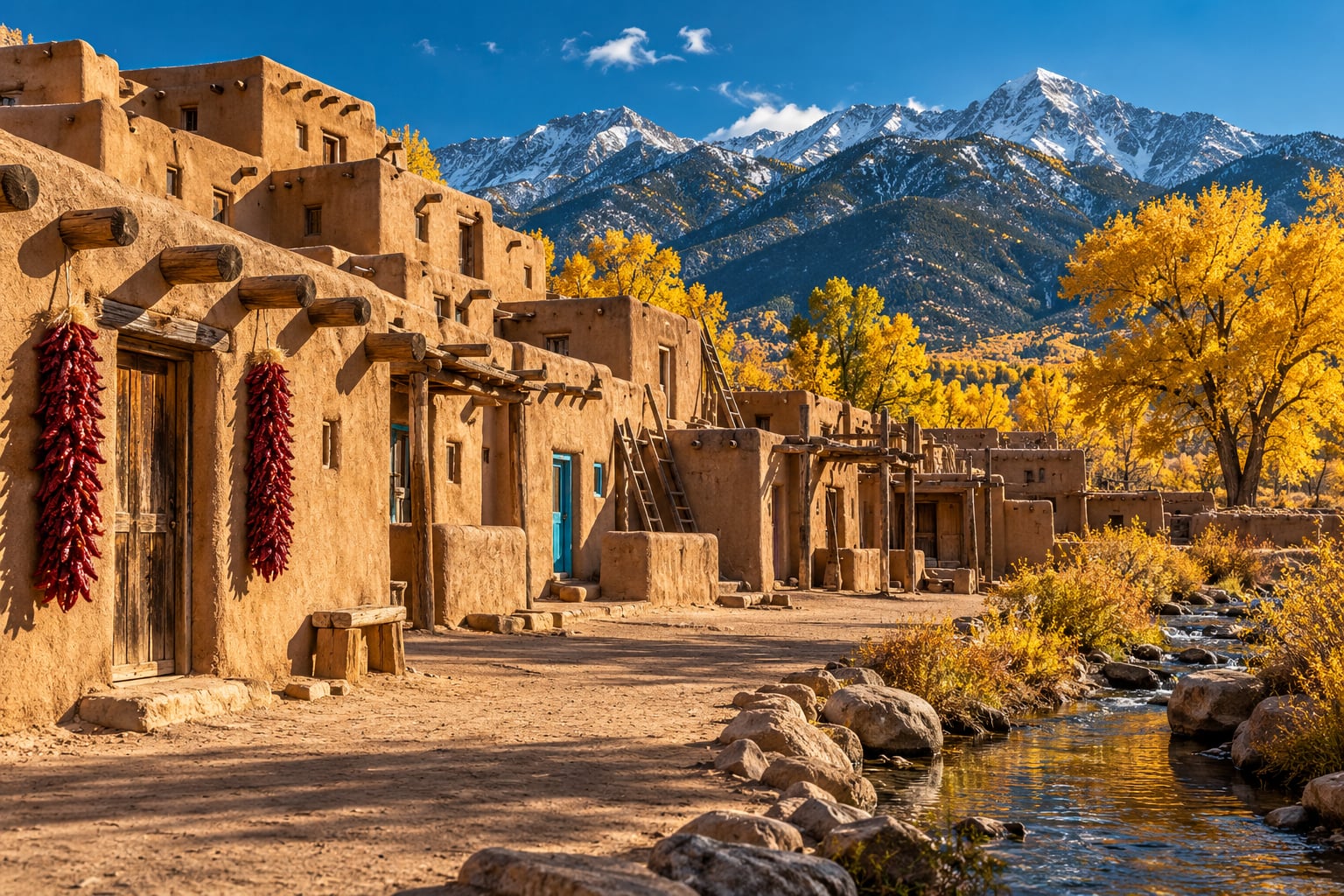
Roughly seventy miles north of Santa Fe, nestled at the base of the sacred Taos Mountain, lies Taos Pueblo, one of the oldest continuously inhabited communities in North America. Designated as both a National Historic Landmark and a UNESCO World Heritage site, this ancient settlement has stood for over a millennium. Built primarily between 1000 and 1450 CE, its magnificent multi-storied adobe complexes, known as Hlauuma (north house) and Hlaukwima (south house), rise like golden clay steps toward the sky, devoid of modern electricity or piped running water.
Visiting Taos Pueblo during autumn is a profound cultural encounter. The crisp morning sun casts long, dramatic shadows across the dusty central plaza, where Red Willow Creek (Rio Pueblo de Taos) flows pure and clear with snowmelt from the sacred Blue Lake in the alpine heights above. Weathered wooden ladders lean against second and third-story rooftops, while rounded outdoor earthen baking ovens, called hornos, emit plumes of fragrant smoke as Pueblo bakers pull out golden loaves of fresh oven bread, fruit-filled pies, and savory fry bread.
When walking through Taos Pueblo, visitors must observe deep respect and cultural humility:
- Always check the Pueblo's official visitor schedule before driving north, as the community closes to outside guests during religious ceremonies and sovereign tribal feast days.
- Photography permits or entry fees are collected at the welcome center; be mindful that photographing individual tribal members, ceremonial spaces, or private homes without explicit personal permission is strictly prohibited.
- Take time to speak with local shopkeepers inside designated ground-floor artisan shops, where you can acquire authentic hand-carved drums, stone carvings, and natural willow crafts directly supporting local families.
- Wear sturdy, closed-toe walking shoes suitable for packed dirt, dust, and uneven gravel pathways.
Strolling the Brick Courtyards and Art Galleries of Historic Canyon Road
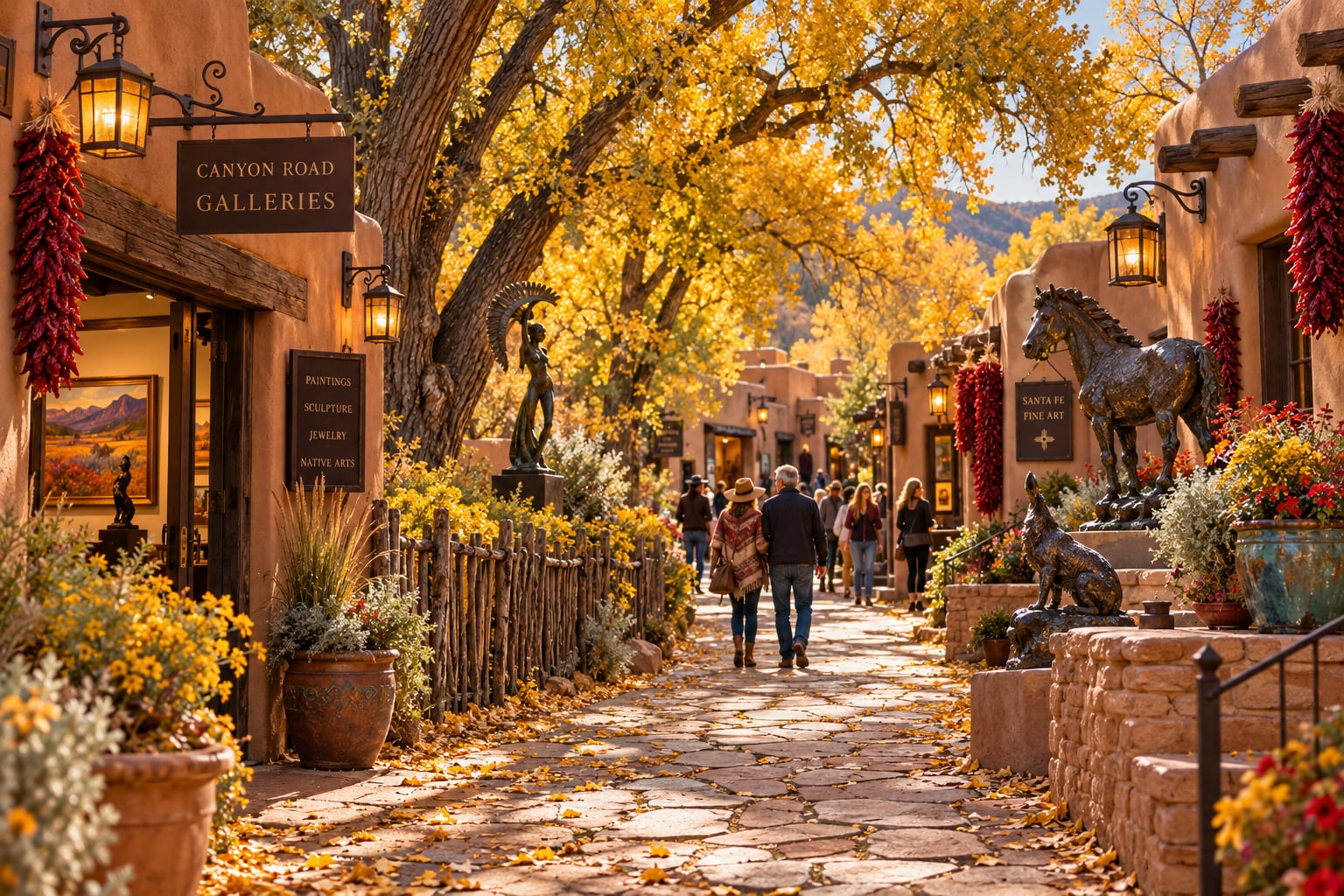
Santa Fe consistently ranks among the most influential art markets in the world, and Canyon Road serves as its beating, picturesque heart. Stretching for roughly half a mile east of the downtown plaza, this former livestock trail has transformed into a world-famous enclave housing more than one hundred fine art galleries, working artist studios, jewelry ateliers, and charming courtyard bistros.
In October, Canyon Road puts on a breathtaking visual performance. Huge golden cottonwood trees canopy the narrow, winding asphalt road, showering yellow leaves over flagstone sidewalks and rustic coyote fences made from upright cedar posts. Terracotta pots overflow with purple asters, and bronze sculptures ranging from monumental dancing figures to abstract high-desert wildlife peek out from flower-strewn courtyards.
Taking a relaxed afternoon stroll along Canyon Road allows you to dip into galleries exhibiting museum-caliber Southwestern realism, contemporary Native American abstract paintings, fine Navajo weavings, and delicate handblown glass. Many galleries keep their courtyard gates wide open, encouraging visitors to wander beneath leafy portales, listen to trickling stone fountains, and chat directly with sculptors and painters at work. As the afternoon light deepens into rich amber, courtyard bistro patios ignite outdoor kiva fireplaces, inviting you to sit under fleece blankets with a glass of crisp local wine or warm spiced cider.
The Fiery Magic of Northern New Mexican Cuisine and Roasting Green Chiles
New Mexican cuisine is distinctly different from both standard Mexican food and Tex-Mex; it is a heritage cooking style recognized in its own right, shaped by centuries of Native Pueblo agriculture, Spanish pantry staples, and the legendary Hatch chile pepper. Autumn is chile harvest season throughout New Mexico, and the intoxicating fragrance of fresh green chiles rotating inside giant wire roasting drums over open gas flames permeates parking lots, supermarket fronts, and roadside farm stands across the region.
When ordering food anywhere in Santa Fe or Taos, the most important question your server will ask is simple: "Red or green?" This refers to whether you prefer your dish smothered in smoky, sun-ripened red chile sauce or bright, fiery, garlic-infused roasted green chile sauce. If you want to savor the best of both worlds, answer with the official state response: "Christmas."
Iconic regional dishes that demand a place on your culinary itinerary include:
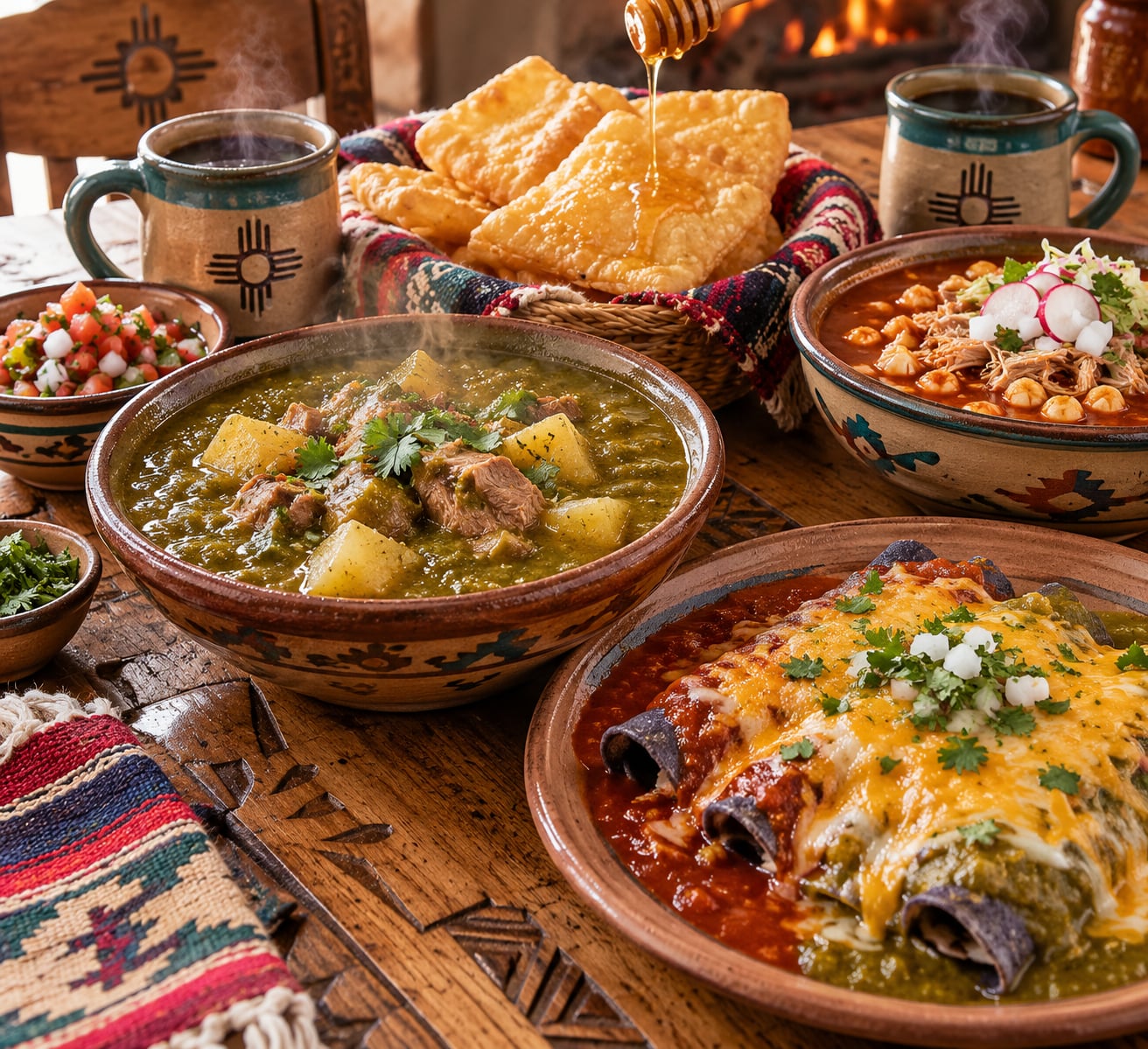
- Green Chile Stew: A soul-warming, deeply comforting bowl of tender, slow-braised pork shoulder, Yukon gold potatoes, sweet onions, and roasted green Hatch chiles simmered in rich bone broth until thick and fragrant.
- Blue Corn Enchiladas: Stacked flat rather than rolled, layered with shredded chicken, slow-cooked pinto beans, or seasoned ground beef, smothered Christmas-style in red and green chile sauces, and crowned with melted yellow cheddar and a fried egg.
- Sopaipillas: Pillowy, golden-fried squares of leavened dough that puff up into hollow clouds. Tear open a steaming corner, drop in a generous dollop of butter, and pour raw local wildflower honey inside to soothe your palate after spicy chile bites.
- Posole: A ceremonial stew made from dried white corn kernels soaked in lime (hominy), simmered gently for hours with pork ribs, crushed Mexican oregano, garlic, and fiery red chile pods.
- Piñon Coffee and Artisan Chocolate: High-desert coffee beans slow-roasted with native piñon nuts, yielding a smooth, buttery, evergreen-accented aroma that pairs perfectly with spicy chile dark drinking chocolates crafted at historic Santa Fe confectioneries.
Driving the Mountain High Road to Taos and Historic Chimayo Sanctuary
While the Low Road (Highway 68) follows the scenic Rio Grande canyon, the High Road to Taos (Highways 76 and 518) offers one of the most stunning alpine-desert road trips in the American Southwest. This winding, sixty-five-mile scenic byway climbs high into the foothills and ridges of the Sangre de Cristo Mountains, weaving through remote, historic Spanish colonial mountain villages where traditional farming and weaving customs remain vibrantly alive.
Your first major stop along the High Road should be the village of Chimayó, famed worldwide for El Santuario de Chimayó. Built in 1816, this small adobe church is often referred to as the "Lourdes of America." Thousands of pilgrims journey here annually seeking physical and spiritual healing, entering a tiny side chapel known as El Pocito to gather a pinch of blessed holy dirt from a small pit in the clay floor. Nearby, visit Centinela Traditional Arts or Ortega's Weaving Shop to watch master Spanish weavers operate massive wooden handlooms, creating woolen blankets and rugs dyed with natural local plant pigments.
Continuing north through Truchas and Las Trampas, the road reaches elevations exceeding eight thousand feet, offering panoramic viewpoints across golden aspen forests and rolling desert arroyos. In Las Trampas, stop to admire San José de Gracia Church, completed in 1776 and widely celebrated as one of the finest preserved examples of eighteenth-century Spanish Pueblo adobe mission architecture, with original hand-hewn ceiling vigas and folk-art altarpieces.
Essential High Desert Wisdom for Autumn Travelers in Northern New Mexico
Planning a smooth, unforgettable journey to Santa Fe and Taos requires keeping high-desert geography and regional traditions in mind:
- Respect the Elevation: Santa Fe sits at 7,199 feet above sea level, and Taos rises to nearly 7,000 feet, with surrounding mountain passes reaching over 9,000 feet. The thin, dry air accelerates dehydration and can trigger mild altitude fatigue. Drink abundant water throughout the day, limit alcohol intake during your first forty-eight hours, and carry electrolyte packets.
- Pack Dynamic Layers: Autumn high-desert weather features dramatic temperature swings. Crisp, frosty mornings around thirty-five degrees Fahrenheit give way to brilliant, sunny afternoons reaching sixty-five degrees, before plunging back down after sunset. Dressing in breathable merino wool or fleece layers paired with a windproof jacket ensures constant comfort.
- Sun and Skin Protection: High altitude brings intense ultraviolet exposure even on chilly autumn days. Pack polarized sunglasses, broad-spectrum sunscreen, and intensive moisturizing lip balm to counter the desert's low humidity.
- Rent an All-Wheel Drive Vehicle: If you plan to explore scenic gravel trails, high mountain passes near Taos Ski Valley, or unpaved arroyo overlooks around Ghost Ranch and Abiquiú, having an all-wheel drive SUV provides safety and peace of mind on changing mountain terrain.
- Reserve Dining Well Ahead: Santa Fe is an acclaimed culinary capital; popular historic dining rooms around the plaza and Canyon Road frequently book up weeks in advance for autumn weekend dinners. Secure your reservations early to guarantee a seat by the fireside.