
# Chasing Autumn Waterfalls in the Columbia River Gorge and Savoring the Culinary Culture of Portland
Few places in North America balance breathtaking natural grandeur with a fiercely independent creative culture quite like the corner of Oregon where the Willamette and Columbia rivers meet. Just thirty minutes east of downtown Portland, the Columbia River slices through the rugged Cascade Mountains, creating a dramatic eighty-mile canyon flanked by sheer four-thousand-foot basalt cliffs. When October arrives, this National Scenic Area transforms into an intoxicating wonderland of misty emerald firs, fiery bigleaf maples, and over ninety cascading waterfalls tumbling through golden river gorges.
Back in the city, Portland's distinctive neighborhood tapestry hums with autumn warmth. Known across the globe as one of the culinary capitals of the United States, the city pairs its wild natural surroundings with an obsession for artisanal craft. From sprawling downtown food cart pods serving world-class global street dishes to third-wave micro-roasters pouring single-origin pour-overs, independent bookstores spanning entire city blocks, and cozy neighborhood bistros celebrating the bounty of the Willamette Valley harvest, Portland and the Columbia River Gorge offer an unforgettable autumn road journey where wilderness and urban craft harmonize in perfect balance.
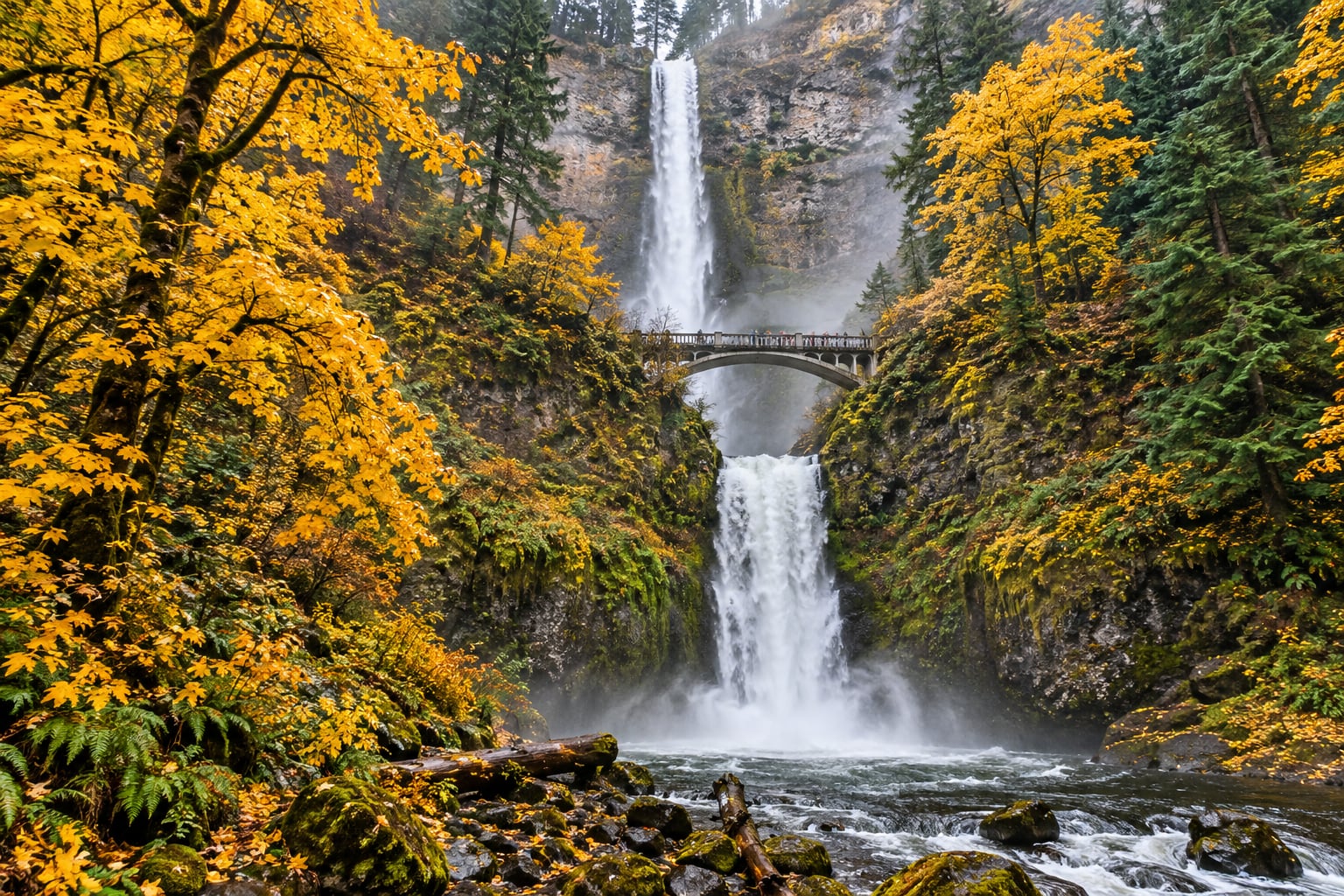
Marveling at the Two Tiered Cascade of Multnomah Falls in Peak Foliage
As the crown jewel of the Pacific Northwest's waterfall corridor, Multnomah Falls is an awe-inspiring sight that leaves first-time visitors breathless. Plunging a staggering 620 feet down sheer volcanic basalt cliffs, it is the tallest waterfall in Oregon and the second tallest continuously flowing waterfall in the United States. Fed by underground springs from Larch Mountain, a massive volume of glacial water plunges first down a 542-foot upper drop, pauses briefly in an emerald pool, and then leaps an additional 69 feet into a misty lower amphitheater.
Visiting Multnomah Falls in the heart of autumn is an experience of pure visual drama:
- Spanning the chasm directly between the upper and lower cascades is the iconic stone Benson Bridge, built in 1914 by Italian stonemasons, providing an intimate vantage point where travelers stand enveloped in swirling mountain mist.
- Framing the sheer black basalt walls are dense groves of old-growth bigleaf maples and vine maples that turn an incandescent lemon-gold and burnt apricot in October, contrasting brilliantly against towering green Douglas firs.
- Early morning sunlight pierces through the river mist, casting ethereal light rays and shimmering rainbows across the thundering water.
- At the base of the falls, the historic stone Multnomah Falls Lodge, built in 1925 with river rock, glows with the warmth of a massive timber hearth where visitors sip hot spiced cider.
A moderate paved switchback trail climbs past the bridge to a wooden observation deck perched directly over the lip of the upper falls. Standing at the crest, looking straight down past tumbling water to the tiny speck of the lodge below while panoramic vistas open across the broad Columbia River, is a moment of pure Northwest majesty.
Driving the Historic Columbia River Highway Past Roaring Basalt Falls
Multnomah Falls is merely the most famous stop along America's first planned scenic highway. Engineered between 1913 and 1922, the Historic Columbia River Highway was designed with poetic vision: not merely to transport vehicles, but to weave gracefully into the contours of the landscape, framing the gorge's natural wonders through arched masonry bridges, stone guardrails, and cliffside view plazas.
Embarking on an autumn drive along this winding two-lane byway unveils a continuous ribbon of spectacular roadside waterfalls:
- Latourell Falls, a straight 249-foot column of white water dropping past columnar basalt formations adorned with fluorescent yellow-green lichen and golden maple leaves.
- Wahkeena Falls, a dramatic crashing cascade that tumbles 242 feet through a steep boulder-strewn canyon shaded by mossy ferns.
- Bridal Veil Falls, tucked into a secluded forested bowl where water fans out across a tiered rock ledge like delicate lace.
- Crown Point and the historic Vista House, an octagonal sandstone memorial rotunda perched 733 feet above the Columbia River on a sheer promontory, offering unobstructed 360-degree vistas stretching thirty miles east and west along the river gorge.
Driving this corridor with windows cracked to let in the cool, pine-infused mountain draft, stopping at every pull-off to listen to the roar of water echoing against ancient stone walls, is the quintessential Pacific Northwest road trip.
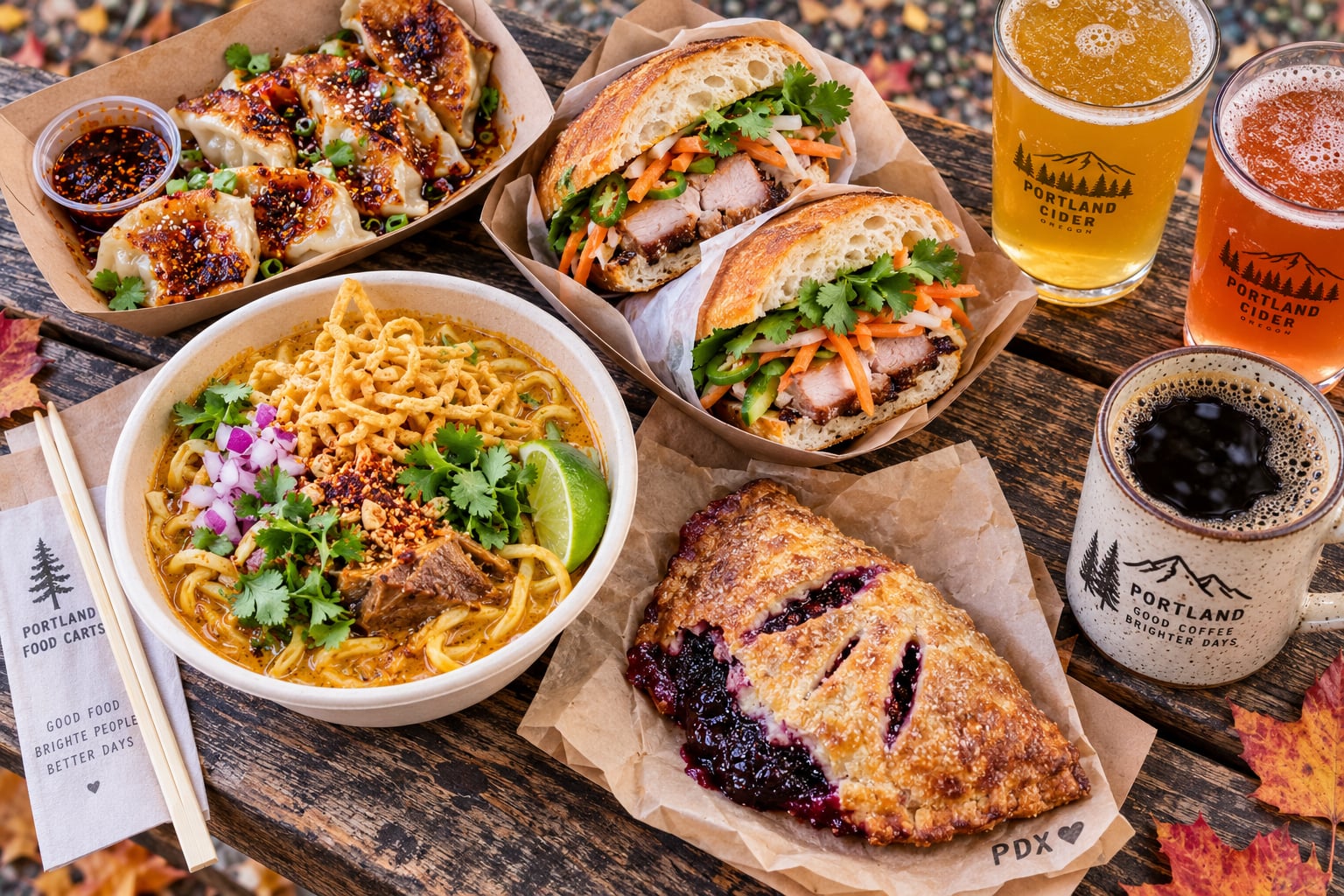
Grazing Across the Vibrant International Food Cart Pods of Portland
After spending the morning hiking waterfall trails in the gorge, returning to Portland means diving headfirst into the city's undisputed culinary signature: its world-famous food cart pods. Unlike other American cities where food trucks wander transient streets, Portland pioneered permanent clusters of carts arranged around covered heated patios, beer gardens, and twinkling string lights.
With over six hundred food carts distributed across neighborhoods like the Cart Blocks downtown, Asylum on Hawthorne, and Hinterland in Southeast Portland, these pods serve as incubators for extraordinary immigrant culinary talent and adventurous young chefs:
- Steaming bowls of northern Thai khao soi, featuring tender chicken drumsticks braised in rich yellow coconut curry broth with egg noodles, topped with a bird's nest of crispy fried noodles, pickled mustard greens, shallots, and fresh lime.
- Crispy pan-fried pork dumplings with translucent dough, seared to a golden lace crust on the flat-top grill and drizzled with fragrant roasted chili oil, toasted sesame seeds, and scallions.
- Authentic Saigon-style banh mi loaded with slow-roasted five-spice pork belly, rich pâté, pickled daikon and carrots, crisp cucumber spears, and fiery jalapeños tucked inside crackly warm French baguettes.
- Savory Georgian cheese breads baked fresh with molten sulguni cheese and a runny egg yolk stirred into the center.
- Freshly baked Oregon marionberry hand pies with flaky, butter-crisp crusts bursting with sweet-tart purple berry jam, paired with frosty pints of local dry-hopped craft cider.
Grazing across a pod with friends, sampling dishes from four different continents while sitting on a rustic cedar bench under the autumn rain canopy, captures the relaxed, democratic warmth of Portland's street-food revolution.
Getting Lost Among Millions of Books in Powells City of Books
No cultural exploration of Portland is complete without spending hours wandering through Powell's City of Books. Occupying an entire city block in the Pearl District at Burnside and Tenth, Powell's is the largest independent new-and-used bookstore in the world, housing more than one million titles across nine color-coded rooms and three sprawling floors.
On a drizzly October afternoon, stepping inside Powell's feels like entering a cathedral of human knowledge and creativity:
- You receive a printed color-coded map at the entrance to navigate through the labyrinthine aisles of the Rose, Green, Blue, and Pearl rooms.
- New paperbacks sit nestled right alongside worn, dog-eared vintage copies, creating a treasure-hunt atmosphere where rare first editions and obscure out-of-print titles hide on every shelf.
- The creaking hardwood floors, towering cedar bookcases reaching the ceilings, and quiet corners with cushioned reading chairs invite you to slow down and lose all track of time.
- The legendary Rare Book Room on the top floor preserves illuminated manuscripts, antique cartography, and signed literary treasures behind glass cases.
Emerging from Powell's at dusk with a heavy canvas tote bag filled with paperbacks and wandering through the rain-washed streets to a nearby coffee shop is an essential rite of passage for every literary traveler.
Savoring Third Wave Coffee and Pacific Northwest Farm to Table Dinners
Portland is widely credited with igniting the global third-wave coffee movement, approaching coffee roasting with the same exacting precision and respect for terroir that winemakers bring to fine vintages. Throughout the city, minimalist roasteries and neighborhood cafés treat coffee as an exquisite craft.
Starting your autumn morning at roasters like Coava, Stumptown, or Heart is an education in flavor:
- Baristas carefully weigh single-origin beans sourced directly from smallholder farms in Ethiopia, Colombia, or Guatemala before brewing pour-overs through metal cone filters that preserve natural coffee oils.
- The resulting brew is remarkably clean and aromatic, revealing delicate tasting notes of stone fruit, bergamot, dark chocolate, and floral jasmine without a hint of bitterness.
- Accompanied by artisan pastries made with stone-ground Oregon grains, local hazelnut frangipane, and seasonal orchard apples, it is the ultimate Northwest breakfast ritual.
As evening arrives, Portland's farm-to-table dining scene shines with equal brilliance. Surrounded by the fertile soils of the Willamette Valley, chefs work in intimate partnership with local foragers, organic farmers, and coastal fishermen:
- Wild Pacific King salmon seared skin-down in cast iron, served over sweet corn purée with roasted golden chanterelles foraged from the Cascade foothills and a vibrant drizzle of garden herb oil.
- Wood-fired heirloom squash stuffed with farro, toasted hazelnuts, goat cheese, and cider-glazed cipollini onions.
- Flights of world-class Willamette Valley Pinot Noir, celebrated for its complex notes of red cherries, forest floor, and wild truffles harvested during the October grape crush.
Dining in an intimate neighborhood bistro lit by flickering candles while rain taps against the glass windows provides a deeply comforting celebration of the Pacific Northwest's autumn harvest.
Strolling the Industrial Charm and Brick Warehouses of the Pearl District
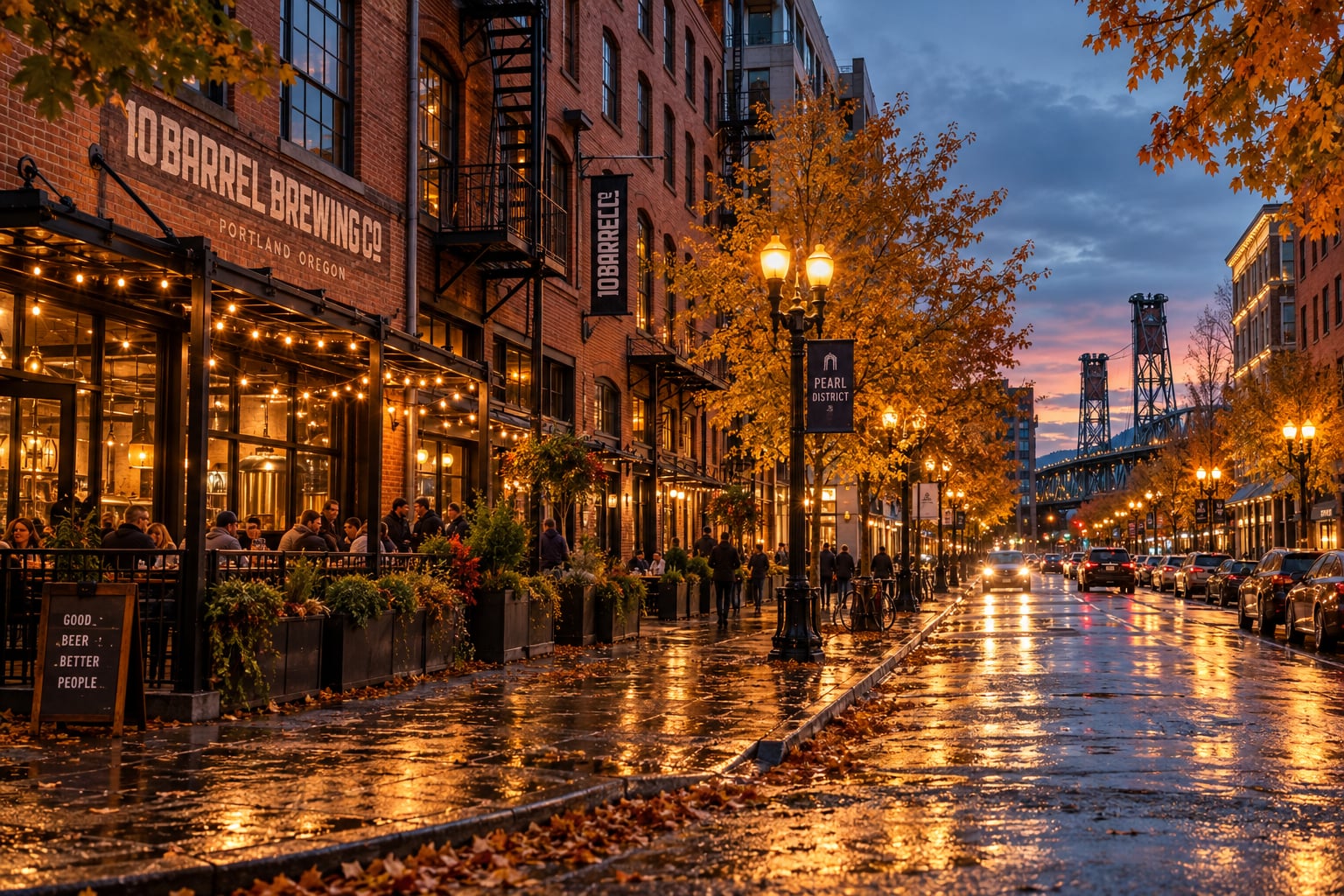
Once an industrial railroad yard and manufacturing district filled with abandoned warehouses, the Pearl District has evolved over the past three decades into one of the most successful urban renewal transformations in North America. Today, its cobblestone streets and converted red-brick industrial lofts blend historic grit with contemporary refinement.
An evening stroll through the neighborhood reveals endless discoveries:
- Repurposed warehouse loading docks with industrial iron railings now serve as raised pedestrian boardwalks for artisan boutiques, glassblowing studios, and contemporary art galleries.
- Historic brick facades adorned with vintage ghost signs glow under the warm light of overhead Edison bulbs and outdoor cafe string lights.
- Pocket urban parks like Jamison Square and Tanner Springs Park incorporate natural wetlands, restored stream beds, and recycled railroad ties into the modern cityscape.
- Craft microbreweries housed in airy industrial spaces pour experimental sour ales, hazy IPAs, and rich oatmeal stouts brewed with pure mountain water from the Bull Run watershed.
The district's walkability and seamless integration of historic industrial architecture with public green space make it a pleasure to explore at your own unhurried pace.
Practical Travel Tips for Navigating Oregon Weather Transit and Permits
Planning a seamless autumn journey through Portland and the Columbia River Gorge requires understanding regional transit systems and seasonal park regulations:
- Weather preparation and packing. Oregon autumns are defined by gentle coastal drizzles and cool mountain breezes rather than torrential downpours. Portlanders rarely use umbrellas, preferring breathable, hooded waterproof rain jackets, water-resistant footwear, and layered wool sweaters. Daytime temperatures in October range from the mid-fifties to low sixties, dropping into the forties at night.
- Waterfall corridor permits and timing. During peak summer months, the Historic Columbia River Highway requires timed entry permits. By early October, this permit requirement usually expires, allowing spontaneous exploration. However, parking lots at Multnomah Falls fill up quickly on sunny weekend afternoons. Arrive before nine in the morning to enjoy the falls in tranquil solitude and secure easy parking.
- Getting around without a vehicle. Portland boasts one of the most comprehensive public transit networks in North America, anchored by the MAX Light Rail, Portland Streetcar, and TriMet bus lines. The Columbia Gorge Express bus operates daily departures from downtown Portland and the Gateway Transit Center directly to Multnomah Falls, making a car-free waterfall excursion entirely feasible.
- Tipping and dining etiquette at food carts. While food carts offer casual counter service, food truck operators rely heavily on tips. A fifteen to twenty percent tip added to your order directly supports independent immigrant and local culinary artisans. Most carts accept credit cards and contactless payments, but carrying a small amount of cash is always helpful.
- Respecting trail safety along gorge cliffs. Autumn rain can make basalt trail switchbacks slick with wet leaves and moss. Always stay on designated paved paths, wear hiking boots with reliable rubber traction, and never climb beyond protective stone railings along gorge overlooks, where sheer drops are common.