
Perched on the rugged southeastern shoulder of Alaska's Kenai Peninsula, where precipitous granite peaks plunge straight into the icy waters of the North Pacific, lies one of the most dramatically untamed national parks in North America. Kenai Fjords National Park is a living monument to the Ice Age, an ethereal realm carved by the monumental Harding Icefield. Covering more than seven hundred square miles, this colossal ice sheet spawns nearly forty glaciers that flow outward like frozen rivers, gouging deep maritime fjords and terminating in towering vertical walls of iridescent blue ice that rise hundreds of feet above the sea.
Serving as the welcoming gateway to this subarctic wilderness is the historic harbor town of Seward, situated along the tranquil shores of Resurrection Bay. Renowned as the historic Mile 0 of the legendary Iditarod Trail and the southern terminus of the breathtaking Alaska Railroad, Seward seamlessly blends rugged frontier fishing culture with world-class maritime exploration. Whether you are navigating an expedition vessel through floating ice floes while listening to the shotgun-like crack of calving tidewater glaciers, marveling at pods of killer whales gliding beneath snow-capped peaks, or sitting down inside a waterfront saloon to a towering feast of steamed red king crab legs and pan-seared wild sockeye salmon, this corner of Alaska delivers wilderness adventure on a scale that takes your breath away. This comprehensive guide reveals the most iconic sights, unforgettable wildlife cruises, mountain trails, seafood traditions, and essential local wisdom for planning an extraordinary journey into Kenai Fjords and Seward.
The Majestic Collision of Ancient Ice and Coastal Wilderness
Unlike inland parks dominated by vast tundra, Kenai Fjords National Park is an amphibious wonderland where alpine glaciers meet the sea. Established in 1980, the park safeguards nearly six hundred and seventy thousand acres of pristine subarctic wilderness. Here, the maritime climate feeds constant snowfalls onto the high peaks of the Kenai Mountains, compressing centuries of snow into dense glacial ice that absorbs red and orange lightwaves, leaving behind the mesmerizing, glowing cobalt and turquoise shades unique to ancient glaciers.
The beating heart of this frozen empire is the Harding Icefield, one of only four remaining major icefields in the United States. High above the fjords at an altitude between four and five thousand feet, a vast plateau of uninterrupted snow and ice blankets the mountain ranges, with solitary jagged peaks, known as nunataks, piercing the frozen horizon. Over hundreds of thousands of years, glaciers spilling from this ice reservoir ground down mountainsides, carving out the dramatic network of coastal fjords that define the park today, including Aialik Bay, Northwestern Fjord, and Holgate Arm.
Exploring these remote fjords by water offers travelers a rare, humbling perspective on planetary forces. The air here carries a crisp, primeval coolness scented with glacial silt, salty ocean spray, and dense Sitka spruce forest. Giant waterfalls cascade down vertical cliffs fed by hanging glaciers thousands of feet above, while harbor seals haul out onto floating blue icebergs to nurse their pups in the protective shelter of the fjord walls.
Cruising Deep Into the Roaring Calving Waters of Aialik and Holgate Glaciers
Because much of Kenai Fjords is completely inaccessible by road, embarking on a full-day wildlife and glacier boat cruise from Seward's small boat harbor is the quintessential park experience. Catamarans and expedition cruisers equipped with warm indoor cabins and expansive outdoor viewing decks depart daily between May and September, charting a scenic course across Resurrection Bay into the open waters of the Gulf of Alaska and deep into the glacial bays.
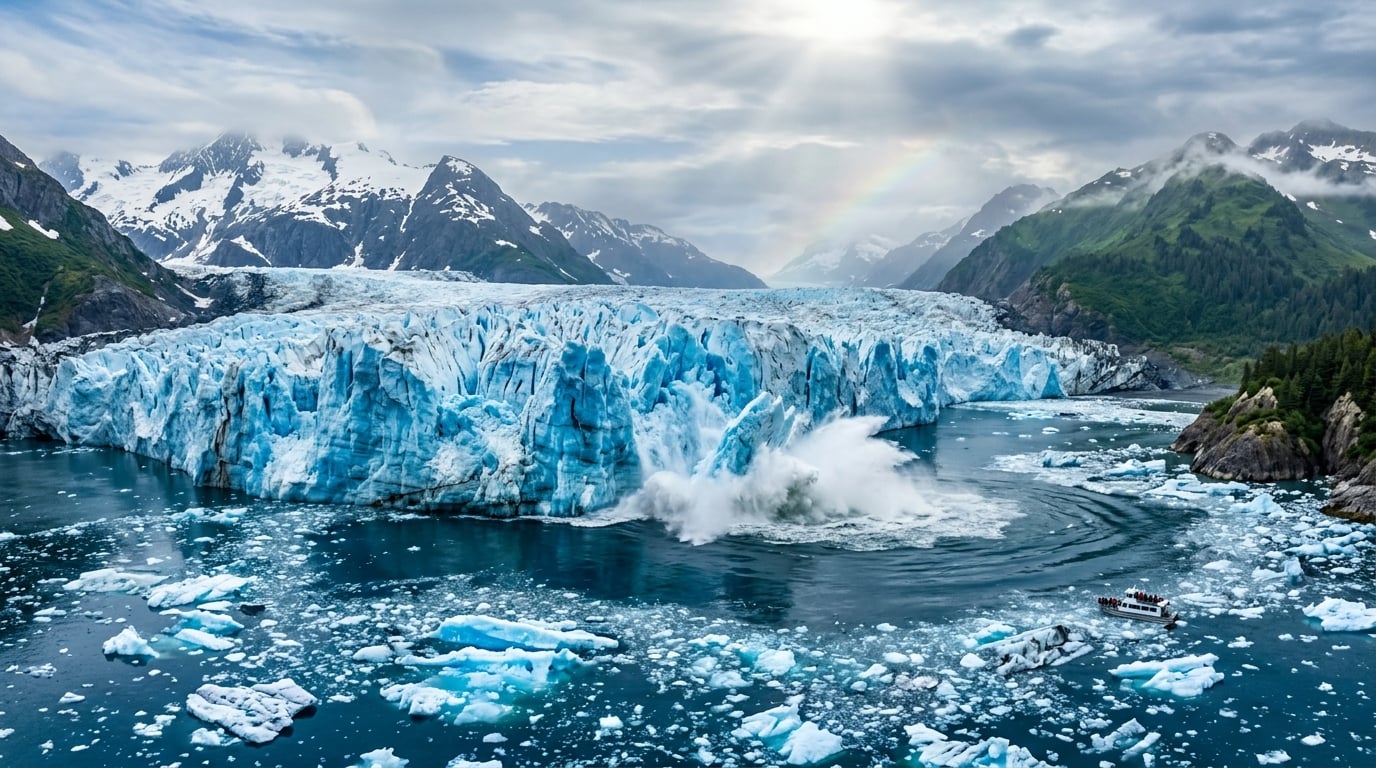
The climax of these cruises arrives when the vessel idles its engines in front of an active tidewater glacier, such as Aialik Glacier or Holgate Glacier. Gliding through a graveyard of floating icebergs, the boat approaches within a safe yet astonishingly close distance of the towering ice wall, which looms over three hundred feet tall and stretches for nearly a mile across the head of the bay. The scale is impossible to comprehend until a small cruise tender or floating bird passes before it.
Sitting in silence before a tidewater glacier is a sensory experience unlike any other:
- Listen for the phenomenon known as white thunder, deep, resonant cracks echoing from deep within the glacial interior as thousands of tons of compressed ice groan under immense tectonic pressure.
- Watch as monumental spires of ice sheer off the face and plunge violently into the ocean, sending up enormous geysers of white water and creating rolling swells that gently rock the vessel.
- Marvel at the intense sapphire and neon blue coloration exposed on freshly cleaved ice faces, untouched by sunlight for hundreds or even thousands of years.
- Savor warm mugs of hot chocolate spiked with peppermint schnapps or Alaskan craft cider served on deck as you take in the frozen amphitheater.
Spectacular Encounters with Orcas Humpbacks and Playful Sea Otters
The nutrient-rich currents that swirl into the Kenai Fjords from the North Pacific support one of the densest marine mammal populations on Earth. As your boat glides past rugged headlands and rocky sea stacks, wildlife sightings unfold in rapid, breathtaking succession.
Resurrection Bay and the outer fjords are a premier sanctuary for both resident fish-eating orcas and transient marine mammal-hunting killer whales. Spotting a six-foot-tall dorsal fin slicing effortlessly through glassy blue water with the snow-capped Kenai Mountains in the background is a signature Alaskan image. Often traveling in close-knit family pods, orcas can frequently be observed hunting, spyhopping to survey their surroundings, or playfully riding the bow wake of expedition boats.
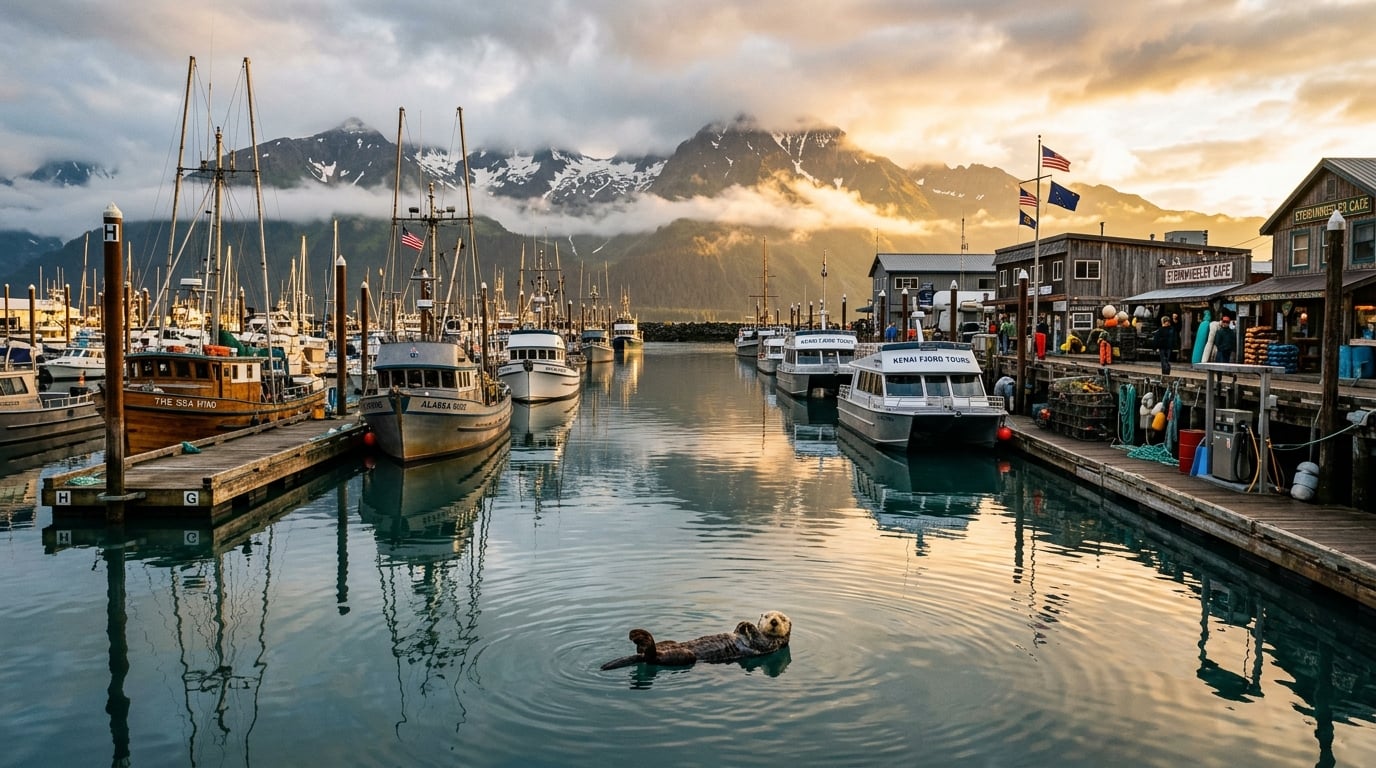
Humpback whales, having migrated thousands of miles from their winter breeding grounds in Hawaii, spend the summer and early autumn gorging on krill and herring in these frigid bays. Watching a forty-ton humpback breach entirely out of the water or slap its massive fluke against the sea leaves onlookers in awe. Closer to the rocky shores, thousands of wild sea otters float comfortably on their backs, often wrapped in tangled strands of bull kelp to keep from drifting away while grooming their thick, water-resistant coats or cracking open sea urchins and clams against rocks balanced on their bellies.
Along the sheer cliffs of the Chiswell Islands, a national wildlife refuge within the park, hundreds of thousands of seabirds nest each summer. Horned puffins and tufted puffins with their brightly colored orange bills and comedic wing beats flutter back and forth from rocky crevices, while massive Steller sea lions haul out onto slick granite ledges, roaring loudly as ocean waves crash against their sunlit perches.
Standing Beside the Electric Blue Crevasses of Exit Glacier and Harding Icefield
While the tidewater glaciers require a boat trip, Kenai Fjords National Park offers one extraordinary point of road access: Exit Glacier. Located just twelve miles northwest of downtown Seward via Herman Leirer Road, Exit Glacier Nature Center provides travelers an intimate, land-based encounter with a receding alpine glacier.
A network of paved, accessible walking trails leads through lush cottonwood and alder woodlands to several dramatic viewing platforms just yards away from the glacier's terminus. Along the approach path, wooden markers with historical dates mark the glacier's snout in previous decades, offering an immediate, sobering education in rapid glacial retreat and climatic change. Standing at the terminal moraine, you can feel freezing glacial katabatic winds sweeping down from the icefield and listen to the steady drip and trickle of melting ice flowing into the braided gravel channels of the Resurrection River.
For experienced and adventurous hikers, the Harding Icefield Trail represents one of the premier day hikes in the entire National Park System:
- The trail climbs four miles one way, gaining more than three thousand feet of elevation through dense subarctic birch forest, open alpine meadows filled with wild blue lupines, and rocky moraines.
- At the trail's end, hikers emerge onto a windswept granite ledge overlooking the boundless expanse of the Harding Icefield, where white snow and ice stretch uninterrupted toward the distant horizon like a frozen ocean.
- Black bears and mountain goats are frequently spotted grazing on steep green meadows along the ridge, requiring hikers to carry bear spray and stay alert.
- The trail is strenuous and can remain snow-covered well into July, so sturdy waterproof hiking boots and trekking poles are indispensable.
Savoring King Crab Legs and Wild Salmon in Historic Seward Harbor
After a brisk day out on the cold waters of Resurrection Bay or trekking glacial ridges, nothing satisfies a traveler's appetite quite like the hearty, wild bounty of coastal Alaska. Seward is a thriving commercial fishing port where fleets unload fresh catches of wild Pacific halibut, black cod, rockfish, and all five species of wild Alaskan salmon, king, sockeye, coho, pink, and chum.
Downtown Seward and the bustling small boat harbor are lined with rustic, wood-paneled taverns, seafood smokehouses, and cozy waterfront bistros where fresh catches go straight from the docks to the kitchen:
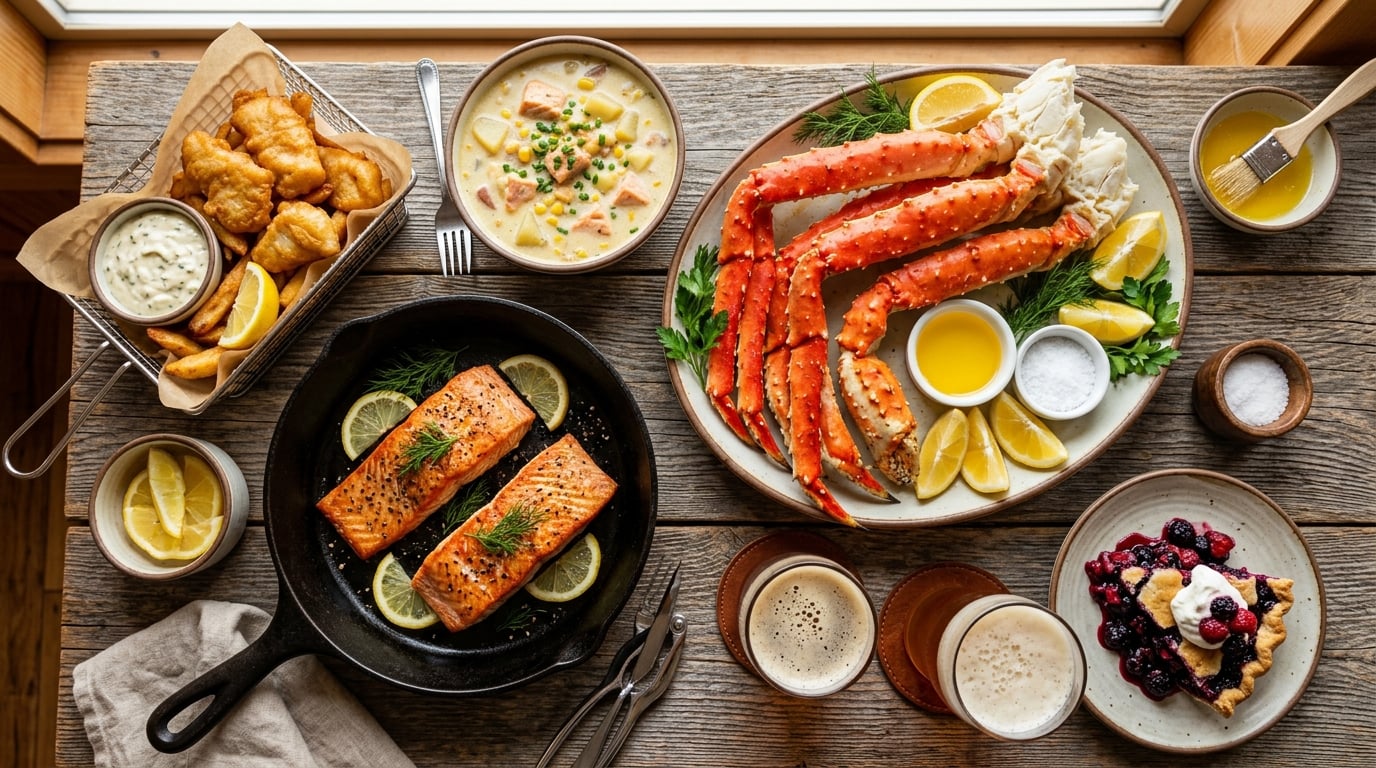
- Steamed Alaskan Red King Crab: Colossal crab legs served piping hot, split open to reveal succulent, sweet white meat, accompanied by lemon wedges and generous bowls of drawn melted butter.
- Pan-Seared Wild Sockeye Salmon: Deep ruby-red fillets harvested from local waters, seared in cast-iron skillets with butter, fresh dill, and garlic, offering a rich, buttery flavor completely incomparable to farm-raised varieties.
- Beer-Battered Halibut Fish and Chips: Thick, flaky fillets of fresh Alaskan halibut coated in light, crispy craft beer batter, fried to golden perfection, and served alongside seasoned pub fries and tangy house-made caper tartar sauce.
- Smoked Salmon Chowder: A creamy, velvety chowder loaded with tender Yukon gold potatoes, sweet corn, and generous chunks of hot-smoked wild salmon, served inside a hollowed-out warm sourdough bread boule.
- Wild Alaskan Berry Pies: Freshly baked pies bursting with tart, fragrant wild mountain huckleberries, blueberries, or salmonberries hand-picked from subarctic hillsides, topped with a scoop of rich vanilla cream.
- Alaskan Craft Brews: Locally crafted spruce tip ales brewed with tender fresh Sitka spruce needles, rich oatmeal stouts, and crisp Alaskan ambers that provide the perfect warming companion to a seafood dinner beside a wood-burning stove.
Essential Wilderness Insights for an Unforgettable Kenai Peninsula Journey
Exploring Kenai Fjords and coastal Alaska is a thrilling adventure that rewards careful preparation and respectful awareness of subarctic conditions:
- Dress in High-Performance Waterproof Layers: Maritime weather in Resurrection Bay can change from brilliant sunshine to driving subarctic rain and gusty winds in minutes. Cotton should be strictly avoided. Instead, dress in a moisture-wicking synthetic or merino wool base layer, an insulating fleece or down jacket, and a fully waterproof, windproof Gore-Tex outer shell with hood.
- Prepare for Ocean Swells: The waters inside Resurrection Bay are generally calm, but venturing into the outer Gulf of Alaska to reach Aialik Bay or Northwestern Fjord requires crossing open ocean passages where long ocean swells can induce seasickness. Take over-the-counter motion sickness medication or apply acupressure bands before boarding your boat.
- Book Wildlife Cruises and Accommodations Early: Seward is a compact town with limited lodging, and summer demand is extremely high. Book your hotel rooms, wilderness lodge cabins, and glacier cruise tickets several months in advance, especially for weekend dates between late June and mid-August.
- Take the Scenic Alaska Railroad Coastal Classic: If traveling from Anchorage, consider booking tickets on the Alaska Railroad Coastal Classic train instead of driving. This legendary four-hour train ride winds along the dramatic mudflats of Turnagain Arm where beluga whales feed, climbs through remote mountain passes inaccessible by road, and traces turquoise glacial rivers right into the heart of Seward.
- Practice Bear Safety: Western black bears and coastal brown bears roam the forests and river valleys around Seward and Exit Glacier. Always hike in groups, make continuous noise while moving through dense vegetation, and carry accessible bear spray at all times.