
# Charleston Historic District & Lowcountry Travel Guide: Rainbow Row, She-Crab Soup & Gullah Geechee Heritage
Nestled where the Ashley and Cooper rivers converge to embrace the Atlantic Ocean, Charleston, South Carolina stands as one of the most thoroughly preserved and visually captivating historic cities in North America. Known affectionately as the "Holy City" because its low-slung, historic skyline is punctuated by dozens of elegant church steeples rather than modern skyscrapers, Charleston weaves an irresistible tapestry of centuries-old architecture, gentle sea breezes, weeping Spanish moss, and world-renowned Southern hospitality.
Beyond its postcard-perfect facade of gas-lit cobblestone lanes and grand antebellum porticos lies a deep, multifaceted cultural soul shaped by indigenous waterways, English and French settlers, Caribbean maritime merchants, and the profound culinary and artisanal legacy of the Gullah Geechee people.
Whether savoring a steaming bowl of sherry-kissed she-crab soup, marveling at the hand-coiled sweetgrass baskets at the historic City Market, or wandering through intimate garden courtyards veiled in fragrant star jasmine, an expedition to Charleston and the surrounding South Carolina Lowcountry is an unforgettable sensory journey through the heart of the American South.
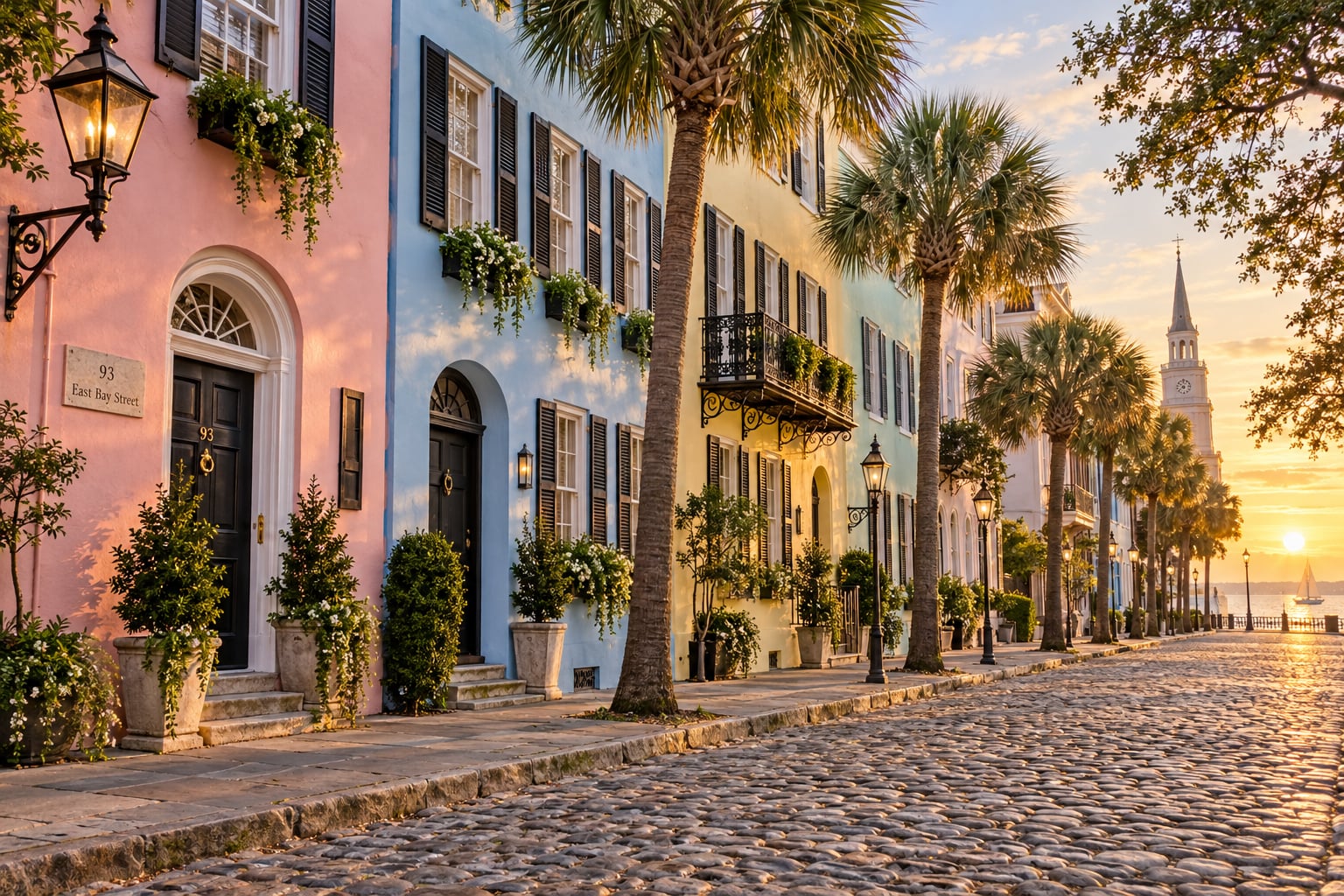
The Living Canvas of Rainbow Row and the Historic French Quarter
The architectural soul of historic Charleston is best experienced on foot, where each cobblestone alleyway tells a story of survival through hurricanes, earthquakes, fires, and wartime sieges:
- Rainbow Row on East Bay Street: This world-famous series of thirteen adjoining Georgian townhouses, painted in cheerful pastel shades of blush pink, robin’s egg blue, pale buttercup, and mint green, is the most photographed streetscape in South Carolina. Originally constructed in the mid-18th century as commercial counting houses and merchant storefronts serving the bustling harbor, the buildings fell into neglect after the Civil War until preservationist Dorothy Porcher Legge purchased and revitalized them in the 1930s, sparking Charleston’s modern historic preservation movement.
- The Historic French Quarter: Named for the high concentration of French Huguenot merchants and religious refugees who settled here in the late seventeenth century, this neighborhood features narrow brick passages, the historic Dock Street Theatre—America’s first building designed specifically for theatrical performances—and the timeless pink stucco facade of the French Huguenot Church.
- Chalmers Street and Ancient Cobblestones: Paved with dark basalt and granite ballast stones brought across the Atlantic inside colonial trading ships, walking along Chalmers Street transports visitors directly back to the 1700s. Along this route sits the Old Slave Mart Museum, offering a sobering, necessary, and deeply moving examination of the domestic slave trade that once operated along the harbor wharves.
- Wrought Iron Artistry and Philip Simmons Gates: Strolling through Charleston reveals exquisite handcrafted wrought iron balconies, window grilles, and garden gates. Many of the finest gates were forged by master artisan Philip Simmons, an African American blacksmith whose decorative ironwork elevated functional gates into world-renowned museum-quality folk art.
Coastal Majesty at The Battery and White Point Garden
At the southernmost tip of the Charleston peninsula, where the two river estuaries meet, lies The Battery, a landmark fortified sea wall and grand promenade offering sweeping views across Charleston Harbor:
- White Point Garden: Shaded by colossal centuries-old southern live oaks draped in silvery, weeping Spanish moss, this peaceful waterside park features historic cast-iron cannons and military monuments dating back to the American Revolution and Civil War.
- Historic Harbor Panoramas and Fort Sumter: Peering across the water from The Battery, visitors can see Fort Sumter guarding the mouth of the harbor. It was here, in April 1861, that Confederate artillery fired the opening shots of the American Civil War. Today, visitor ferries depart daily to the island fortress for guided ranger tours.
- The Grand Mansions of South Battery and Meeting Street: Facing the sea wall are some of the most opulent private residences in the South, characterized by multi-tiered covered verandas—traditionally called "piazzas"—designed to capture prevailing ocean breezes during sweltering coastal summers.
The Soul of Lowcountry Gastronomy
The cuisine of Charleston and the Lowcountry is recognized globally as one of America’s most distinct regional food cultures. Born from the intersection of coastal ingredients and the agricultural genius of enslaved West Africans who transformed South Carolina into a global rice empire, Lowcountry dining is an irresistible blend of tidal seafood, slow-simmered spices, and soulful comfort:
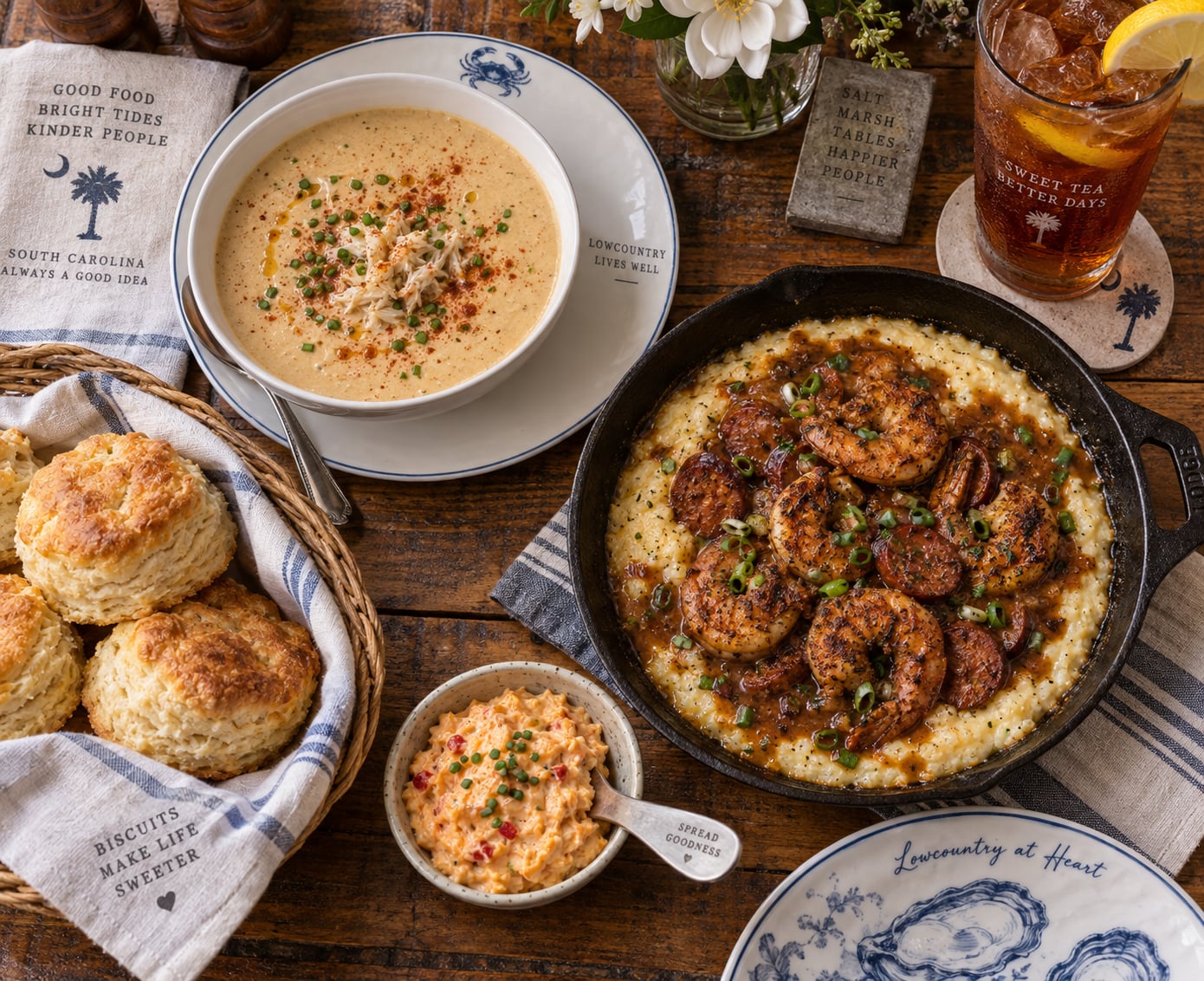
When pulling up a chair at a historic Charleston dining room or waterside oyster shack, these iconic culinary creations are absolute essentials:
- Velvety Lowcountry She-Crab Soup: Invented in the 1920s by William Deas, the butler and cook to Charleston Mayor Robert Goodwyn Rhett, this rich, creamy bisque is traditionally made using the delicate meat and orange roe of female blue crabs (she-crabs) harvested from local saltwater marshes. The orange roe imparts a distinct richness and golden hue, while heavy cream, shallots, celery, and a liberal splash of dry sherry added right at the table elevate the soup into pure liquid silk.
- Charleston Shrimp and Grits: Once a humble breakfast eaten by coastal fishermen using the previous night’s catch, shrimp and grits has blossomed into a signature gourmet delicacy. Plump, sweet Atlantic white shrimp are pan-seared with smoky andouille sausage, crisp bacon lardons, garlic, and scallions, then ladled generously over a bed of slow-cooked, stone-ground heirloom grits enriched with sharp cheddar cheese and cream.
- Frogmore Stew (Lowcountry Boil): Named after the small community of Frogmore on Saint Helena Island, this communal feast features fresh whole shell-on shrimp, smoky Kielbasa or andouille sausage, sweet corn on the cob, and red new potatoes boiled in a massive kettle infused with Old Bay seasoning, lemon, and beer, traditionally dumped straight onto newspaper-lined outdoor tables for lively, hands-on feasting.
- Warm Buttermilk Biscuits with Pimento Cheese: Flaky, laminated southern biscuits pulled piping hot from cast-iron pans, with dozens of buttery, steaming layers that melt in your mouth. They are served alongside homemade pimento cheese—the beloved "caviar of the South"—crafted from extra-sharp white cheddar, roasted red pimento peppers, and rich Duke’s mayonnaise.
- Benne Wafers and Sweet Tea: Benne, the heritage sesame seed cultivated across West Africa, was introduced to Lowcountry soil by enslaved plantation cooks. Baked into wafer-thin, crispy, caramelized cookies with a distinct nutty fragrance, benne wafers are the traditional sweet accompaniment to a condensation-beaded glass of ice-cold southern sweet tea infused with fresh lemon and mint.
Honoring Gullah Geechee Culture and Living Artistry
One of the most vital, resilient, and culturally rich threads of Charleston’s identity is the heritage of the Gullah Geechee people—descendants of West and Central Africans who were enslaved on the isolated rice, cotton, and indigo plantations of the coastal sea islands stretching from North Carolina down to northern Florida.
Because of the geographic isolation of the barrier islands, the Gullah Geechee community retained a remarkably high degree of their ancestral African languages, culinary techniques, spiritual folklore, and artisanal traditions:
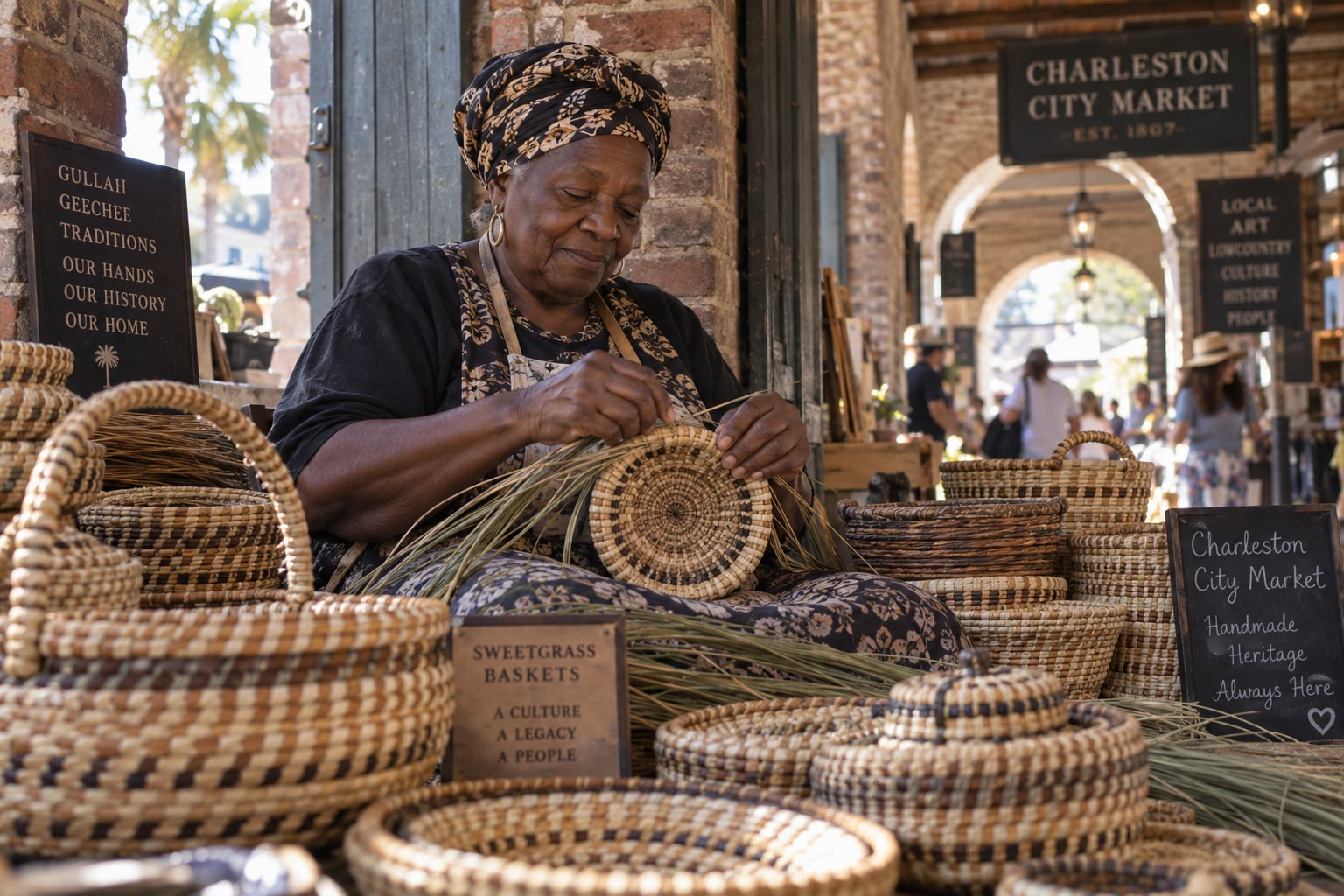
- The Living Tradition of Sweetgrass Basket Weaving: For more than three centuries, Gullah artisans have practiced the ancient West African art of coiling sweetgrass, longleaf pine needles, and palmetto leaves into durable, intricately patterned baskets. Originally used on plantations to winnow harvested Carolina Gold rice grains from the chaff, sweetgrass baskets have evolved into highly prized works of living contemporary art. Visiting the open-air sheds of the Historic Charleston City Market on Market Street provides an opportunity to watch master weavers coil baskets by hand and purchase directly from the artisans whose families have preserved this tradition across seven and eight generations.
- Carolina Gold Rice and Gullah Red Rice: Enslaved Africans from the "Rice Coast" of West Africa brought essential knowledge of tidal irrigation and rice cultivation that made Lowcountry planters fabulously wealthy. Today, heritage Carolina Gold rice—celebrated for its nutty aroma and tender texture—is celebrated in iconic dishes like Gullah Red Rice, cooked down with tomatoes, onions, smoked sausage, and bacon drippings.
- The International African American Museum (IAAM): Situated at Gadsden’s Wharf, the very port where tens of thousands of enslaved Africans first set foot on North American soil, this world-class museum opened in 2023. Through cutting-edge interactive exhibits, genealogy research centers, and the reflective African Ancestors Memorial Garden, the museum provides a profoundly impactful, essential chronicle of African American resilience, leadership, and global cultural impact.
Moss-Draped Historic Plantations and Natural Sanctuaries
Venturing along the Ashley River Road just northwest of the city center reveals some of the oldest landscaped estates and botanical gardens in the United States, framed by dramatic avenues of moss-hung live oaks:
- Magnolia Plantation and Gardens: Founded in 1676, Magnolia boasts America’s oldest public gardens, famous for vast informal romantic gardens where hundreds of varieties of vibrant azaleas, ancient camellias, and cypress swamp wetlands bloom beneath Spanish moss.
- Boone Hall Plantation: Renowned for its breathtaking three-quarter-mile Avenue of Oaks planted in 1743, Boone Hall provides critical historical context through its preserved original brick slave cabins and live Gullah storytelling presentations that educate visitors on the realities of plantation life.
- Middleton Place: Home to America’s oldest landscaped formal gardens, designed with geometric reflection pools, sculpted earthen terraces, and the Middleton Oak—a massive live oak estimated to be nearly a thousand years old.
Practical Advice for Exploring the Lowcountry
To ensure a seamless, respectful, and deeply enriching journey through Charleston, keep these seasoned travel recommendations in mind:
- Optimal Times to Visit: Spring (late March through May) is spectacular, with azaleas, dogwoods, and wisteria exploding into full bloom throughout the historic district, complemented by comfortable, mild temperatures. Autumn (October and November) offers crisp coastal breezes, clear sunny skies, and prime oyster roast weather. Summer brings intense humidity and heat, necessitating early morning explorations and mid-afternoon indoor rests.
- Navigating the Historic District: Downtown Charleston is remarkably flat, compact, and pedestrian-friendly. The best way to orient yourself on your first morning is by taking a licensed horse-drawn carriage tour or a guided architectural walking tour departing from North Market Street.
- Parking and Transit: Parking on narrow residential cobblestone streets is strictly regulated and heavily permitted for local residents. It is far easier to leave your vehicle in one of the city’s multi-story parking garages—such as the Cumberland Street Garage or East Bay Garage—and explore on foot, by bicycle, or via the free Downtown Area Shuttle (DASH) bus.
- Dining Reservations and Etiquette: Charleston’s award-winning culinary scene is in exceptionally high demand year-round. Reserve tables at top-tier Lowcountry restaurants several weeks in advance, especially for weekend dinners. While daywear around town is casual and comfortable, historic fine dining establishments often adhere to a "smart casual" dress code, where collared shirts, tailored trousers, and summer dresses are customary.