
# Chicago Architecture, Deep-Dish Pizza & Jazz Heritage: The Ultimate Windy City Cultural and Culinary Guide
Rising proudly along the freshwater shores of Lake Michigan, Chicago is a city built on audacious ambition, relentless reinvention, and timeless cultural swagger.
When the catastrophic Great Chicago Fire of 1871 leveled four square miles of timber-built downtown in just two days, the tragedy did not break the spirit of the Midwest’s greatest metropolis; instead, it cleared the slate for the greatest architectural renaissance in human history.
Visionary masterminds like Louis Sullivan, Daniel Burnham, Frank Lloyd Wright, and later Mies van der Rohe converged on this windswept prairie crossroads to pioneer the modern steel-frame skyscraper.
Today, Chicago stands as a breathtaking outdoor museum of soaring glass, gleaming terra-cotta, and granite canyons, complemented by one of the nation’s richest food cultures and a deeply moving blues and jazz heritage that changed American music forever.
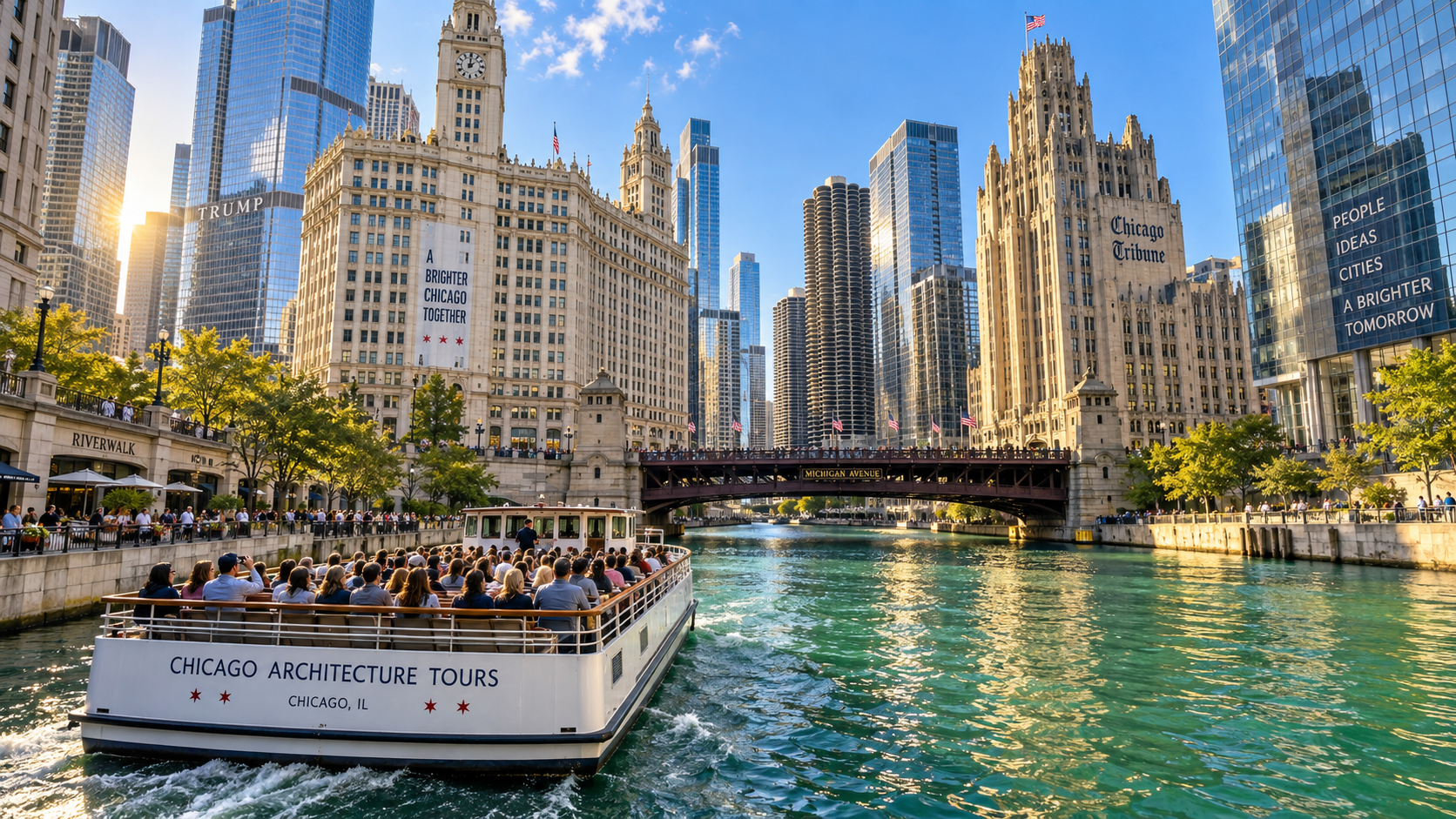
The Chicago River Architecture Cruise: Gliding Through an Outdoor Museum
There is no single travel experience in the United States that encapsulates urban majesty quite like the official ninety-minute Chicago Architecture Center River Cruise aboard the First Lady.
Departing from the bustling Riverwalk near Michigan Avenue, the vessel glides gently along the emerald-green waters of the Chicago River, maneuvering through all three branches of the river as certified docents narrate the engineering triumphs, political intrigue, and design philosophies that shaped the skyline:
- The DuSable Bridge and Magnificent Mile Portal: Passing beneath the double-deck trunnion bascule bridge, travelers are greeted by the gleaming white glazed terra-cotta facade of the French Renaissance-style Wrigley Building and the neo-Gothic majesty of the Tribune Tower, whose exterior walls embed historic limestone fragments from the Parthenon, the Taj Mahal, and the Great Pyramid of Giza.
- Marina City (The Corncob Towers): Designed in the early 1960s by modernist architect Bertrand Goldberg, these twin sixty-five-story sculptural concrete towers were the first urban high-rises in America to integrate residences, parking, a marina, and bowling alleys into a single "city within a city," instantly recognizable by their organic scalloped balconies resembling giant corncobs.
- Merchandise Mart (THE MART): An Art Deco behemoth so colossal that it possessed its own postal zip code upon completion in 1930, sprawling across two city blocks along the river's north bank with over four million square feet of floor space.
- Willis Tower (Formerly Sears Tower): Dominating the skyline at 1,450 feet, this groundbreaking bundled-tube structural marvel held the title of the world's tallest building for a quarter-century and remains a monumental feat of structural engineering.
- Modern Glass Triumphs: Towering contemporary marvels like the curvilinear St. Regis Chicago designed by Jeanne Gang—the tallest building in the world designed by a female architect—featuring undulating flowing glass bands that shimmer like water in the shifting midday light.
The lower pedestrian promenade along the Chicago Riverwalk offers equally magical vantage points on foot, lined with shaded wine cafes, kayak rentals, public art installations, and bustling outdoor patios where locals gather for afternoon cocktails as water taxis zip across the currents.
The Ritual of Chicago Deep-Dish Pizza: Butter-Crust Alchemy and Local Flavors
Exploring Chicago's windswept avenues inevitably works up an appetite, and no meal embodies the city's hearty, unpretentious culinary soul quite like authentic Chicago deep-dish pizza.
Invented in 1943 at Pizzeria Uno in the Near North Side neighborhood by Ike Sewell and Rudy Malnati, deep-dish was conceived not as a quick street snack to be folded on the go, but as a rich, knife-and-fork feast capable of anchoring an entire evening:
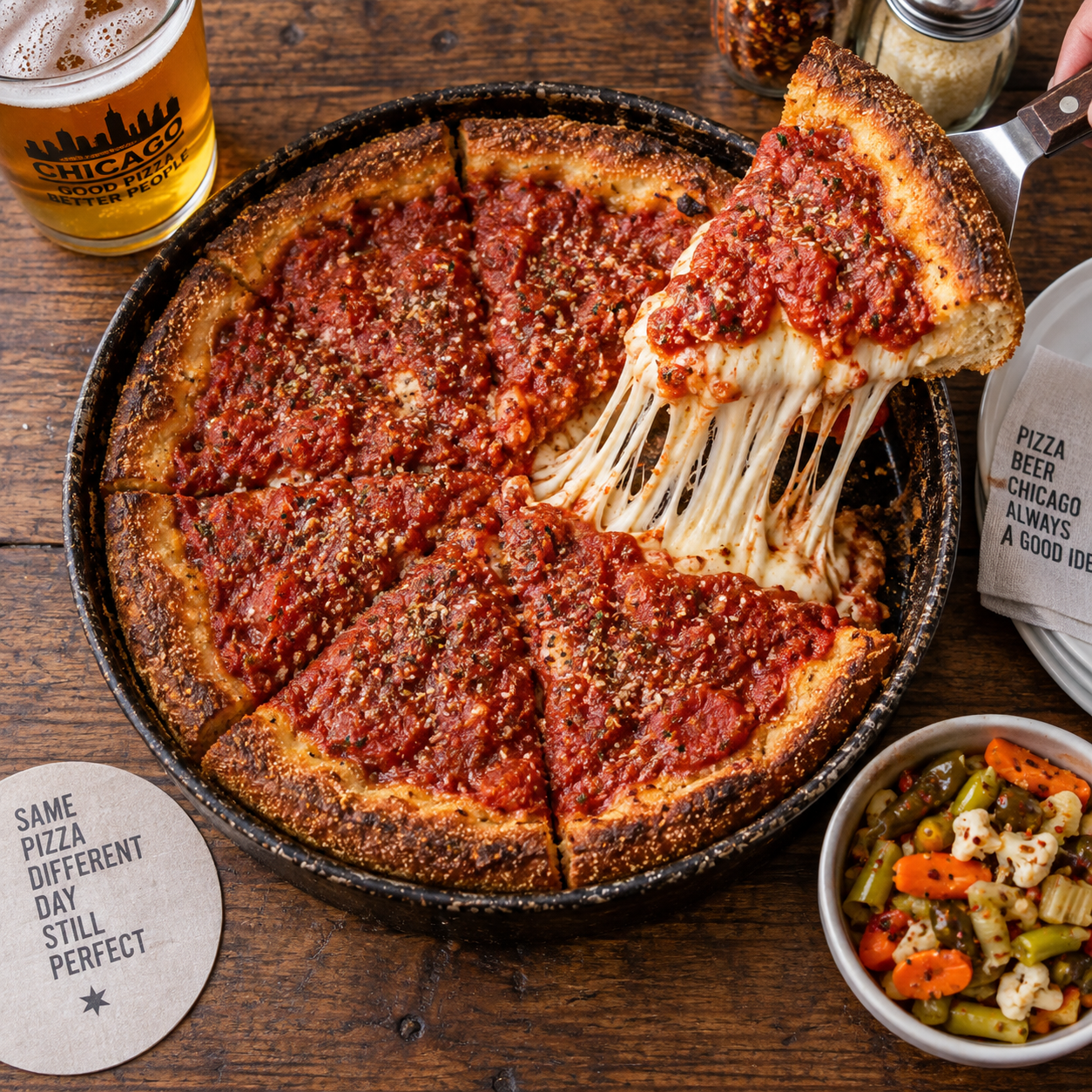
Unlike thin Neapolitan or New York-style slices, a proper Chicago deep-dish is engineered in reverse inside a heavy, well-seasoned steel cake pan:
- The Buttery Cornmeal Crust: The dough is pressed up the high metal sides of the pan, infused with butter and cornmeal to create a crumbly, biscuit-like golden crust that crisps perfectly without turning soggy under the immense weight of the toppings.
- The Foundation of Molten Cheese: Thick slabs of whole-milk, low-moisture mozzarella cheese are laid directly against the bottom crust, providing a velvety foundation that stretches dramatically when a slice is lifted.
- The Meat and Aromatics Layer: A generous blanket of freshly seasoned Italian pork sausage—studded with cracked fennel seeds, garlic, and red pepper—is spread across the cheese, cooking gently in its own savory juices.
- The Chunky Tomato Crown: Because a baking cycle lasts nearly forty-five minutes in a five-hundred-degree oven, the cheese would burn if left exposed. Instead, the pie is crowned with a thick layer of crushed, sweet San Marzano plum tomatoes seasoned with oregano, basil, and a generous blizzard of grated Pecorino Romano cheese.
Beyond deep-dish, Chicago's working-class food culture boasts several other iconic staples:
- The Italian Beef Sandwich: Paper-thin ribbons of slow-roasted seasoned sirloin piled high into a crusty French roll, topped with spicy pickled giardiniera (a piquant mix of pickled serrano peppers, celery, carrots, and cauliflower preserved in oil), and ordered "dipped" so the entire sandwich is submerged momentarily in hot seasoned beef jus.
- The Chicago-Style Hot Dog: An all-beef frankfurter steamed in a poppy seed bun, "dragged through the garden" with yellow mustard, neon-green sweet relish, chopped white onions, juicy red tomato wedges, a crisp pickle spear, spicy pickled sport peppers, and a dash of aromatic celery salt. Crucially, asking for ketchup is considered a cardinal culinary sin.
Soul of the City: The Great Migration and Chicago Blues & Jazz
To understand Chicago is to hear the sound of an amplified electric guitar crying out across a crowded, smoke-scented room.
During the early-to-mid twentieth century, hundreds of thousands of African Americans journeyed northward from the Mississippi Delta to Chicago seeking industrial jobs and freedom from Jim Crow segregation.
They brought with them the acoustic country blues of the rural South, plugged their instruments into electric amplifiers in the bustling South Side clubs, and created Chicago blues: an electric, raw, driving musical force that birthed rock and roll and influenced artists from the Rolling Stones to Eric Clapton.
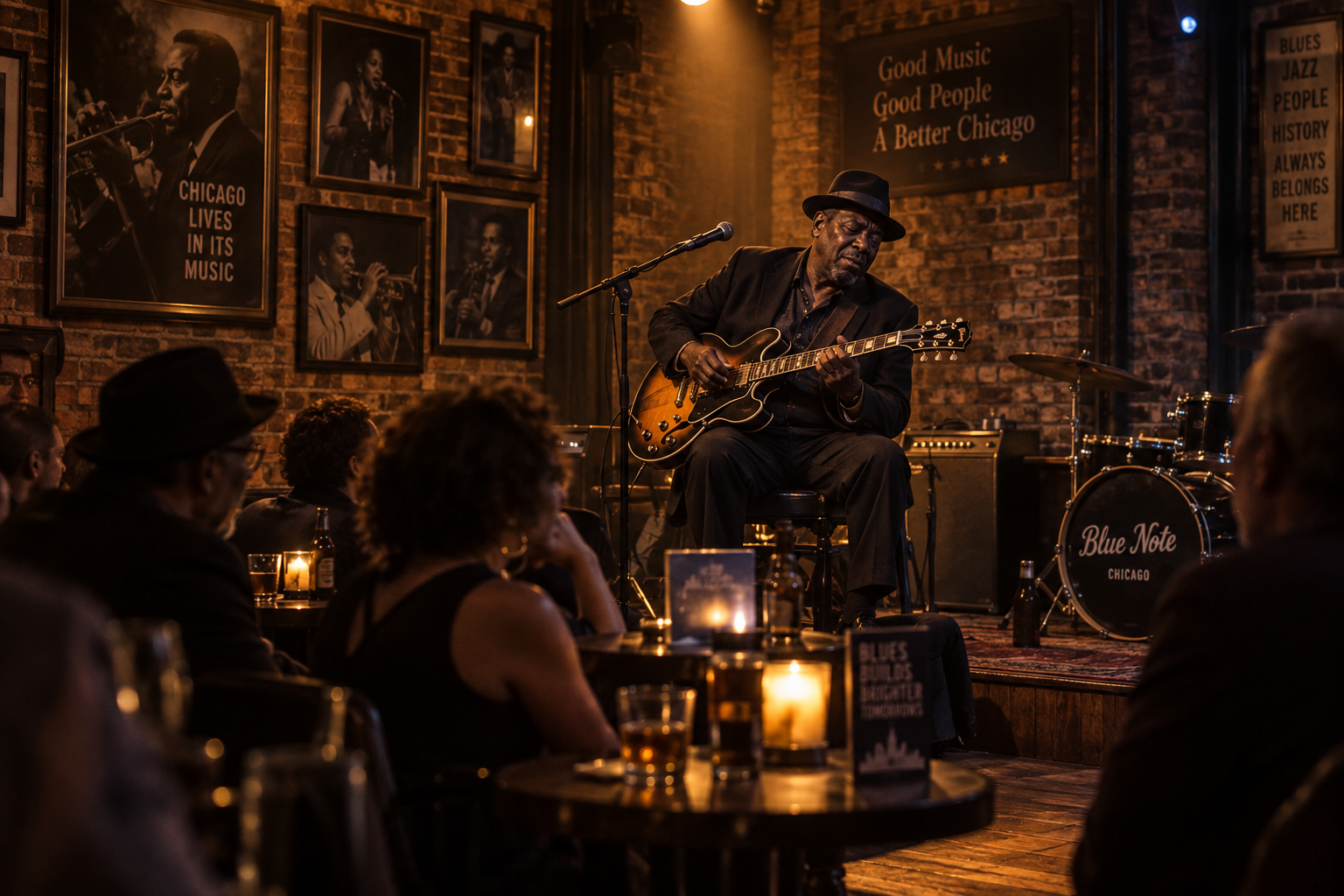
Visitors seeking the living spirit of Chicago's musical heritage should make pilgrimages to these hallowed musical temples:
- Kingston Mines (Lincoln Park): Operating since 1968, this legendary late-night sanctuary features two alternating stages of non-stop live blues seven nights a week, where fiery guitar solos and foot-stomping rhythms reverberate until the early morning hours over platters of Southern-style fried catfish and Louisiana ribs.
- The Green Mill Cocktail Lounge (Uptown): Established in 1907, this historic Art Deco lounge was a notorious speakeasy during Prohibition frequented by mob boss Al Capone, whose favorite curved booth still offers an unobstructed view of both entrances. Today, it hosts world-class live jazz ensembles beneath vintage neon lighting and plush velvet drapery.
- Rosa's Lounge (Logan Square): A welcoming neighborhood blues haven founded in 1984 by an Italian immigrant drummer who fell in love with Chicago blues, offering intimate table seating, exceptional acoustic warmth, and legendary jam sessions where seasoned blues veterans perform alongside emerging talents.
- Jazz Showcase (South Loop): Operating continuously since 1947 under the late visionary Joe Segal, this venerable institution continues to present international jazz virtuosos in a listening-room environment focused purely on acoustic elegance.
Millennium Park, The Bean & Strolling the Lakefront Trail
No trip to Chicago is complete without spending an unhurried morning exploring Millennium Park and the sprawling greenery of Grant Park, affectionately known as "Chicago's Front Yard."
At the heart of the park sits British artist Sir Anish Kapoor’s monumental public sculpture, Cloud Gate—universally beloved by locals and travelers as The Bean. Crafted from one hundred and sixty-eight seamlessly welded stainless steel plates polished to a mirror finish, its curved liquid-mercury surface reflects the towering historic streetwall of Michigan Avenue, the scudding clouds overhead, and the smiling faces of onlookers in distorted, surreal proportions.
Just steps away, the Jay Pritzker Pavilion, designed by world-renowned architect Frank Gehry, unfurls ribbons of stainless steel ribbons into the sky, hosting free world-class symphony concerts throughout the summer months across its expansive Great Lawn.
To the east, the eighteen-mile paved Chicago Lakefront Trail hugs the azure shoreline of Lake Michigan, where runners, cyclists, and walkers take in sweeping views of the city skyline rising directly out of the vast freshwater expanse.
As twilight descends, head up to an elevated observation deck like 360 CHICAGO at the former John Hancock Center or the outdoor terrace of Cindy's Rooftop overlooking Millennium Park, watching as the city lights illuminate the grid below and the historic Buckingham Fountain begins its colorful evening water show.
Practical Chicago Travel Advice: Transit, Seasons, and Packing
Navigating the Windy City is remarkably seamless thanks to its intuitive street grid and comprehensive public transit network:
- Ride the 'L' Train: The Chicago Transit Authority (CTA) operates the historic elevated rail system known as the 'L'. The Blue Line provides direct, affordable train access from O’Hare International Airport straight into the central downtown Loop in forty-five minutes, while the Orange Line connects Midway Airport in twenty-five minutes.
- Walk the Downtown Loop: Chicago is one of the most walkable cities in North America. The pedestrian-friendly downtown bridges, lakefront paths, and riverfront boardwalks make walking the most rewarding way to experience the city's architectural details up close.
- Pack for Shifting Lake Breezes: Even in midsummer, sudden gusts off Lake Michigan—known locally as "lake effect"—can drop temperatures by fifteen degrees within an hour. Carrying a light windbreaker or layering pieces ensures comfortable exploring throughout the day and evening.
- Optimal Travel Seasons: Late spring through early autumn (May to October) is the golden window for Chicago travel, characterized by pleasant outdoor patio dining, vibrant neighborhood street festivals, active riverboat cruises, and lush green parklands.