
# Florida Keys & Key West Road Trip Guide: The Overseas Highway, Seven Mile Bridge, Key Lime Pie & Sunset Celebrations
Leaving mainland South Florida behind as the mainland asphalt gives way to a ribbon of concrete suspended over shimmering shallow flats, the rhythm of life slows to an intoxicating island tempo.
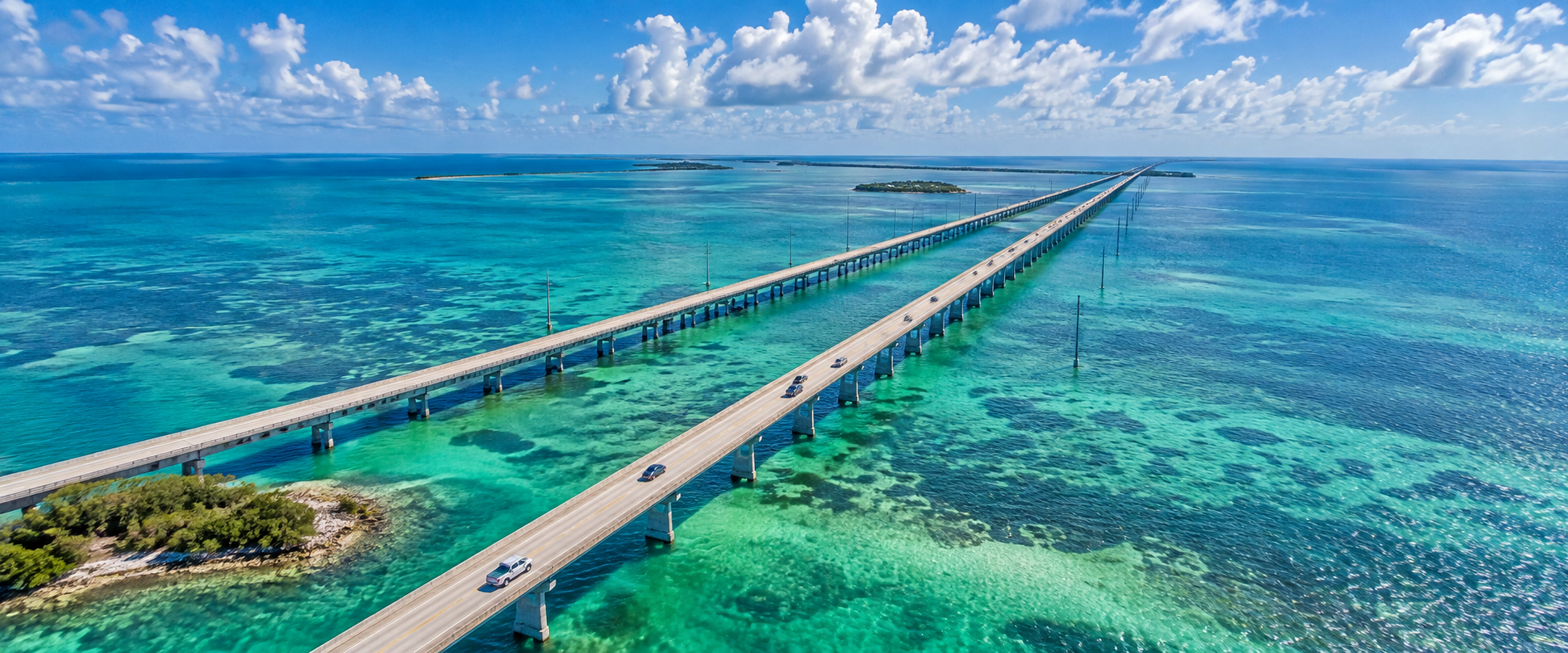
This is the legendary Overseas Highway—US Route 1—an engineering marvel that unfurls across one hundred and thirteen miles and forty-two bridges, linking a gentle archipelago of limestone and coral islands known collectively as the Florida Keys.
Originally forged in the early twentieth century as oil tycoon Henry Flagler’s audacious Florida East Coast Over-Sea Railroad—dubbed by skeptics at the time as "Flagler’s Folly"—the route was transformed into a paved highway following the Labor Day Hurricane of 1935.
Today, embarking on this subtropical road trip is one of the quintessential American bucket-list journeys, where travelers literally drive over open ocean waters, feast on freshly fried sea conch and tart lime pies, and arrive at the bohemian, southernmost rim of the continental United States.
Island-Hopping South: From Coral Reefs to the Seven Mile Bridge
The journey down the Overseas Highway is far more than just a direct drive; each key along the chain boasts its own distinct maritime personality and ecological wonders:
- Key Largo and America's First Undersea Park: Just an hour south of Miami, Key Largo welcomes drivers into a world of vibrant undersea life at John Pennekamp Coral Reef State Park. Snorkelers and scuba divers board catamarans to visit living offshore coral barrier reefs, kaleidoscopic schools of parrotfish, sea turtles, and the famous submerged nine-foot bronze statue of Christ of the Abyss.
- Islamorada (The Sportfishing Capital): Further south along the overseas trail lies Islamorada, famous for world-class offshore sportfishing and serene saltwater flats. A favorite roadside tradition is stopping at Robbie's Marina, where travelers buy buckets of silver fish and hand-feed massive, six-foot wild Atlantic tarpon leaping directly out of the teal harbor water.
- Marathon and the Seven Mile Bridge Engineering Feat: Passing through the family-friendly heart of the Keys brings you to the crown jewel of the highway: the Seven Mile Bridge. Spanning nearly seven miles of uninterrupted ocean between the Gulf of Mexico on the right and the vast Atlantic Ocean on the left, driving across this sweeping modern causeway feels like hovering weightlessly over a sea of liquid turquoise. Parallel to the modern road sits the historic original railway bridge, now partially restored as a scenic walking and cycling pier leading to historic Pigeon Key.
- Bahia Honda State Park: Nestled in the Lower Keys just past the big bridge, Bahia Honda features the most picturesque natural white-sand beaches in the entire archipelago, fringed by native coconut palms and offering crystalline shallows perfect for cooling off in the midday heat.
The Culinary Heritage of the Conch Republic: Key Lime Pie & Coastal Feasts
Centuries of geographic isolation, Bahamian seafaring migration, and Cuban cultural integration created a regional culinary style completely unique to the Florida Keys.
Dining here revolves around open-air wooden docks, salty ocean breezes, and dishes born from resourceful coastal pioneers:
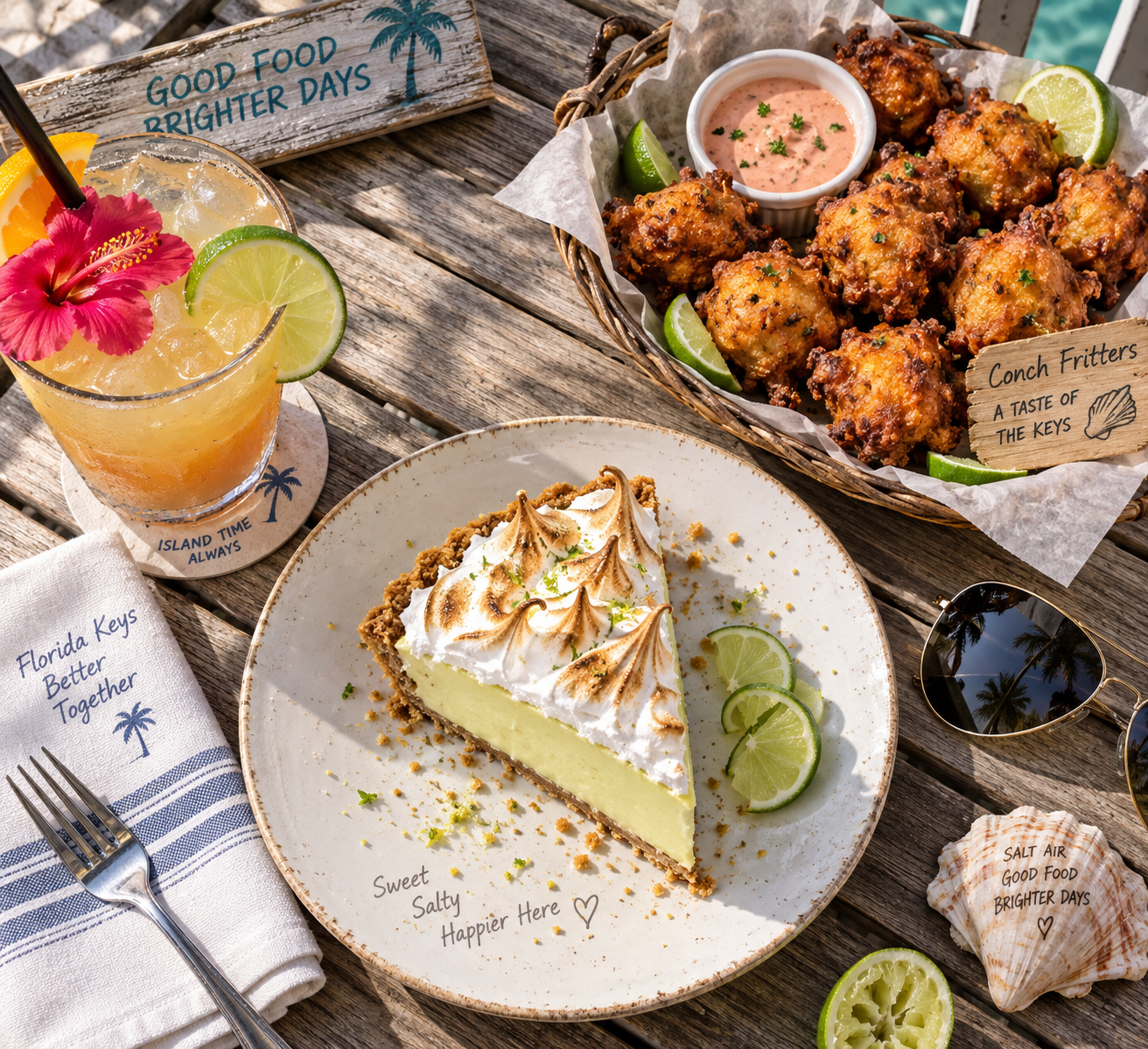
No traveler can truly claim to have experienced the Keys without savoring these signature staples:
- Authentic Key Lime Pie: True Key lime pie is a delicate balance of tart, creamy, and sweet. Made exclusively from small, marble-sized Key limes (Citrus aurantiifolia)—which are infinitely more aromatic and intensely acidic than common Persian grocery store limes—the filling blends freshly squeezed pale-yellow juice with egg yolks and sweetened condensed milk. Baked into a buttery graham cracker crust, it is traditionally crowned with lofty, toasted peaks of golden-brown egg-white meringue or fresh whipped cream. Noticeably, authentic Key lime filling is naturally soft pale yellow; any pie that appears artificial green is an immediate tourist imitation.
- Crispy Golden Conch Fritters: Sea conch meat—tenderized, finely diced, and seasoned with finely chopped red bell peppers, celery, scallions, garlic, and a pinch of cayenne—is folded into a light savory batter and fried until deeply golden and crisp. Squeezed with fresh lime juice and dunked into spicy pink Key West calypso dipping sauce, these fritters provide the ultimate crunchy seaside appetizer.
- Peel-and-Eat Key West Pink Shrimp: Harvested from the shallow coral-sand waters surrounding the Marquesas Keys and Dry Tortugas, these wild-caught pink shrimp are renowned for their sweet, succulent flavor and firm texture, traditionally boiled in seasoned court-bouillon with pickling spices and served cold with tangy cocktail sauce.
- Cuban Sandwiches and Morning Coladas: Long before road bridges connected Key West to Florida, the island maintained closer trade and cultural ties with Havana than with Miami. Begin mornings by pulling up a stool at historic Cuban bakeries like Sandy’s Cafe or El Siboney, ordering a steaming thimble of potent sweetened espresso (a colada) alongside warm, buttered Cuban toast pressed flat and crisp on a hot plancha.
Bohemian Key West: Gingerbread Cottages, Hemingway, and Island Freedom
Reaching Key West—Mile Marker 0 of Route 1—feels like entering an independent Caribbean republic, which locals famously declared in 1982 when they tongue-in-cheek seceded from the United States to establish the Conch Republic.
The town’s historic Old Town is a national treasure trove of nineteenth-century maritime architecture, characterized by narrow leafy lanes shaded by towering banyan trees, vibrant pink bougainvillea, and the melodious crowing of feral wild roosters that wander freely across the sidewalks:
- The Ernest Hemingway Home and Museum: Nestled in a lush walled compound on Whitehead Street, this handsome 1851 Spanish colonial villa made of native coral stone was the residence of legendary author Ernest Hemingway throughout the 1930s. Here, Hemingway penned classics like To Have and Have Not and The Snows of Kilimanjaro. Visitors can stroll through his second-story writing studio and pet the dozens of famous six-toed (polydactyl) cats that still roam the grounds, all descendants of his original white ship's cat, Snow White.
- Pastel Gingerbread Conch Cottages: Strolling along Eaton and Caroline streets reveals architectural gems built by nineteenth-century shipwrights, featuring pastel clapboard siding, intricate hand-carved gingerbread trim, wide shaded front verandas, and raised foundations designed to catch ocean drafts.
- The Southernmost Point Buoy: A brightly painted concrete ocean buoy anchored at the corner of Whitehead and South streets marks the southernmost geographic point of the continental United States, famously reading: 90 Miles to Cuba / Southernmost Point Continental U.S.A.
The Sunset Celebration at Mallory Square: Key West's Nightly Miracle
As the afternoon sun begins its descent, all roads in Key West naturally lead westward toward the open waters of the Gulf of Mexico for the world-renowned Sunset Celebration at Mallory Square.
Beginning roughly two hours before nightfall, this historic brick waterfront pier transforms into a festive open-air circus celebrating the beauty of another day completed in paradise:
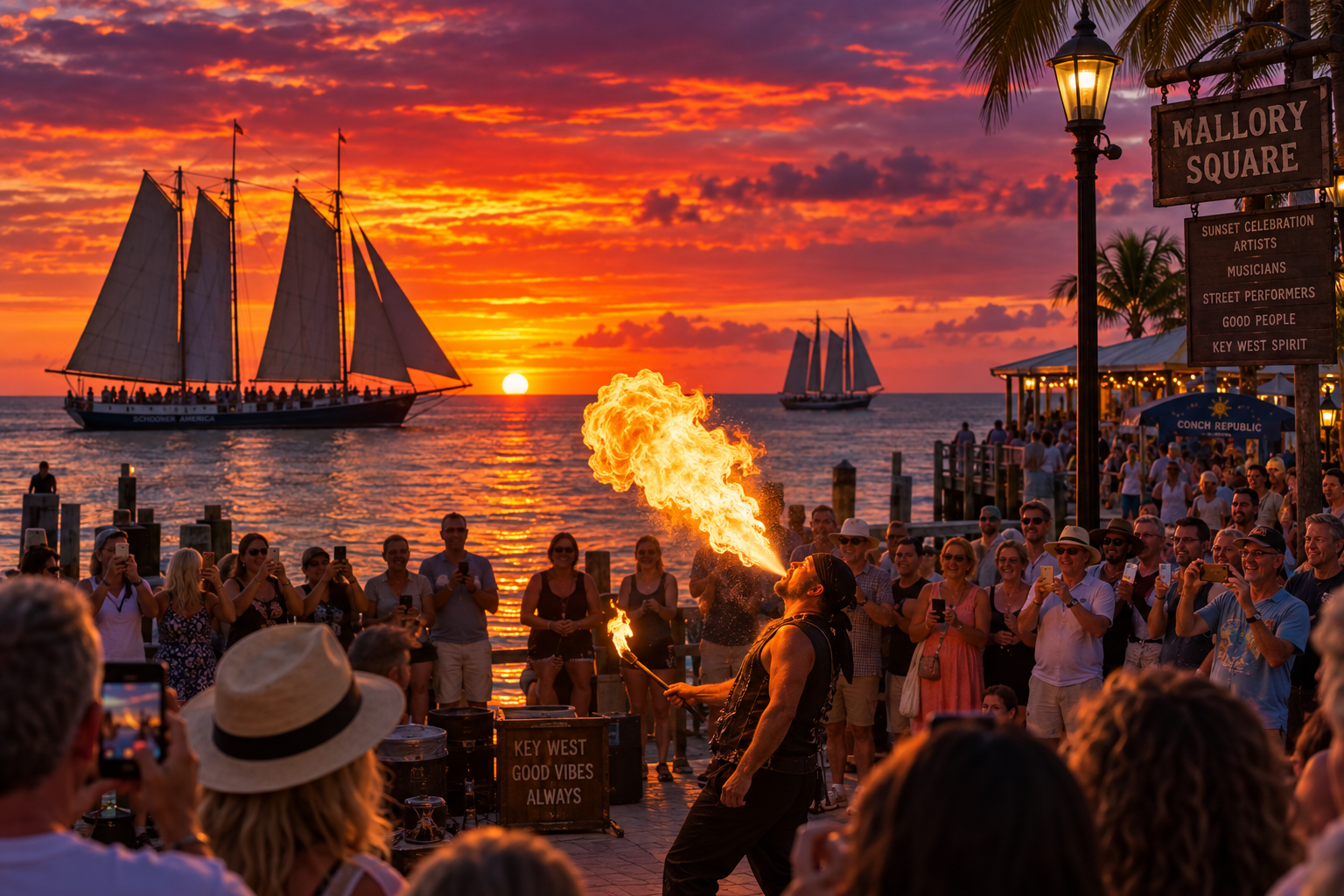
- Watch eccentric street performers, acrobats, sword swallowers, fire jugglers, and local troubadours performing beneath the warm salt breeze as crowds cheer and children gaze in wonder.
- Browse handmade creations from local island artisans, from delicate sea glass jewelry to hand-rolled Key West cigars and fragrant coconut shell crafts.
- Marvel as vintage tall-ship wooden schooners and catamarans glide past the pier, their billowing white sails silhouetted in sharp relief against a sky that ignites in shades of molten gold, flaming tangerine, and bruised violet.
- Join the collective roar of clapping and cheers from thousands of spectators the exact moment the fiery red sphere slips beneath the tranquil horizon, signaling the transition into Key West's legendary nightlife along bustling Duval Street.
Essential Overseas Highway Travel Advice: Navigation, Seasons, and Packing
To make the most of your road trip across the Florida Keys, keep these practical island travel strategies in mind:
- Respect Island Speed Limits: The Overseas Highway is heavily patrolled by local sheriffs and Florida Highway Patrol, particularly through school zones and designated Key Deer protection corridors on Big Pine Key, where the miniature native deer roam near the road. Maintain posted speeds, especially at night.
- Ditch the Car in Key West: Parking in Old Town Key West is scarce and expensive. Once you arrive at your guesthouse, park your vehicle and explore the compact island like a local by renting a bicycle, riding an electric golf cart, or utilizing the complimentary Duval Loop air-conditioned bus that circulates through downtown every fifteen minutes.
- Reef-Safe Sunscreen Only: When swimming or snorkeling in the fragile marine sanctuaries of the Keys, always use mineral-based, reef-safe sunscreen (free of oxybenzone and octinoxate) to protect living coral polyps from environmental damage.
- Best Times to Travel: Winter and early spring (December through April) offer the most pleasant weather, with clear skies, mild coastal breezes, and low humidity. Late spring (May and June) brings warmer water for snorkeling and significantly fewer road-trip crowds before the peak late-summer tropical storm season.