
# Standing on the Edge of the Grand Canyon and the Sculpted Sandstone Waves of Antelope
No photograph, documentary film, or widescreen panorama ever prepares you for the sheer physical shock of stepping to the edge of the Grand Canyon for the very first time. You walk up the gentle incline through a sparse pine forest, your eyes expecting another forested hill or highway vista, and then the earth simply drops away beneath your boots. Before you lies a colossal abyss over a mile deep and eighteen miles across, stretching toward the horizon like an unstitched tear across the crust of the earth.
This is the timeless heart of northern Arizona, where the Colorado River has spent six million years slicing through nearly two billion years of planetary history. Beyond the sheer monumental scale of the canyon itself, this high-desert plateau holds some of the most surreal landscapes on the continent: the swirling, wave-sculpted sandstone chambers of Antelope Canyon, the thousand-foot vertigo of Horseshoe Bend, and the rich culinary and artistic heritage of the Navajo Nation.
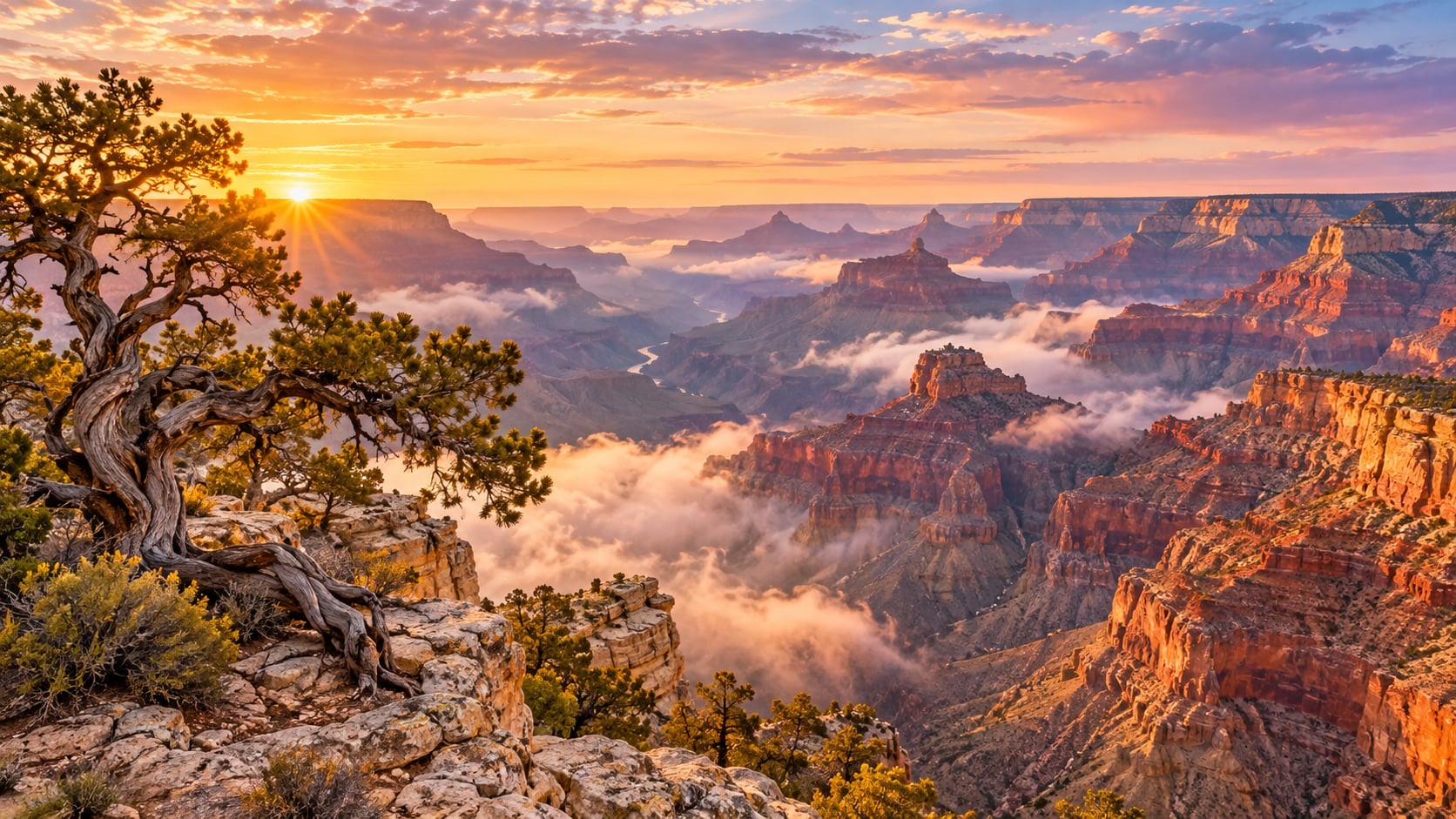
The Great Chasm of Time: Why Nothing Prepares You for the Grand Canyon
Standing at seven thousand feet above sea level on the Colorado Plateau, the air carries a crisp, dry sharpness scented with aromatic piñon pine, cliffrose, and desert sage. The silence here is physical. Sounds from the rim—a raven’s wingbeat, the whisper of wind across limestone ledges, the faint sigh of ancient stone—seem swallowed by the cavernous depth.
What makes the Grand Canyon so profoundly mesmerizing is its ever-changing palette. The canyon is never the same color two minutes in a row. As shadows shift and clouds pass overhead, the exposed strata of rock tell an epic geological narrative: the white Kaibab limestone at the rim, the dusty pink Hermit shale below, the sheer red cliffs of Redwall limestone, and down at the very bottom in the shadowy Inner Gorge, the dark, contorted Vishnu schist formed nearly two billion years ago when single-celled organisms were first appearing on Earth.
Sunrise Along the South Rim: Mather Point Whispers and Piñon Pine Breezes
The South Rim of the Grand Canyon is open year-round and offers the most accessible and dramatically sweeping views of the national park. While midday brings thousands of visitors, early morning is when the canyon reveals its true spiritual majesty.
Set your alarm an hour before dawn and head to Mather Point, Yavapai Point, or Desert View. As the eastern sky transitions from navy blue to pale peach and dusty rose, the canyon floor remains shrouded in deep indigo shadows. Then, the first golden ray of sunlight strikes the top of the North Rim across the void, igniting the highest sandstone temples in fiery orange fire. Minute by minute, light cascades down the stone amphitheater like liquid honey, turning shadowed chasms into glowing amphitheaters of gold and terracotta.
- Stroll along the paved Rim Trail between Grand Canyon Village and Hermits Rest; the trail is largely flat and offers countless secluded stone overlooks away from the main shuttle bus stops.
- Avoid hanging over unsecured cliff ledges or stepping over guardrails for selfies; loose sandstone and sudden gusts of wind can cause fatal falls.
- Explore the historic Mary Colter buildings in the village, including Hopi House and Bright Angel Lodge, which were designed in the early 1900s to blend organically with indigenous stone and timber architecture.
Sacred Light in the Slot Canyons: Walking Through the Curving Walls of Antelope
Two hours northeast of the Grand Canyon Village, driving across the open red sands of the Navajo Nation brings you to the desert hub of Page, Arizona. Here lies Antelope Canyon, perhaps the most photogenic slot canyon on Earth.
Carved into Navajo sandstone over hundreds of thousands of years by seasonal flash floods, Antelope Canyon is a subterranean wonder. Guided tours led by Navajo guides are mandatory, as the canyon sits on sacred tribal land and flash flood monitoring is essential for safety.
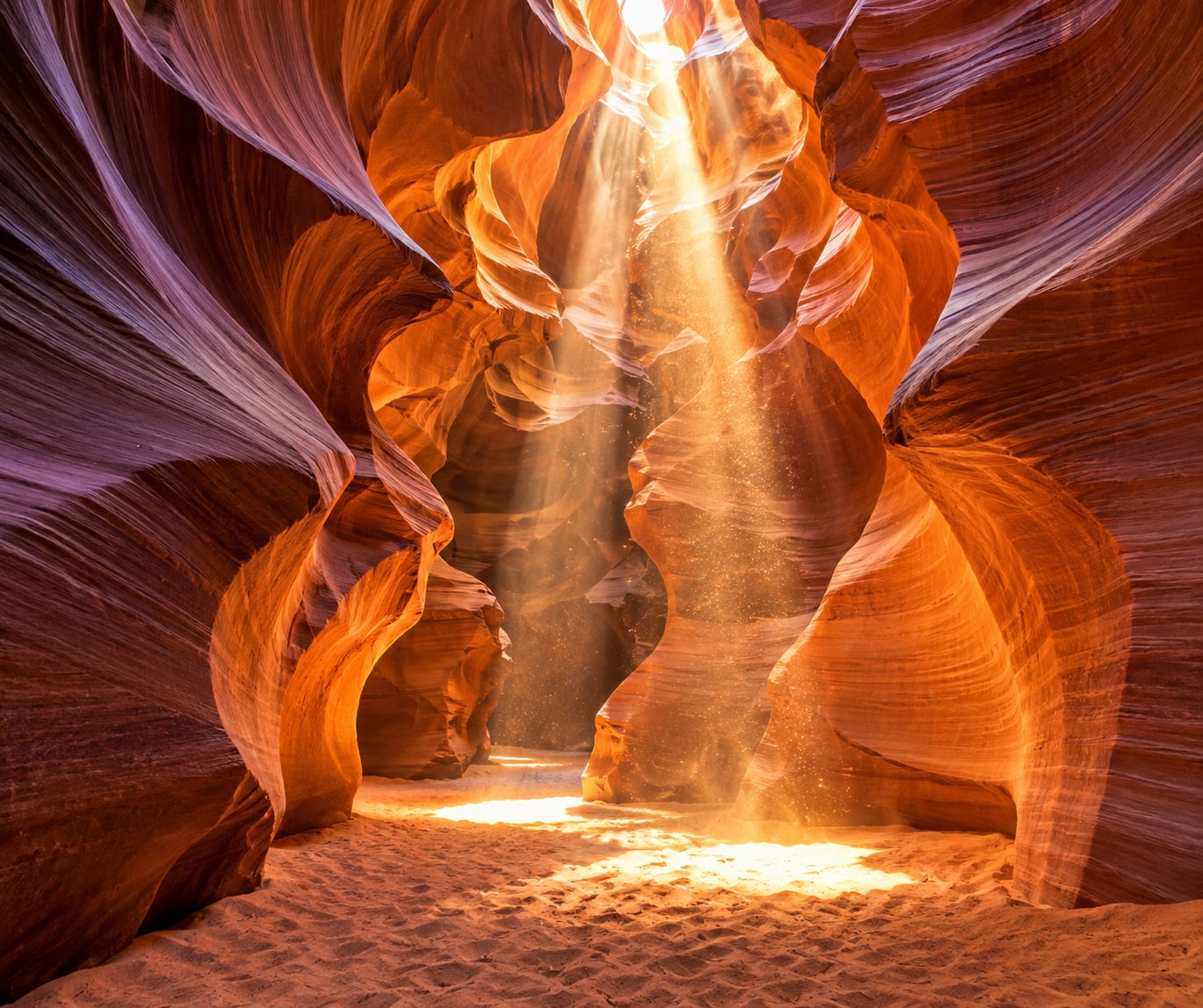
Entering Upper Antelope Canyon feels like walking inside the swirling heart of a petrified flame. The narrow passage twists and turns, with walls sweeping thirty feet overhead in fluid, ripple-like waves of stone. Between late spring and early autumn during midday, shafts of golden sunlight pierce through narrow openings in the ceiling, striking the sandy floor like celestial spotlights that illuminate swirling clouds of fine red dust. In Lower Antelope Canyon, you descend into the stone via metal staircases, winding through narrower, spiral-like chambers where the light reflects in ethereal gradients of amber, violet, and deep coral.
- Book your tour reservations several months in advance, especially for midday prime-time slots when sunlight shafts are most pronounced.
- Wear a dust bandana or scarf and sunglasses; fine desert sand frequently trickles down from the canyon rim above during breezy days.
- Respect your Navajo guide’s cultural stories and sacred traditions; the canyon is revered by tribal elders as a holy cathedral where spiritual harmony is renewed.
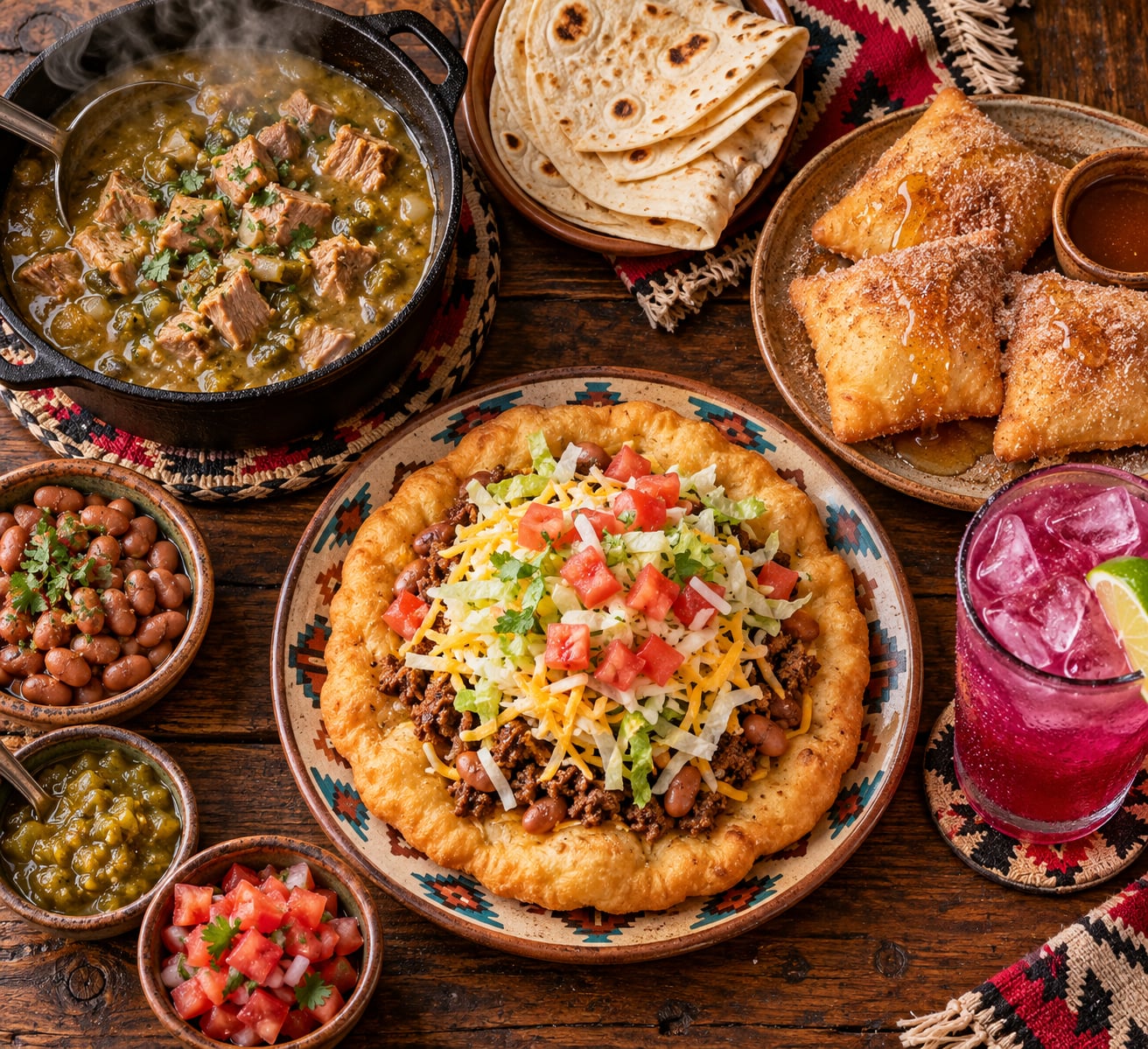
Southwestern Flavors on the Trail: Warm Navajo Frybread, Green Chile Stew, and Desert Feasts
Exploring the high desert builds an immense appetite, and northern Arizona offers a culinary heritage born of survival, indigenous resilience, and deep Southwestern comfort.
The undisputed icon of Native American roadside cuisine is Navajo frybread. Simple in ingredients—flour, baking powder, salt, and warm water—the dough is hand-stretched paper-thin, then dropped into bubbling hot oil until it puffs into a golden, pillowy disc with crisp blistered edges and a soft, chewy interior.
At roadside stands and tribal dining posts, order an authentic Navajo taco. The golden frybread serves as a sturdy foundation piled high with seasoned ground beef or shredded flank steak, slow-simmered pinto beans, melted sharp cheddar cheese, shredded lettuce, diced vine-ripened tomatoes, and spicy red salsa. For dessert, order plain frybread drizzled with warm amber clover honey or dusted in powdered cinnamon sugar. Biting into the hot, sweet dough while looking out over red mesas is an unforgettable culinary milestone.
Equally comforting is a bowl of New Mexican-style green chile stew, prepared with tender cubes of slow-braised pork shoulder, roasted Hatch green chiles, sweet corn, and potatoes in a savory broth served with warm corn tortillas. And to quench your thirst after miles on dusty trails, sip on refreshing iced tea brewed with prickly pear cactus fruit, glowing bright magenta and offering a sweet, melon-like floral flavor.
- Stop at the historic Cameron Trading Post along Highway 89 for their legendary mammoth Navajo taco, renowned across the Southwest since the early 1900s.
- Pack high-protein snacks like beef jerky, raw almonds, and dried apricots for long drives between canyon viewpoints where services are miles apart.
- Sample local blue corn pancakes served with warm maple syrup or piñon pine nut butter at trading post diners for an energizing breakfast before hiking.
The Thousand-Foot Drop: Sunset Reflections Over the Emerald Horseshoe Bend
Just five miles south of Page sits Horseshoe Bend, an astonishing geological spectacle that draws millions of travelers annually. A short, three-quarter-mile walk along a wide gravel trail brings you to the edge of a sheer thousand-foot sandstone precipice.
Look over the edge and your breath catches in your throat. Far below, the Colorado River makes an almost perfect 270-degree hairpin turn around a massive sandstone butte. The water glows deep emerald green against the towering rust-red walls, reflecting clouds like a liquid ribbon of glass. Tiny tour boats and river rafts drift below, looking like colorful specks of confetti against the colossal stone ramparts.
Sunset is the ultimate hour to experience Horseshoe Bend. As the sun dips below the western desert rim, the sky ignites in fiery shades of gold and burnt orange, casting a soft glow over the curved canyon walls while the river reflects the twilight sky.
- Arrive at least forty-five minutes before sunset to secure parking and walk the trail before the light fades.
- Stay well back from the unrailed sandstone cliff edges; the rock can be friable and sudden gusts of wind near the precipice can be hazardous.
- Bring a wide-angle camera lens (14mm to 24mm) if you want to capture the entire 270-degree bend of the river in a single frame.
The Sacred Lands of the Navajo Nation: Cameron Trading Post and Ancient Traditions
Traveling through northern Arizona means passing through Diné Bikéyah—the vast Navajo Nation, covering over twenty-seven thousand square miles across three states. This is a landscape where sandstone spires, flat-topped mesas, and endless sagebrush horizons carry thousands of years of human story.
A stop at the historic Cameron Trading Post, established in 1916 on the banks of the Little Colorado River Gorge, offers an authentic immersion into Native American craftsmanship. Inside the stone-walled trading gallery, admire hand-woven Navajo wool rugs featuring bold geometric patterns, silver and turquoise jewelry crafted by Zuni and Navajo silversmiths, and hand-coiled Santa Clara Pueblo pottery.
Take the scenic Desert View Drive (Highway 64) along the canyon’s eastern rim to visit the Desert View Watchtower, designed by architect Mary Colter in 1932 to honor ancestral Puebloan stone towers. The interior walls feature stunning authentic murals painted by Hopi artist Fred Kabotie, depicting sacred tribal cosmology and the origin of human life.
- When purchasing authentic Native American jewelry, look for silver hallmarks and certificates of authenticity guaranteeing genuine turquoise and hand-stamped sterling silver.
- Arizona does not observe Daylight Saving Time, but the Navajo Nation does, meaning your phone clock may jump back and forth by an hour when crossing tribal boundaries.
- Support tribal artisans directly by purchasing pottery, woven baskets, and turquoise jewelry at roadside wooden vendor ramadas along highways.
Practical Desert Highway Essentials: Timed Entry, Summer Monsoons, and High-Altitude Packing
Navigating the great distances and extreme environments of northern Arizona requires thoughtful preparation to ensure a smooth, worry-free adventure:
- Understand the altitude and desert climate: The South Rim sits at seven thousand feet elevation, while Page sits around four thousand feet. At this height, the atmosphere is thin and dry. Drink plenty of water constantly, apply high-SPF sunscreen and lip balm, and allow your body time to adjust if coming from sea level.
- Dress in strategic layers: Desert temperatures can swing forty degrees within twelve hours. A crisp 35°F dawn at the canyon rim can easily transform into a sunny 75°F afternoon before tumbling back to chilly temperatures after sunset. Bring a wind-resistant fleece jacket, thermal base layers, and sturdy hiking boots with aggressive tread.
- Fuel up whenever you see a gas station: Distances between towns like Flagstaff, Cameron, Tusayan, and Page span forty to eighty miles of remote desert with zero cell service or service stations. Never let your fuel tank drop below a quarter full.
- Be aware of summer flash flood risks: The desert monsoon season from July through September brings sudden afternoon thunderstorms that can trigger devastating flash floods in dry washes and slot canyons miles away from the rain. Always heed ranger advisories and never enter slot canyons during rainy weather.
- Plan photography timing wisely: Midday harsh overhead sun washes out canyon colors and creates deep black shadows. The most breathtaking photographs happen during the "golden hours"—one hour after sunrise and one hour before sunset—when soft raking light brings out the rich red, purple, and gold tones of the stone.
When you leave the canyon behind and watch the red sandstone mesas fade into the rear-view mirror, the immense silence of Arizona stays with you. You will remember the cool morning breeze carrying the scent of pine over the rim, the golden light dancing through the slot walls of Antelope, and the overwhelming feeling of standing before millions of years of patient, unhurried time.