
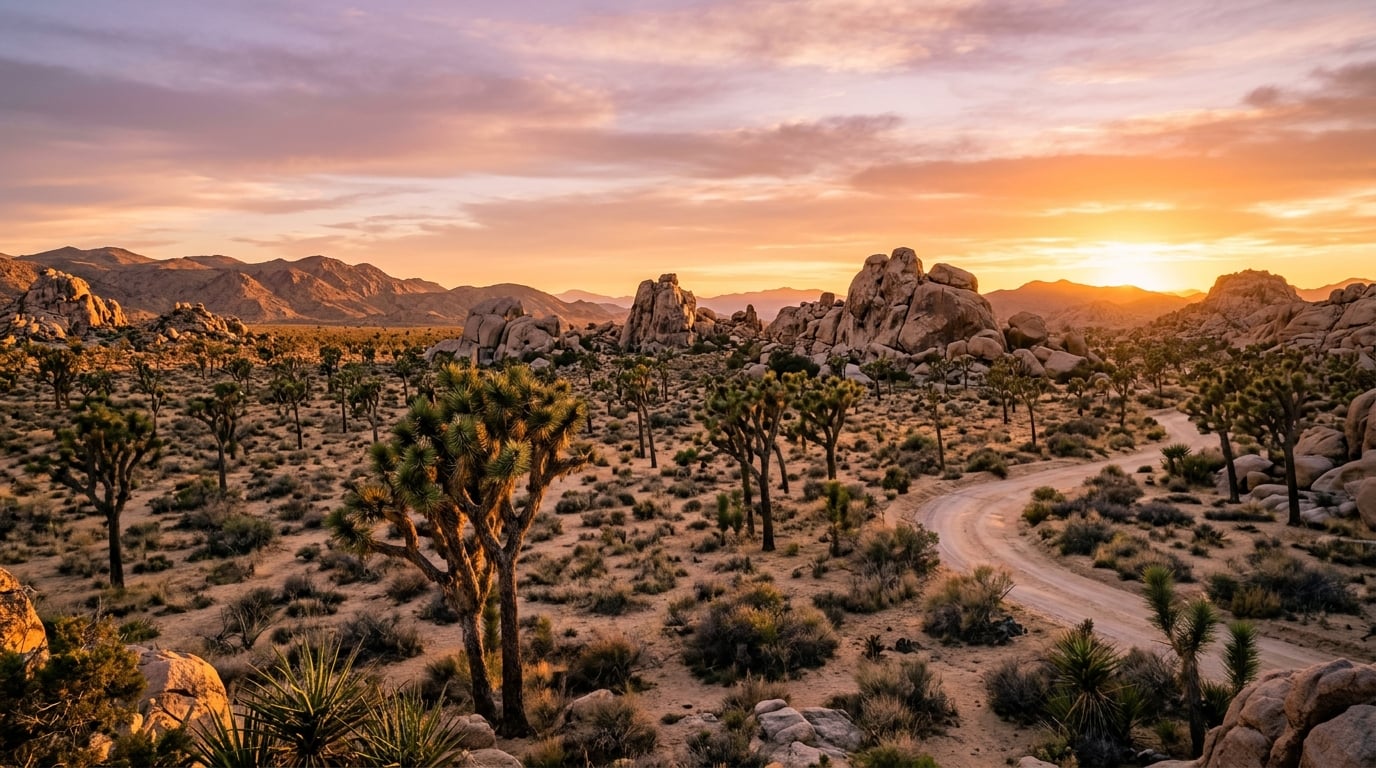
Just a two-hour drive east of the sprawling Los Angeles basin, the coastal freeways give way to vast horizons of sand, weathered granite, and sky. Here in Southern California's high desert, where the cooler, higher Mojave Desert collides with the lower, sun-scorched Colorado Desert, Joshua Tree National Park spreads across nearly eight hundred thousand acres of primordial wonder. It is a surreal landscape that looks as if it were plucked straight from an illustrated fantasy book. Spindly, twisted Joshua trees raise their bristling, pom-pom branches toward heaven, while colossal piles of golden quartz monzogranite boulders rise from the desert floor like the abandoned stone playthings of slumbering giants.
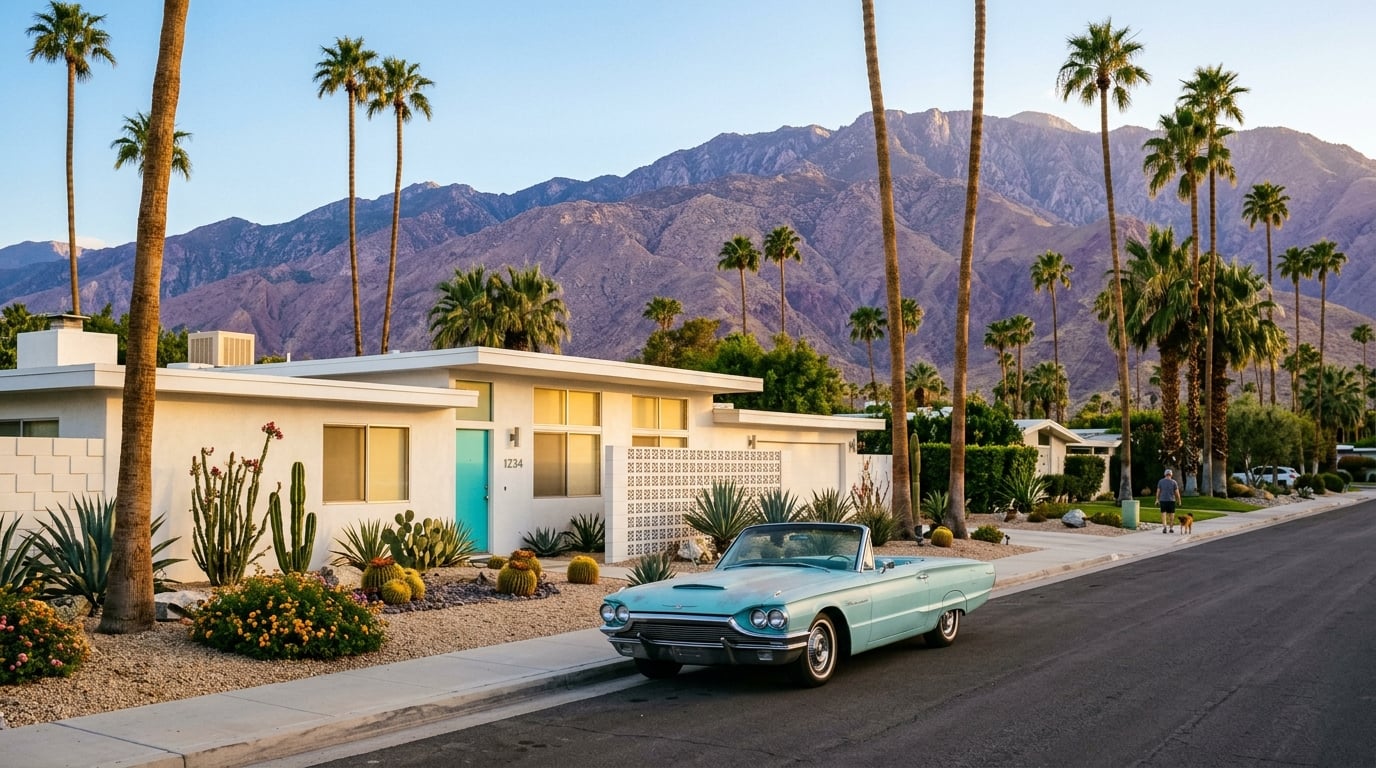
Just down the mountain pass lies the Coachella Valley and the legendary desert oasis of Palm Springs. Long revered as the sun-drenched playground of Hollywood royalty, Palm Springs offers an intoxicating architectural and cultural counterpoint to the wild desert backcountry. Here, sleek mid-century modern villas with clean geometric lines and retro turquoise doors sit tucked beneath towering fan palms, shadowed by the dramatic eight-thousand-foot vertical escarpment of Mount San Jacinto. Whether you are scrambling over sun-warmed granite monoliths in Hidden Valley, sipping an icy date shake pressed from local Coachella palm groves, or watching the Milky Way blaze across ink-black desert skies beside a crackling campfire, this high desert kingdom awakens a profound sense of peace and creative inspiration. This comprehensive guide uncovers the most iconic boulder trails, panoramic mountain lookouts, retro desert retreats, culinary treasures, and essential desert wisdom for crafting an unforgettable autumn journey.
Where Two Mighty American Deserts Converge in Geological Wonder
To truly appreciate Joshua Tree National Park is to understand its extraordinary ecological duality. The park is split diagonally into two distinct desert worlds, each shaped by differences in elevation, moisture, and temperature. The western and northern halves belong to the Mojave Desert, elevated above three thousand feet, where cooler winter temperatures and seasonal rains create the exact conditions required for Yucca brevifolia, the fabled Joshua tree, to thrive. The eastern half drops down toward the sea-level basin of the Colorado Desert, an arid expanse characterized by spiny ocotillo shrubs, dense stands of jumping cholla cactus, and creosote bushes that can survive for thousands of years.
The trees themselves possess an eccentric, almost human personality. Named by Mormon emigrants in the mid-nineteenth century who saw in the outstretched branches the biblical prophet Joshua pointing the way to the Promised Land, these resilient members of the agave family can live for hundreds of years. Without annual tree rings, their age is estimated by their height, growing merely one to two inches annually in the dry soil.
The park's iconic rock formations tell an even older geological tale. More than one hundred million years ago, molten granite pushed upward beneath the earth's crust, cooling slowly into crystalline stone deep underground. Over eons, groundwater seeped through perpendicular fractures, dissolving and rounding the sharp edges. Subsequent erosion stripped away the overlying soil, leaving behind the massive, weathered stacks of boulders that draw rock climbers, hikers, and photographers from across the globe.
Scrambling the Monolithic Granite Labyrinths of Hidden Valley and Jumbo Rocks
Exploring Joshua Tree on foot is an invitation to play, scramble, and reconnect with youthful curiosity. Unlike parks where trails are strictly confined to narrow boardwalks, the park's boulder fields encourage thoughtful exploration, allowing visitors to clamber over grippy, textured granite friction slabs and weave through secret stone corridors.
Among the park's premier hiking routes, several trails stand out as absolute must-do journeys:
- Hidden Valley Nature Trail: A scenic one-mile loop winding through an enclosed stone amphitheater once used by cattle rustlers to hide stolen herds. Surrounded on all sides by towering rock walls, this sheltered pocket features a diverse desert garden of pinyon pines, juniper bushes, and yucca.
- Barker Dam Trail: A gentle 1.1-mile loop that leads to a historic water reservoir built by early cattle ranchers in 1900. Depending on seasonal rainfall, the blue pool reflects the surrounding boulders, attracting bighorn sheep, desert tortoises, and migratory songbirds, with a spur trail leading to well-preserved Native American petroglyphs and pictographs.
- Cholla Cactus Garden: Located along the transition zone between the Mojave and Colorado deserts, an elevated wooden boardwalk loops through a dense natural forest of thousands of teddy-bear cholla cacti. In early morning or late afternoon light, the golden needles glow with an ethereal luminescence that creates mesmerizing photographs.
- Arch Rock and Skull Rock: Easily accessible formations where natural weathering has hollowed out granite into a freestanding thirty-foot stone arch and a spooky, hollow-eyed granite skull right beside the road.
Sunset Over the San Andreas Fault and Celestial Stargazing in the Dark Sky
As afternoon transitions into evening, the desert puts on its most dramatic performance. Driving up the paved spur road to Keys View, situated at 5,185 feet atop the crest of the Little San Bernardino Mountains, rewards travelers with one of the most sweeping vistas in the American West.
Looking down into the vast Coachella Valley basin, you can clearly trace the long tectonic trough of the infamous San Andreas Fault running along the valley floor. On crystal-clear autumn afternoons, the panorama extends for over ninety miles, stretching from the glittering expanse of the Salton Sea in the south to the snow-capped peak of Mount San Gorgonio in the north and the jagged ridge of Mount San Jacinto directly across the valley. As the sun dips beneath the mountain rim, the desert sky ignites in ribbons of amber, rose, violet, and deep indigo.
When dusk gives way to total nightfall, Joshua Tree reveals its second wonder: world-class stargazing. Designated an International Dark Sky Park by the International Dark-Sky Association, the park benefits from surrounding mountain ranges that shield it from the artificial light glare of coastal cities.
- Pack a warm blanket and headlamps with red-light mode to preserve your natural night vision.
- Pull into scenic pullouts near Cap Rock or Jumbo Rocks Campground, lay back on a reclining camp chair, and watch the dense river of the Milky Way arch directly above the spiky silhouettes of Joshua trees.
- Time your stargazing to coincide with the new moon cycle for the darkest skies, or bring binoculars to spot planetary rings, the Andromeda galaxy, and frequent shooting stars streaking across the atmosphere.
The Retro Glamour and Architectural Splendor of Palm Springs
Descending the winding switchbacks of Highway 62 into the Coachella Valley brings you to Palm Springs, a glamorous oasis that has fascinated visionaries, artists, and celebrities since the 1920s. Bound by an old Hollywood studio contract rule that required actors to remain within a two-hour drive of Los Angeles in case of emergency film reshoots, legends such as Frank Sinatra, Dean Martin, Marilyn Monroe, and Elvis Presley adopted Palm Springs as their private desert playground.
This celebrity influx triggered an architectural renaissance, giving birth to Desert Modernism, a design movement pioneered by master architects like Richard Neutra, Albert Frey, and Donald Wexler. Characterized by low-slung horizontal rooflines, expansive floor-to-ceiling glass walls that erase the boundary between indoor and outdoor living, breeze-block screen walls, and private kidney-shaped swimming pools, these historic homes remain beautifully preserved throughout neighborhoods like Vista Las Palmas, Twin Palms, and the Movie Colony.
For an astonishing shift in climate and terrain, board the Palm Springs Aerial Tramway, the world's largest rotating tram car. The ten-minute journey travels two and a half miles up the sheer cliffs of Chino Canyon, transporting passengers from the warm ninety-degree desert floor to an elevation of 8,516 feet at Mountain Station in Mount San Jacinto State Park. Step out onto alpine observation decks where temperatures are routinely thirty to forty degrees cooler, and wander through fragrant forests of lodgepole and ponderosa pines while gazing down at the entire desert valley spread out like a miniature map.
Savoring Date Shakes and Sizzling Desert Tacos in the Coachella Valley
The culinary culture connecting Joshua Tree, the high desert communities of Yucca Valley and Twentynine Palms, and the Coachella Valley is a mouthwatering collision of historic desert agriculture, authentic Mexican heritage, and contemporary artisanal creativity.
Your desert culinary bucket list must include:
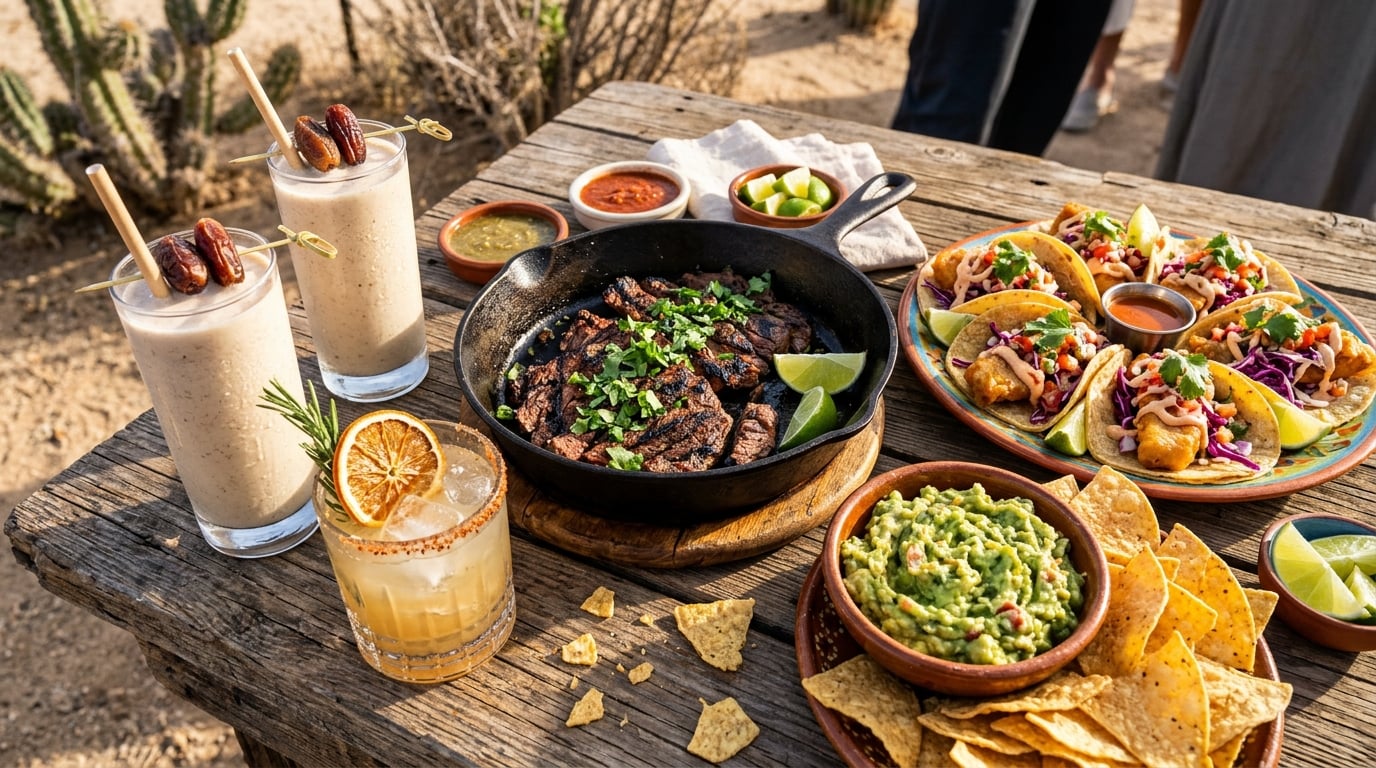
- Coachella Valley Medjool Date Shakes: The Coachella Valley produces roughly ninety-five percent of all dates grown in the United States. Visiting historic groves in Indio or roadside stands yields thick, creamy milkshakes blended with plump Medjool date paste and vanilla ice cream, delivering a rich caramel flavor with natural sweetness that provides instant cooling refreshment.
- Authentic Baja Fish Tacos: Crispy, beer-battered Pacific fish fillets folded into warm corn tortillas, topped with finely shredded cabbage, fresh pico de gallo, and spicy chipotle lime crema, served alongside slow-simmered pinto beans.
- Desert Smokehouse Barbecue: In high desert outposts like Pioneertown, historic saloons that once served as 1940s western movie sets now smoke Texas-style prime brisket, baby back ribs, and pulled pork over white oak and hickory embers, served with jalapeño mac and cheese and cold craft beer.
- Sonoran Carne Asada: Thinly sliced skirt steak marinated in citrus juices, garlic, and Mexican spices, seared over blazing mesquite coals and served with warm flour tortillas, charred scallions, and fresh guacamole.
- Artisanal Agave and Mezcal Cocktails: Desert mixologists celebrate the native agave plant by shaking up smoky mezcal palomas, prickly pear margaritas rimmed with black volcanic salt, and botanical cocktails infused with desert sage and rosemary.
Essential Desert Survival and Exploration Wisdom for Autumn Travelers
The desert is a landscape of profound beauty, but its extreme environment demands respect and careful preparation:
- Hydrate Relentlessly: High desert air has extremely low humidity, causing sweat to evaporate almost instantly without realizing how much water your body has lost. Carry at least one gallon of drinking water per person per day, even for casual car touring, and keep electrolyte replacement powders handy.
- Pack Dynamic Temperature Layers: Autumn in the desert brings dramatic forty-degree temperature swings. While midday temperatures in October and November hover around a comfortable seventy to seventy-five degrees Fahrenheit, temperatures plummet swiftly after sunset into the brisk forties and thirties. Dress in breathable layers with a warm fleece or packable down jacket for nightfall.
- Protect Cryptobiotic Desert Soil: The crusty, dark earth beneath the sand is a living crust of cyanobacteria, mosses, and lichens that stabilizes dunes and nourishes desert plants. Walking off established trails destroys decades of delicate crust growth. Always walk on marked trails, sandy washes, or durable rock slabs.
- Fill Your Gas Tank and Download Offline Maps: There are zero gas stations, grocery stores, or running water spigots within the backcountry boundaries of Joshua Tree National Park. Cell phone service is nonexistent throughout ninety percent of the park. Fill your fuel tank before entering the park gates, pack high-energy snacks, and download all GPS trail maps offline before you go.
- Watch Your Step Around Cacti and Wildlife: Cholla cactus needles have microscopic backward-facing barbs that latch onto clothing and skin at the slightest brush. Never touch cacti, carry a pocket comb and tweezers just in case, and watch your hands and feet when scrambling rocks to avoid startling desert rattlesnakes or scorpions.