
Rising from the warm swells of the North Pacific like an emerald fortress draped in morning mist, Kauai is the oldest and arguably the most visually mesmerizing island in the Hawaiian archipelago. Born over five million years ago from immense shield volcanoes, this northernmost main island has spent millennia being sculpted by relentless tropical trade winds, warm rains, and oceanic waves into a landscape of unimaginable drama. Known universally as The Garden Isle, Kauai feels fundamentally different from the bustling resort corridors of Oahu or Maui; here, strict building ordinances forbid any structure from rising taller than a mature coconut palm, allowing the island's staggering topography to reign supreme.
From the dizzying vertical spires of the legendary Na Pali Coast plunging four thousand feet directly into the cobalt sea to the crimson and ochre chasms of Waimea Canyon, celebrated as the Grand Canyon of the Pacific, Kauai possesses an ancient, elemental power that hums through every valley. Yet alongside its untamed natural monuments, the island cradles a slow-paced, deeply rooted Hawaiian way of life. In the verdant river valleys of Hanalei, emerald patchwork taro fields have been tended continuously by Hawaiian families for over a thousand years, while roadside fruit stands and rustic town squares serve up ruby-red ahi poke tossed minutes after being brought ashore by local fishermen. This comprehensive guide uncovers the most awe-inspiring viewpoints, boat expeditions, canyon treks, island culinary traditions, and practical secrets to help you experience Kauai with the deep respect and wonder it deserves.
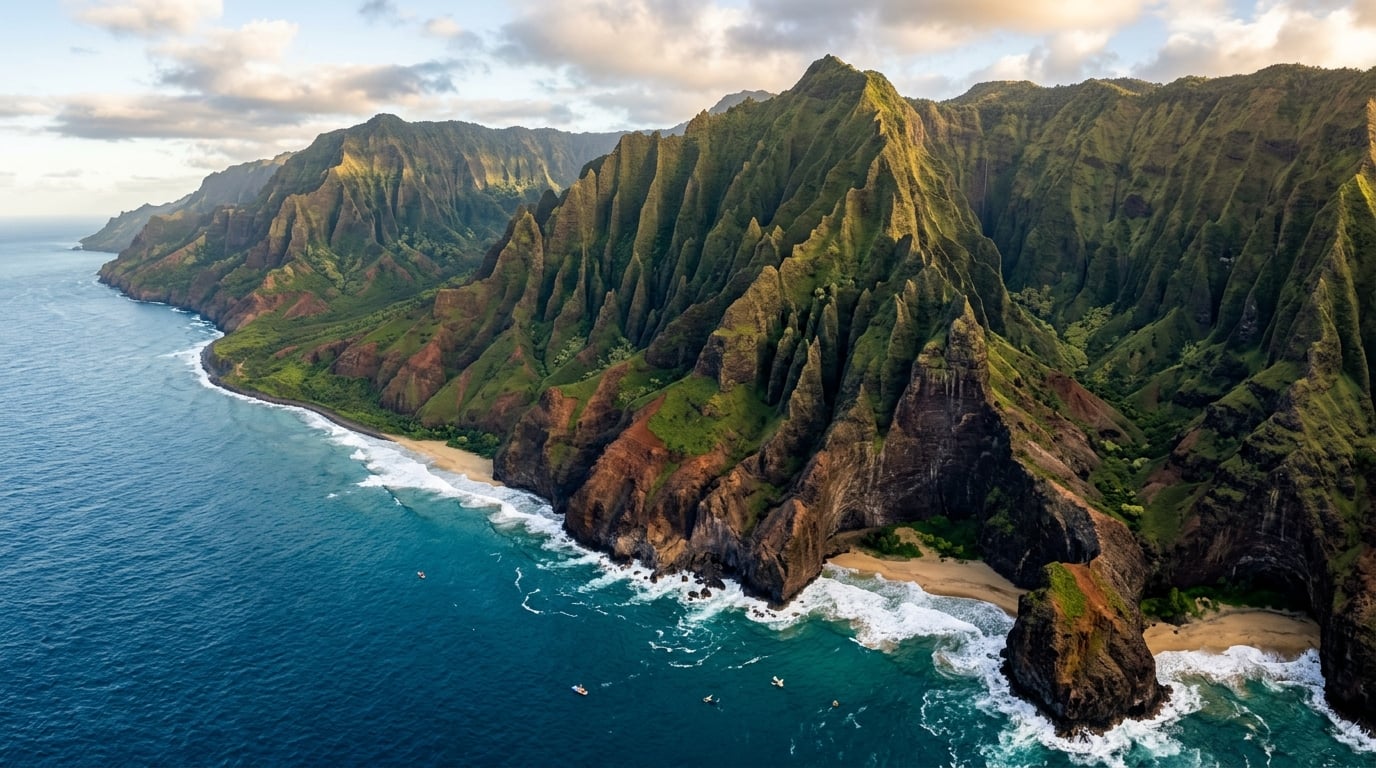
The Primordial Beauty of Hawaiis Oldest Volcanic Sanctuary
To understand Kauai is to understand the quiet majesty of geological age. While the Big Island of Hawaii continues to birth new land through active molten lava, Kauai's volcanic fires fell dormant millions of years ago, giving the natural elements endless time to carve, weather, and soften its volcanic peaks into knife-edge ridges and deep amphitheater valleys. At the center of the island rises Mount Waialeale, an extinct shield volcano whose cloud-shrouded summit ranks among the wettest places on earth, receiving an average of over four hundred and fifty inches of rain each year.
This perpetual mountain rainfall feeds dozens of rushing rivers and gives birth to majestic waterfalls, such as Wailua Falls and Opaekaa Falls, that tumble hundreds of feet through dense rainforests of native ohia lehua, wild ferns, and fragrant white ginger. Because much of Kauai's rugged interior remains entirely roadless and inaccessible by vehicle, vast tracts of wilderness look almost identical today to how they appeared when ancient Polynesian voyagers first navigated their double-hulled canoes across thousands of miles of open ocean to make landfall here.
The island's ecological richness is matched by a tranquil, restorative atmosphere. In place of multi-lane freeways, two-lane coastal highways gently trace the shoreline, winding past historic sugarcane plantation towns with tin-roofed wooden storefronts, sleepy harbors, and expansive golden-sand crescent beaches where endangered Hawaiian monk seals haul out on the sand to doze under the tropical sun.
Soaring and Sailing Along the Cathedrals of the Na Pali Coast
Of all the natural wonders scattered across the Hawaiian islands, none surpasses the sheer monumental majesty of the Na Pali Coast. Stretching for fifteen roadless miles along Kauai's northwest coast, this wilderness sanctuary is defined by vertical sea cliffs, or pali, that soar up to four thousand feet above the breaking surf. Carved by wind and ocean into intricate, velvet-green fluted folds resembling the stone pipes of a colossal Gothic cathedral, these cliffs are intersected by narrow hanging valleys, secluded white-sand beaches, and plunging waterfalls that drop straight into the sea.
Because no paved roads cross this terrain, travelers must choose between three unforgettable perspectives to witness its splendor:
- Sail by Catamaran: Departing from Port Allen or the southern coast, spacious sailing catamarans cruise along the length of the coast, maneuvering into sea caves carved into volcanic basalt, skirting beneath ocean spray from plunging waterfalls, and trailing pods of acrobatic spinner dolphins playing in the bow wake.
- Hike the Kalalau Trail: For rugged hikers, the world-renowned Kalalau Trail traverses the coastal cliffs, beginning at Ke'e Beach. Even hiking just the first two miles to Hanakapi'ai Beach and its inland waterfall offers astonishing cliffside vistas over the breaking ocean swells below.
- Take a Helicopter Tour: Viewing the coast from an open-door helicopter reveals the staggering depth of the interior amphitheater valleys, such as Honopu and Kalalau, where hidden waterfalls cascade down green cliffs inaccessible by foot or water.
Standing in Awe Over the Crimson Depths of Waimea Canyon
Tucked away in the southwestern interior of the island lies an astonishing geological contrast to Kauai's emerald coastlines: Waimea Canyon. Stretching ten miles long, one mile wide, and more than three thousand feet deep, this colossal gorge earned its moniker from author Mark Twain, who famously proclaimed it the Grand Canyon of the Pacific.
Unlike the arid, desert hues of Arizona's Grand Canyon, Waimea Canyon dazzles the eye with an intense, painterly color palette. Sheer cliffs of fiery red volcanic basalt and terracotta clay are striated with ochre earth, punctuated by vivid splashes of emerald-green jungle, and punctuated by the distant silver ribbon of Waipoo Falls plunging eight hundred feet into the gorge floor. The canyon was formed not only by the erosive power of the Waimea River cutting through volcanic rock, but also by a catastrophic collapse of the volcano that formed the island, which created a massive geological rift that filled with subsequent lava flows.
Driving along Waimea Canyon Road (Highway 550) brings you to several extraordinary vantage points:
- Waimea Canyon Lookout (Mile Marker 10): The main observation platform offers an expansive panoramic view across the canyon's widest expanse, where changing clouds cast dramatic shadows across the sculpted red buttresses.
- Pu'u Hinahina Lookout (Mile Marker 13): Provides a perpendicular vista straight down into the canyon's deepest gorges, with distant views extending on clear days toward the forbidden private island of Niihau.
- Kalalau Lookout and Pu'u O Kila Lookout (Kokee State Park): Continuing to the very end of the mountain road leads into Kokee State Park, where the road terminates on high ridges four thousand feet above the Kalalau Valley, looking down from behind the Na Pali sea cliffs into the mist-filled valley and blue ocean far below.
Slow Living in the Taro Valleys of Hanalei and the North Shore
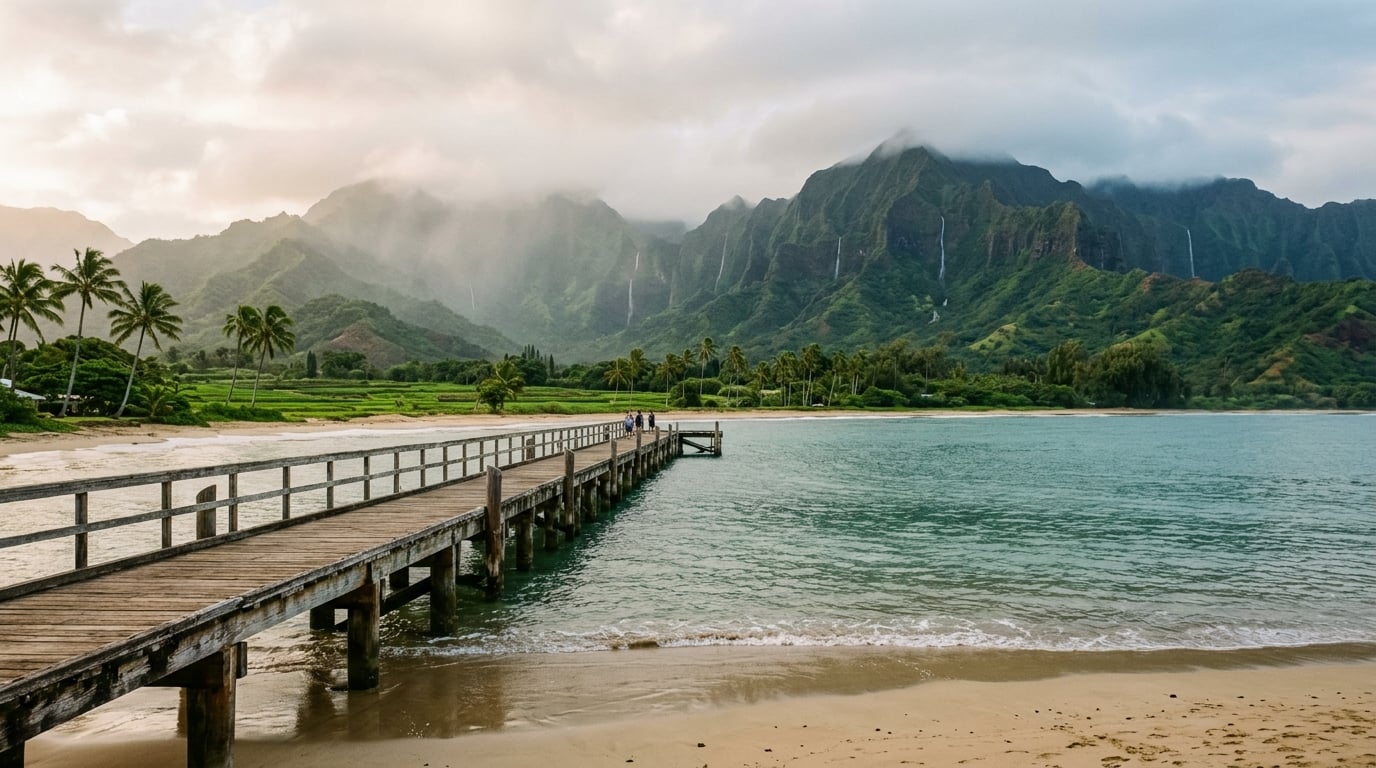
Crossing the historic one-lane bridge over the Hanalei River brings you into the peaceful, timeless realm of Kauai's North Shore. Sheltered beneath sweeping emerald mountains where dozens of thread-like waterfalls cascade down vertical green slopes, Hanalei is a bohemian seaside village that embodies the gentle rhythms of classic Hawaii.
At the heart of the valley lies Hanalei Bay, a nearly perfect two-mile crescent of soft golden sand backdropped by majestic peaks. At the bay's eastern curve, the historic wooden Hanalei Pier, originally built in 1892 for loading rice and sugar crops, extends into calm turquoise waters. On sunny mornings, local families and travelers gather on the pier to fish with bamboo poles, launch stand-up paddleboards, or watch surfers ride gentle, rolling ocean waves into shore.
Surrounding the village are the Hanalei taro fields, a mosaic of flooded emerald paddies framed by coconut palms and ancient mountain ridges. Taro, or kalo in Hawaiian, is considered a sacred elder brother in traditional Hawaiian cosmology, cultivated as a staple food that sustained island communities for generations. Taking an afternoon stroll through the town reveals eclectic artisan boutiques, vintage surf shops, open-air cafes, and farmers markets overflowing with sweet Hawaiian papayas, apple bananas, and creamy avocados.
Savoring Island Poke and Slow Roasted Kalua Feasts
Kauai's cuisine is a mouthwatering reflection of its multicultural plantation heritage, blending native Polynesian agricultural traditions with culinary influences brought by Japanese, Portuguese, Chinese, and Filipino laborers who settled on the island over the past two centuries. Here, food is an expression of generous hospitality, celebrating the abundance of the Pacific Ocean and volcanic island soils.
Iconic island dishes that every traveler must seek out across Kauai include:
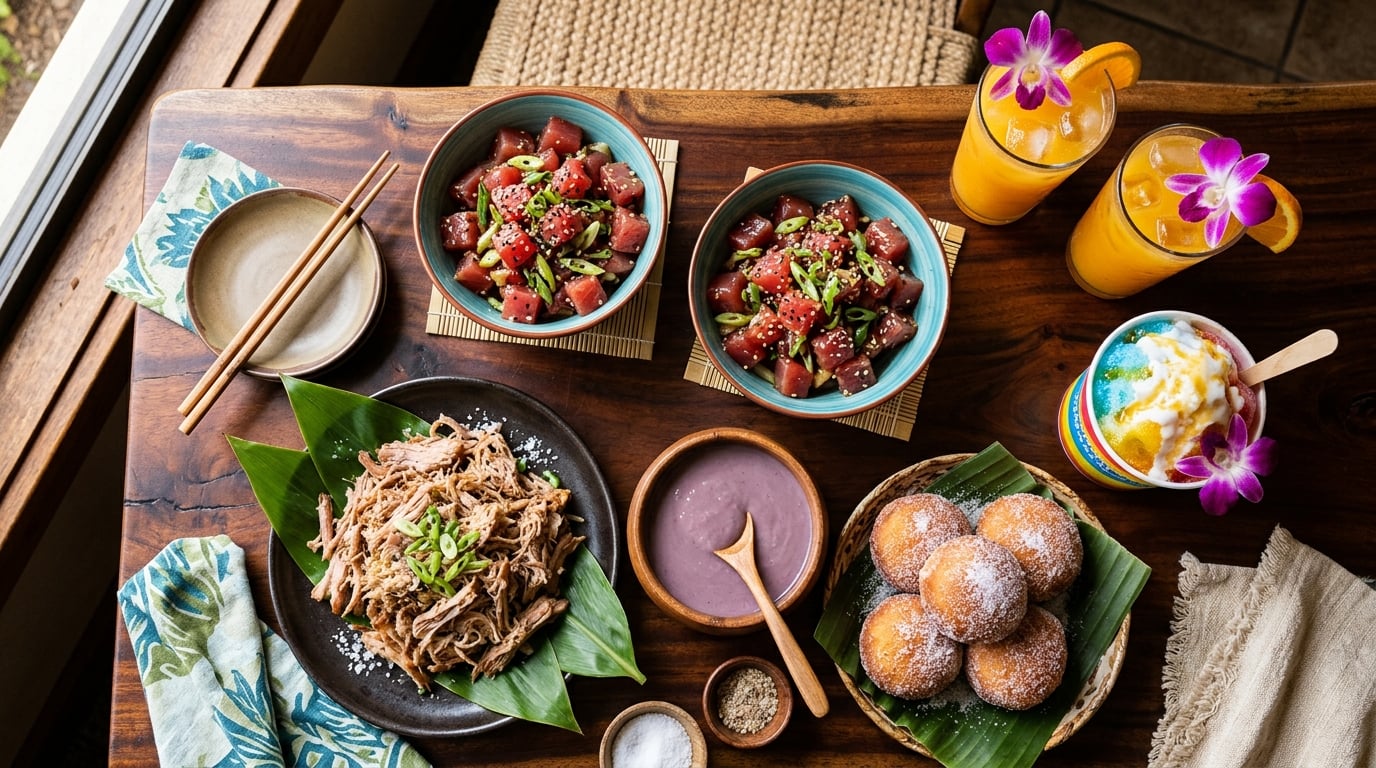
- Fresh Ahi Poke: Succulent, glistening cubes of sashimi-grade yellowfin tuna caught that morning, seasoned to perfection with shoyu (soy sauce), toasted sesame oil, thinly sliced scallions, sweet Maui onions, sea salt, and inamona (roasted candlenut). Served over a bowl of warm sushi rice, it is the quintessential taste of Hawaii.
- Kalua Pig: Whole pork shoulder slow-steamed for hours in an underground earthen oven called an imu, layered between hot volcanic rocks and wrapped in fragrant banana and ti leaves. The resulting meat is impossibly tender, smoky, and seasoned simply with coarse Hawaiian sea salt.
- Lau Lau: Tender chunks of pork and salted butterfish wrapped in nutrient-rich taro leaves and tied tightly with ti leaves, then steamed until the greens melt into a savory, spinach-like delicacy rich in earthy flavor.
- Malasadas: Pillowy, yeast-risen Portuguese doughnuts fried golden brown and rolled generously in granulated sugar or cinnamon sugar, often filled with rich tropical creams such as lilikoi (passion fruit), guava, or chocolate haupia.
- Hawaiian Shave Ice: Shaved micro-fine from a single block of ice until it takes on the texture of freshly fallen snow, then generously drizzled with all-natural syrups made from local tropical fruits, layered over a scoop of vanilla macadamia nut ice cream, and crowned with sweetened condensed milk or haupia coconut cream.
- Tropical Fruit and Island Juice: Freshly squeezed cold lilikoi juice, sweet golden sunrise papayas squeezed with fresh lime, and smooth Kona coffee roasted on neighbor islands to start your mornings with tropical vigor.
Essential Wisdom and Cultural Etiquette for Exploring the Garden Isle
To ensure a seamless, respectful, and safe adventure across Kauai, embrace these essential local guidelines:
- Practice Malama Aina (Caring for the Land): The Hawaiian concept of Malama Aina reminds visitors that the land is sacred and life-giving. Stay strictly on marked trails to prevent soil erosion, pack out all trash, and never remove lava rocks, black sand, or native plants from their natural environments.
- Protect Coral Reefs with Mineral Sunscreen: Hawaii state law prohibits the sale or use of sunscreens containing reef-damaging chemicals such as oxybenzone and octinoxate. Always pack and apply mineral-based sunscreens containing non-nano zinc oxide or titanium dioxide to safeguard the island's delicate coral gardens and sea turtles.
- Respect Sacred Cultural Sites (Heiau): Ancient stone temples and ceremonial fishing shrines are scattered along Kauai's coasts and riverbanks. Treat these historic sites with reverence; never climb on stone walls, move rocks, or leave behind litter.
- Mind Ocean Safety and Rip Currents: Kauai's beaches are breathtaking, but open ocean waters can be hazardous. Winter swells create powerful shore breaks and strong rip currents along the North Shore, while southern beaches can experience strong currents in summer. Always swim near lifeguards, heed posted warning flags, and never turn your back on the ocean.
- Reserve North Shore and State Park Access Ahead: To protect fragile natural ecosystems and local community infrastructure, access to Ha'ena State Park and the Kalalau Trail trailhead requires advance reservations for out-of-state visitors. Book your park entry, shuttle passes, or parking permits online up to thirty days in advance to guarantee access.