
# New Orleans French Quarter, Creole Dining & Jazz Heritage: The Ultimate Crescent City Cultural Guide
Resting in the gentle crescent curve of the mighty Mississippi River, New Orleans is unlike any other destination in North America.
Founded in 1718 by French colonizers, shaped by four decades of Spanish governance, and profoundly enriched by the traditions, rhythms, and resilience of enslaved and free people of African descent, the Crescent City has spent more than three centuries perfecting the art of joyous living.
Here, the motto Laissez les bons temps rouler—"Let the good times roll"—is not a tourist slogan; it is an enduring way of life.
From the sweet aroma of chicory coffee and freshly fried beignets wafting across flagstone plazas at dawn to the thunderous syncopation of second-line brass bands marching through the twilight, New Orleans seduces the senses with an effortless, intoxicating magic found nowhere else on earth.
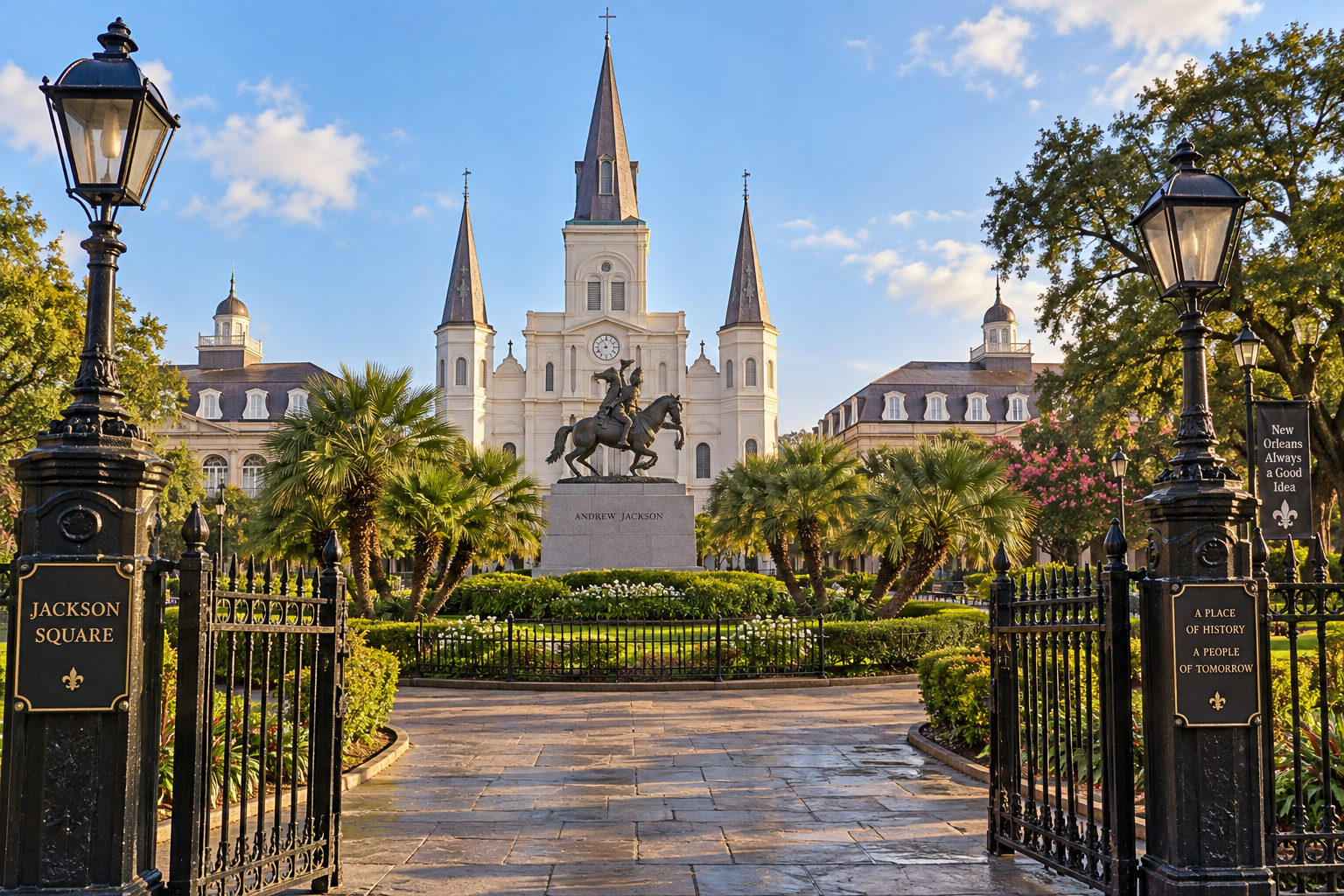
The French Quarter: Walking Through Centuries of Cast-Iron Romance
Known historically as the Vieux Carré ("Old Square"), the French Quarter is the historic nucleus of New Orleans.
Despite its name, much of the neighborhood’s iconic architecture reflects the grand Spanish colonial rebuilding that followed devastating citywide fires in the late eighteenth century:
- Jackson Square and St. Louis Cathedral: The visual epicenter of the city, this open green park is framed by the Cabildo and Presbytère historic museums, anchored by the equestrian statue of Andrew Jackson, and dominated by the soaring triple steeples of St. Louis Cathedral—the oldest continuously operating Roman Catholic cathedral in the United States. Along the perimeter wrought-iron fence, street portrait artists, tarot card readers, and brass trios entertain an unhurried crowd of admirers.
- Wrought-Iron Balconies and Secret Courtyards: Strolling along Royal and Chartres streets reveals magnificent multi-story cast-iron galleries draped in cascading Boston ferns, flowering magenta bougainvillea, and fragrant jasmine. Peeking through arched carriage passageways unveils hidden brick courtyards with trickling stone fountains, shaded by banana trees and ancient sweet olive bushes.
- The Mississippi Riverfront and Steamship Heritage: Just across Decatur Street from Jackson Square, climb the Moonwalk promenade to watch giant cargo ships maneuver along the river currents alongside the Steamboat Natchez, an authentic paddlewheel riverboat whose steam calliope organ belts out ragtime melodies across the water.
While Bourbon Street commands international fame for its rambunctious party scene, the true soul of the French Quarter lives in its quieter daylight hours, when antique shops, historic bookstores, and centuries-old pharmacies offer quiet contemplation beneath flickering copper gas lamps.
The Holy Trinity of Creole & Cajun Cuisine: Feasts of the Crescent City
Dining in New Orleans is nothing short of a sacred cultural ritual.
Where Cajun cooking represents the hearty, rustic countryside foodways of French-Acadian swamp and bayou settlers, Creole cuisine is the sophisticated city-born child of European aristocrats and enslaved West African master chefs, refined across three centuries in grand French Quarter dining rooms:
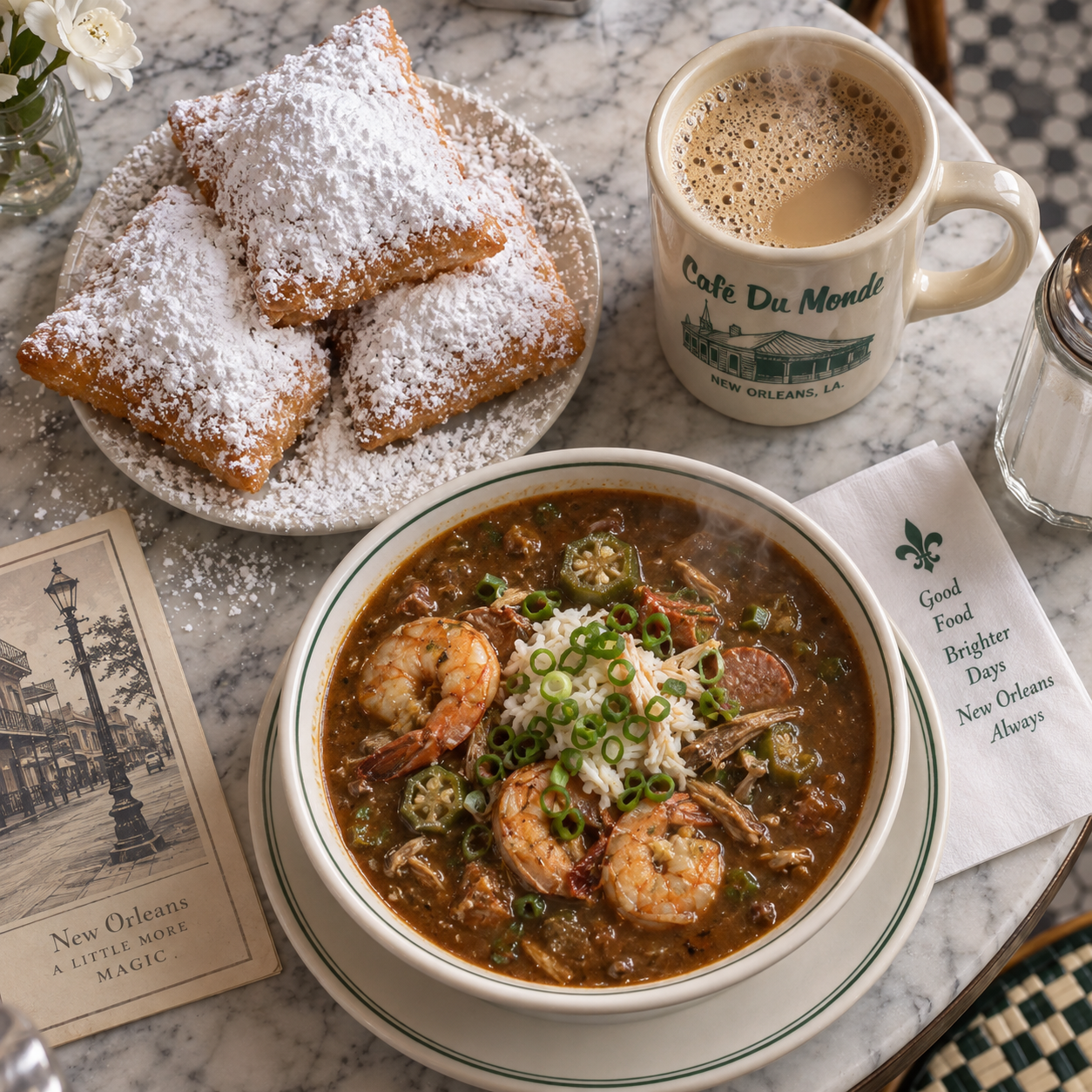
Every visitor embarking on a culinary pilgrimage must experience these signature Crescent City delicacies:
- Café du Monde Beignets & Chicory Café au Lait: Since 1862, pilgrims have gathered beneath the green-and-white awning of this open-air market pavilion on Decatur Street. Served piping hot in batches of three, these French-style fried choux pastry pillows are buried beneath a dizzying blizzard of powdered confectioners' sugar that inevitably dusts your shirt. Pair them with a steaming white ceramic mug of café au lait—half dark-roast coffee blended with roasted chicory root, half scalded whole milk—a tradition born during Civil War naval blockades that remains a beloved morning staple.
- Seafood Gumbo: The undisputed queen of Louisiana soups begins with a painstaking dark roux—equal parts flour and oil slowly stirred over a gentle flame until it achieves the deep, nutty color of melted dark chocolate. Stewed with the "Holy Trinity" of diced onions, bell peppers, and celery, the broth is thickened with okra and sassafras filé powder, then loaded with wild Gulf shrimp, lump blue crab, and spicy andouille sausage, ladled over a scoop of fluffy white rice.
- Crawfish Étouffée: Fresh Louisiana freshwater crawfish tails smothered in a velvety, blonde roux-based gravy perfumed with garlic, cayenne, green onions, and seafood stock, served steaming over buttered rice.
- The Iconic New Orleans Po'Boy: Built on legendary Leidenheimer French bread characterized by an impossibly crisp, paper-thin crust and an airy, cloud-like interior, po'boys are stuffed to overflowing with golden-fried Gulf oysters, blackened catfish, or slow-roasted beef with rich pan gravy debris. Always order it "dressed," which arrives layered with shredded iceberg lettuce, sliced tomatoes, pickles, and mayonnaise.
- Bananas Foster & Pralines: End an evening with Bananas Foster flamed tableside at historic institutions like Brennan’s, where ripe bananas are flambéed in rum, banana liqueur, and brown sugar before being poured over vanilla bean ice cream, or pick up soft, buttery pecan pralines hand-poured onto cold marble slabs along Chartres Street.
The Birthplace of Jazz: From Congo Square to Frenchmen Street
To experience New Orleans without surrendering to its music is to miss its very heartbeat.
In the eighteenth and nineteenth centuries, enslaved Africans were permitted to gather on Sunday afternoons in Congo Square (now part of Louis Armstrong Park) to drum, dance, and sing, preserving ancestral rhythms that eventually collided with European marching band brass, gospel spirituals, and delta blues to birth American jazz:
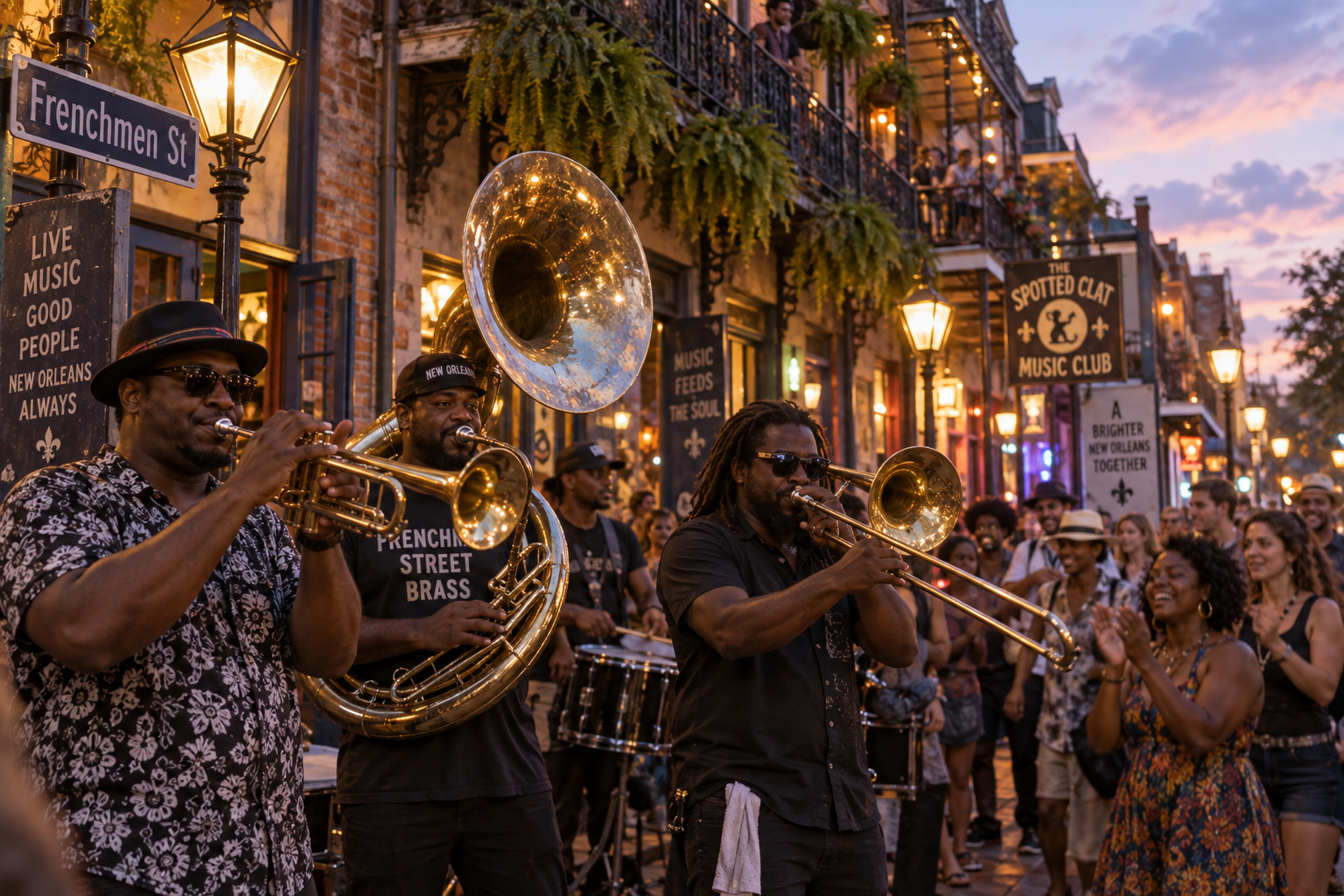
Music lovers should chart their evening listening itinerary around these legendary institutions:
- Preservation Hall (French Quarter): Founded in 1961 to protect and honor traditional New Orleans jazz, this unpretentious, historic wooden hall on St. Peter Street offers pure, unamplified acoustic mastery. There is no air conditioning, no drinks served, and patrons sit on rustic wooden benches just feet from world-class masters performing time-honored standards like Basin Street Blues and When the Saints Go Marching In.
- Frenchmen Street (The Marigny): Just downriver from the French Quarter lies the Faubourg Marigny neighborhood, where Frenchmen Street serves as the authentic local music strip. Venues like The Spotted Cat Music Club, d.b.a., and Snug Harbor host blistering sets of trad jazz, funk, and gypsy swing, while energetic youth brass bands set up impromptu open-air concerts on street corners, prompting joyous sidewalk dance parties under the stars.
- Second-Line Brass Band Parades: On Sunday afternoons throughout autumn and spring, historic social aid and pleasure clubs sponsor neighborhood second-line parades, featuring rolling brass bands followed by dancing crowds twirling decorated umbrellas and waving white handkerchiefs through the historic avenues of Treme and Central City.
Beyond the Quarter: The Garden District & St. Charles Streetcar
Stepping aboard the historic green St. Charles Streetcar—the oldest continuously operating street railway line in the world, running since 1835—transports visitors into a serene, aristocratic realm worlds away from the Quarter's lively commotion.
Rattling under soaring cathedral canopies of centuries-old live oaks draped in Spanish moss, the streetcar glides into the opulent Garden District:
- Historic Antebellum Architecture: Stroll leafy avenues lined with lavish nineteenth-century Greek Revival and Italianate mansions built by wealthy American merchants following the Louisiana Purchase, surrounded by manicured camellia gardens and intricate wrought-iron cornstalk fences.
- Lafayette Cemetery No. 1 and Cities of the Dead: Because New Orleans sits below sea level with an extraordinarily high water table, traditional underground burials were historically impossible. The city’s cemeteries became majestic "Cities of the Dead," filled with ornate whitewashed above-ground family crypts and marble tombs shaded by sprawling oak roots.
- Magazine Street: A six-mile commercial corridor stretching across Uptown, packed with vintage boutiques, independent art galleries, neighborhood po'boy counters, and lively sidewalk bistros.
Essential New Orleans Travel Advice: Culture, Footwear, and Timing
Navigating the Crescent City with ease requires embracing a few practical local customs and seasonal realities:
- Wear Sturdy Walking Shoes: French Quarter banquettes (sidewalks) are paved with historic slate flagstones and bricks that have been shifted by century-old tree roots. Leave spindly high heels in your luggage and wear comfortable, flat walking shoes.
- The "Go-Cup" Culture: New Orleans legally permits adult travelers to carry beer, wine, or cocktails in open plastic containers ("go-cups") on public streets within the French Quarter and commercial districts. If you haven't finished your drink at a tavern, simply ask the bartender for a go-cup on your way out.
- Seasonal Timing: Spring (February through May) is peak festival season, encompassing Mardi Gras celebrations, the free French Quarter Festival, and the world-renowned New Orleans Jazz & Heritage Festival (Jazz Fest). Autumn (October and November) brings crisp, comfortable breezes, fewer crowds, and sublime outdoor patio dining weather.