
# Falling for New York City: A Real Insider’s Walk Through Autumn in Manhattan, Secret Corner Slices, and Sunset Over the Brooklyn Bridge
There is a very specific moment every October when New York City sheds its humid summer exhaustion and snaps into sharp focus. You feel it the second you emerge from a subway station into the morning air: a crisp, brisk bite that clears your head, the faint aroma of roasted candied nuts drifting from a silver pushcart, and the sudden realization that the leaves along the avenues have turned copper and fiery crimson overnight.
New York in autumn does not feel like an ordinary metropolis. It feels like an open-air theater where everyone—from the commuter carrying a steaming paper cup of drip coffee to the neighborhood dog walker bundled in a wool cardigan—is moving with purpose. If you have ever dreamed of visiting the city, autumn is the season when its legendary kinetic energy blends seamlessly with an unexpected, deeply romantic stillness.
The Electric Chill of October: Why New York Belongs to Autumn
Summer in Manhattan can be stifling, and winter brings icy slush, but autumn is when the five boroughs are at their absolute peak. The sunlight hits the granite brownstones and glass towers at a low, honeyed angle that photographers spend lifetimes trying to capture. The air carries that nostalgic scent of fallen oak leaves mingling with warm pretzel ovens and diesel exhaust—a gritty, intoxicating perfume unique to this island.
For travelers who want to feel the true pulse of the city, visiting right now means seeing New Yorkers reclaim their outdoor spaces. Rooftop bars pull out heavy wool throw blankets and light fire bowls. Sidewalk cafes in SoHo and Greenwich Village wrap heat lamps around bistro tables so patrons can sip warm cider and natural wine while watching the street style parade by. The city feels intimate, welcoming, and endlessly walkable.
Morning in Central Park: The Mall Canopy and Bow Bridge Reflections
The best way to start any New York morning before the midday crowds arrive is to enter Central Park from the Upper West Side around 72nd Street. As soon as you step past the stone perimeter wall, the roar of yellow taxis and crosstown buses softens into a gentle hum.
Head directly toward The Mall, the park’s grand quadruple promenade lined with American elm trees. In late October and early November, these towering elms form a cathedral ceiling of pure golden leaves arching fifty feet overhead. Skaters glide across the pavement, street musicians play cello suites near the statue of Shakespeare, and dry leaves crunch beneath your boots with every step.
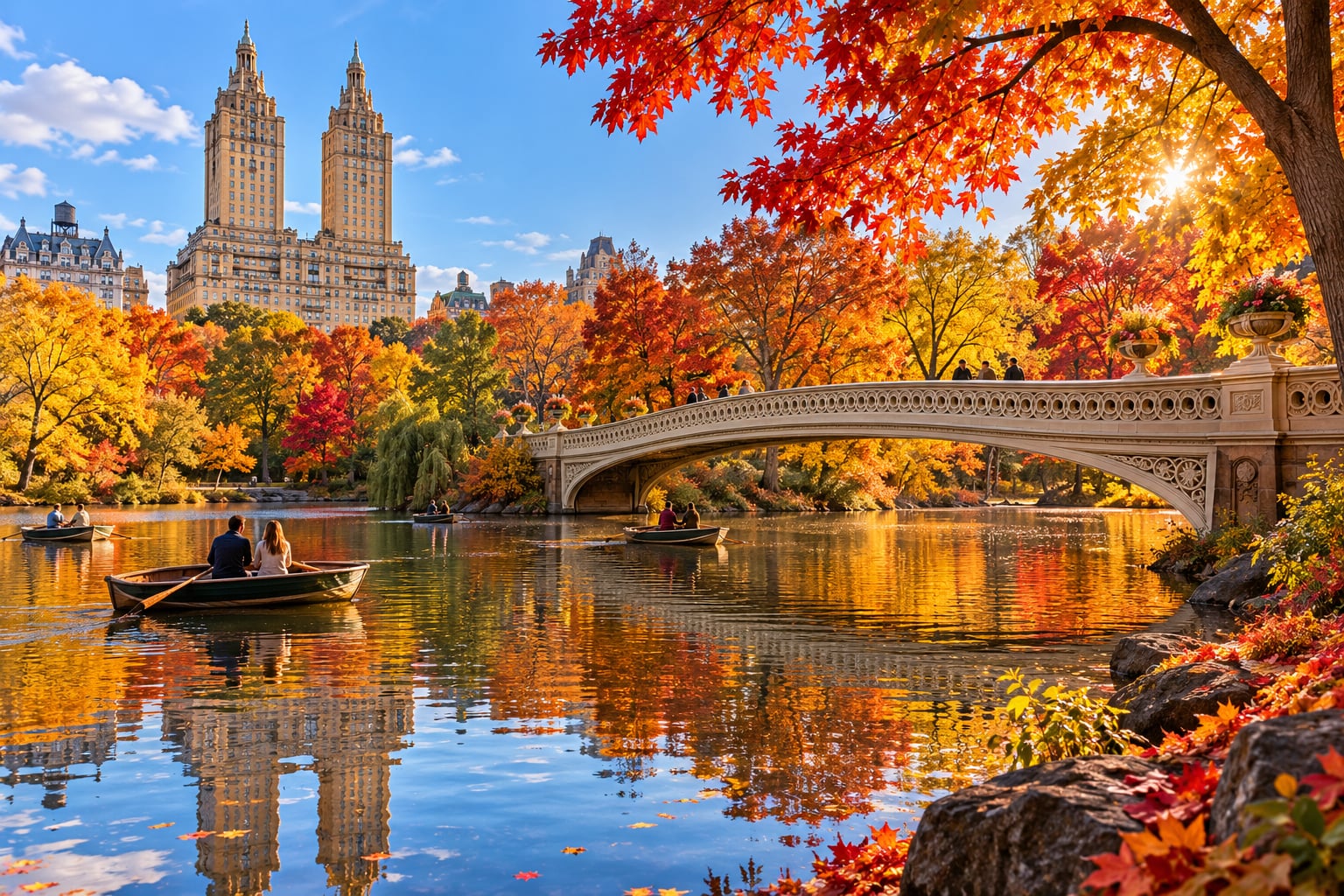
Continuing east brings you to Bethesda Terrace, where the elaborate sandstone arches and Minton-tiled arcade create echo chambers of street melodies. Just beyond lies The Lake and the graceful Victorian curves of Bow Bridge. Stand on the bridge around eight in the morning: the water is glassy and mirror-still, reflecting blazing orange maples, wooden rowboats tied to the dock, and the aristocratic twin limestone spires of The San Remo luxury apartments piercing the skyline. It is the quintessential New York postcard brought to life, completely free and open to anyone willing to wake up early.
- Take an unhurried detour through The Ramble, a 36-acre wild woodland maze of winding dirt paths, rocky outcrops, and hidden streams where migratory birds rest on their journey south.
- Grab a hot beverage from one of the small perimeter carts near 72nd Street and sit on a green wooden bench along Cherry Hill to watch horses trotting along the bridle paths.
- Avoid renting horse carriages in high-traffic zones; walking allows you to discover secluded nooks like the Conservatory Water where miniature model sailboats race across the pond.
Wandering the Brownstones: West Village Coffee, Secret Bookshops, and Greenwich Cobblestones
After immersing yourself in the foliage of uptown, catch the downtown subway to Christopher Street or West 4th. Greenwich Village and the West Village represent the bohemian heart and architectural soul of Manhattan, where the rigid grid system completely dissolves into charming, tree-lined diagonals.
The streets here—Perry, Charles, Bank, and Bedford—are lined with 19th-century Greek Revival and Italianate brownstones. In autumn, local residents decorate their steep stone stoops with heirloom pumpkins, dried corn stalks, and creeping English ivy. Fallen ginkgo biloba leaves paint the Belgian cobblestones in fan-shaped carpets of yellow.
Take your time walking without looking constantly at navigation apps. You will stumble upon cozy independent bookshops tucked into half-basements, tiny flower stalls spilling over with autumn dahlias, and intimate specialty cafes where the scent of freshly pulled espresso fills the cool air. The Village is best experienced through curiosity: peek into secluded residential courtyards, admire the wrought-iron gas lamps, and listen to the rhythmic tapping of heels against brick sidewalks.
The Real Manhattan Food Ritual: Bagels with Lox, Pastrami on Rye, and Folded Corner Slices
To eat well in New York, you do not need Michelin reservations booked six months in advance. The true culinary genius of the city lives on its street corners, behind tiled deli counters, and inside decades-old Jewish appetizing shops where recipes have remained unchanged for over a century.
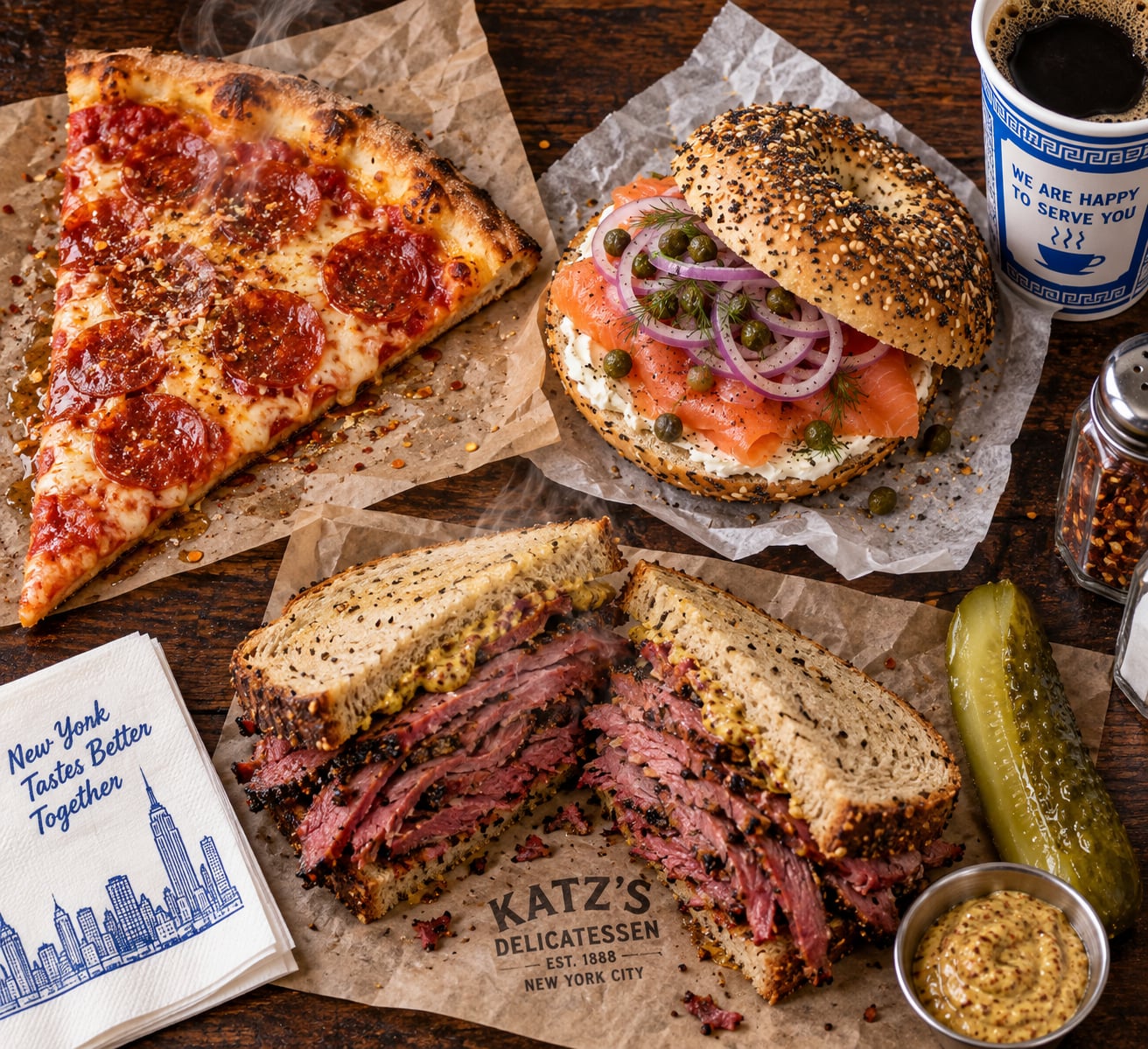
Start your morning downtown on the Lower East Side. A proper New York bagel is hand-rolled, kettle-boiled, and baked on cedar boards wrapped in burlap until the outside develops a shiny, blistered crust with a dense, chewy interior that requires actual jaw work. Stop at a neighborhood institution like Russ & Daughters or Tompkins Square Bagels. Order an everything bagel toasted lightly, slathered with scallion cream cheese, paper-thin slices of cold-smoked Gaspe Nova salmon (lox), thinly shaved red onions, and briny capers. The balance of salty fish, rich velvety cheese, garlic-sesame crunch, and acidic onion is unmatched anywhere in the world.
For lunch, nothing compares to the legendary warmth of a historic pastrami sandwich at an iconic counter like Katz’s Delicatessen on Houston Street or 2nd Avenue Deli. Hand-carved by veteran cutters right before your eyes, the cured beef brisket is steamed for hours until the peppery, coriander-spiced bark gives way to meltingly tender, ruby-red meat. Stacked several inches thick between seeded rye bread with spicy deli mustard and accompanied by garlic dill half-sour pickles, it is a culinary monument of immigrant history.
And then comes the pizza. A true New York slice is an engineering marvel: large, thin-crusted, folded lengthwise down the middle so the hot aromatic orange grease stays contained while you walk down Bleecker Street. Head to Joe’s Pizza in the Village or Scarr’s Pizza on Orchard Street. The bottom crust is charred with airy leopard spotting, the crushed plum tomato sauce is bright and acidic rather than sugary, and the low-moisture whole milk mozzarella stretches in glorious ribbons. Eat it standing on the sidewalk paper plate in hand, just like eight million locals do every single day.
- Pair your corner slice with a cold classic soda or a hot drip coffee served in the iconic blue-and-white Anthora paper cup reading "We Are Happy To Serve You."
- Always order your pastrami "juicy" or regular rather than lean; the marbled brisket fat is where all the deep smoke and spice infusion resides.
- When buying bagels by the half-dozen to take back to your apartment, slice them immediately before freezing so they retain their signature kettle-boiled chew when toasted later.
Beyond Times Square: The Art of Taking the Subway and Finding the City’s Secret Pockets
First-time visitors often spend far too much time trapped in the blinding neon glare and aggressive corporate madness of Times Square. While seeing the billboards once is a rite of passage, the real soul of New York begins several blocks away in the neighborhoods where actual people live, work, and congregate.
Learn to master the subway system—it is the great democratic equalizer of New York City. Beneath the asphalt, steel train cars rumble twenty-four hours a day, carrying musicians, bankers, artists, and families in the same communal rhythm. Taking the express train instead of sitting in gridlocked surface traffic gives you the freedom to crisscross the borough in minutes.
Venture beyond the tourist hubs to explore the High Line elevated park in Chelsea, where autumn grasses and native perennials sway high above 10th Avenue against historic brick warehouses and striking contemporary architecture. Descend into the Meatpacking District, walk down into SoHo’s cast-iron historic district to admire grand architectural facades, or duck into Chinatown for steaming pork soup dumplings (xiao long bao) served in bamboo steamers at an unassuming cellar table.
Twilight Walk on the Brooklyn Bridge: Golden Hour Over the East River and DUMBO Skyline Views
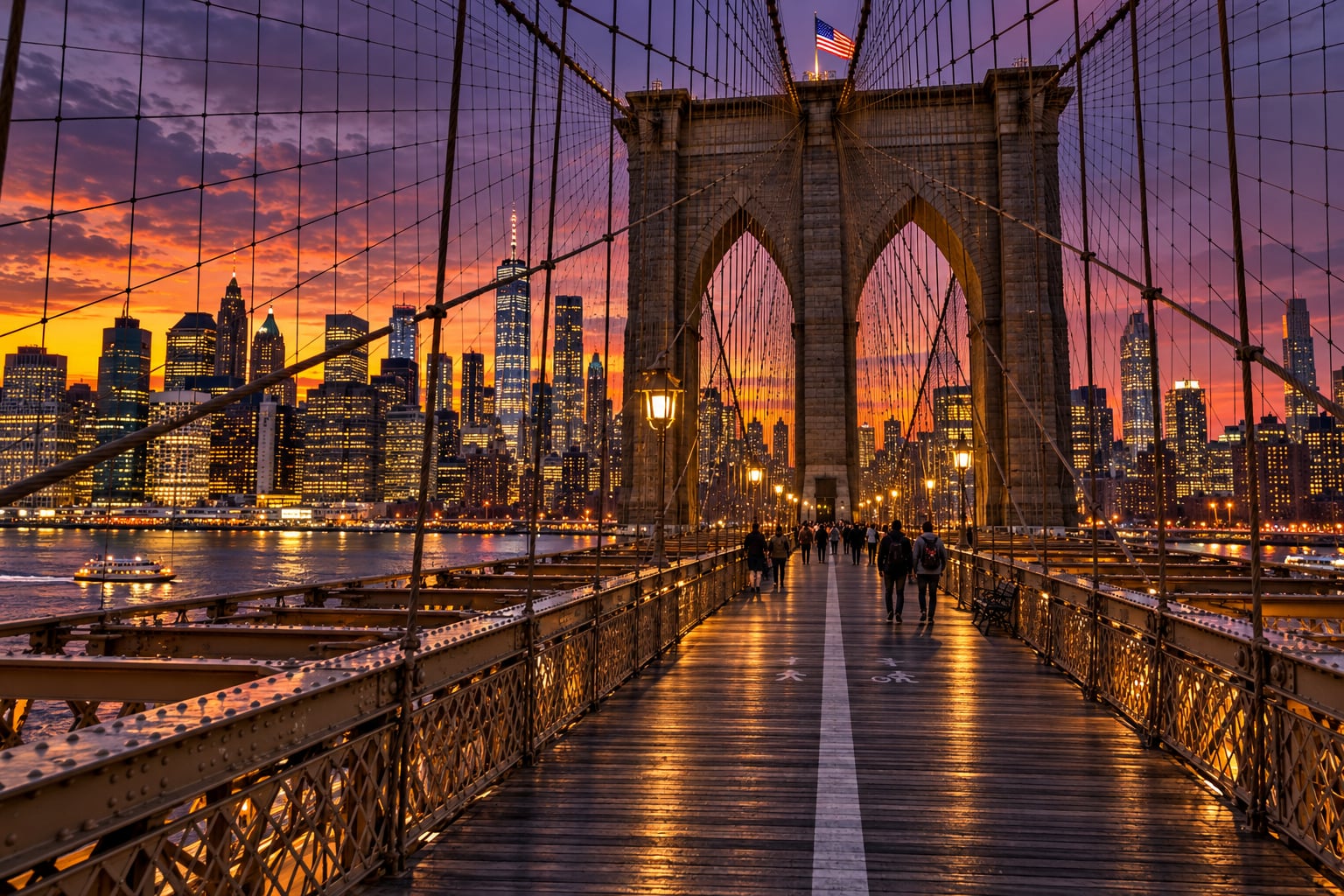
As late afternoon approaches and the autumn sun begins its descent behind New Jersey, make your way toward the Lower Manhattan entrance of the Brooklyn Bridge. Walking across this suspension bridge—an engineering marvel completed in 1883—from Manhattan toward Brooklyn is one of the most unforgettable urban experiences on earth.
Step onto the elevated wooden promenade. Beneath your sneakers, the heavy traffic hums along the lower roadway, while the cool marine air from New York Harbor sweeps up across your face. As you pass through the massive neo-Gothic stone arches with their double pointed towers, pause and look up at the intricate harp-like web of crisscrossing steel cables silhouetted against the autumn sky.
Time your walk so you reach the Brooklyn side just as magic hour transitions into blue twilight. Step down into Brooklyn Bridge Park and the cobblestone streets of DUMBO (Down Under the Manhattan Bridge Overpass). Look back across the East River: the Lower Manhattan financial district—crowned by the glowing spire of One World Trade Center—lights up floor by floor, reflecting shimmering ribbons of gold, violet, and electric amber onto the dark tidal waters. It is an image that stays etched in your memory for the rest of your life.
Essential Street Smarts: MetroCard vs OMNY, Tipping Culture, and Navigating Like a Local
Moving through New York smoothly requires understanding a few unspoken street rules that will save you time, money, and unnecessary stress:
- Transit is now entirely contactless: You no longer need to stand in line at subway vending machines to buy a plastic yellow MetroCard. Simply tap your contactless credit card, debit card, or smartphone (Apple Pay / Google Wallet) at the OMNY turnstiles. After twelve paid rides within any Monday-to-Sunday cycle using the same device, every subsequent subway and local bus ride for the remainder of that week is automatically free.
- The pedestrian rhythm: Manhattan sidewalks are highway lanes for pedestrians. If you need to check your phone, look at a map, or take a photograph, step to the side near a building facade or a tree pit rather than stopping abruptly in the center of the sidewalk. Keep right when walking up subway stairs.
- Understand uptown versus downtown: On Manhattan’s numbered street grid, avenues run north-south (from 1st Avenue on the east to 12th Avenue on the west), while streets run east-west (numbers ascend as you travel north toward uptown). Knowing this single rule ensures you will never get directionally disoriented.
- Gratuity expectations: Tipping is customary across the United States, but particularly in New York’s hospitality ecosystem. For full table service dining, tipping between eighteen and twenty-two percent of the pre-tax bill is standard. For casual counter service like picking up a quick bagel or coffee, tipping one dollar or rounding up via the digital screen is polite but optional.
- Autumn layering is key: October and November weather can fluctuate dramatically. A crisp 48°F morning can easily warm up to a sunny 65°F by 2:00 PM before plummeting back down after sunset. Wear breathable layers—a light merino wool sweater, a comfortable wind-resistant trench or wool overcoat, and broken-in walking shoes that can comfortably handle ten to fifteen miles on concrete each day.
When you pack your bags and head toward the airport, you will find that New York does not leave you easily. Long after you return home, you will still hear the distant echo of a subway whistle in the tunnels, smell the sweet caramel of roasted nuts on a crisp breeze, and remember the quiet feeling of watching golden leaves flutter across Bow Bridge against a soaring skyline. New York in autumn is pure magic, waiting right around the next corner.