
# Oahu North Shore Travel Guide: Big Wave Surfing, Kahuku Garlic Shrimp, Ahi Poke & Haleiwa Town
Leaving the glittering resort high-rises of Honolulu and winding northward through the central pineapple fields of Wahiawa, the highway suddenly crests a gentle rise.
Ahead, framed between emerald volcanic ridgelines and swaying coconut fronds, stretches the endless sapphire horizon of the Pacific Ocean.
This is the legendary North Shore of Oahu—an iconic, sun-drenched stretch of coast revered globally as the spiritual epicenter of modern wave riding.
Encompassing roughly seven miles of uninterrupted golden sand beaches, this fabled strip of shoreline—fondly crowned the "Seven-Mile Miracle"—offers a stark, refreshing contrast to urban Oahu.
Here, towering green valleys plunge directly into the sea, roadside shrimp trucks sizzle beneath century-old banyan canopies, and the timeless Polynesian rhythm of Aloha infuses every sea breeze and sunset.
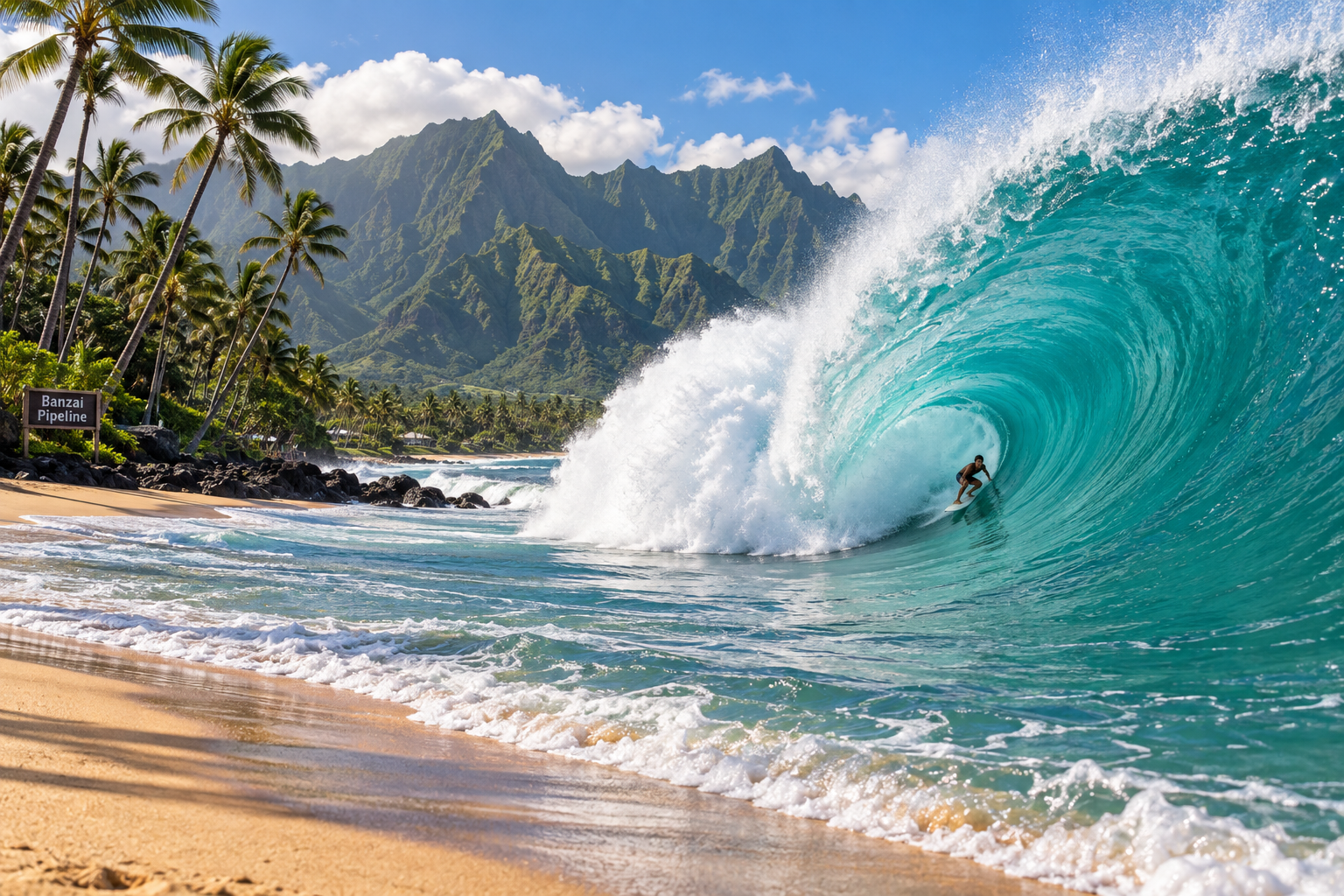
The Seven-Mile Miracle: Watching the Titans of Big Wave Surfing
What makes Oahu's North Shore uniquely revered in the sporting world is its raw oceanography.
Born from fierce winter storms thousands of miles away in the North Pacific, colossal swells roll unimpeded across thousands of miles of deep open sea before violently colliding with the shallow, jagged volcanic coral reefs of Oahu's northern rim.
Between November and February, this natural phenomenon transforms quiet seaside beaches into the most thrilling natural theater on the planet:
- Banzai Pipeline (Ehukai Beach Park): The undisputed holy grail of surfing, where massive swells heave upward over a razor-sharp, cavernous volcanic reef just fifty yards from the sand. Spectators sit mesmerized on the steep golden berm as world-class athletes drop into impossibly steep, churning turquoise tubes that detonate with thunderous, ground-shaking force.
- Waimea Bay: A majestic amphitheater steeped in Hawaiian surf lore, famous for creating the modern sport of big-wave riding in the late 1950s. On days when open-ocean swells exceed thirty feet, legendary watermen gather to contest The Eddie Aikau Big Wave Invitational, honoring the legendary Hawaiian lifeguard whose selfless courage inspired the island creed: Eddie Would Go.
- Sunset Beach: Renowned for its sweeping wide-angle vistas, powerful deep-water peaks, and incandescent golden hour light, serving as the dramatic final battleground for world surfing championship titles.
- The Summer Transformation: When the seasons shift from May to September, the monstrous winter swells vanish completely, transforming the entire North Shore into a tranquil, glass-calm swimming and snorkeling paradise. Marine sanctuaries like Shark’s Cove and Three Tables become crystalline underwater aquariums teeming with green sea turtles, spotted eagle rays, and vibrant schools of reef fish.
Coastal Gastronomy: Garlic Shrimp Trucks, Ahi Poke & Shave Ice
No pilgrimage to the North Shore is complete without surrendering to its unpretentious, world-renowned roadside food culture.
Rooted in the agricultural heritage of the sugar cane era and the abundant bounty of the surrounding deep Pacific waters, dining here is an outdoor, communal feast:
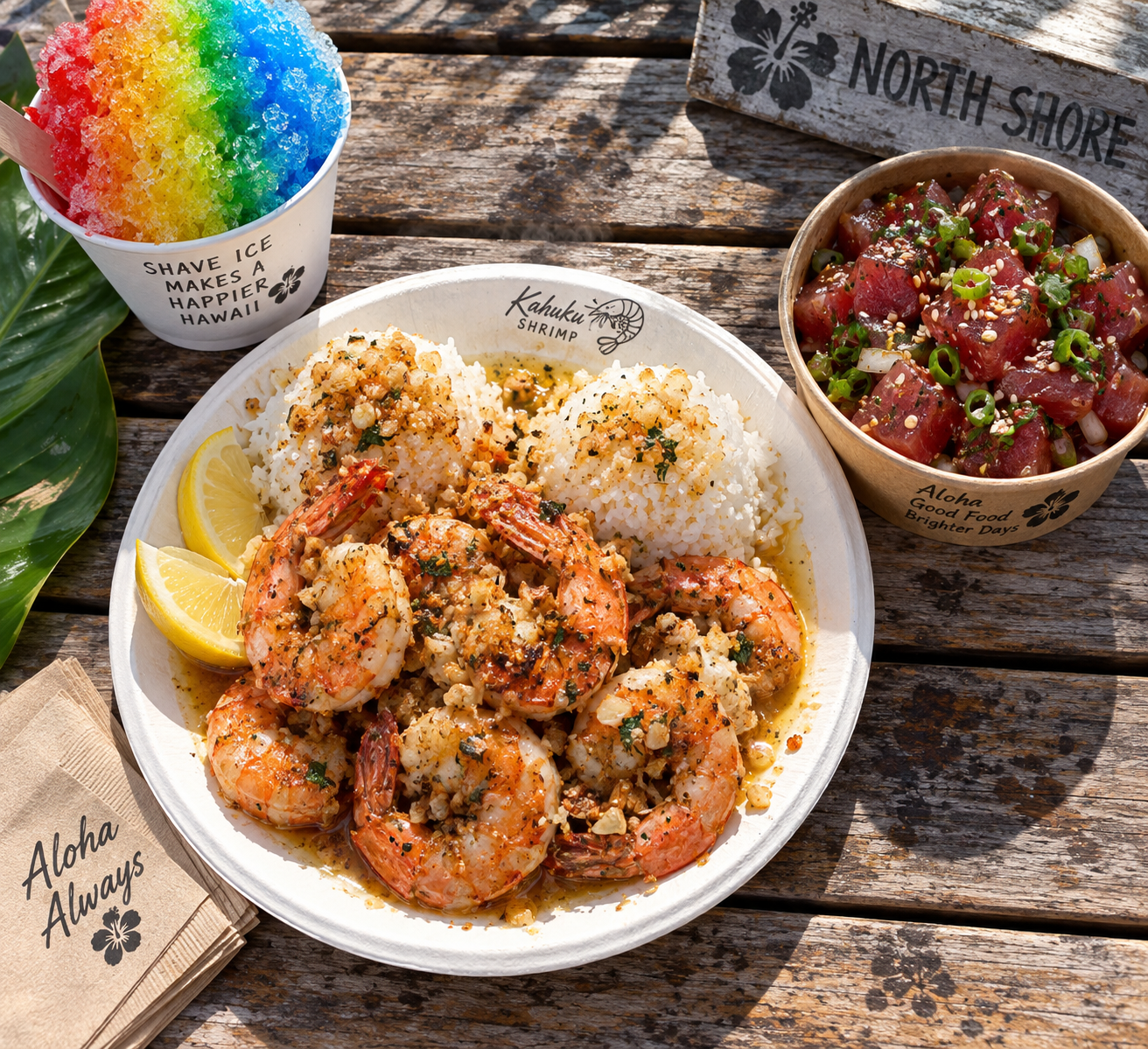
Food lovers exploring the coast should seek out these quintessential Hawaiian culinary staples:
- Kahuku Garlic Shrimp Plates: Originating in the coastal aquaculture farming town of Kahuku, food trucks like the iconic, graffiti-covered Giovanni’s Shrimp Truck, Romy’s, and Fumi’s have achieved international cult status. Dozens of fresh, plump whole shrimp in their shells are pan-fried in lakes of sizzling butter, white wine, and heaping tablespoons of golden, caramelized minced garlic. Served steaming hot over two generous scoops of sticky white rice drenched in savory garlic oil and accompanied by a lemon wedge, it is a messy, finger-licking masterpiece that defines island comfort food.
- Authentic Island-Style Ahi Poke: Far removed from the mainland salad-bar poke bowls piled high with mayonnaise and corn, traditional Hawaiian poke is an exercise in pure ingredient reverence. Freshly caught yellowfin tuna (ahi), firm and ruby-red, is cut into generous cubes and gently tossed with sea salt harvested from red volcanic clay (Alaea), dark shoyu, toasted sesame oil, sweet chopped Maui onions, scallions, and delicate, crunchy fronds of wild sea seaweed (limu kohu). Enjoyed fresh from local fish counters like Tamura’s or North Shore roadside stalls, it melts on the tongue with the clean, rich sweetness of the open ocean.
- Rainbow Shave Ice at Matsumoto’s: Established in 1951 in historic Haleiwa town, this family-owned grocery store turns ice into fine, powdery snow. Drizzled in vibrant homemade tropical fruit syrups—guava, lilikoi passion fruit, mango, and coconut—traditionalists order it served over a base of sweetened azuki red beans or vanilla ice cream, topped with a sweetened condensed milk "snow cap" and chewy mochi balls.
- Warm Coconut Malasadas & Haupia Pie: Originally introduced to Hawaii by nineteenth-century Portuguese sugar plantation laborers, malasadas are fluffy, golden-brown fried yeast dough balls rolled in granulated sugar. Enjoy them piping hot, filled with rich coconut cream custard (haupia) or sweet lilikoi curd.
Historic Haleiwa Town: Plantation Charm and Surf Culture
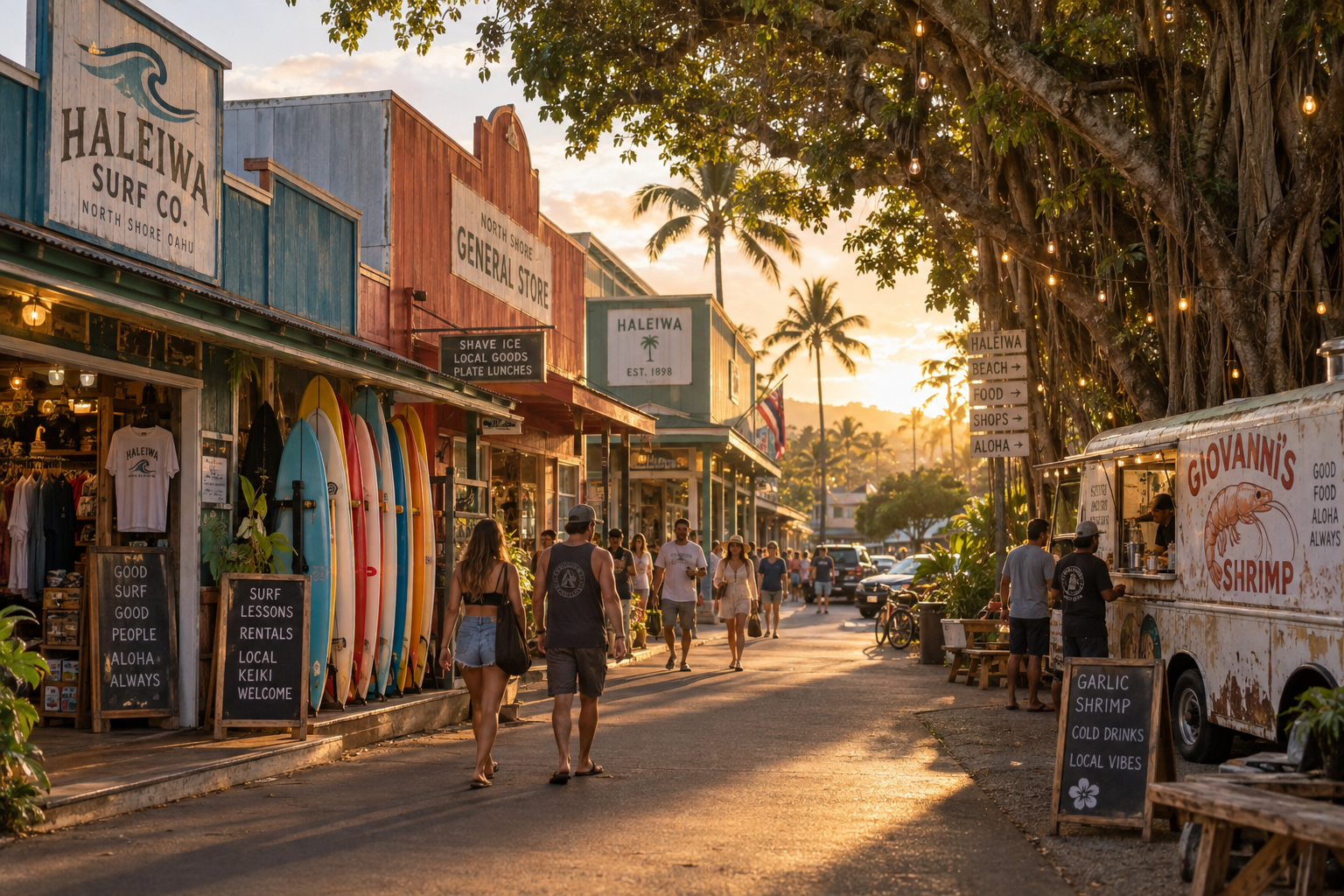
Serving as the historic gateway to the North Shore, Haleiwa has deliberately preserved its nineteenth-century plantation-era character through strict local preservation laws.
Wandering through this laid-back wooden town feels like stepping back into an era of slow island living:
- Cross the historic double-arched concrete Anahulu Bridge (known locally as the Rainbow Bridge), built in 1921, spanning the calm emerald estuary where paddleboarders and sea turtles glide side by side toward the ocean.
- Explore weather-worn wooden boardwalks lined with independent surf shops where veteran shapers hand-carve custom balsa and foam surfboards, alongside open-air art galleries displaying vibrant ocean photography and Hawaiian wood carvings.
- Relax under the sprawling canopies of massive monkeypod and banyan trees at roadside coffee shacks, sipping rich dark-roast coffee grown on the volcanic slopes of the neighboring Waialua Estate.
Sacred Sanctuaries: Green Sea Turtles and Ka’ena Point
Beyond the surf breaks and dining, the North Shore harbors some of the most ecologically and spiritually significant landscapes in the Hawaiian archipelago:
- Honu at Laniakea Beach: Also known affectionately as Turtle Beach, this golden cove is famous for wild Hawaiian green sea turtles (honu) that haul themselves out of the surf each afternoon to bask peacefully in the warm sunshine. Volunteer guardians from conservation organizations establish perimeter ropes, educating visitors on the federal requirement to maintain at least ten feet of respectful distance from these ancient, protected marine reptiles.
- Ka’ena Point Natural Area Reserve: At the westernmost tip of the island, where the paved road abruptly ends, a rugged coastal trail leads through sand dunes to Ka’ena Point. In traditional Hawaiian cosmology, this windswept promontory is revered as a sacred leina a ka ‘uhane—a soul’s leaping-off place where departed spirits transition into the ancestral spiritual realm. Today, the predator-free sanctuary protects nesting colonies of magnificent Laysan albatrosses and resting Hawaiian monk seals.
Essential North Shore Travel Advice: Timing, Safety, and Respect
To ensure a seamless, respectful journey across the North Shore, keep these practical travel tips in mind:
- Heed Winter Ocean Warnings: Winter waves on the North Shore generate tremendous rip currents and explosive shorebreaks. Never turn your back on the ocean, and always consult on-duty lifeguards before entering the water. If red warning flags are posted, view the majestic waves safely from dry sand.
- Navigate Kamehameha Highway Smartly: The North Shore is served by a single two-lane roadway (Route 83). During peak winter surf competitions or sunny weekend afternoons, traffic between Haleiwa and Sunset Beach can slow significantly. Plan day trips by departing Honolulu before 8:30 AM and lingering in Haleiwa for dinner to allow evening rush-hour traffic to clear.
- Use Mineral Reef-Safe Sunscreen: Hawaii law strictly prohibits the sale or use of sunscreens containing oxybenzone and octinoxate, chemical compounds scientifically proven to cause coral bleaching. Protect the island's fragile reefs by using mineral sunscreens formulated exclusively with non-nano zinc oxide or titanium dioxide.
- Practice Malama ‘Aina: The Hawaiian concept of malama ‘aina—caring for and nurturing the land—is central to local life. Always pack out all trash, yield courteously to local residents when driving narrow rural lanes, and treat the island's sacred spaces and natural resources with deep reverence.