
# Exploring the Golden Autumn Forests and Majestic Alpine Peaks of Rocky Mountain National Park
When the first crisp nights of October descend upon the Continental Divide, the high country of Colorado transforms into one of the most magnificent spectacles on the North American continent. The sprawling evergreen forests of lodgepole pine, subalpine fir, and Engelmann spruce are suddenly cleaved by vast, luminous rivers of quaking aspens turned fiery yellow and brilliant amber. Above the tree line, fourteen-thousand-foot granite peaks wear fresh powdered coats of early autumn snow, gleaming like jagged crowns against an impossibly deep cobalt sky.
Down in the glacial valleys, the air carries a sweet, earthy perfume of fallen leaves and cured mountain grasses, punctuated by one of nature's most haunting sounds: the echoing, flute-like bugle of massive bull elk calling across the meadows during their annual autumn rut. For travelers seeking the quintessential Rocky Mountain experience, this fleeting season between summer warmth and winter freeze delivers pristine mountain trails, sublime alpine reflections, world-class wildlife viewing, and the comforting warmth of crackling lodge fireplaces paired with hearty mountain cuisine.
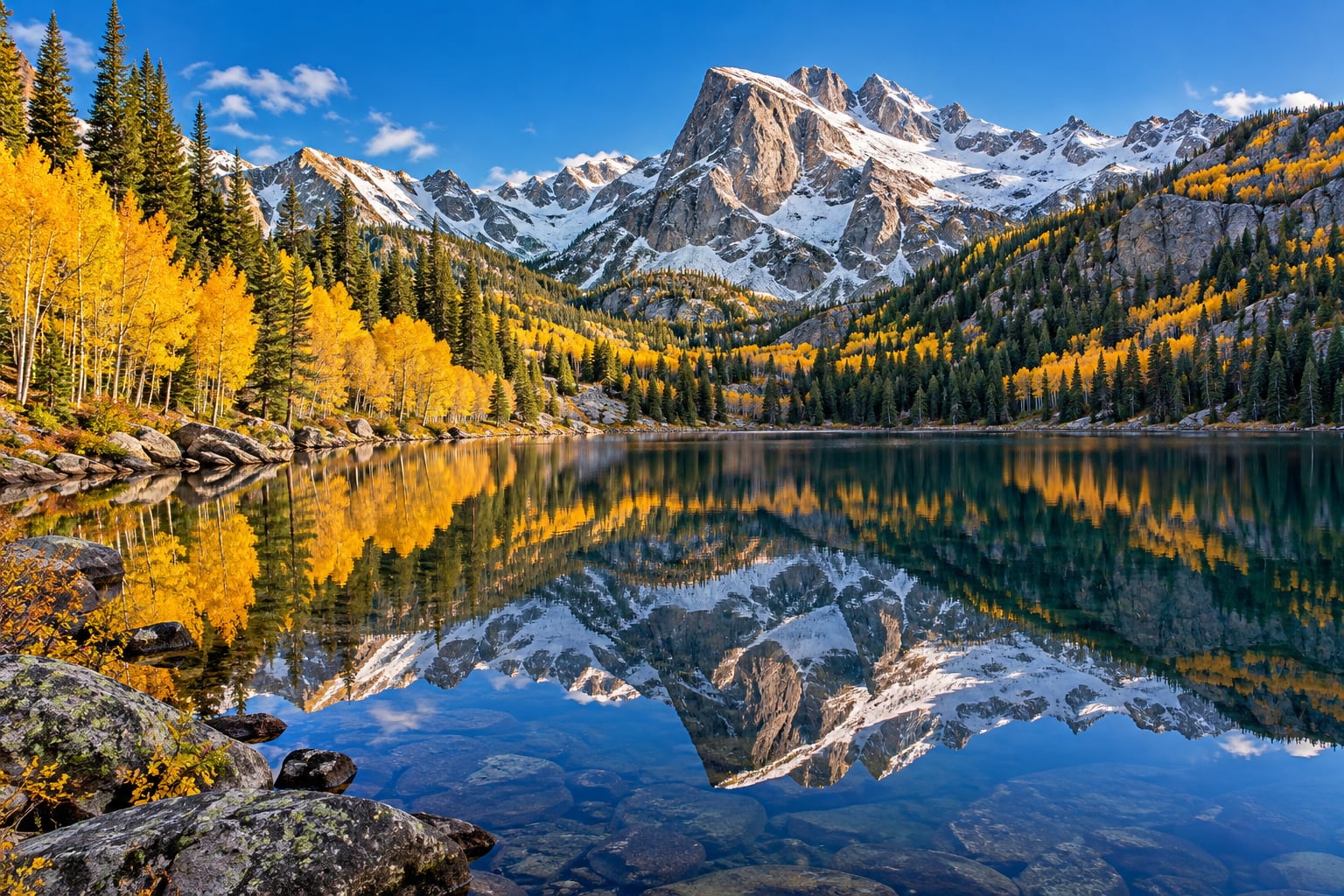
Welcoming Autumn Among the Shimmering Golden Aspens of Bear Lake
Sitting at an elevation of 9,475 feet at the end of Bear Lake Road, Bear Lake is the spiritual heartbeat of Rocky Mountain National Park. Glacially carved thousands of years ago and cradled beneath the towering ramparts of Hallett Peak and Flattop Mountain, this alpine tarn offers one of the most celebrated vistas in all of Colorado.
Arriving at the lakeshore just as dawn breaks across the Continental Divide is an experience of sheer serenity. The water is often completely still, functioning like a colossal liquid mirror that reflects every jagged contour of the surrounding granite peaks and the vibrant yellow foliage lining the shore. Unlike oaks or maples that burn in crimson and burnt orange, quaking aspens turn an electric, pure lemon gold. Because each leaf hangs from a flattened stem that catches even the gentlest mountain draft, the entire forest seems to shimmer and whisper in the breeze, filling the cool morning air with a soft, rustling chorus.
The easy, flat loop trail around Bear Lake spans less than a mile, making it accessible to hikers of all ages, but it also serves as the gateway to a chain of higher, wilder alpine gems:
- Nymph Lake, a tranquil lily-pad-dotted pond surrounded by dense groves of golden aspens reflecting the sheer northern wall of Hallett Peak.
- Dream Lake, perched beneath a dramatic cliff band where crystal-clear waters lap against granite boulders and twisted bristlecone pines.
- Emerald Lake, a cirque basin tucked directly into the shadow of the Continental Divide, where cascading meltwater creeks tumble over boulders beneath vertical alpine rock walls.
Walking this corridor on a crisp October morning, breathing thin, pine-scented air that chills your lungs and invigorates your spirit, captures the true essence of the Colorado Rockies before the heavy snows of November seal the high passes.
Listening to the Haunting Bugle of Wild Elk in Moraine Park at Twilight
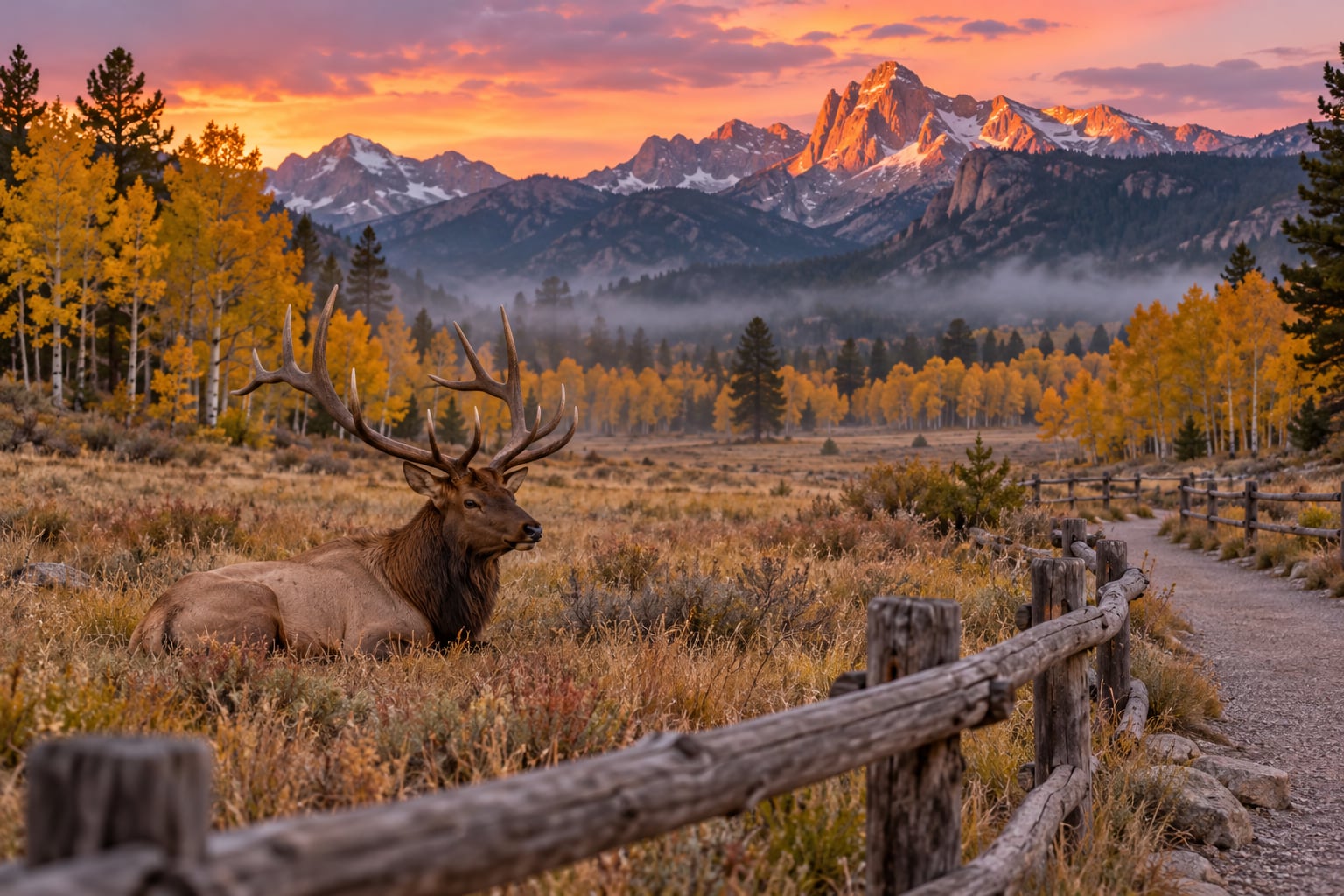
While the golden foliage draws photographers from around the globe, October in the Rockies belongs undeniably to the elk. Rocky Mountain National Park is home to one of the healthiest wild elk herds in North America, and autumn marks the height of the breeding season, known throughout the West as the elk rut.
As late afternoon light begins to soften across Moraine Park and Horseshoe Park, hundreds of elk emerge from the timbered ridges into the open river meadows. Massive bull elk, each weighing over seven hundred pounds and sporting sweeping racks of polished antlers spanning five feet across, strut through the golden grasses to gather and defend their harems of cows:
- The sound of their bugle is unlike anything else in nature, beginning with a deep, resonant guttural bellow before ascending into a piercing, high-pitched shrill whistle and finishing with a series of sharp chuckles that echo off the canyon walls.
- Rival bulls frequently confront one another across the meadow, thrashing low willow branches with their antler tips to display their strength and occasionally locking antlers in dramatic, clattering clashes of brute force.
- The low-angled golden sunlight paints the open meadows in shades of honey and amber, while the jagged peaks of the Mummy Range and Continental Divide light up with pink and violet alpenglow.
Visitors gather respectfully along the roadside turnouts and designated viewing areas with binoculars and spotting scopes, wrapped in warm wool blankets as the mountain twilight deepens into velvet dusk. Observing these majestic creatures in their natural habitat against a backdrop of snow-dusted peaks is a profound reminder of the untamed wilderness that still thrives in the heart of the American West.
Driving Above the Clouds on the Historic Trail Ridge Road
No visit to Rocky Mountain National Park is complete without traveling Trail Ridge Road, the highest continuous paved highway anywhere in the United States. Reaching an astonishing crest of 12,183 feet above sea level, this historic scenic byway carries travelers clean out of the montane and subalpine forests and into the windswept arctic tundra.
Constructed in the 1930s by the Civilian Conservation Corps, the road spans forty-eight miles from Estes Park on the eastern slope to Grand Lake on the western side. Driving this route in early October feels like soaring along the spine of the continent:
- As you climb past Rainbow Curve and Many Parks Curve, the tree line abruptly ends around 11,500 feet, opening onto vast alpine meadows populated by miniature tundra wildflowers, resilient cushions of alpine moss, and colonies of chirping pikas scurrying between rock screes.
- At the Alpine Visitor Center, you stand above the clouds, looking across hundreds of miles of unbroken mountain ranges stretching into Wyoming and southern Colorado.
- Crossing the Continental Divide at Milner Pass, you observe the exact geographic boundary where rainfall on one side flows eastward toward the Atlantic Ocean, while water on the other flows westward to the Pacific.
Because autumn storms can bring sudden blizzard conditions to these extreme heights with little warning, Trail Ridge Road typically closes for the winter season by mid to late October. Catching it on a clear, sunny autumn afternoon when the distant valleys glow gold with aspens and the wind carries the crisp bite of impending winter is an unforgettable road-trip milestone.
Savoring Colorado Mountain Lodge Cooking with Grilled Bison and Fresh Trout
After spending brisk days trekking mountain trails and exploring tundra passes in chilly temperatures, returning to lower elevations ignites a deep, primal mountain appetite. The culinary landscape of the Colorado high country around Estes Park, Lyons, and Boulder is rooted in the rich traditions of the Rocky Mountain frontier, celebrating wild game, cold-water fish, and comforting wood-fired craft cooking.
Gathering around a roaring river-rock fireplace in a rustic log tavern sets the stage for an authentic alpine feast:
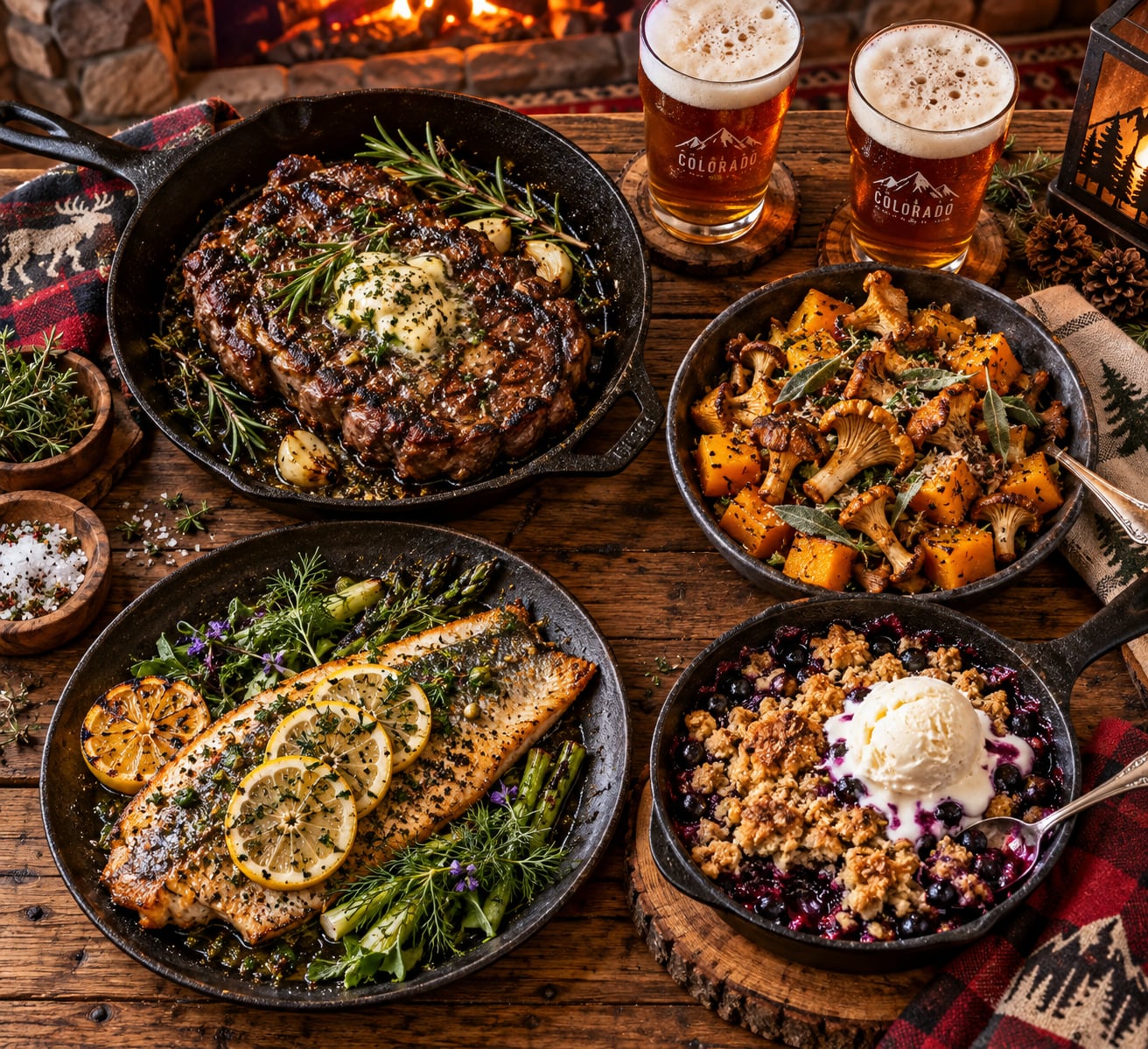
- Grilled Colorado bison ribeye steak, seared over mesquite coals to medium-rare perfection and topped with melting compound butter infused with roasted garlic and fresh mountain rosemary. Bison is naturally leaner and richer than beef, offering an intensely savory, clean flavor profile that pairs beautifully with roasted root vegetables.
- Pan-seared Rocky Mountain rainbow trout, harvested from pristine mountain headwaters and cooked skin-side down until shatteringly crisp, dressed with browned lemon herb butter, toasted slivered almonds, and fresh sprigs of wild thyme.
- A bubbling skillet of autumn butternut squash, caramelized shallots, and wild forest chanterelle mushrooms sautéed in clarified butter with cracked black peppercorns.
- A hot cast-iron skillet of wild mountain huckleberry and blackberry cobbler fresh from the hearth, crowned with a melting scoop of vanilla bean ice cream that swirls into the tart purple fruit juices.
- Pints of frosty Colorado craft ale, from malty amber ales and rich oatmeal stouts brewed with Rocky Mountain snowmelt water to crisp, effervescent local hard ciders pressed from regional orchard apples.
This hearty meal is not merely sustenance; it is a ritual of warmth and camaraderie that celebrates the bounty of the high country and prepares body and mind for another day of alpine exploration.
Hiking Beneath the Sheer Granite Face of Longs Peak to Chasm Lake
For hikers seeking a more strenuous backcountry challenge that captures the raw, formidable scale of the Rocky Mountains, the trail to Chasm Lake delivers one of the most dramatic destinations in North America. Tucked away on the eastern flank of Longs Peak—the park's highest summit at 14,259 feet—this alpine lake sits in a colossal glacial cirque beneath the legendary Diamond, a vertical, sheer two-thousand-foot granite wall that draws elite rock climbers from across the globe.
Beginning at dawn from the Longs Peak Trailhead, the route ascends steadily through dense spruce forests before emerging onto the vast, windswept expanse of the alpine tundra above treeline:
- Golden grasses and lichen-encrusted granite boulders stretch toward the horizon, while panoramic views open up across the plains to the east.
- As the trail contours around the shoulder of Mount Lady Washington, the sheer bulk of Longs Peak looms overhead, its towering granite face illuminated by the morning sun.
- The final approach requires a brief, exciting scramble over a natural stone dam of jumbled granite blocks, leading directly to the edge of Chasm Lake.
The view that greets you upon cresting the ledge is overwhelming in its sheer verticality. The deep, ink-black waters of Chasm Lake lie directly at the foot of the Diamond wall, which soars nearly half a mile straight up into the alpine sky. In October, patches of early winter ice begin to form along the shoreline, creating dazzling patterns of frozen crystal against the dark water, while the thin air remains crisp and still. Sitting on a granite boulder beside this glacial tarn, eating trail provisions beneath the highest wall in the park, offers a taste of true alpine majesty that few other day hikes in the country can match.
Experiencing the Alpine Charms and Historic Architecture of Estes Park
Nestled in the sun-drenched valley immediately outside the park's eastern gates, the town of Estes Park serves as the classic gateway community to the Rockies. Surrounded by jagged granite crags and bisected by the rushing waters of the Big Thompson River, the town combines historic western hospitality with an unmistakable alpine atmosphere.
A stroll down Elkhorn Avenue reveals welcoming boardwalks lined with historic stone storefronts, artisan leather shops, local woodcarvers, and traditional confectionery kitchens where copper kettles bubble with fresh fudge and saltwater taffy. Throughout the autumn months, wild elk roam freely through the town's parks and golf courses, casually grazing beside municipal flower beds while residents and visitors watch from a safe and respectful distance.
No visit to Estes Park is complete without touring the legendary Stanley Hotel:
- Built in 1909 by steam-powered automobile pioneer Freelan Oscar Stanley, this pristine white Georgian revival palace sits regally on a granite bluff overlooking Lake Estes and the Continental Divide.
- With its grand music rooms, sweeping hardwood staircases, and historic stone verandas, the hotel radiates early twentieth-century elegance and famously served as the real-world inspiration for Stephen King's psychological horror masterpiece The Shining.
- Enjoying an evening craft cocktail on the hotel's sprawling veranda while watching the final orange rays of sunset fade behind Longs Peak is one of the most civilized and memorable traditions in Colorado travel.
The blend of wild mountain wilderness just minutes away and refined historic comfort in town creates a harmonious rhythm for any autumn mountain getaway.
Essential Tips for High Altitude Acclimatization Weather and Timed Entry
Exploring Rocky Mountain National Park at elevations ranging from 7,500 feet to over 12,000 feet requires thoughtful preparation to ensure your adventure is both safe and enjoyable:
- High altitude hydration and pacing. The thin, dry air of the Colorado Rockies pulls moisture from your body rapidly. Drink plenty of water throughout your stay, carry electrolyte replenishment tablets on the trail, and allow yourself a day to acclimatize in Denver or Estes Park before tackling demanding hikes above treeline. Limit caffeine and alcohol during your first two days to prevent altitude sickness and headaches.
- Timed entry permits and park access. Rocky Mountain National Park operates a timed entry reservation system through late October. Travelers need one permit for the popular Bear Lake Road corridor and a standard permit for the remainder of the park. Reserve these permits online in advance through recreation.gov, or plan to enter the park before the permit checkpoints activate at five in the morning for Bear Lake or nine in the morning for the rest of the park.
- Dressing in versatile autumn layers. Autumn temperatures in the high country can fluctuate by forty degrees in a single day. Crisp mornings in the twenties can give way to pleasant sixty-degree afternoons, only to plunge back below freezing when a cold front rolls across the Divide. Dress in breathable synthetic or merino wool base layers, an insulating fleece mid-layer, and a windproof, waterproof outer shell. Pack a warm beanie, lightweight gloves, and sturdy waterproof hiking boots with solid ankle support.
- Safe wildlife viewing distances. Never approach wild elk, bighorn sheep, or moose. During the autumn rut, bull elk are unpredictable and fiercely territorial. The National Park Service requires visitors to maintain a minimum distance of seventy-five feet from all wildlife, and at least one hundred and twenty feet from larger animals like moose and aggressive bulls. Always use telephoto camera lenses and binoculars rather than trying to get close on foot.
- Road and pass conditions. Check current road conditions at the visitor center or via the official park app before attempting to drive Trail Ridge Road or Old Fall River Road. Sudden autumn snow squalls can temporarily close high-altitude mountain passes, so keep extra blankets, drinking water, high-energy snacks, and a full tank of fuel in your vehicle at all times.