
# San Francisco Travel Guide: Historic Cable Cars, Sourdough Bread Bowls, Dungeness Crab & Golden Gate Views
Perched on the rugged tip of a windswept peninsula between the restless Pacific Ocean and a sparkling natural harbor, San Francisco is one of the world's most romantic and photogenic cities.
Spanning just seven miles by seven miles across forty-three rolling hills, the "City by the Bay" is defined by its dramatic topography, sweeping marine vistas, vibrant multicultural tapestry, and the theatrical dance of coastal fog—affectionately named "Karl the Fog" by locals—that rolls through the Golden Gate strait on summer afternoons.
Few places on earth pack as much architectural grandeur, historical grit, and culinary innovation into such a compact footprint.
Whether clinging to the wooden running boards of an iconic cable car as it rattles down an impossible thirty-percent grade toward the bay, tearing into a sour, blistered loaf of Gold Rush sourdough filled with steaming clam chowder, or watching the orange towers of the Golden Gate Bridge pierce through a sea of white mist, San Francisco captures the traveler’s imagination like nowhere else.
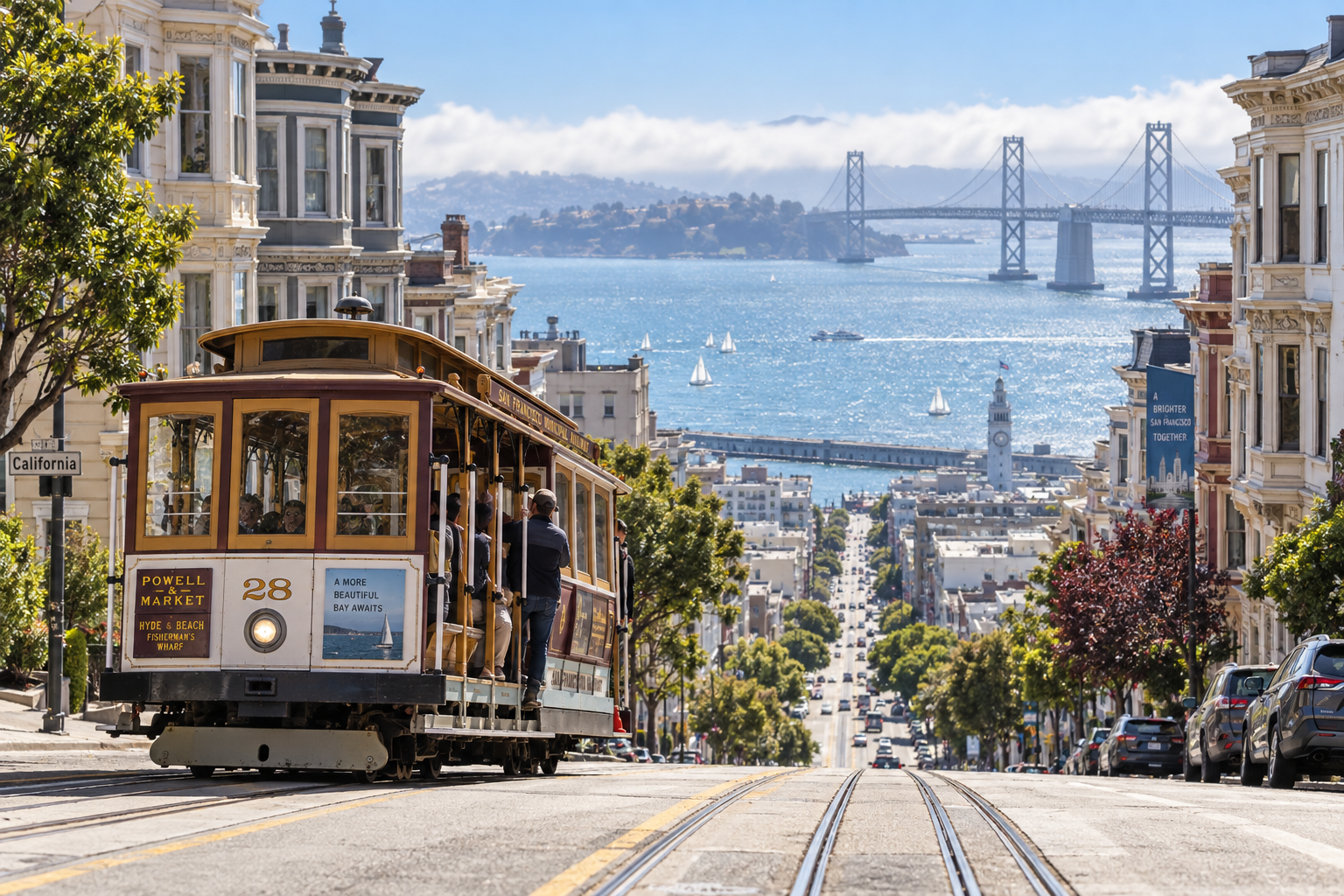
The Moving Monument: Riding San Francisco's Historic Cable Cars
San Francisco’s world-famous cable car system is not merely public transit; it is the only moving National Historic Landmark in the United States, operating continuously with nineteenth-century mechanical technology.
Invented in 1873 by British-born engineer Andrew Smith Hallidie after witnessing a horrifying carriage accident on a rain-slicked cobblestone incline, cable cars conquered hills so steep that draft horses could not reliably climb them:
- How the Mechanical Marvel Operates: Beneath the city streets, massive steel cables—each one and a quarter inches thick—run continuously at a steady nine and a half miles per hour, driven by gigantic electric winding wheels housed in the historic Cable Car Powerhouse on Mason Street. A skilled operator, known as the "gripman," uses a powerful hand-operated steel lever to reach through a slot in the street and physically clamp onto the moving underground cable to pull the car uphill, using heavy wooden friction brakes to halt the descent.
- The Powell-Hyde Line: Widely considered the most scenic route, this line begins near Union Square, climbs over Nob Hill, and plunges dramatically down Russian Hill toward Aquatic Park, offering passengers sweeping views of Alcatraz Island, historic sailing ships at Hyde Street Pier, and the azure bay.
- The California Street Line: A majestic east-west run that bisects the downtown Financial District, climbing straight up the historic spine of Nob Hill past luxury historic hotels like the Fairmont and the Mark Hopkins, terminating near Van Ness Avenue.
- The Art of the Grip: While sitting inside the open-air wooden benches offers comfort, the quintessential San Francisco experience is gripping the polished brass uprights while standing on the exterior wooden running boards, feeling the cool ocean breeze rush past as the gripman rhythmically clangs the overhead brass bell.
Gold Rush Sourdough & Fisherman’s Wharf: A Culinary Legacy
San Francisco’s culinary soul is inextricably linked to its maritime history and the sudden influx of fortune seekers during the 1849 California Gold Rush.
Out of this wild era emerged two of the city's most beloved gastronomic institutions: naturally fermented sourdough bread and fresh Pacific seafood:
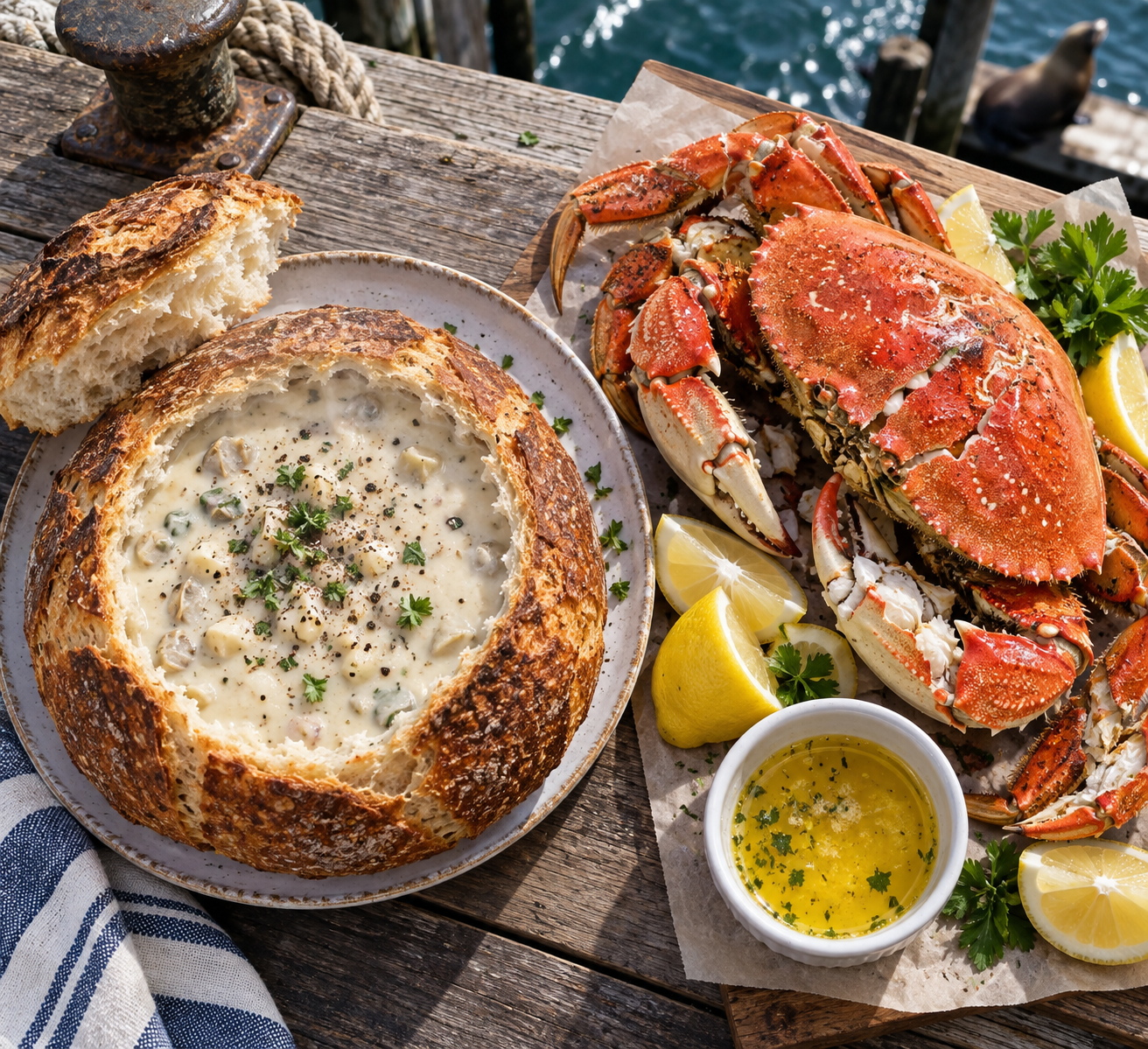
Food lovers exploring the waterfront should make a dedicated pilgrimage to these time-honored culinary traditions:
- Boudin Sourdough Bread Bowls: In 1849, French baker Isidore Boudin blended traditional European baking techniques with the wild airborne yeasts and friendly bacteria unique to the foggy coastal microclimate of the bay. The result was a unique sourdough starter—later classified scientifically as Lactobacillus sanfranciscensis—producing a dense, tangy, blistered boule with a crackling, golden-brown crust. At the flagship Boudin Bakery on Fisherman’s Wharf, bakers hollow out these round loaves to serve as edible bowls brimming with rich, velvety New England-style clam chowder laden with tender clams, diced potatoes, and savory bacon.
- Whole Steamed Dungeness Crab: Between November and late spring, the cold Pacific waters off the Northern California coast yield sweet, succulent Dungeness crabs. Along the open-air sidewalk stalls of Fisherman’s Wharf, vendors plunge live crabs into enormous boiling stainless steel cauldrons, cracking the bright-orange shells to order and serving the sweet, snowy meat alongside lemon wedges, melted garlic butter, and slices of warm sourdough.
- Cioppino (The Sicilian Fisherman's Stew): Born in the late nineteenth century in North Beach among Italian-American fishermen, cioppino is a hearty, aromatic tomato and white wine stew simmered with garlic, oregano, and the daily catch—heaped with Dungeness crab legs in the shell, plump mussels, clams, sea scallops, and local rockfish. It is messy, communal dining at its very finest.
- Mission-Style Super Burritos: Across town in the historic Latino heart of the Mission District, taquerias like La Taqueria and El Farolito perfected the foil-wrapped "super burrito"—an enormous steamed flour tortilla packed with grilled carne asada or carnitas, Mexican rice, whole pinto beans, fresh pico de gallo, melted jack cheese, sour cream, and homemade guacamole, creating a beloved working-class culinary icon.
Maritime Atmosphere: Fisherman’s Wharf & Pier 39 at Dusk
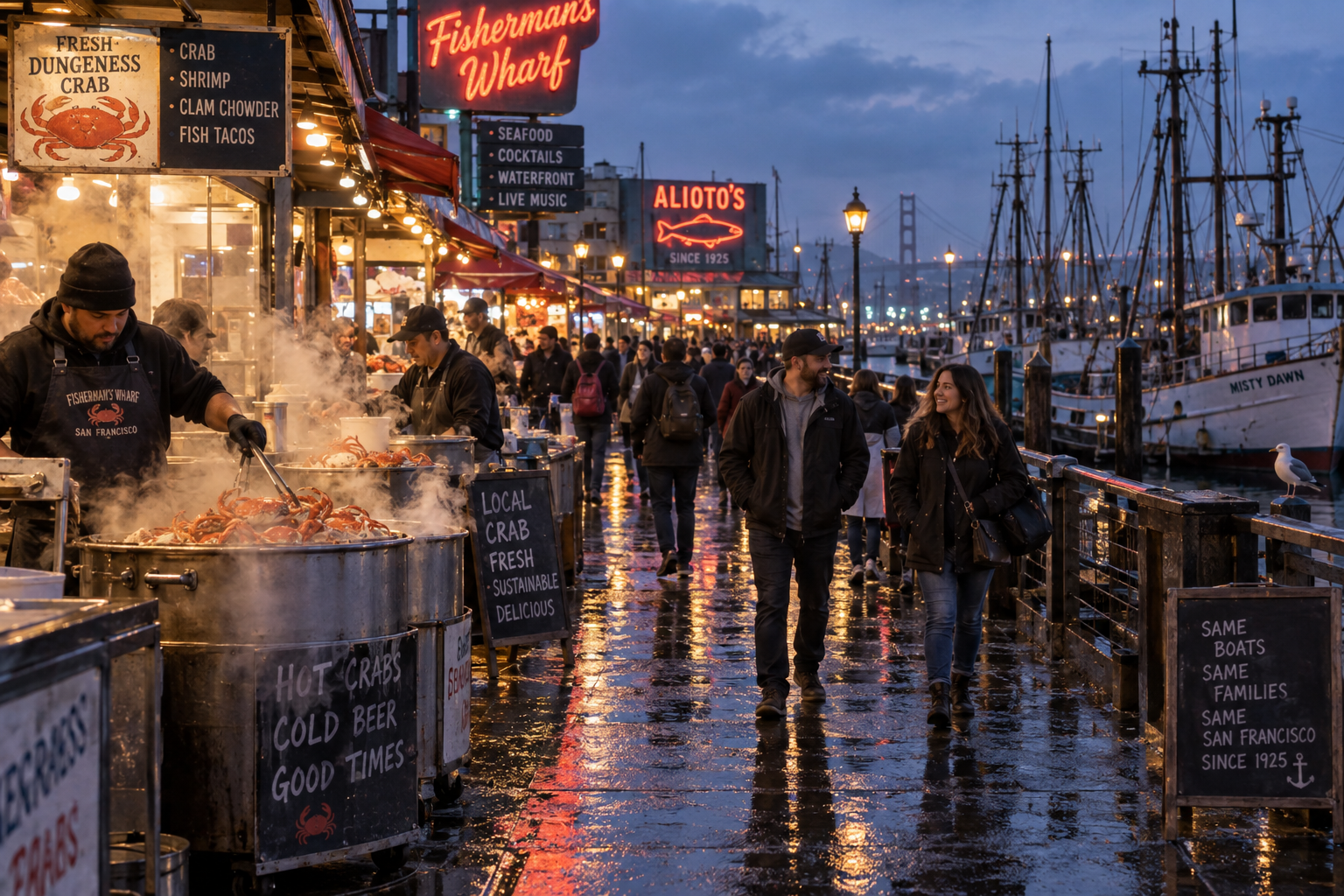
As evening approaches and the daytime crowds thin out, Fisherman’s Wharf takes on an evocative, nostalgic maritime character.
The scent of salt brine mingles with the aromatic steam billowing from boiling pots, while vintage neon crab signs flicker against the darkening sky:
- Watch local fishing trawlers tie up at historic Fish Alley, where generations of Italian and Portuguese immigrant families have docked their fleets since the mid-nineteenth century.
- Visit Pier 39 to observe hundreds of wild California sea lions barking, lounging, and jostling for space across floating wooden docks, a natural spectacle that began unexpectedly following the 1989 Loma Prieta earthquake.
- Stroll through the San Francisco Maritime National Historical Park at Hyde Street Pier, where visitors can board a flotilla of historic nineteenth-century wooden schooners, tugboats, and paddle steamers against panoramic views of the Golden Gate.
Architectural Gems: Painted Ladies to the Golden Gate Bridge
Beyond the waterfront, San Francisco unfolds into an enchanting mosaic of distinct architectural neighborhoods:
- The Painted Ladies of Alamo Square: Facing east across Alamo Square Park, this iconic row of pastel Queen Anne Victorian homes—known affectionately as "Postcard Row"—contrasts historic nineteenth-century gingerbread fretwork and decorative gables against the gleaming modern skyscrapers of downtown in the distance.
- Telegraph Hill and Coit Tower: Crowned atop one of the city's steepest hills, this slender Art Deco fluted tower was built in 1933 using funds bequeathed by eccentric socialite Lillie Hitchcock Coit. Inside the lobby, spectacular Depression-era Works Progress Administration (WPA) frescoes depict California’s industrial and agricultural history, while the surrounding gardens are home to a famous flock of wild, squawking green parrots.
- Walking the Golden Gate Bridge: Stretching 1.7 miles across the entrance to San Francisco Bay, this 1937 Art Deco suspension bridge remains one of the greatest engineering feats of all time. Walking the pedestrian walkway across its International Orange steel spans, suspended 220 feet above the crashing Pacific surf, provides unmatched vistas of the city skyline, the Marin Headlands, and the open ocean.
Chinatown and The Mission: Living Cultural Hearts
San Francisco's strength lies in its deep, diverse cultural enclaves, each preserving distinct culinary and artistic heritages:
- Chinatown: The oldest Chinatown in North America, entered through the ornate green-tiled Dragon Gate on Grant Avenue. Amble along Stockton Street’s bustling produce markets and herbal apothecaries, stop for dim sum tea lunches, and visit the historic Golden Gate Fortune Cookie Factory tucked into Ross Alley, where cookies have been hand-folded on cast-iron griddles since 1962.
- The Mission District: Famous for its sunny microclimate and vibrant murals, especially along Balmy Alley and Clarion Alley, where artists paint powerful messages of social justice and indigenous heritage across building walls and garage doors.
Essential San Francisco Travel Advice: Transit, Parking & Weather
Exploring the City by the Bay is effortless with the right local insights and preparation:
- Dress for Microclimates in Layers: Mark Twain famously remarked that the coldest winter he ever spent was a summer in San Francisco. Coastal fog and ocean breezes can cause temperatures to plummet twenty degrees between neighborhoods or within an hour. Always carry a light fleece or windbreaker, regardless of the morning sunshine.
- Curb Your Wheels When Parking: San Francisco strictly enforces a municipal ordinance requiring drivers parking on hills steeper than three percent to turn their front wheels toward the curb when facing downhill, and away from the curb when facing uphill, setting the parking emergency brake to prevent runaway vehicle accidents.
- Ride Public Transit: Operating a car downtown can be stressful with expensive parking garages and complex one-way streets. Instead, utilize the city’s comprehensive Muni bus, light rail, and historic F-Line heritage streetcar network, using the Clipper mobile transit card on your phone.
- The Golden Window to Visit: While summer brings heavy afternoon fog and chilly marine drafts, autumn—specifically September through October—is known as "Indian Summer," offering the year's warmest, sunniest days, crystal-clear skies, and unforgettable sunset views over the bay.