
# Savannah Historic District & Lowcountry Feast Guide: Spanish Moss Squares, River Street Cobblestones, and Southern Coastal Dining
Stepping into Savannah, Georgia, feels less like visiting a modern coastal city and more like wandering through a living, breathing painting woven from morning sea mist, flickering gas lamps, and centuries-old live oak branches.
Founded in 1733 by General James Oglethorpe as America’s first planned city, Savannah was designed around a visionary grid of leafy public squares that still form the beating heart of its downtown.
Today, this storied port on the Savannah River stands as one of the nation's most atmospheric architectural treasures, where visitors amble under magnificent moss-draped canopies, savor piping-hot Lowcountry culinary delicacies, and listen to the gentle clip-clop of horse hooves echoing across ballast cobblestone lanes at dusk.
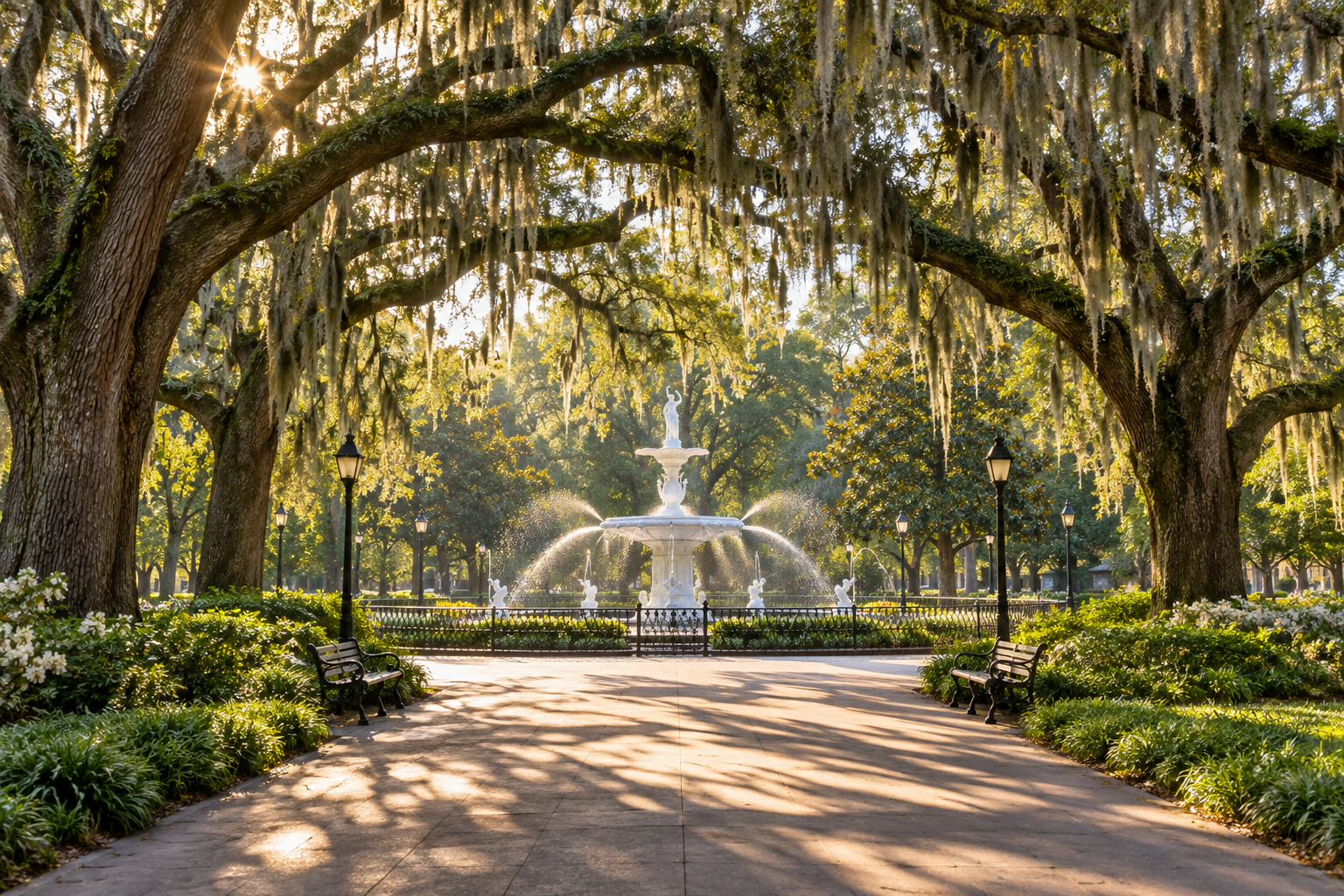
The Oglethorpe Plan: Walking Through 22 Enchanting Historic Squares
What sets Savannah apart from virtually every other American historic city is its extraordinarily elegant urban layout. Rather than cramming buildings into rigid, endless blocks, Oglethorpe designed Savannah as a cluster of interconnected garden wards, each anchored by a lush central park.
While four of the original twenty-six squares were lost to twentieth-century road development, twenty-two survive today in immaculate condition, offering shady sanctuaries every two blocks:
- Monterey Square: Widely considered one of the city’s most dramatic squares, framed by the towering Gothic-style Congregation Mickve Israel synagogue and the opulent Mercer Williams House made famous by John Berendt’s literary classic, Midnight in the Garden of Good and Evil.
- Chippewa Square: Famously immortalized in pop culture as the tranquil garden where Forrest Gump sat on his wooden bench waiting for the bus, this shaded square features a bronze monument to General Oglethorpe surrounded by majestic palmettos and flowering azaleas.
- Johnson Square: The city’s oldest and largest square, established in 1733, shaded by towering live oaks and featuring two soothing fountains that serve as a natural gathering spot for street musicians and leisurely walkers.
- Columbia Square: A quiet, peaceful haven nestled in the eastern district, shaded by delicate crepe myrtles and anchored by a salvaged historic fountain from an old Georgia plantation.
Strolling south toward the thirty-acre expanse of Forsyth Park, the live oak branches intertwine overhead to create soaring Gothic arches of living foliage. Draped in cascades of silvery Spanish moss—an air-breathing epiphyte that drinks humidity from the coastal Atlantic breeze—the park’s Parisian-inspired cast-iron fountain shoots cool sprays into the warm Georgia air, creating one of the most photographed vistas in North America.
Lowcountry Culinary Royalty: Coastal Georgia's Richest Flavors
Savannah is an undisputed capital of Lowcountry cuisine, a distinct regional foodway rooted in the brackish barrier islands, salt marshes, and tidal waterways of coastal Georgia and South Carolina.
Born from a fusion of West African culinary wisdom, coastal Native American ingredients, and French-English coastal cooking, dining in Savannah is a rich, sensory journey celebrated in historic taverns, Victorian mansions, and riverside eateries.
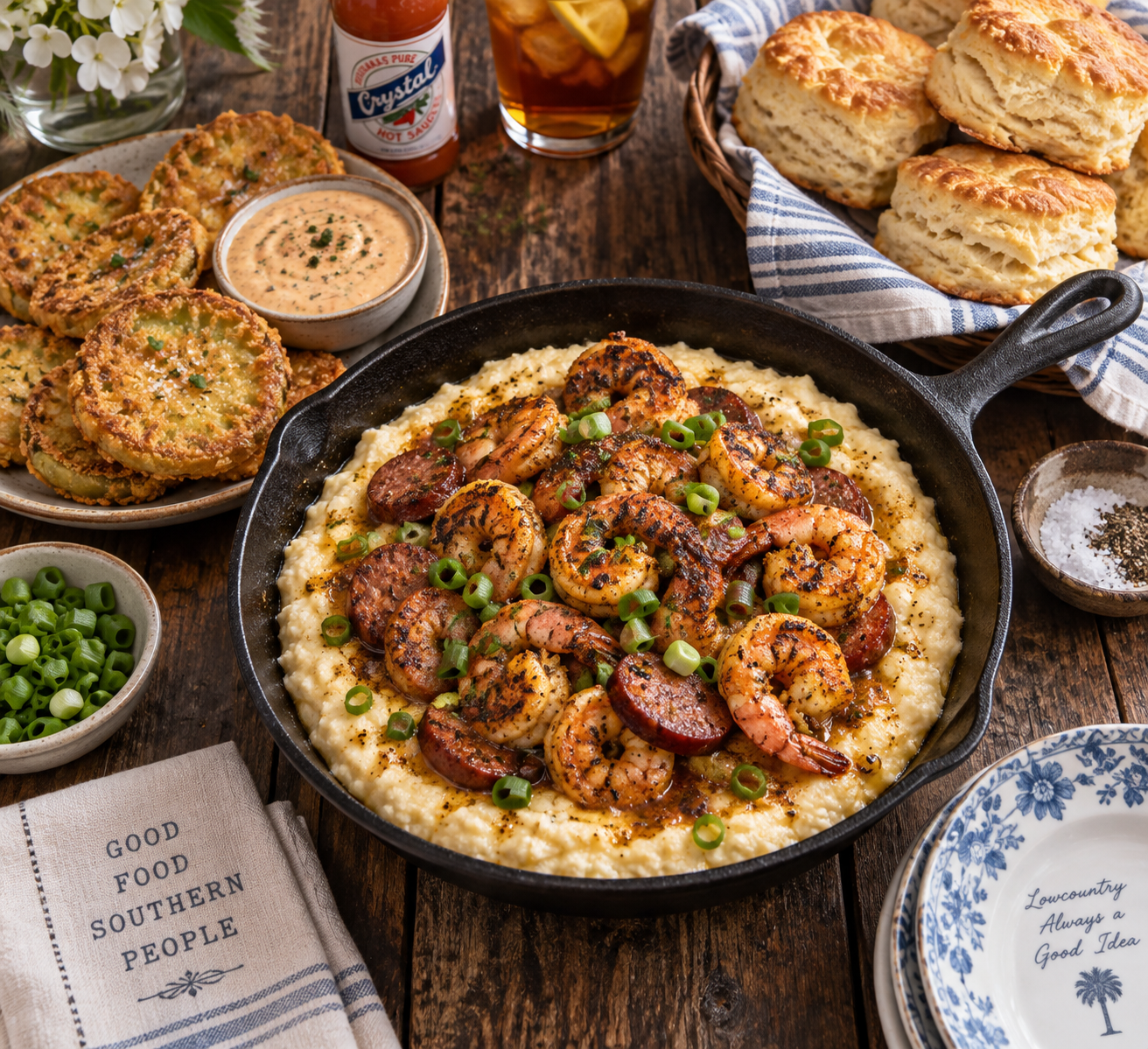
Food lovers exploring Savannah should never miss these signature Lowcountry staples:
- Lowcountry Shrimp and Grits: Plump, sweet Georgia white shrimp sautéed in a rich pan gravy of smoked andouille sausage, sweet bell peppers, caramelized onions, and garlic, served over a steaming bowl of coarse, stone-ground white corn grits slowly simmered with heavy cream and sharp aged white cheddar.
- She-Crab Soup: A silky, velvety seafood bisque crafted from sweet Atlantic blue crab meat, fresh crab roe, cream, and a splash of dry sherry added just before serving to impart a delicate warmth and fragrant complexity.
- Crispy Fried Green Tomatoes: Thickly sliced unripened green tomatoes dredged in coarse seasoned cornmeal, pan-fried to a golden crunch, and served topped with spicy coastal remoulade sauce, goat cheese crumbles, or sweet bacon jam.
- Flaky Buttermilk Biscuits with Honey Butter: Tall, tender biscuits pulled fresh from the oven with dozens of flaky, buttery layers that melt in your mouth, served with whipped wildflower honey butter and house-made blackberry preserves.
- Lowcountry Country Boil (Frogmore Stew): A hearty, communal one-pot feast of freshly netted local shrimp, smoky kielbasa sausage, sweet ears of yellow corn on the cob, and tender red potatoes boiled in water generously spiced with Old Bay and bay leaves, drained and poured straight onto butcher paper.
For a sweet afternoon indulgence along the riverfront, follow the intoxicating aroma of toasted Georgia pecans and bubbling brown sugar into the historic confectioners of River Street. Here, candy makers pour molten praline batter from heavy copper kettles onto icy marble slabs, producing soft, buttery pecan pralines that melt effortlessly on the tongue.
Riverfront Magic: Ballast Cobblestones and Factor's Walk
Stepping down from the bluff toward the bustling Savannah River, travelers discover another dramatic layer of the city’s complex maritime heritage: River Street and the historic alleyways of Factor's Walk.
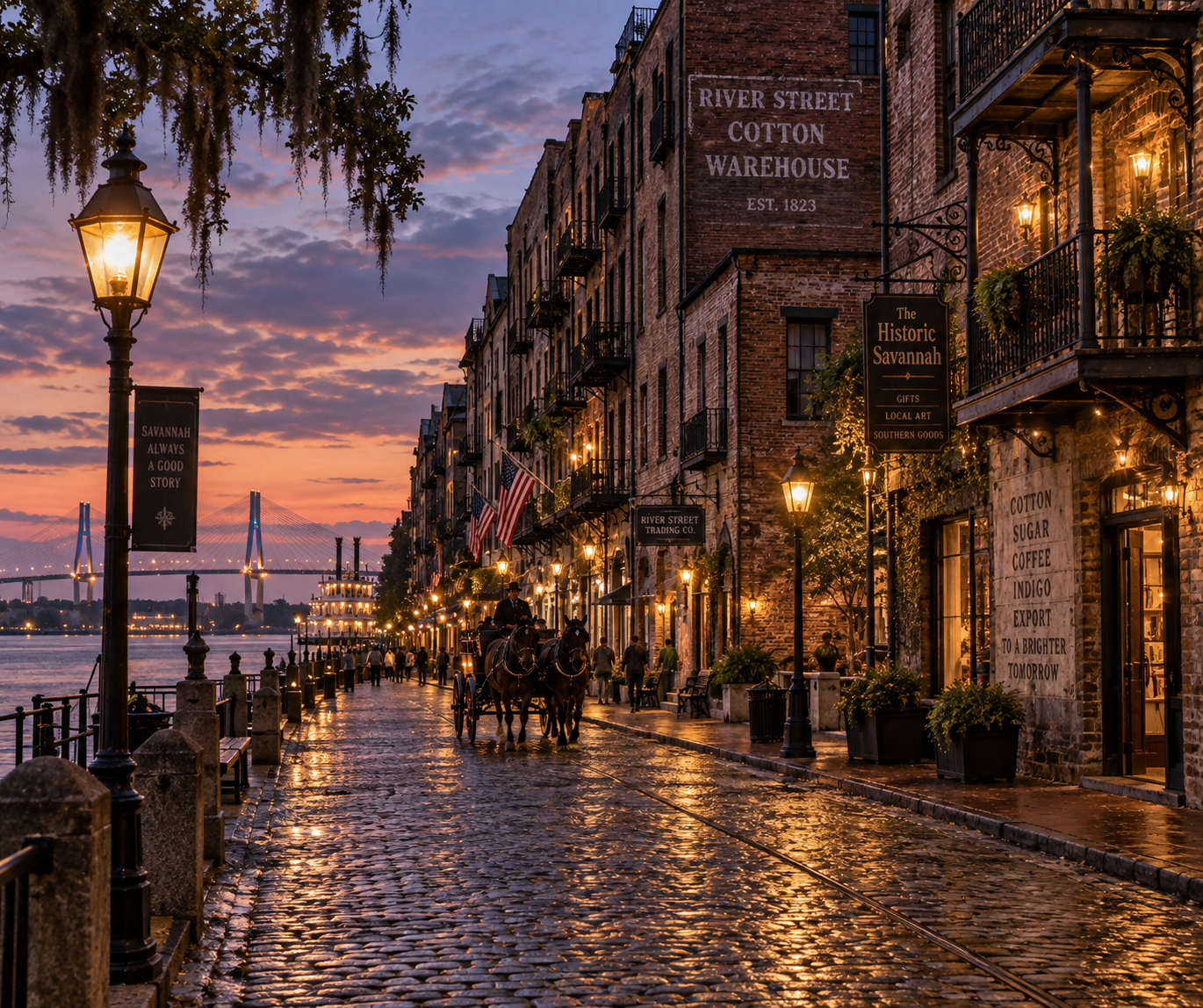
Centuries ago, merchant sailing vessels from across Europe unloaded tons of heavy ballast stones—flint, granite, and basalt collected from distant riverbeds—onto Savannah's marshy shores before loading their hulls with Georgia cotton and naval timber.
City builders paved the riverfront ramps, streets, and retaining walls with these rounded ballast stones, creating the iconic, undulating cobblestone streets that still rumble beneath carriage wheels today:
- Explore Factor's Walk, an intricate network of narrow pedestrian alleys and arched wrought-iron footbridges connecting the upper town bluff to the upper levels of massive multistory red brick cotton warehouses.
- Watch colossal modern container ships glide silently down the narrow river channel just feet from the promenade, offering a striking juxtaposition against vintage nineteenth-century paddlewheel riverboats.
- Unwind on a breezy rooftop bar overlooking the water as the sunset paints the sky in shades of bruised violet and apricot, enjoying local coastal craft beers and hand-shaken bourbon cocktails.
Open Containers, Ghost Tours, and Twilight Folklore
As dusk settles over Savannah and the Spanish moss turns into dark, hanging silhouettes against the twilight sky, the city embraces two of its most famous evening traditions: to-go drink culture and supernatural storytelling.
Savannah is one of the few historic municipalities in the United States that legally permits adult travelers to carry beer, wine, or cocktails in an open plastic cup (up to 16 ounces) within the Historic District boundaries. Visitors can comfortably order a mint julep or craft ale from a local tavern, step outside into the balmy evening air, and amble casually from square to square beneath the flickering gaslights.
With its centuries of yellow fever epidemics, Revolutionary and Civil War skirmishes, and mysterious legends, Savannah is frequently named America's most haunted city:
- Stroll through Colonial Park Cemetery, where weathered eighteenth-century headstones lean beneath gnarly oak roots, holding the remains of historic founding fathers and yellow fever victims.
- Join a lantern-led walking ghost tour through candlelit squares, listening to dramatic accounts of the resident phantoms of the pirate-frequented Sorrel Weed House and the atmospheric halls of the Marshall House hospital.
- Dine inside The Olde Pink House, an elegant 1771 Georgian mansion where guests enjoy upscale Southern fare in candlelit subterranean tavern rooms with exposed brick hearths and live piano jazz.
Essential Savannah Travel Advice: Walking, Transit, and Timing
Navigating Savannah is remarkably effortless, provided visitors plan ahead with comfortable footwear and an appreciation for relaxed Southern pacing:
- Footwear is Everything: With ballast cobblestones along River Street, uneven brick sidewalks, and sprawling garden pathways, leave delicate heels at home and pack comfortable walking shoes or sturdy flat boots.
- Riding the Free DOT Shuttle: The city operates the dot Express Shuttle, a complimentary fare-free transit loop that runs throughout the Historic District every ten minutes, providing a refreshing air-conditioned ride between Forsyth Park and the riverfront.
- Parking Strategy: Historic street parking requires meter payment through mobile apps. For stress-free day trips, park your vehicle in the multi-story Bryan Street Parking Garage or Whitaker Street Garage and explore the rest of the city entirely on foot or by pedicab.
- Best Times to Visit: Spring (March to May) brings mild daytime temperatures and the spectacular blooming of tens of thousands of pink and white azaleas throughout the squares. Autumn (October to November) offers warm afternoon sunshine, comfortable evenings, fewer crowds, and peak festival weather.