
# The Soul of Vietnamese Home Cooking: The Sacred Harmony of Caramelized Claypot Fish and Tamarind Sour Soup
Ask any American food lover to name their favorite Vietnamese dishes, and their response almost invariably begins with a piping-hot bowl of beef phở or a crunchy pork-filled bánh mì picked up on a hurried lunch break.
Yet, if you walk through the screen door of an everyday Vietnamese-American home in Orange County, Houston, or Seattle on any given Sunday evening, you will rarely smell simmering star anise phở broth or see baguettes on the dining table.
Instead, you are greeted by an aroma so intensely comforting, deeply savory, and unmistakably nostalgic that it stops you right in your tracks: the sweet-pungent perfume of garlic, shallots, and rich amber fish sauce bubbling away in an unglazed black claypot, drifting alongside the vibrant, citrusy steam of simmering tamarind, ripe pineapple, and fresh sawleaf herbs.
This is the true culinary soul of Vietnam: the legendary, indivisible partnership of Cá Kho Tộ (caramelized braised claypot fish) and Canh Chua (sweet and sour tamarind soup).
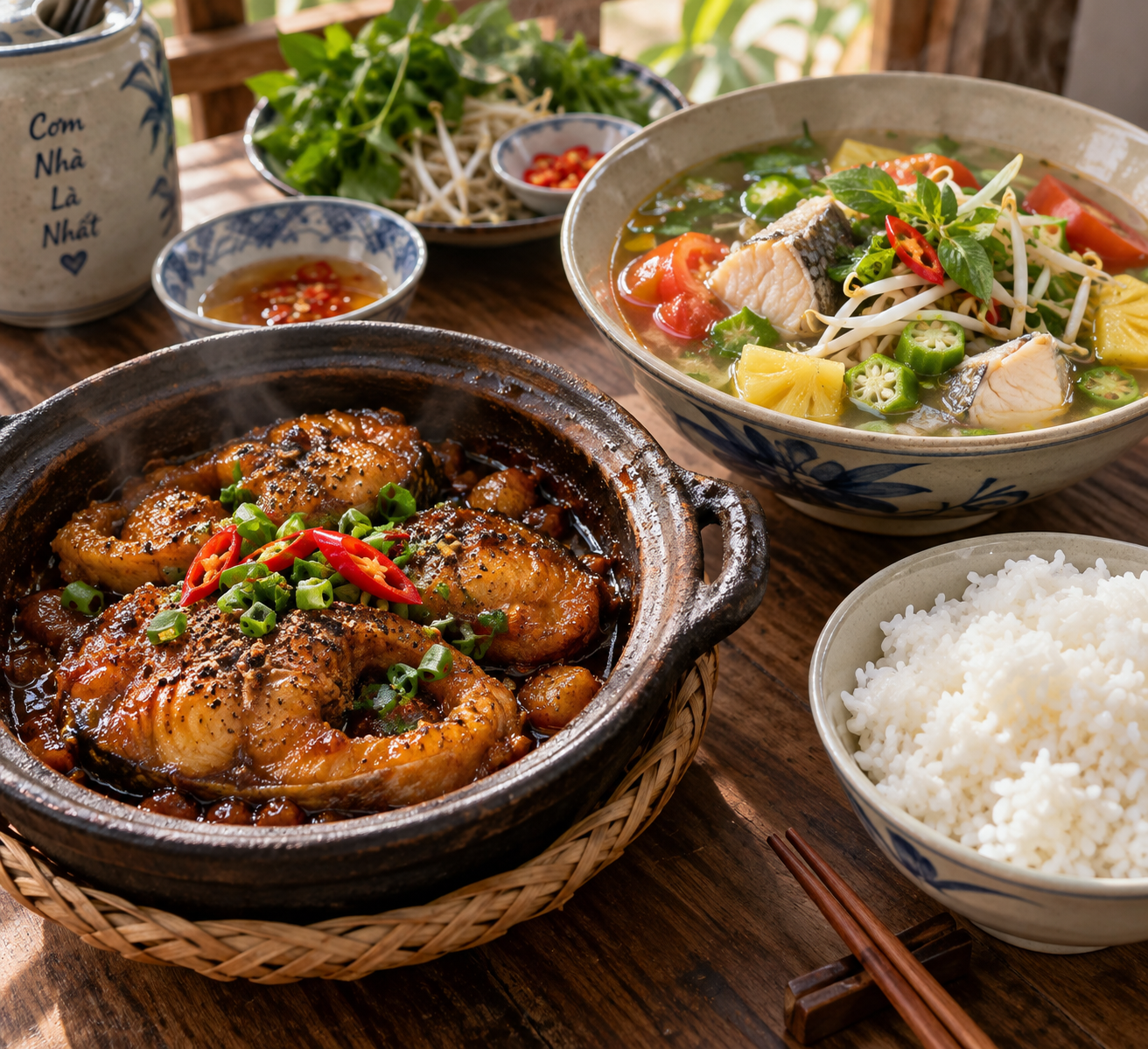
In Vietnamese culinary philosophy, these two dishes do not simply complement one another; they exist in a state of eternal, cosmological balance. Together with a mound of steaming jasmine rice, they represent the ultimate expression of home, family resilience, and ancestral memory in the diaspora.
The Cosmology of the Vietnamese Family Table
To truly appreciate why this pair commands such profound devotion, one must understand the ancient philosophical foundation of Vietnamese home cooking: the principle of Âm and Dương (Yin and Yang).
Every meal prepared in a traditional home is conceived as a harmonious balancing act between warming, heating elements and cooling, soothing ingredients.
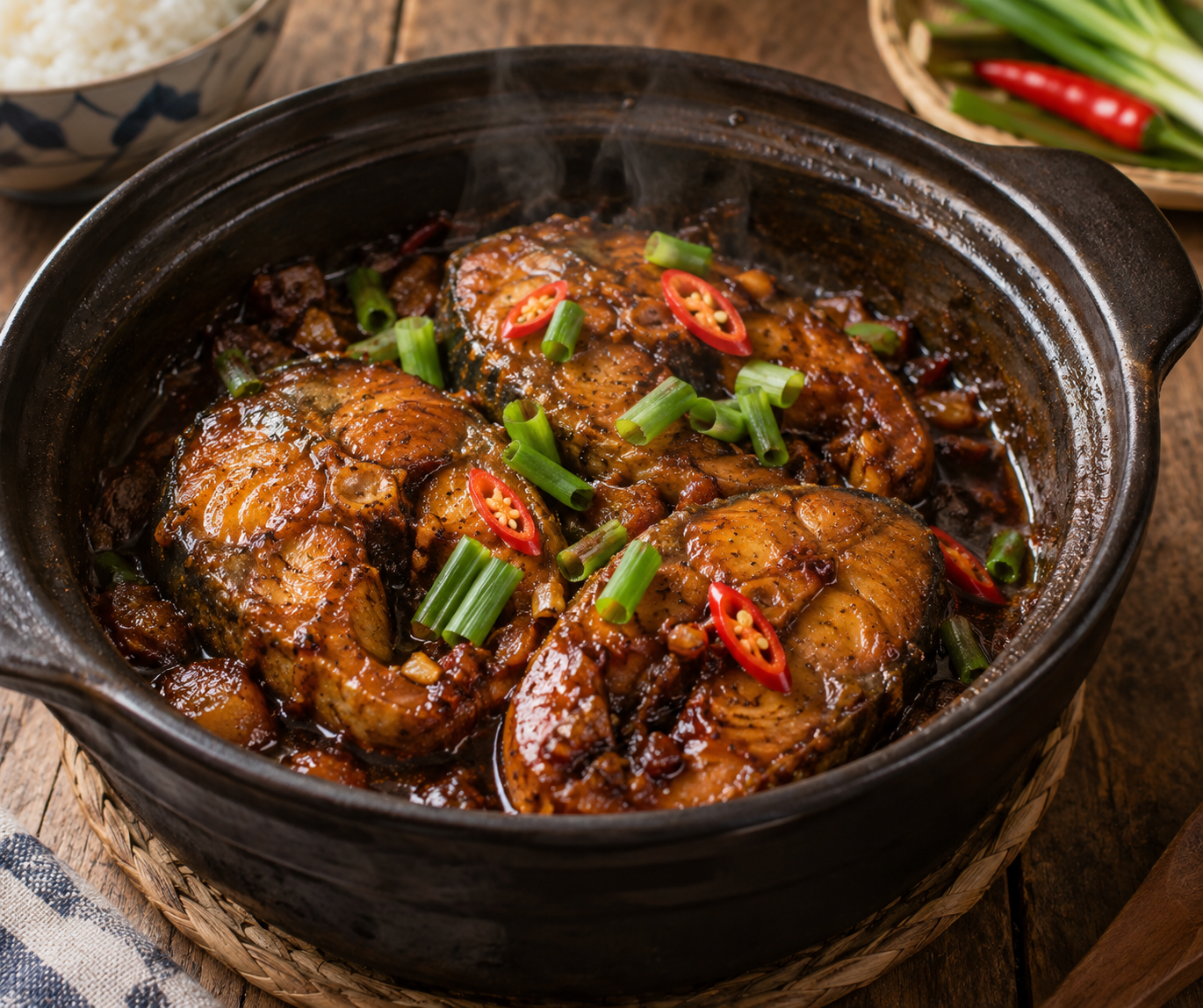
Cá Kho Tộ represents the fiery Yang: bold, concentrated, salty, rich with black pepper and sweet caramelized sugars, simmering intensely until the sauce reduces into an opulent, sticky mahogany glaze that clings stubbornly to the fish.
Eaten alone, such an intense savory dish would quickly overwhelm the palate.
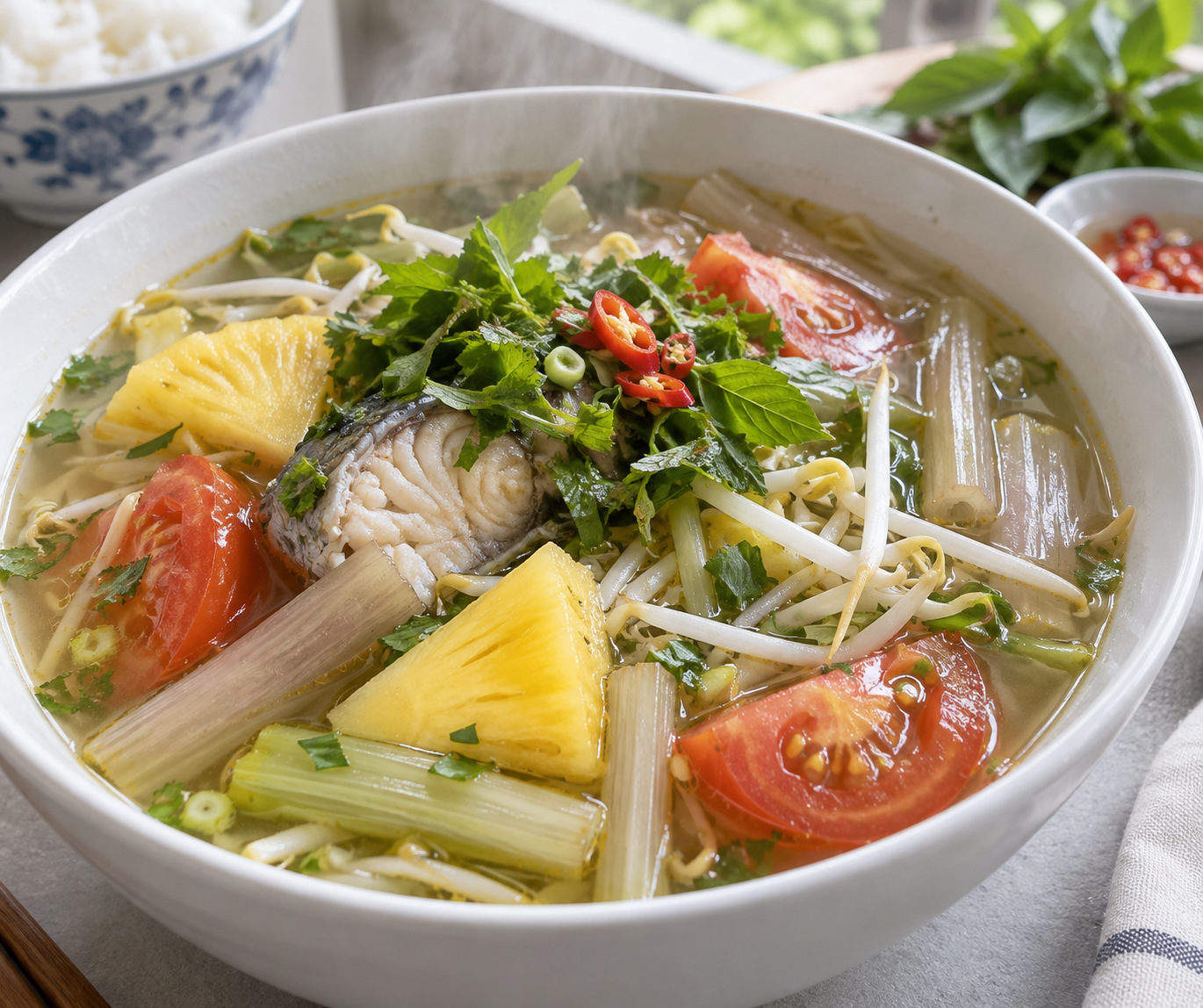
Enter Canh Chua, the cooling Yin: a light, refreshing, restorative broth dancing with the gentle, fruity acidity of crushed tamarind pulp, the juicy sweetness of pineapple chunks, the mild crunch of elephant ear stems, and the cooling brightness of aromatic herbs.
A bite of the rich, peppery fish followed immediately by a spoonful of steaming jasmine rice soaked in the tangy tamarind broth creates an intoxicating sensory equilibrium. It is a flavor rhythm perfected over centuries along the winding waters of the Mekong Delta, engineered to revive tired bodies after a long day of labor in the tropical heat.
The Magic of the Earthenware Claypot and Nuoc Mau
The alchemy of authentic Cá Kho Tộ begins not with high-tech stainless steel cookware, but with humble earthenware pottery (tộ).
Clay is porous, heating slowly and radiating an extraordinarily gentle, uniform warmth that metal pans simply cannot replicate. As the stew simmers, the earthenware draws out the natural collagen and savory juices from thick bone-in fish steaks—traditionally Mekong catfish (cá trê or cá lăng), though Vietnamese cooks in America frequently favor sweet, flaky Atlantic cod, salmon steaks, or fresh channel catfish from local Asian seafood markets.
The foundational secret of the dish lies in Nước Màu, the traditional Vietnamese caramel cooking sauce.
Unlike Western pastry caramel, which relies on butter and heavy dairy cream, nước màu is a pure, intense reduction of sugar and a splash of water cooked over medium heat until it turns past golden-amber into an ominous, foaming deep mahogany redolent of bittersweet roasted sugars.
The moment the bubbling caramel reaches its peak aromatic darkness, minced shallots, crushed garlic, and premium fermented fish sauce are poured into the pot.
The resulting sizzle creates an intoxicating cloud of savory steam, laying the foundation for a braising liquid that coats the fish in an irresistible lacquer.
Simmered slowly over a gentle flame alongside crushed black peppercorns and slivers of fresh red bird's eye chilies, the fish absorbs the deep umami essence, transforming every tender flake into a buttery, savory masterpiece.
The Botanical Symphony of Canh Chua
While the claypot bubbles softly on one burner, the adjacent pot comes alive with the kaleidoscopic colors and fresh aromas of Canh Chua.
Unlike clear Western consommés or cream-based soups, Canh Chua is an intricate botanical tapestry celebrating the tropical abundance of Southern Vietnam.
The heart of the broth is tamarind (me). Ripe tamarind pulp is simmered in hot water and pressed through a fine mesh strainer, releasing a tart, fruity acidity that possesses a far softer, more rounded profile than harsh distilled vinegar or sharp lemon juice.
Into this fragrant, simmering tamarind broth goes a vibrant garden of textures:
- Sweet, juicy chunks of fresh golden pineapple that soften the tartness
- Ripe red tomato wedges that release gentle savory glutamates into the stock
- Crisp, tender bean sprouts added during the final moments of cooking
- And most iconic of all, Bạc Hà (sponge-like elephant ear or taro stems), which drink up the savory broth like tiny culinary sponges, bursting with tangy flavor with every single bite.
Just before serving, the soup is crowned with the essential herb duo that gives Canh Chua its unmistakable identity: Ngò Gai (sawtooth coriander) and Rau Ôm (rice paddy herb).
With their bright, citrusy, slightly peppery and cumin-like notes, these delicate herbs are never boiled directly in the pot; instead, they are scattered fresh over the steaming bowl alongside a shower of crisp, golden fried garlic. The sudden release of aromatic essential oils when the hot broth touches the herbs is pure sensory poetry.
The Immigrant Kitchen as Sanctuary
For generations of Vietnamese families who arrived in the United States after 1975, the ritual of cooking Cá Kho Tộ and Canh Chua was far more than an evening meal; it was an emotional sanctuary.
In those early immigrant decades, tracking down fresh ingredients was an arduous quest. Young parents working exhausting double shifts at nail salons, factories, and assembly lines would drive hours across unfamiliar highways on Saturday mornings to reach fledgling community enclaves in California's Orange County or Houston's Bellaire district, searching for a single bundle of fresh rau ôm, a bottle of authentic Phu Quoc fish sauce, or fresh catfish heads to make broth.
Standing over a simmering claypot after a ten-hour shift in an English-speaking workplace was how parents anchored their identity, calmed their anxieties, and preserved a living bridge to the home they had left behind across the Pacific.
To this day, for Vietnamese-American children raised in suburban America, the rhythmic sound of a mother spooning dark caramel sauce over white rice and the clinking of ceramic spoons against soup bowls remains the ultimate soundtrack of parental devotion and unconditional love.
Savoring the Ritual at Home
There is a sacred etiquette to eating this meal that transforms dinner into an interactive, mindful experience.
You begin with a personal bowl of steaming, fragrant white jasmine rice. With your chopsticks, you lift a tender flake of caramelized fish, letting its glossy, peppery sauce drip lightly onto the rice before taking a bite.
Next, you pick up a piece of fish from the soup, dip it into a small side dish of pure fish sauce spiked with sliced fresh chilies (nước mắm mặn), and savor the contrast between the clean, sweet flesh and the sharp saltiness of the dip.
Finally, you spoon several generous ladles of the hot, fragrant tamarind broth directly over the remainder of your rice bowl, stirring the rice grains into the soup and drinking in the savory, sour, and comforting nectar down to the very last drop.
Whether you are seeking to reconnect with cherished childhood memories or exploring the profound depth of Southeast Asian culinary traditions beyond the restaurant takeout menu, mastering this timeless pairing will forever change the way you understand comfort food.
Ready to find authentic Vietnamese grocery markets, fresh herb purveyors, and family-owned traditional restaurants in your neighborhood? Discover verified local gems and culinary hubs across the United States on the FindALoco Vietnamese Supermarket & Grocery Directory and explore traditional family dining on the FindALoco Restaurant Directory.