
# The Ultimate Guide to Mid-Autumn Festival & Mooncakes in America: Traditions, Flavors, and How to Celebrate in 2026
Every year, as late September brings crisp autumn air across the United States, an enchanting cultural celebration unfolds in Asian-American neighborhoods from California to Texas, New York, and beyond.
Bright paper lanterns shaped like stars and shimmering koi fish glow in temple courtyards. The thunderous, rhythmic roar of lion dance drums echoes through vibrant plazas. And inside bustling heritage bakeries, elaborate decorative gift boxes lined with gold and crimson silk are stacked high to the ceiling.
This is the Mid-Autumn Festival (Tết Trung Thu in Vietnamese, Zhongqiu Jie in Chinese)—one of the most beloved and visually captivating harvest holidays celebrated throughout East and Southeast Asia.
At the very beating heart of this thousand-year-old celebration sits an iconic, intricately embossed pastry that captures the curiosity and appetite of food lovers everywhere: the Mooncake.
Whether you have seen viral videos of molten lava custard mooncakes oozing on social media, received an opulent decorative tin from a friend or coworker, or noticed stacks of colorful boxes taking over the bakery aisles at your local Asian supermarket, you likely have questions.
What is inside these dense, glossy pastries? Why do they cost anywhere from \$35 to over \$100 a box? What is the story behind that mysterious golden yolk in the center? And how are you actually supposed to eat them?
Here is your definitive American guide to unlocking the secrets, rich folklore, culinary craft, and irresistible flavors of the Mid-Autumn Festival.
What is the Mid-Autumn Festival?
Celebrated on the 15th day of the eighth month of the lunar calendar—coinciding with the full harvest moon, usually falling between mid-September and early October—the Mid-Autumn Festival has ancient roots dating back more than 3,000 years.
Historically, it originated as a sacred agricultural thanksgiving ritual. Farmers offered gratitude to the moon goddess and ancestral spirits for a bountiful autumn harvest, praying for prosperity and fertility in the coming year.
Over the centuries, the holiday evolved into a deeply sentimental celebration of family reunion, togetherness, and completeness (đoàn viên). Because the harvest moon is believed to be the brightest, fullest, and roundest of the entire year, its round shape became a universal symbol of unbroken family bonds, harmony, and wholeness.
For the Vietnamese diaspora across the United States, Tết Trung Thu holds an extra special dimension: it is famously celebrated as the Children's Festival (Tết Thiếu Nhi).
Legend tells of Chú Cuội, a legendary woodcutter stranded on the moon beside a magical banyan tree, forever looking down upon the earth. On this magical evening, adults shower children with toys, sweet treats, and handcrafted paper lanterns, holding parades so their lights can guide Chú Cuội back home.
The Anatomy of a Mooncake: A Pastry Unlike Any Other
To modern Western palates accustomed to light, airy sponge cakes or flaky French croissants, encountering a traditional mooncake for the first time is a fascinating surprise.
Mooncakes are not airy desserts. They are dense, compact, intensely rich, and crafted with artistic precision.
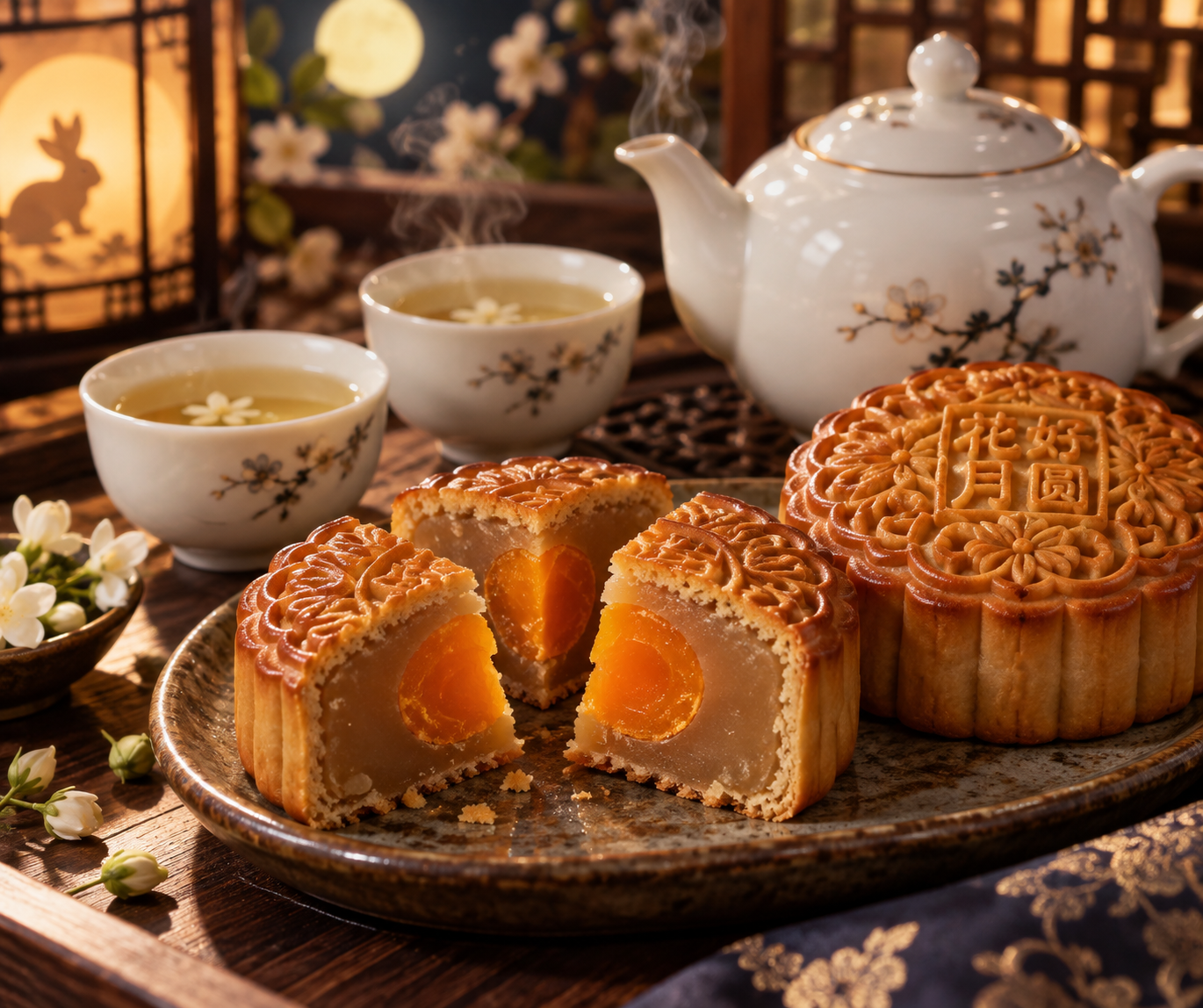
A standard traditional mooncake weighs around 150 to 200 grams (about the weight of a baseball) and consists of two primary components:
- The Crust: An impossibly thin, tender pastry sheath made from wheat flour, golden sugar syrup, oil, and alkaline water (nước tro tàu), brushed with an egg wash before baking to create a glossy, deep golden-mahogany sheen. The top is embossed with elaborate wooden or plastic molds, imprinting auspicious Chinese characters (such as Longevity, Harmony, or Prosperity) or graceful floral motifs.
- The Filling: A dense, smooth, and heavily concentrated filling that makes up roughly 80% to 85% of the pastry's total mass.
- The Salted Egg Yolk: Tucked into the core of premium mooncakes is one, two, or even four cured salted duck egg yolks (trứng muối). Firm, rich, and brilliantly orange, the yolk represents the glowing harvest moon shining in the night sky.
Decoding the Flavors: Sweet Classics vs. The Legendary Savory Filling
Walking down the bakery aisle can feel overwhelming with dozens of flavor varieties. Here is how to navigate the most popular styles:
1. Thập Cẩm (Mixed Nuts & Savory Roast Meat) — The Legendary Heritage Champion
In Vietnamese culture, Thập Cẩm is the undisputed king of mooncakes. If you have never experienced it, prepare your tastebuds for an extraordinary sweet-and-savory symphony.
A traditional Thập Cẩm filling brings together up to a dozen contrasting ingredients:
- Crushed toasted walnuts, pumpkin seeds, melon seeds, and sesame seeds
- Candied winter melon (mứt bí) and lotus seeds for a mellow sweetness
- Finely shredded roasted chicken or five-spice roast pork (xá xíu)
- Sweet-and-savory dried Chinese sausage (lạp xưởng)
- A splash of fragrant Mai Quế Lộ (rose liqueur) and slivered kaffir lime leaves (lá chanh), which cut through the rich meat with an invigorating herbal aroma.
Combined with a rich salted duck egg yolk, it delivers an umami explosion that seasoned connoisseurs crave all year long.
2. The Silky Sweet Staples: Lotus Seed, Mung Bean & Red Bean
If you prefer pure sweetness without cured meats, the classic sweet paste mooncakes are an elegant starting point:
- **White Lotus Seed Paste (Hạt Sen):** The most prized traditional sweet filling. Delicate, floral, and silky smooth, made by soaking dried lotus seeds, boiling them down, and whipping them with sugar and peanut oil.
- **Mung Bean Paste (Đậu Xanh):** A beloved Vietnamese favorite. Golden-yellow, earthy, and lightly sweetened, often enhanced with creamy coconut milk or pandan leaf extract (lá dứa).
- **Red Bean Paste (Đậu Đỏ):** Deep, velvety, and rich, made from simmered adzuki beans.
3. The Salted Egg Yolk: Why It Makes the Cake
To beginners, the idea of a salted egg yolk inside a sweet cake can sound startling. But culinarily, it is pure genius.
The duck eggs are cured in brine or salt-crusted for 30 to 40 days until the yolks turn bright crimson-orange and firm, developing a rich, creamy, savory fat content. When you take a bite, the savory, buttery richness of the yolk cuts directly through the intense sweetness of the lotus paste or bean filling, creating the exact same flavor magic as salted caramel or chocolate-covered pretzels.
Bánh Nướng vs. Bánh Dẻo: Two Sides of the Moon
In Vietnamese Mid-Autumn traditions, mooncakes come in two complementary forms:
- Bánh Nướng (Baked Mooncakes): The golden, glossy, oven-baked variety described above. Rich, hearty, and masculine (dương / yang), representing warmth and earth.
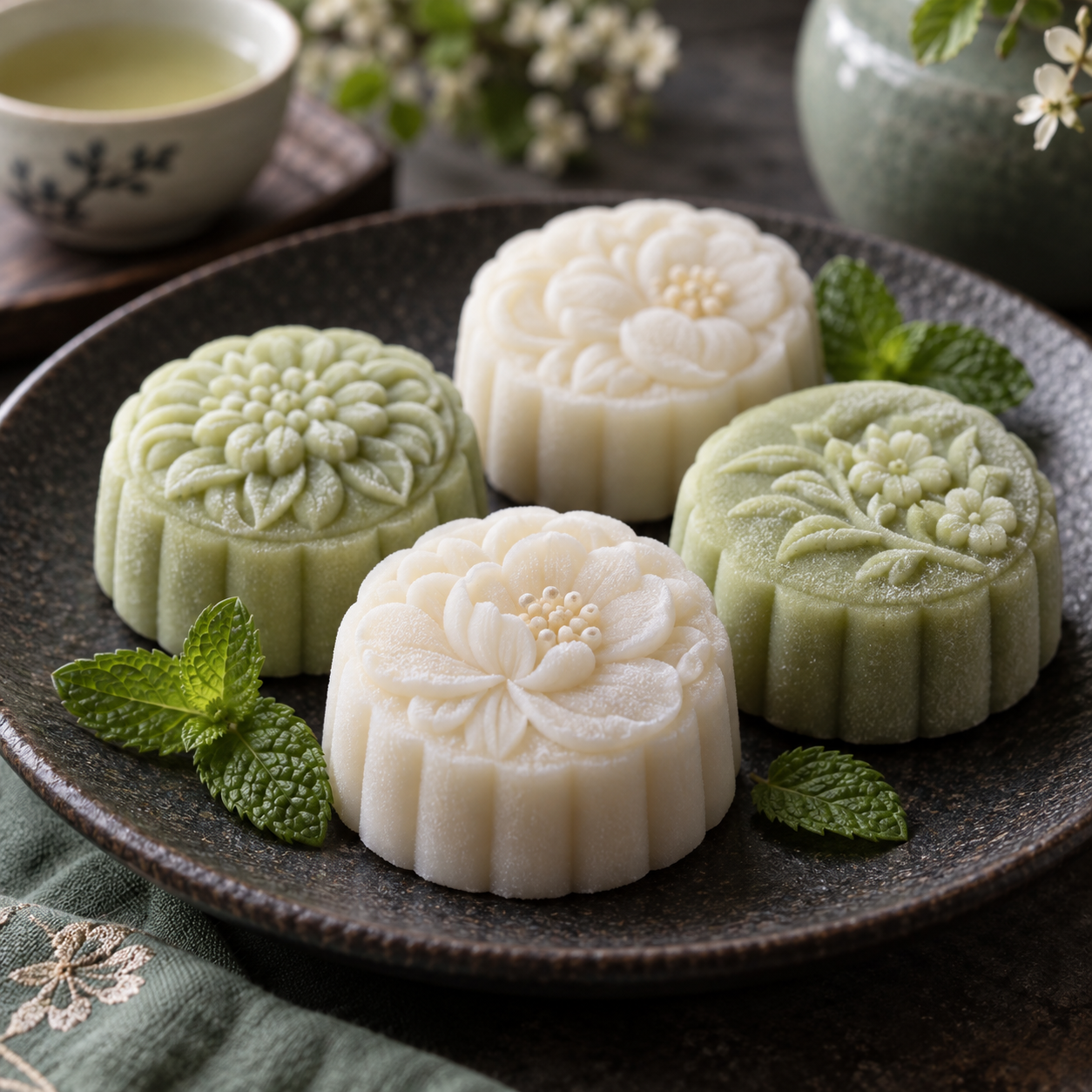
- Bánh Dẻo (Snow Skin / Soft Mooncakes): A uniquely delicate, unbaked mooncake crafted from cooked glutinous rice flour (bột nếp chín), sugar syrup, and a few drops of nước hoa bưởi (natural grapefruit blossom flower essence). Pure white, soft, chewy, and slightly translucent, Bánh Dẻo is feminine (âm / yin), representing the cool, gentle radiance of the moonlight.
Taking a bite of an authentic Bánh Dẻo filled with sweet mung bean or lotus paste is like biting into a tender, scented cloud of jasmine and citrus blossoms.
The Modern Craze: Lava Custard, Matcha & Durian
While traditional recipes remain revered, modern Asian-American bakeries have ignited viral trends with contemporary twists:
- Molten Lava Custard: Pioneered in Hong Kong and wildly popular in the US, these miniature mooncakes feature a rich salted egg custard filling that oozes like molten lava when warm.
- Matcha & Roasted Hojicha: Earthy Japanese green tea infused into both the crust and filling.
- Musang King Durian: For adventurous durian lovers, soft snow-skin cakes packed with 100% pure, pungent, buttery tropical durian puree are a luxury delicacy that sells out within hours.
The Golden Rule of Eating Mooncake: Sliced, Shared & Paired with Tea
If there is one cardinal mistake first-timers make, it is picking up a whole mooncake and biting into it like an apple or a donut.
Never eat a mooncake whole by yourself!
Because mooncakes are extraordinarily dense and calorie-rich (a single standard cake can easily contain 800 to 1,000 calories), eating an entire cake alone is overwhelming. More importantly, doing so misses the entire cultural point of the holiday.
The Traditional Mooncake Etiquette:
- Slice into Wedges: Using a sharp, clean knife, slice the mooncake into four, six, or eight equal triangular wedges. Each wedge should display a beautiful cross-section of the filling and a slice of the golden egg yolk.
- Brew a Fresh Pot of Hot Tea: Mooncakes are designed to be savored alongside hot, astringent tea. The slight bitterness of hot Jasmine tea, Lotus tea, Oolong, or Pu-erh cleanses the palate, dissolves the rich oils, and balances the sweetness after every bite.
- Share with Loved Ones: Gather around the table with family, friends, or neighbors under the evening moon, sip your tea, and enjoy small, mindful nibbles together.
Lanterns, Lion Dances & Children's Joy Across America
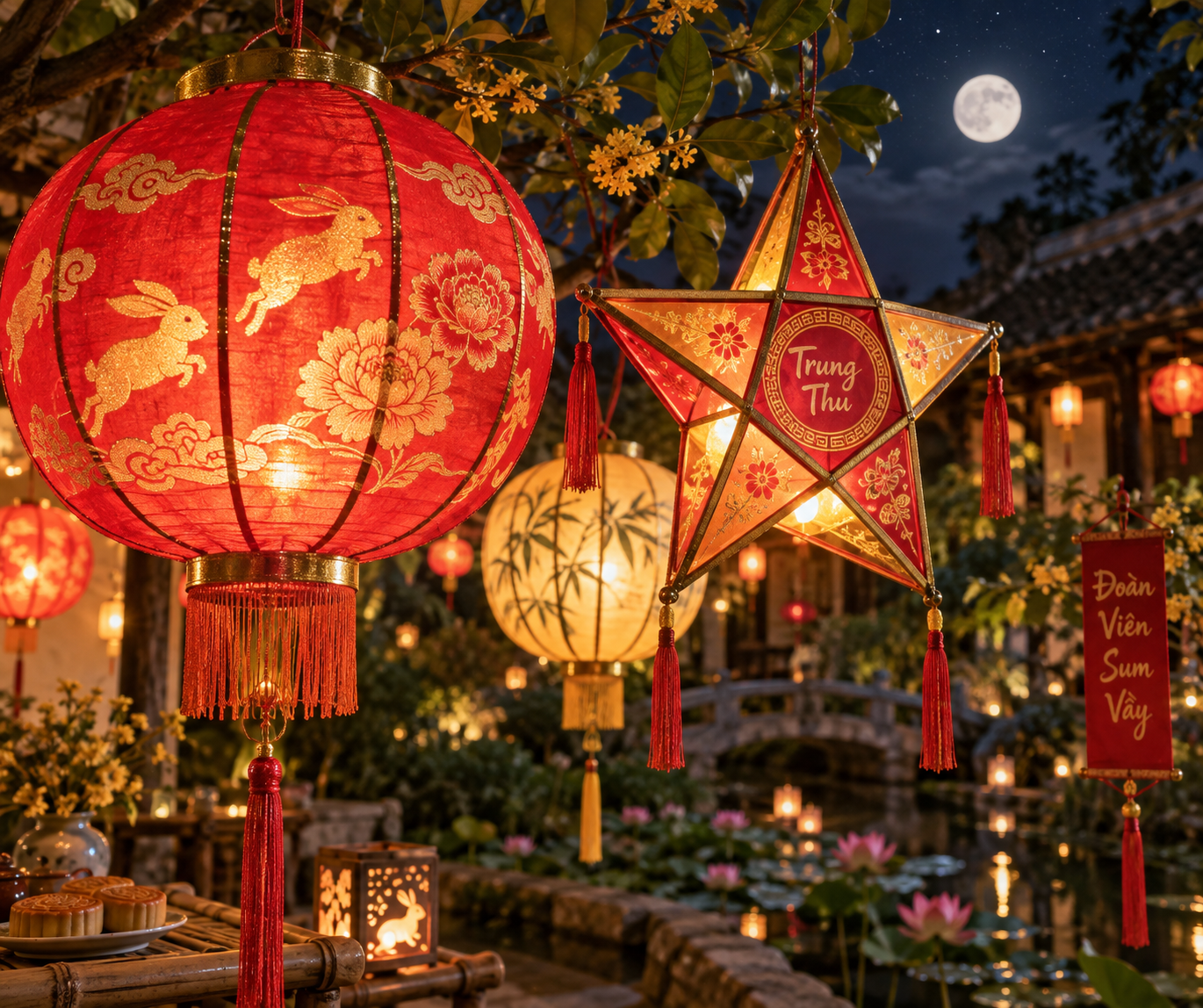
In metropolitan areas with thriving Vietnamese communities—such as Orange County's Little Saigon in California, San Jose, Houston, Dallas, Seattle, Orlando, and Northern Virginia—the Mid-Autumn Festival transforms into a dazzling community spectacle:
- The Grand Lantern Parade: Children parade through temple courtyards and community plazas carrying illuminated paper lanterns (lồng đèn). Traditional favorites include star lanterns made of bamboo and colored cellophane (đèn ông sao) and collapsible accordion paper lanterns shaped like fish, butterflies, and rabbits.
- **Lion Dance (Múa Lân):** Accompanied by clashing cymbals, gongs, and a massive bass drum, acrobatic lion dancers perform energetic routines, leaping between poles to chase away bad luck and bless businesses and spectators with prosperity for the autumn season.
- Outdoor Night Markets: Street food stalls grill Vietnamese street food favorites, from sugarcane shrimp to sizzling skewers, while families enjoy live musical performances and children participate in lantern-making contests.
Where to Buy Authentic Mooncakes in the United States
Mooncakes are strictly seasonal: bakeries only produce them for roughly six to eight weeks leading up to the holiday, after which they disappear until the following year.
If you want to experience the real deal:
- Local Vietnamese & Asian Bakeries: Visit beloved heritage bakeries in your city's Little Saigon or Chinatown districts. Artisan bakeries bake fresh batches daily without preservatives.
- Asian Supermarkets: Major Asian grocers like 99 Ranch Market, H Mart, Shun Fat (SF) Supermarket, and local Vietnamese markets stock an impressive array of imported luxury brands (such as Maxim's Hong Kong, Wing Wah, Kinh Đô, and Như Lan) as well as locally baked gift boxes.
- Order Early: The most sought-after flavors—especially double-yolk white lotus seed and premium thập cẩm—routinely sell out 7 to 10 days before the full moon date.
Ready to find authentic Vietnamese bakeries, specialty pastry shops, and community Mid-Autumn celebrations near you? Explore the verified local listings on FindALoco's Restaurant & Food Directory and Vietnamese Community Services.