
# The Ultimate American Guide to Vietnamese Coffee: From Traditional Phin Drip to the Viral Salt Coffee (Cà Phê Muối) Craze
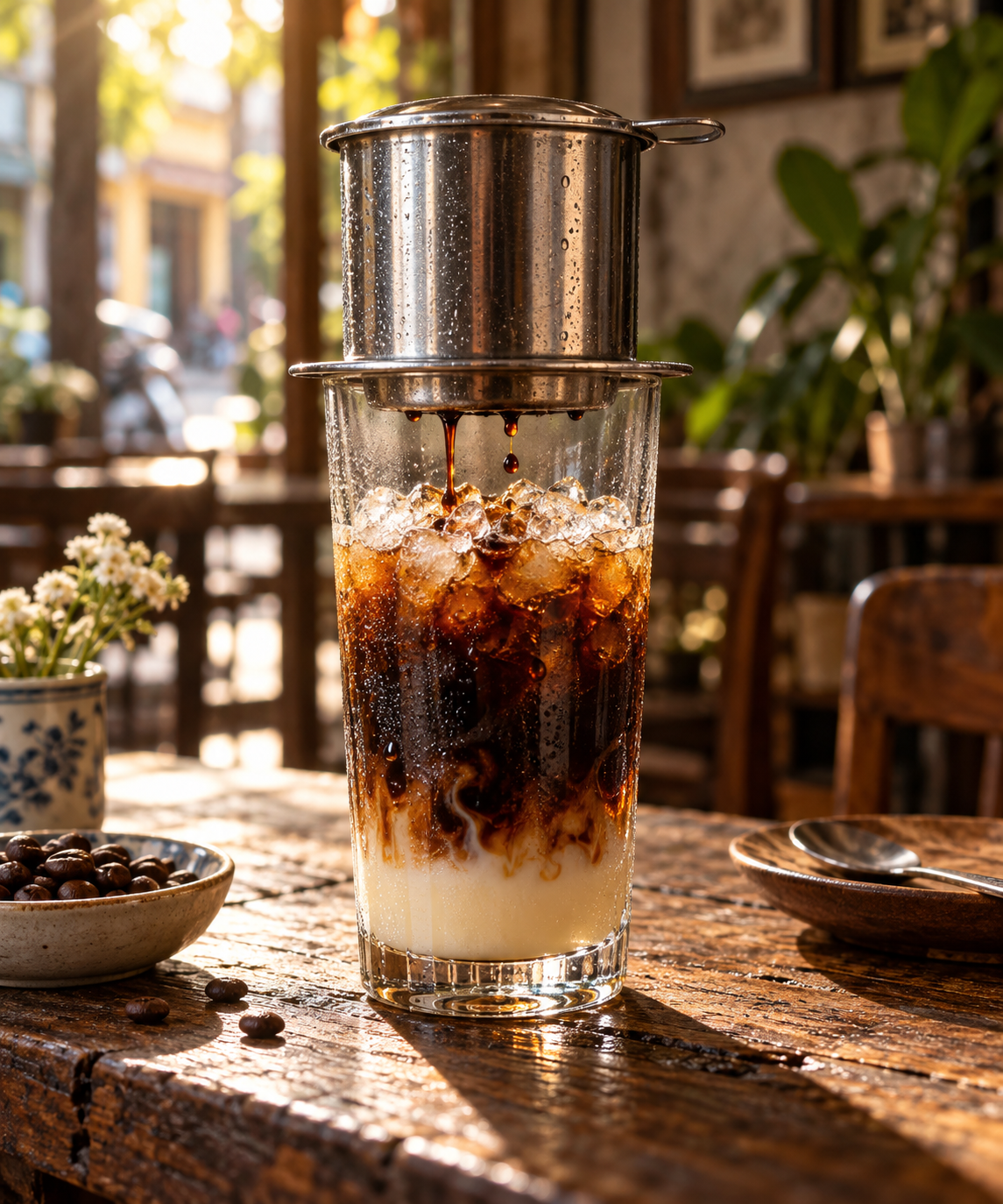
Watch a traditional Vietnamese iced coffee being prepared, and you are immediately drawn into a slow, meditative ritual: dark, glistening coffee dripping drop by drop from a small metal gravity press into a clear glass, slowly settling atop a thick, snowy pillow of sweetened condensed milk.
Stirred vigorously and poured over a glass brimming with crushed ice, the resulting elixir is bold, velvety, and shockingly caffeinated.
For decades, mainstream American coffee drinkers encountered Vietnamese coffee (cà phê sữa đá) almost exclusively as a sweet after-dinner treat at the local pho joint.
Today, Vietnamese coffee is driving one of the most exciting specialty beverage movements in the United States.
From independent third-wave roasters in Brooklyn, San Francisco, and Seattle challenging the decades-old Western bias against Robusta beans, to the viral explosion of **Salt Coffee (Cà Phê Muối)** dominating American social feeds, Vietnamese coffee culture has officially arrived in the American mainstream.
Whether you are looking to brew the perfect cup at home with a traditional phin filter, curious about what makes Robusta beans pack twice the punch of Arabica, or eager to navigate the menu at your local Vietnamese cafe, here is your definitive insider guide.
The Robusta Revolution: Why Vietnamese Coffee Knocks You Off Your Feet
To understand Vietnamese coffee, you have to unlearn the single most pervasive myth perpetuated by American specialty coffee chains: that Arabica is the only bean worthy of your palate.
Vietnam is the second-largest coffee producer in the world and the undisputed number-one producer of **Robusta (Coffea canephora)**. While American third-wave coffee historically championed delicate, floral, and acidic Ethiopian or Colombian Arabica beans, Vietnamese coffee culture is built unapologetically on the muscular profile of Robusta.
Robusta vs. Arabica: The Hard Numbers
- Double the Caffeine: Robusta beans contain 2.7% caffeine by volume, compared to roughly 1.5% in Arabica. A single 6-ounce glass of authentic Vietnamese brew delivers nearly twice the physical jolt of a standard American drip coffee.
- 60% Less Sugar & Higher Antioxidants: Robusta has significantly less natural fruit sugar and lower acidity, making it naturally bitter, bold, and earthy.
- Dense Crema & Full Body: Robusta generates a luxurious, thick crema with deep tasting notes of dark baker's chocolate, toasted hazelnuts, roasted chicory, and warm caramel.
This heavy-bodied, low-acidity profile is precisely why Vietnamese coffee pairs so miraculously with sweetened condensed milk. Delicate Arabica gets drowned out by thick dairy; bold Robusta slices straight through it, creating a balanced, harmonious mocha-like dessert in a glass.
The Phin Filter: The Zero-Waste Gravity Brewer You Need in Your Kitchen
You don't need a \$1,500 espresso machine or disposable paper filters to brew incredible coffee. The traditional Vietnamese Phin (pronounced "feen") is a brilliant, pocket-sized brewing system made of stainless steel or aluminum.
A standard phin consists of just four parts:
- The Plate (Saucer): Rests on top of your glass with perforations for the brewed liquid to flow through.
- The Brew Chamber (Cup): Holds the coffee grounds.
- The Gravity Press (Insert): Sits gently on top of the grounds to compress the bed evenly.
- The Lid: Retains heat during the 4-to-6-minute extraction process, then doubles as a saucer to hold your dripping phin when finished.
How to Brew Authentic Cà Phê Sữa Đá at Home
- The Beans: Use 20 to 25 grams of dark roast coffee ground medium-coarse (think coarse sea salt). Classic options include Trung Nguyên Premium Blend, Café Du Monde (with chicory), or specialty single-origin Vietnamese Robusta like Nguyen Coffee Supply or Omni Bev.
- The Milk: Spoon 1.5 to 2 tablespoons of canned sweetened condensed milk (Sữa Ông Thọ / Longevity Brand is the undisputed gold standard) into the bottom of a heat-resistant glass.
- The Bloom: Place the phin chamber over the glass, add coffee, and rest the gravity insert on top without pressing down too hard. Pour 20ml of hot water (200°F / 93°C) and let the coffee bed "bloom" and swell for 40 seconds.
- The Slow Drip: Fill the chamber with 60 to 80ml of hot water and place the lid on top. If properly packed, the coffee should drip slowly—about one drop per second—finishing in 4 to 5 minutes.
- The Finish: Stir the dark brew and condensed milk until thoroughly dissolved and silky caramel in color. Pour into a tall glass packed with crushed ice and enjoy.
The Modern Drink Menu: 6 Vietnamese Coffee Creations Americans Must Try
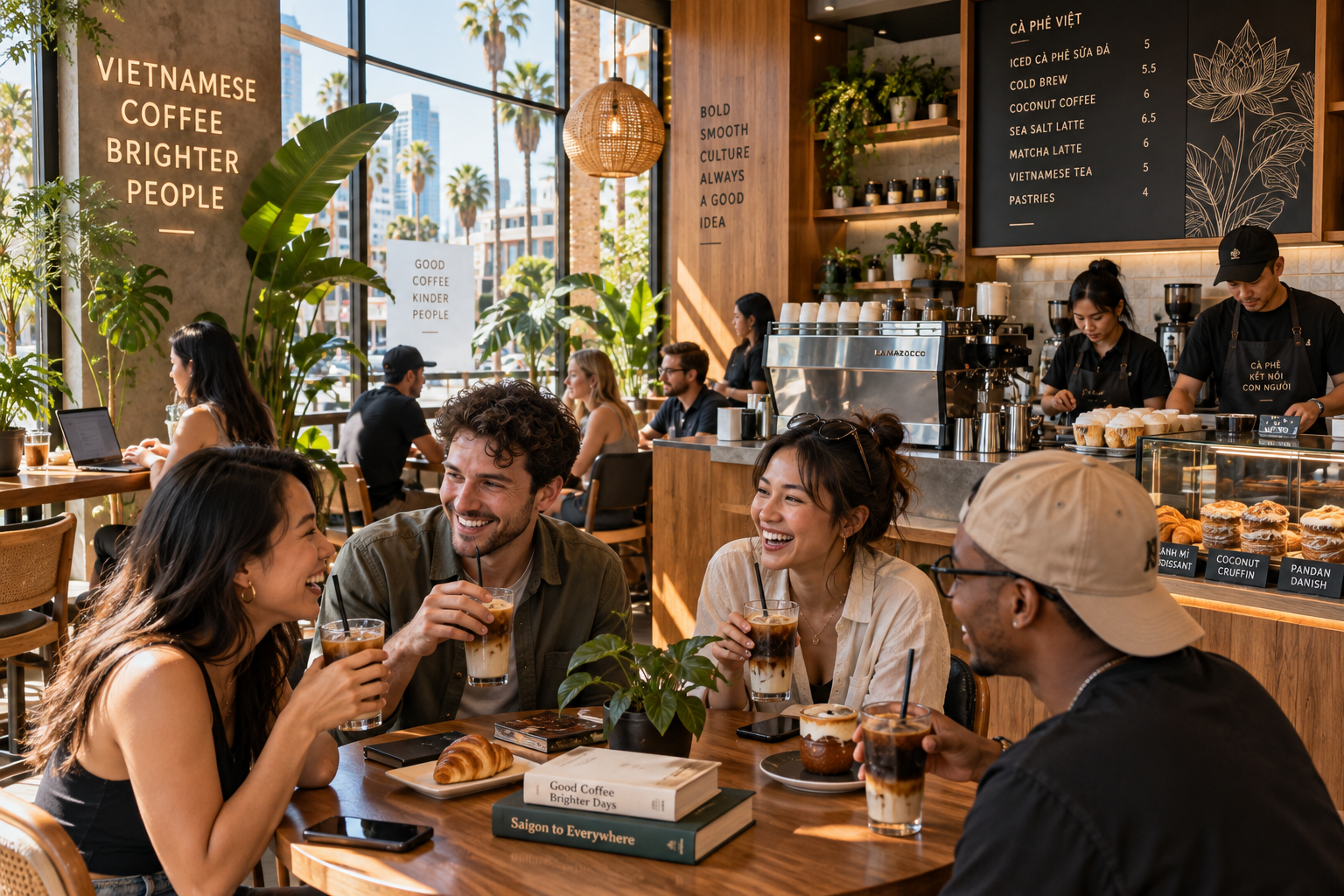
Walk into a contemporary Vietnamese specialty cafe in Los Angeles, Houston, or New York, and you will encounter an inventive beverage program that rivals any European espresso bar:
1. Cà Phê Sữa Đá (Classic Iced Coffee with Condensed Milk)
The timeless standard. Bold, velvety, unapologetically strong, and deeply satisfying on a sweltering summer afternoon.
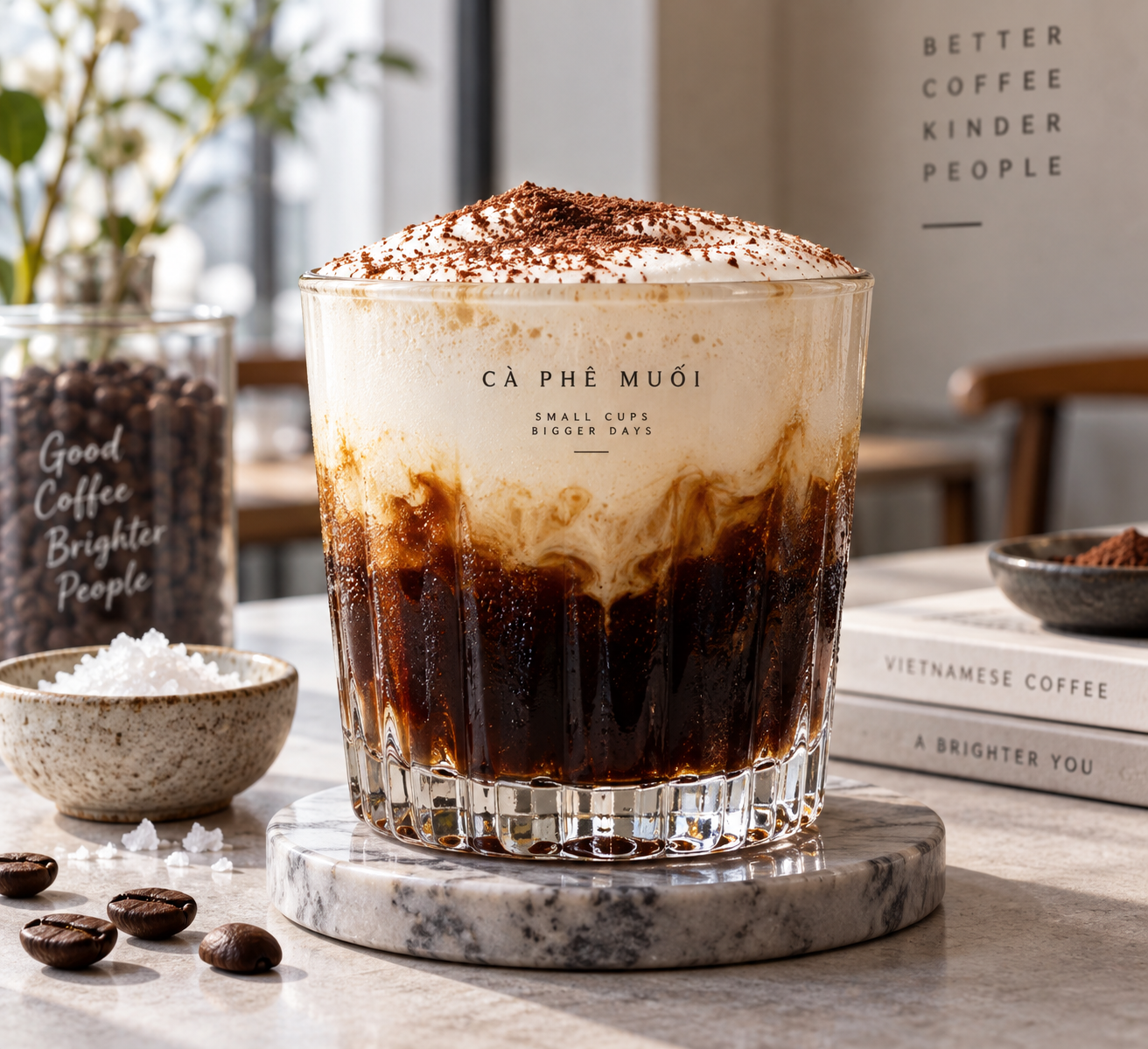
2. Cà Phê Muối (Salted Cream Coffee) — The Viral Sensation
Originating around 2010 in a small cafe in the historic imperial capital of Huế, Salt Coffee has become the single biggest viral coffee trend in the US.
A base of intense, slow-drip Robusta is crowned with a generous cloud of whipped, sea-salted dairy cream and dusted with fine cocoa powder.
Scientifically, sodium acts as a natural flavor enhancer that suppresses bitterness receptors on the tongue, transforming the coffee's dark roast edge into a decadent flavor reminiscent of liquid salted caramel.
3. Cà Phê Trứng (Hanoi Egg Coffee)
Invented in Hanoi in 1946 by a bartender at the Sofitel Legend Metropole during a wartime milk shortage, this legendary drink is essentially liquid tiramisu.
Egg yolks are whipped vigorously with sweetened condensed milk and a drop of vanilla until transformed into an ethereal, marshmallow-thick custard that floats proudly atop piping hot black coffee.
4. Cà Phê Cốt Dừa (Coconut Iced Coffee)
A tropical paradise in a glass. Rich coconut cream, condensed milk, and crushed ice are blended into a thick, snowy slushie, then crowned with a pour-over shot of dark Robusta.
The contrast between icy coconut and warm, bitter espresso creates an addictive sensory contrast.
5. Bạc Xỉu (Saigon White Coffee)
Born in the bustling Chinese-Vietnamese enclave of Chợ Lớn (Saigon's Chinatown), Bạc Xỉu was created for women, children, and workers who loved the intoxicating scent of coffee but couldn't stomach the high-powered caffeine punch of pure brew.
It is composed of roughly 75% steamed condensed milk and fresh milk, with just a splash of dark coffee for fragrance.
6. Ube & Pandan Specialty Lattes
Modern Asian-American baristas have pushed the envelope by incorporating vibrant Southeast Asian botanicals.
Ube lattes feature a striking, electric-purple cold foam made from sweetened purple yam, while Pandan lattes infuse the brew with the fragrant, grassy, vanilla-coconut aroma of screwpine leaves.
The New Orleans & Chicory Connection: An American Origin Story
If you have ever visited a Vietnamese household or traditional cafe in America, you likely noticed an iconic yellow-and-orange tin: Café Du Monde Coffee and Chicory.
Why did a New Orleans French Market coffee become the de facto official bean of the Vietnamese American diaspora?
When hundreds of thousands of Vietnamese refugees arrived in the United States following 1975, finding authentic dark-roasted Robusta from their homeland was virtually impossible due to the trade embargo.
Settling heavily in Louisiana and the Gulf Coast, Vietnamese immigrants discovered that New Orleans-style coffee—blended with roasted, pulverized chicory root—closely replicated the deep, earthy, slightly woody bitterness of the Vietnamese Robusta they missed so dearly.
Generations later, Café Du Monde remains a beloved staple in Vietnamese pantries from Orange County to Houston.
3 Pro-Tips for Ordering at a Vietnamese Coffee Shop
- Adjust Your Sweetness Level: Authentic Vietnamese coffee is made with intensely sweet condensed milk. If you prefer a less sugary profile, ask the barista for "ít ngọt" (less sweet) or request an extra shot of black coffee to cut the sweetness.
- Watch the Caffeine Intake: Because Robusta packs nearly double the caffeine of your standard Starbucks drip, pace yourself. Drinking a large Vietnamese coffee too quickly on an empty stomach can trigger a jittery caffeine buzz known colloquially as being "coffee drunk" (say cà phê).
- Embrace Plant-Based Alternatives: Many modern Vietnamese cafes now offer house-made condensed oat milk or coconut condensed milk, allowing vegan and lactose-intolerant coffee lovers to enjoy the full indulgence without dairy.
Whether you are searching for a quiet morning brew, an afternoon rocket-fuel pick-me-up, or the velvety decadence of salted cream foam, Vietnamese coffee offers a rich, unforgettable sensory journey.
Ready to explore the best authentic Vietnamese cafes, boba tea shops, and dining destinations in your city? Discover top-rated spots near you on the FindALoco Vietnamese Restaurant & Cafe Directory.