
# The Ultimate Guide to the Vietnamese Bánh Mì Sandwich in America: History, Culinary Anatomy & Iconic Flavors
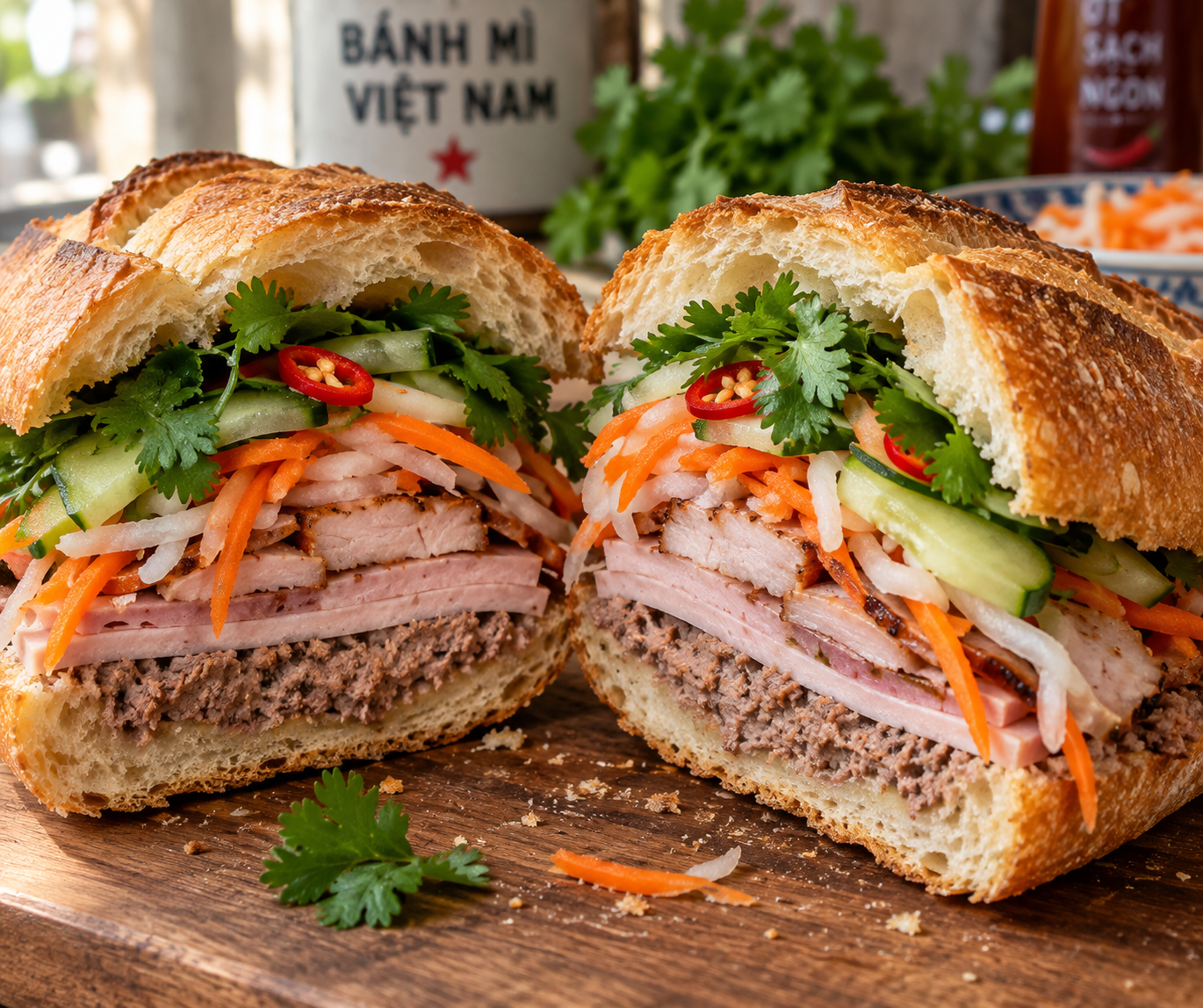
Take a freshly assembled Vietnamese Bánh Mì into your hands, and you are holding a masterclass in sensory architecture.
Bring it to your mouth and take that first fateful bite: you hear a distinct, musical crack as the gossamer-thin crust shatters into a shower of golden flakes.
Instantly, a whirlwind of textures and temperatures explodes across your palate: the warm, rich, iron-rich savoriness of homemade pork liver pâté; the luxurious, creamy silkiness of whipped egg-yolk mayonnaise; the cool, crisp, refreshing snap of cucumber spears and sweet-and-sour pickled daikon; the herbal punch of fresh cilantro; and a sudden, thrilling jolt of heat from raw jalapeño peppers.
To say that the Vietnamese bánh mì has taken the American culinary landscape by storm is an understatement.
Over the past two decades, this humble Southeast Asian street sandwich has evolved from a nostalgic staple sold out of nondescript storefronts in Southern California's Little Saigon, Houston, and San Jose into a ubiquitous national obsession. Today, you will find bánh mì celebrated on prestigious restaurant menus in Manhattan and Seattle, highlighted on late-night food shows, and embraced by millions of American office workers as the undisputed champion of fast-casual lunch.
What is the secret behind that miraculously light, crackling baguette? What goes into the iconic cold-cut filling? And how do you navigate the menu at an authentic Vietnamese bakery?
Here is your definitive guide to the history, anatomy, and unforgettable flavors of the Vietnamese bánh mì in America.
The French Connection & The Saigon Revolution: A Triumph of Decolonization
To understand bánh mì, one must trace its roots back to mid-19th century French colonial rule in Indochina.
French colonizers brought their cherished staples to Vietnam: dense wheat baguettes, liver pâté, butter, and processed cheeses. For decades, these luxury imports—known as bánh tây (\"Western bread\")—were expensive and strictly reserved for elite colonial tables.
Vietnamese locals were neither encouraged to eat wheat nor allowed to adapt the recipes.
That all changed following the Battle of Dien Bien Phu in 1954 and the partition of Vietnam. As French troops departed, hundreds of thousands of northern refugees fled south to Saigon (now Ho Chi Minh City).
Resourceful Vietnamese bakers inherited French brick ovens and transformed the European import into something wholly original, democratic, and revolutionary.
Instead of following French tradition—eating bread sliced with butter and jam on a formal plate—Saigon street vendors sliced the baguette lengthwise and stuffed it with homegrown Vietnamese ingredients: savory pork rolls (chả lụa), headcheese (giò thủ), crisp pickled vegetables, fresh native herbs, and a savory splash of soy sauce or Maggi seasoning.
By the late 1950s, legendary family shops like Bánh Mì Hòa Mã in Saigon popularized the portable, handheld sandwich wrapped in a scrap of newspaper and tied with a rubber band. The modern bánh mì kẹp thịt was born—fast, affordable, balanced, and bursting with vibrant Southeast Asian freshness.
The Holy Grail: Why the Vietnamese Baguette is Infinitely Lighter Than French Bread
If you have ever attempted to make a bánh mì at home using a traditional European artisanal baguette from a high-end French bakery, you probably encountered a frustrating failure: the thick, chewy European crust squeezed the fillings out the back with every bite, tearing up the roof of your mouth.
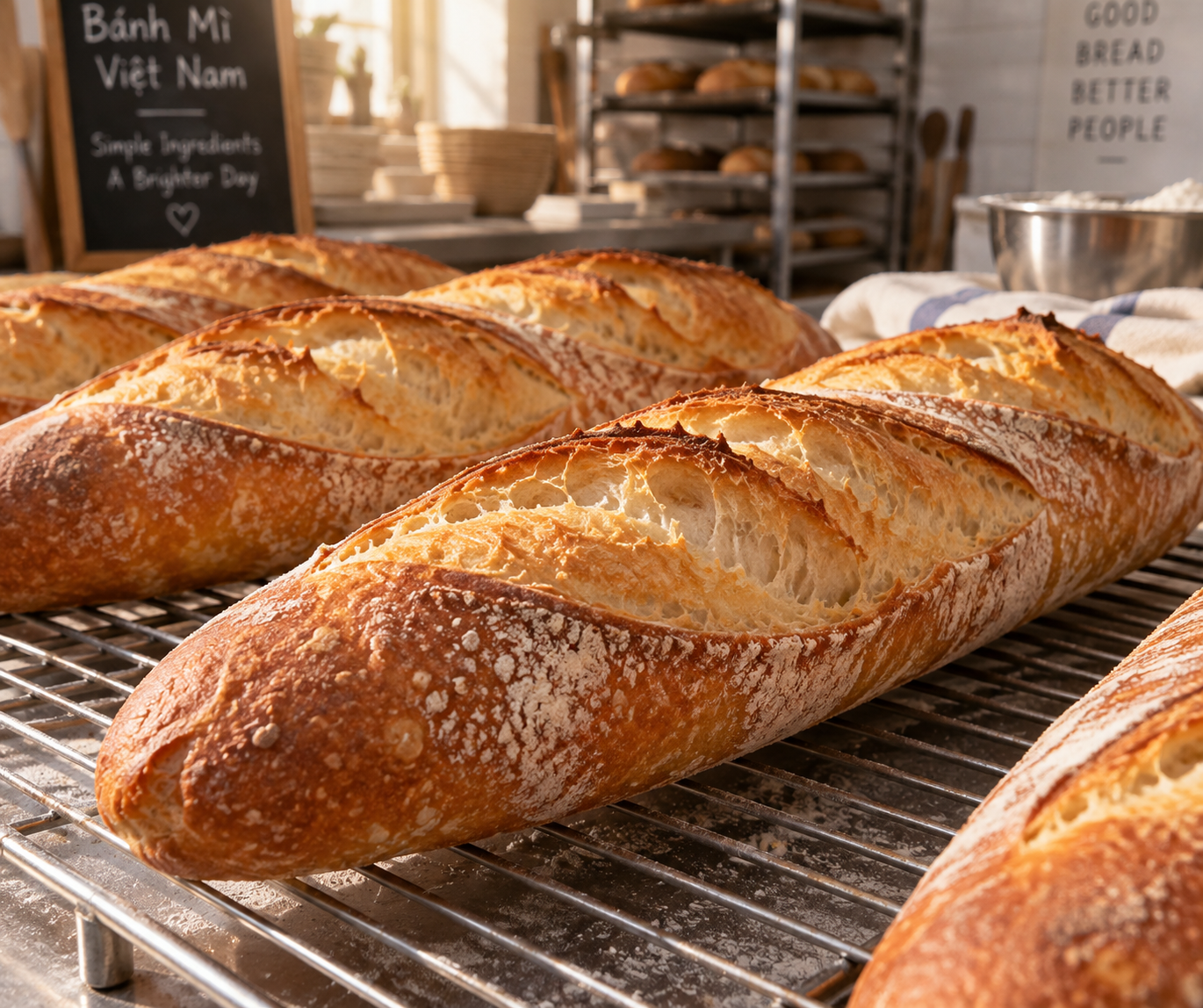
An authentic Vietnamese baguette (bánh mì Việt Nam) is a completely different beast:
- Paper-Thin, Blistered Crust: The exterior crust is so thin and brittle that it shatters like spun sugar at the gentlest pressure.
- Featherlight, Cottony Crumb: The interior bread is airy, hollowed, and cloud-like—designed not to dominate, but to serve as an edible vessel holding generous fillings and soaking up savory juices without getting soggy.
The Baker’s Secrets:
- The Rice Flour Myth vs. Reality: For years, food writers claimed that Vietnamese bakers replaced 50% of wheat flour with rice flour due to wheat shortages. In modern commercial bakeries, however, bakers achieve that gossamer-light texture primarily through high-protein bread flour, specialized dough improvers (which relax gluten strands), and high-hydration doughs (up to 70% water). Some bakers do add a small percentage of rice starch to promote crispiness, but the real magic is in the technique.
- Steam-Injected Deck Ovens: Vietnamese baguettes are baked in specialized industrial deck ovens fitted with automated steam injectors. Blasts of superheated steam during the first minutes of baking gelatinize surface starches, preventing premature crust formation and allowing the dough to expand aggressively into an airy sponge before setting into a paper-thin, blistered shell.
The 5 Sacred Layers: Deconstructing the Culinary Anatomy
A flawless bánh mì is an exercise in culinary harmony—an interplay of rich fats, sharp acids, crisp vegetables, savory proteins, and clean herbs.
Here are the five essential layers inside every authentic sandwich:
1. The Spreads: Pâté & Golden Egg Mayonnaise (Bơ Trứng)
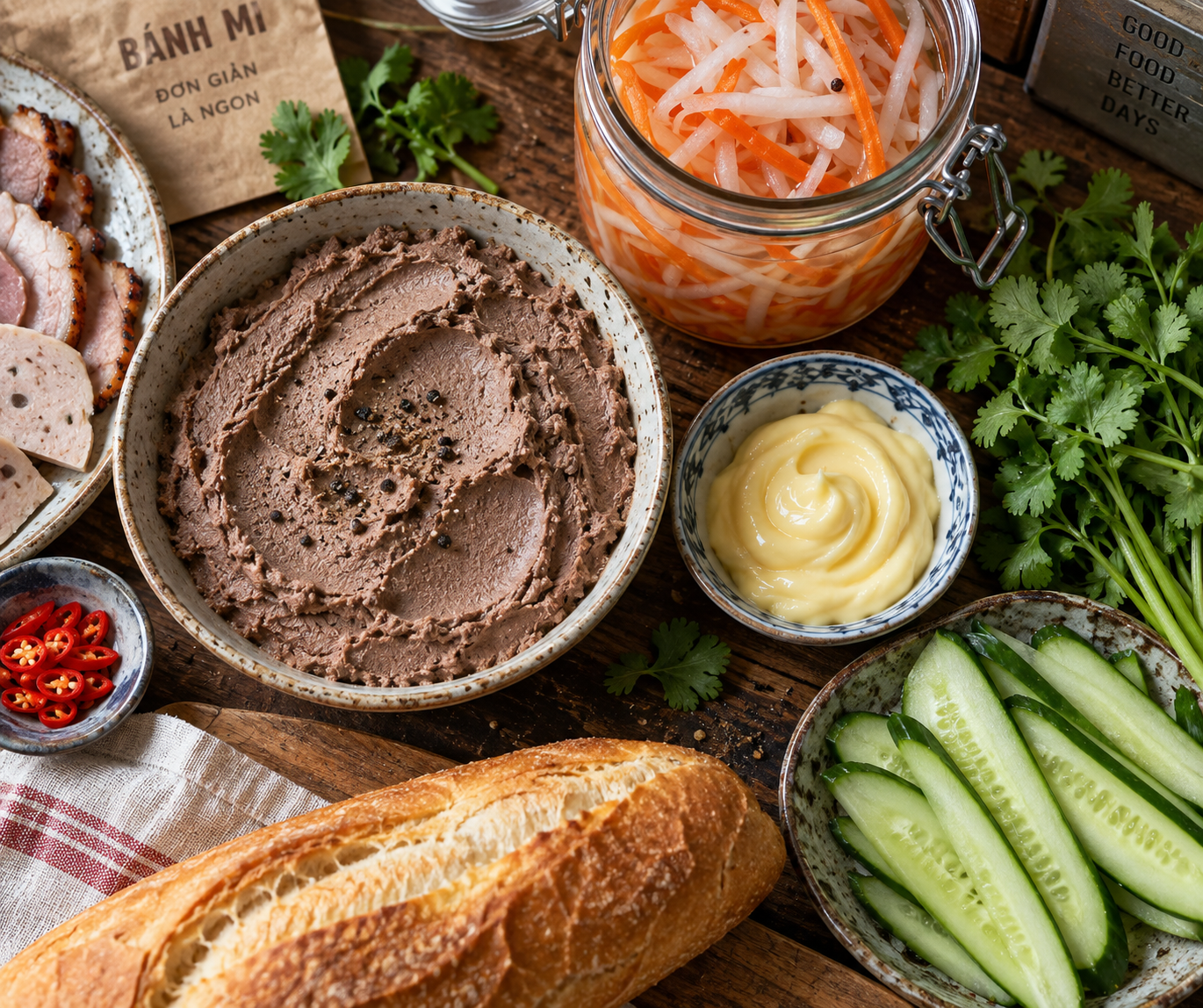
Before any meat touches the bread, both sides of the warm sliced baguette receive generous swipes of two homemade spreads:
- **Pork Liver Pâté (Patê Gan):** Made from ground pork liver, pork shoulder, shallots, garlic, and rendered pork back fat, seasoned with black pepper and fish sauce, then slowly steamed or baked in a bain-marie. It provides an earthy, decadent, umami-rich base layer.
- **Vietnamese Egg-Yolk Mayonnaise (Bơ Trứng):** This is not bland store-bought Hellmann's mayonnaise. Traditional bơ is an unpasteurized, yellow-gold emulsification of fresh raw egg yolks slowly whipped by hand with neutral oil, salt, and a splash of lime juice. It tastes closer to rich, velvety hollandaise sauce than commercial mayo.
2. The Pickles: Đồ Chua (Daikon & Carrot)
No bánh mì can exist without Đồ Chua. Crisp matchsticks of white daikon radish and sweet carrot are quick-pickled in a simple brine of rice vinegar, sugar, salt, and warm water.
The bright, crunchy acid cuts cleanly through the rich pork fat and liver pâté, resetting your palate after every single mouthful.
3. The Aromatics & Heat: Cucumber, Cilantro & Fresh Chili
- Cucumber: Thin, lengthwise ribbons or spears of fresh Persian or Kirby cucumber add cool, hydrating crunch.
- **Cilantro (Ngò Rí):** Long, unchopped sprigs of fresh cilantro—leaves and stems included—add bright, citrusy, grassy freshness.
- Fresh Jalapeño or Bird's Eye Chili: Thin rounds of spicy green pepper deliver sharp, electrifying sparks of heat that awaken the sinuses.
4. The Umami Seasoning: Maggi & Soy Sauce
A quick splash of Maggi Liquid Aminos or dark seasoned soy sauce, followed by a pinch of fine white pepper, ties the ingredients together with a savory, roasted-grain aroma.
The Protein Showdown: Navigating the Bakery Menu
Walk into an authentic Vietnamese bakery in Westminster, Houston, or Philadelphia, and you will see dozens of enticing sandwich options on the menu board.
Here is how to decode the classics:
1. Bánh Mì Thịt Nguội / Đặc Biệt (The Iconic Cold Cuts)
The king of all bánh mì. If you only try one style, make it this one. It combines three distinctive Vietnamese charcuterie meats:
- Chả Lụa: Steamed lean pork roll seasoned with fish sauce and wrapped in banana leaves.
- Giò Thủ (Headcheese): Braised pork ear, nose, snout, and wood-ear mushrooms, pressed into a terrine. The cartilage provides a deeply satisfying, gelatinous crunch.
- Thịt Đỏ / Ham: Thin slices of spiced cured pork loin dyed with red yeast rice for a festive pink-red rim.
2. Bánh Mì Heo Quay (Crispy Roast Pork Belly)
A crowd favorite among meat lovers. Tender roasted pork belly with a golden, blistered crackling skin that shatters loudly when chewed, drizzled with five-spice brown gravy and fresh scallion oil (mỡ hành).
3. Bánh Mì Xíu Mại (Braised Pork Meatballs in Tomato Broth)
Tender, melt-in-your-mouth pork meatballs studded with crunchy jicama, simmered gently in a rich, sweet-and-savory fresh tomato broth.
When ladled into a crusty baguette, the warm tomato sauce soaks into the soft interior bread crumb like an Italian meatball sub elevated to culinary perfection.
4. Bánh Mì Gà Nướng (Charbroiled Lemongrass Chicken)
Boneless chicken thighs marinated in a fragrant paste of minced lemongrass, garlic, shallots, sweet soy sauce, and honey, grilled over hot charcoal until caramelized and smoky.
A fantastic gateway sandwich for newcomers hesitant about liver pâté or headcheese.
5. Bánh Mì Chả Cá (Crispy Fish Cake with Dill)
A specialty hailing from the coastal cities of Nha Trang and Quy Nhơn.
Mackerel or featherback fish is pounded into a bouncy paste with black pepper and fresh dill, shaped into patties, deep-fried until golden, sliced, and doused in a spicy sweet garlic chili fish sauce.
6. Plant-Based & Vegetarian (Bánh Mì Chay)
Vietnamese Buddhist culinary traditions have made bánh mì exceptionally vegetarian-friendly.
Look for sandwiches loaded with lemongrass-marinated pan-fried tofu, crispy fried gluten (mì căn), wood-ear mushroom pâté, and roasted shredded king oyster mushrooms that rival any pork belly in savory complexity.
The American Bakery Phenomenon: Buy 4, Get 1 Free
In the late 1970s and 1980s, Vietnamese immigrants settled in major metropolitan centers and established community bakeries that forever changed American sandwich culture.
Chains like Lee's Sandwiches—founded in San Jose in 1983 by the Le family—scaled traditional Vietnamese baking with drive-thru service, automated ovens, and wholesale distribution, introducing millions of non-Vietnamese Americans to French-Vietnamese baguettes, iced milk coffee, and croissants.
Independent heritage bakeries across California, Texas, Louisiana, and the East Coast preserved artisan methods, famous for offering the beloved community deal: \"Buy 4, Get 1 Free\" (or Mua 4 Tặng 1). Families routinely walk out of Vietnamese bakeries on Saturday mornings carrying armloads of brown paper bags, distributing hot, fragrant sandwiches to friends and neighbors.
The Golden Rule: How to Properly Enjoy a Bánh Mì
- Eat It Within 20 Minutes: A freshly assembled bánh mì has a ticking clock. The moisture from the pickled vegetables, cucumber, and warm meats will eventually soften the razor-thin crust. Eat it while the bread is hot and crackling.
- Embrace the Crumb Shower: Eating a proper bánh mì is messy. The delicate crust will inevitably shower your lap, car dashboard, or shirt in dozens of tiny golden flakes. Wear it as a badge of honor.
- **Pair It with Vietnamese Iced Coffee (Cà Phê Sữa Đá):** The bitter, dark-roasted Robusta coffee paired with sweet condensed milk is the ultimate liquid counterbalance to the spicy, savory, tangy richness of the sandwich.
Ready to discover the most authentic Vietnamese bakeries, deli counters, and traditional banh mi shops near you? Explore top-rated local dining spots on FindALoco’s Vietnamese Restaurant Directory and Local Vietnamese Bakeries.