
# The Ultimate Guide to Authentic Vietnamese Pho in America: Northern vs. Southern Broths, Cut-by-Cut Beef Guide, and How to Order Like an Insider
Step into any venerable Vietnamese noodle house in the United States at four o'clock in the morning, and the first thing that hits you is not sound, but aroma: a deep, soul-warming perfume of fire-charred ginger, roasted shallots, star anise, cassia cinnamon, and crushed black cardamom billowing from a hundred-gallon stainless steel stockpot. Inside that bubbling cauldron, fifty pounds of beef marrow and knuckle bones have been quietly surrendering their rich collagen over eighteen continuous hours of patient simmering.
Pho (pronounced "fuh", not "foe") has long transcended its origins as a working-class morning fuel in Southeast Asia to become one of America’s most revered comfort foods.
From late-night college haunts in Seattle and strip-mall sanctuaries in Orange County to Michelin-recognized dining rooms in New York and Houston, millions of Americans crave that glistening bowl of aromatic broth, slippery flat rice noodles, and tender beef.
Yet for all its widespread popularity, ordering pho can remain an intimidating puzzle. What is the difference between Northern and Southern styles? What do cryptic Vietnamese terms like gầu, gân, and nước béo actually mean on a laminated menu? And is there a right way to eat it without insulting the chef?
Here is your masterclass in authentic Vietnamese pho: decoding regional differences, translating every cut of beef, mastering dining etiquette, and highlighting the greatest heritage noodle institutions across the United States.
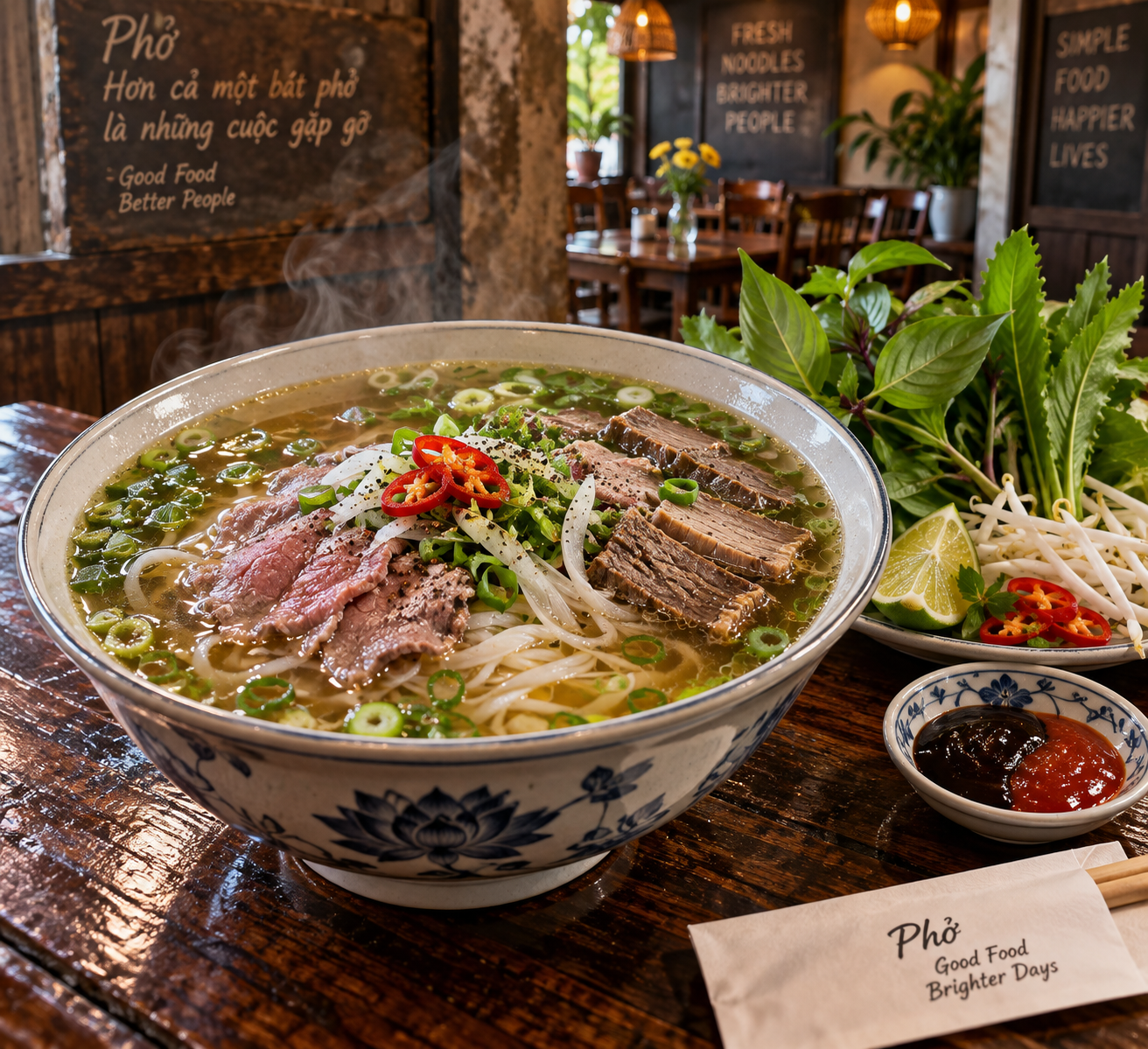
Fast Comparison: Northern Pho (Phở Bắc) vs. Southern Pho (Phở Nam)
The single biggest debate in the pho universe revolves around geography. While both styles share a common heritage, their flavor architecture, noodle textures, and table garnishes are strikingly distinct:
| Characteristic | Northern Style (Phở Bắc) | Southern Style (Phở Nam) |
|---|---|---|
| Origin & Vibe | Hanoi and Nam Định (Austere, purist, minimalist) | Saigon and the Mekong Delta (Abundant, aromatic, bold) |
| Broth Profile | Crystal clear, delicate, intensely savory, deeply beef-forward; sweetened subtly with charred shallots and rock sugar | Golden-amber, richly spiced with star anise, cinnamon, clove; sweeter and rounder profile |
| Noodle Width | Wider, softer, flat fresh rice sheets (bánh phở bản to) | Thinner, narrower flat noodles with slight chew |
| Herbs & Toppings | Strictly lots of fresh green scallions and cilantro; served with pickled garlic slices (tỏi ngâm giấm) and fresh bird's-eye chili | Served with a massive tabletop herb basket: Thai basil, culantro (ngò gai), fresh bean sprouts, and lime wedges |
| Condiment Culture | Table chili paste or garlic vinegar; no hoisin sauce | Hoisin sauce (tương đen) and Sriracha (tương đỏ) mixed into side dipping saucers |
| Dominant Style in the US | Specialty boutique shops in San Jose, Seattle, and NYC | Over 85% of Vietnamese pho restaurants across America |
When the first major wave of Vietnamese refugees arrived in America in 1975, the vast majority hailed from Southern Vietnam. Consequently, Southern-style pho—with its overflowing basket of fresh herbs and sweet-savory broth—became the foundational standard for American diners.
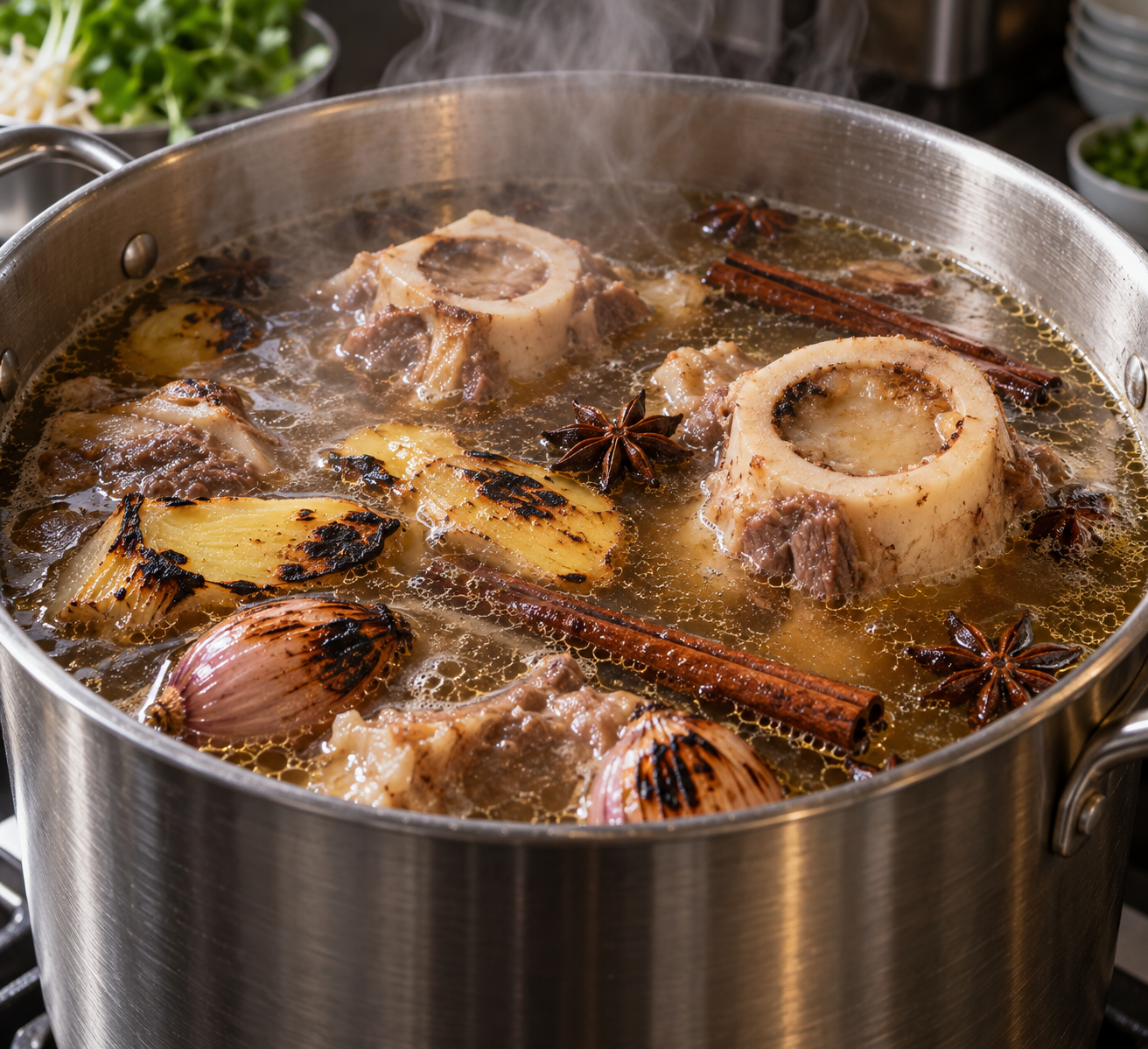
The 18-Hour Alchemy: What Makes a World-Class Broth?
Great pho cannot be rushed. Powdered bouillon cubes and quick thirty-minute stocks produce a flat, salty liquid that leaves you parched. A genuine artisan broth requires a four-stage extraction process:
1. The Blanch and Parboil
Beef leg marrow bones, oxtails, and knuckle bones are submerged in cold water, brought to a violent boil for ten minutes, and then completely drained and scrubbed clean under cold running water. This crucial step washes away clotted blood, impurities, and excess tallow, ensuring the final broth achieves pristine, crystal-clear translucence rather than murky brown cloudiness.
2. The Charring Ritual
Whole hands of unpeeled fresh ginger and fist-sized purple shallots are placed directly over open flames on a gas burner until their papery skins are blackened and blistered. The scorched skins are rinsed away, releasing intense caramelized essential oils that impart smokiness and earthy depth to the stock.
3. The Botanical Aromatics
In a dry cast-iron skillet, whole star anise pods, Vietnamese cinnamon barks (cassia), black cardamom pods, cloves, fennel seeds, and coriander seeds are gently toasted until their fragrant oils crackle. They are bundled tightly into a fine mesh spice bag (túi vải gia vị) and steeped into the stock during the final hours so their aromatics perfume the liquid without turning it bitter.
4. The Simmer and Seasoning
The bones simmer over low, steady heat for sixteen to twenty hours. As the connective tissues melt into pure gelatin, the broth takes on body, silkiness, and mouth-coating richness. Finally, the master chef seasons the brew with yellow rock sugar for gentle roundness and drops of aged Vietnamese fish sauce (nước mắm) added at the very end to preserve its bright umami punch.
Decoding the Laminated Menu: The Cut-by-Cut Beef Guide
Almost every Vietnamese pho restaurant features a menu numbered 1 through 20. Instead of blindly guessing or ordering the "#1 Combo" without knowing what lurks beneath the noodles, use this insider translation guide:
The Classic Cuts
- Tái (Eye-Round Steak / Thin-Sliced Rare Beef): Paper-thin slices of raw beef laid across the hot noodles. The boiling broth poured over the top cooks the beef to tender medium-rare within seconds.
- Chín / Nạm (Well-Done Flank / Lean Brisket): Slow-simmered beef brisket that has cooked alongside the bones for hours until it yields easily to chopsticks. Flavorful, beefy, and lean.
- Gầu (Fatty Brisket): The crown jewel for connoisseurs. Features a thin, buttery ribbon of golden fat along the edge. The fat has been rendered so long it melts like cream on the tongue without being greasy.
- Gân (Beef Tendon): Don't be shy! When slow-cooked for half a day, tough fibrous tendon transforms into a translucent, gelatinous marvel with a delicate, springy chew. It is pure natural collagen.
- Sách (Beef Tripe): Carefully cleaned and thinly shredded honeycomb beef stomach. It has a mild flavor and adds an addictive, crunchy textural contrast to the soft rice noodles.
- Bò Viên (Vietnamese Beef Meatballs): Spiced beef blended with garlic and black pepper, pounded into springy, bouncy spheres and sliced in half. Highly popular with kids.
The Secret Off-Menu Customizations (Order Like a Local)
- Tái Để Riêng (Rare Beef on the Side): Ask for your raw beef on a small side dish. This prevents the hot broth from overcooking the delicate beef while you eat, allowing you to swish each slice shabu-shabu style right before taking a bite.
- Chén Nước Béo (Side of Scallion Fat): A small bowl of molten, savory broth fat ladled from the top of the pot, infused with fresh poached green scallion heads (đầu hành). Pouring a spoonful of this into your bowl instantly amplifies richness and aroma.
- Hột Gà / Trứng Chần (Poached Egg Yolk in Broth): A raw egg yolk gently warmed in simmering broth. Drop it into your hot soup or break it over your beef for extraordinary velvetiness.
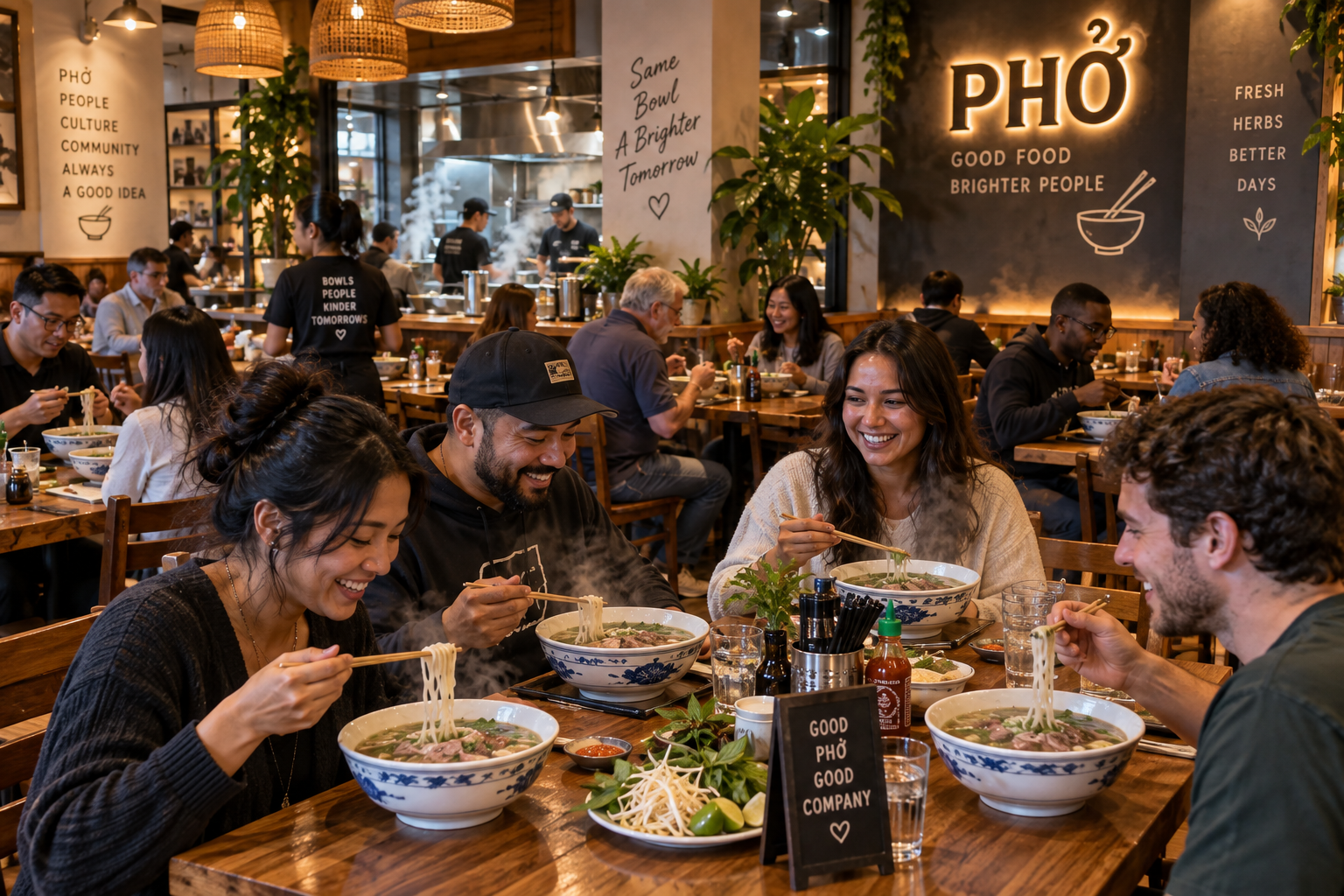
The Cardinal Rules of Pho Etiquette: How NOT to Insult the Chef
Watching newcomers eat pho often causes Vietnamese elders to wince. To experience pho as intended, follow these dining guidelines:
Rule 1: Sip the Unadulterated Broth First
Before you touch the lime, squeeze bottles, or herbs, take your ceramic soup spoon, lift a spoonful of pure broth, and sip. Taste the complexity, the sweet warmth of cinnamon, the savory depth of bone marrow. Squeezing half a bottle of hoisin sauce and hot sauce into the bowl before tasting is like slathering ketchup all over a prime dry-aged ribeye.
Rule 2: Use the Small Saucer for Dipping
Those small plastic saucers on the table are not trash bins. Squirt a swirl of hoisin sauce and a dollop of Sriracha (or chili oil) into the saucer. Use your chopsticks to dip your slices of beef into the sauce before eating. This keeps your main broth pure and fragrant while giving you intense savory bites.
Rule 3: Bruise Your Herbs Before Tossing
Don't dump entire leafy stems into the bowl. Pluck the Thai basil and sawtooth herb (culantro) leaves off the woody stems. Slap or tear the leaves gently between your fingers to bruise the cell walls and release their fragrant essential oils, then submerge them beneath the piping-hot noodles so they wilt and infuse the soup.
Rule 4: Slurp with Pride
In Vietnamese dining culture, slurping noodles is not rude—it is practical. Slurping draws air into your mouth, cooling the scalding noodles while aerating the broth, which dramatically heightens your retro-nasal perception of the spices.
The Modern Frontier: American Viet-Fusion Pho
Over the past decade, second-generation Vietnamese American chefs have blended traditional ancestral recipes with regional American culinary staples:
- Texas Smoked Brisket Pho: Pioneered in Houston and Dallas, pitmasters smoke whole beef briskets over post oak for fourteen hours before slicing the smoky, bark-crusted beef into traditional star-anise broths. The marriage of Texas smoke and Vietnamese aromatics is unforgettable.
- Short Rib & Bone Marrow Canoe Pho: Trendy urban noodle shops in Southern California and New York now serve bowls crowned with an entire roasted beef short rib on the bone, accompanied by a roasted bone marrow canoe to scoop into the broth.
- Phở Trộn (Dry Pho / Tossed Noodle Salad): Warm rice noodles tossed in dark savory soy-garlic reduction, topped with crisp shallots, crushed roasted peanuts, and beef, served with a small bowl of hot broth on the side for sipping.
Iconic American Pho Institutions Worth the Pilgrimage
If you are a serious food traveler, add these landmark Vietnamese pho temples to your bucket list:
- Pho 79 (Garden Grove, Orange County, CA): Established in 1982 in the heart of Little Saigon, Pho 79 was awarded the coveted James Beard Foundation America’s Classics Award in 2019. Their oxtail pho (phở đuôi bò) is widely considered the gold standard in the nation.
- Pho Bac Súp Shop (Seattle, WA): Operating out of a famous boat-shaped building in Seattle's Little Saigon since 1982, the Pham family introduced the Pacific Northwest to pho. Today, their chic adjacent modern outpost serves short rib pho and bone marrow shots alongside craft cocktails.
- Pho Binh Trailer (Houston, TX): What started inside a retro silver camper trailer in Southeast Houston has grown into a Texas legend, famed for its exceptionally clean broth and luscious marrow cuts.
- Pho Bang (New York, NY): A Chinatown staple on Mott Street, offering comforting, restorative bowls of beef and chicken pho that have fueled generations of New Yorkers.
Behind every steaming bowl of pho across America lies an inspiring immigrant saga. When Vietnamese families arrived with nothing but family recipes preserved in memory, they opened neighborhood soup shops that bridged cultures and fed entire communities.
Next time you hear that morning bell ring at your local pho shop, pull up a chair. Breathe in the star anise. Slurp the broth. And savor one of the greatest culinary treasures in the American landscape.
Explore top-rated, authentic Vietnamese noodle restaurants in your city through the FindALoco Vietnamese Restaurant Directory.