
# Yellowstone & Grand Teton Travel Guide: Geysers, Wildlife Safaris, Bison Steaks & Jackson Hole
Sprawling across the rugged volcanic plateaus of northwestern Wyoming and spilling into Montana and Idaho, Yellowstone is a land sculpted by subterranean fire, ancient ice, and untamed frontier spirit.
Established by an act of Congress in 1872 as the world’s very first national park, Yellowstone preserves more than two million acres of geothermal wonders, alpine rivers, and pristine wilderness that look virtually identical to how they appeared thousands of years ago.
Just a short drive south along the John D. Rockefeller Parkway, the jagged, sawtooth granite peaks of the Grand Teton Range erupt abruptly from the sagebrush valley floor without foothills, mirroring their snow-dusted summits across the crystal-clear waters of Jenny Lake and Jackson Lake.
Anchoring this mountainous empire is the historic cowboy town of Jackson Hole, where visitors amble along wooden boardwalks beneath arches crafted from shed elk antlers, savor flame-kissed bison steaks paired with mountain berry pies, and immerse themselves in the living legends of the American West.
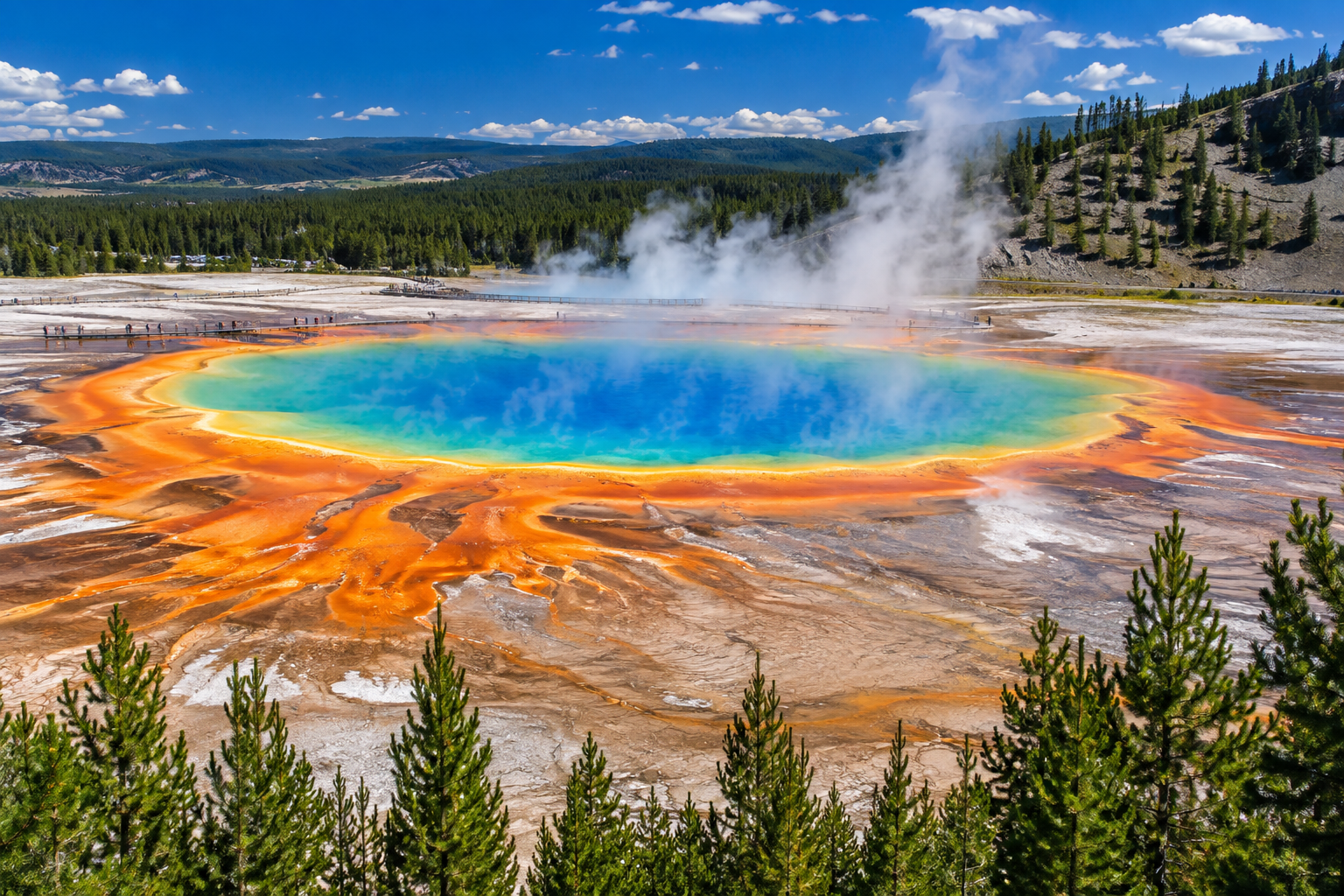
The Living Supervolcano: Steaming Rings and Erupting Geysers
Yellowstone sits atop an active volcanic caldera that fuels over ten thousand hydrothermal features—more than half of all the geysers and hot springs on earth.
Walking along the park’s wooden boardwalks feels like visiting a primeval, breathing planet where the earth's molten interior vents directly into the sky:
- Grand Prismatic Spring: The crown jewel of the Midway Geyser Basin and the third-largest hot spring in the world, stretching over three hundred and seventy feet across. Its deep center glows in an otherworldly, crystalline sapphire blue where boiling water rises from deep underground fissures. Surrounding the azure core are concentric bands of brilliant gold, fiery orange, and rust red, created by trillions of pigmented thermophilic (heat-loving) bacteria mats thriving in the cooling runoff waters.
- Old Faithful and the Upper Geyser Basin: The most famous geyser in the world erupts roughly every ninety minutes with astonishing reliability, shooting thousands of gallons of boiling water and billowing steam up to one hundred and eighty feet into the crisp mountain air. Surrounding boardwalk trails weave past dozens of other unpredictable geysers, bubbling mud pots, and emerald-hued thermal pools.
- Mammoth Hot Springs Terraces: Located in the park’s northern sector, these surreal limestone terraces resemble frozen travertine waterfalls, formed over centuries as hot mineral-rich waters dissolve underground limestone and deposit pure white and terra-cotta-tinted calcium carbonate cascades down the hillside.
- The Grand Canyon of the Yellowstone: A dramatic golden-yellow volcanic canyon carved twelve hundred feet deep by the rushing Yellowstone River, featuring the thunderous Lower Falls plunging over three hundred feet into the turquoise rapids below.
America’s Serengeti: Wildlife Safaris in Lamar and Hayden Valleys
Nowhere else in the continental United States offers the sheer abundance and diversity of large wild mammals found across the expansive river valleys of Yellowstone.
Known among wildlife photographers as "America’s Serengeti," setting out in the misty dawn through Lamar Valley in the northeast or Hayden Valley in the park's central plateau provides an unforgettable safari experience:
- The Wild American Plains Bison: Yellowstone is the only place in the United States where free-roaming wild bison have lived continuously since prehistoric times. Weighing up to two thousand pounds with shaggy brown coats and curved black horns, thousands of bison graze peacefully along river meadows, often causing famous "bison jams" as entire herds slowly cross two-lane park roads. During the late-summer rutting season, massive bulls bellow across the plains, pawing the earth and locking horns in dramatic displays of dominance.
- Grizzly and Black Bears: As springtime blooms across the alpine slopes, grizzly mothers emerge from winter dens with tiny cubs, foraging for glacier lily roots, moth larvae, and berries.
- The Gray Wolf Packs of Yellowstone: Reintroduced to the park in 1995 in one of the most successful ecological restoration triumphs in history, wild wolf packs now roam the northern valleys, their mournful, haunting howls echoing through the twilight.
- Pronghorn Antelope, Bighorn Sheep, and Bugling Bull Elk: Witnessing a massive bull elk with a towering crown of antlers bugle through the autumn morning mist is an indelible sensory memory of the Rocky Mountain wilderness.
Rocky Mountain Frontier Feast: Wild Bison, Native Trout & Huckleberry Pies
Exploring high-altitude mountain trails inevitably stokes a ravenous appetite, and dining across northwestern Wyoming reflects the hearty, unpretentious traditions of frontier ranchers and mountain hunters:
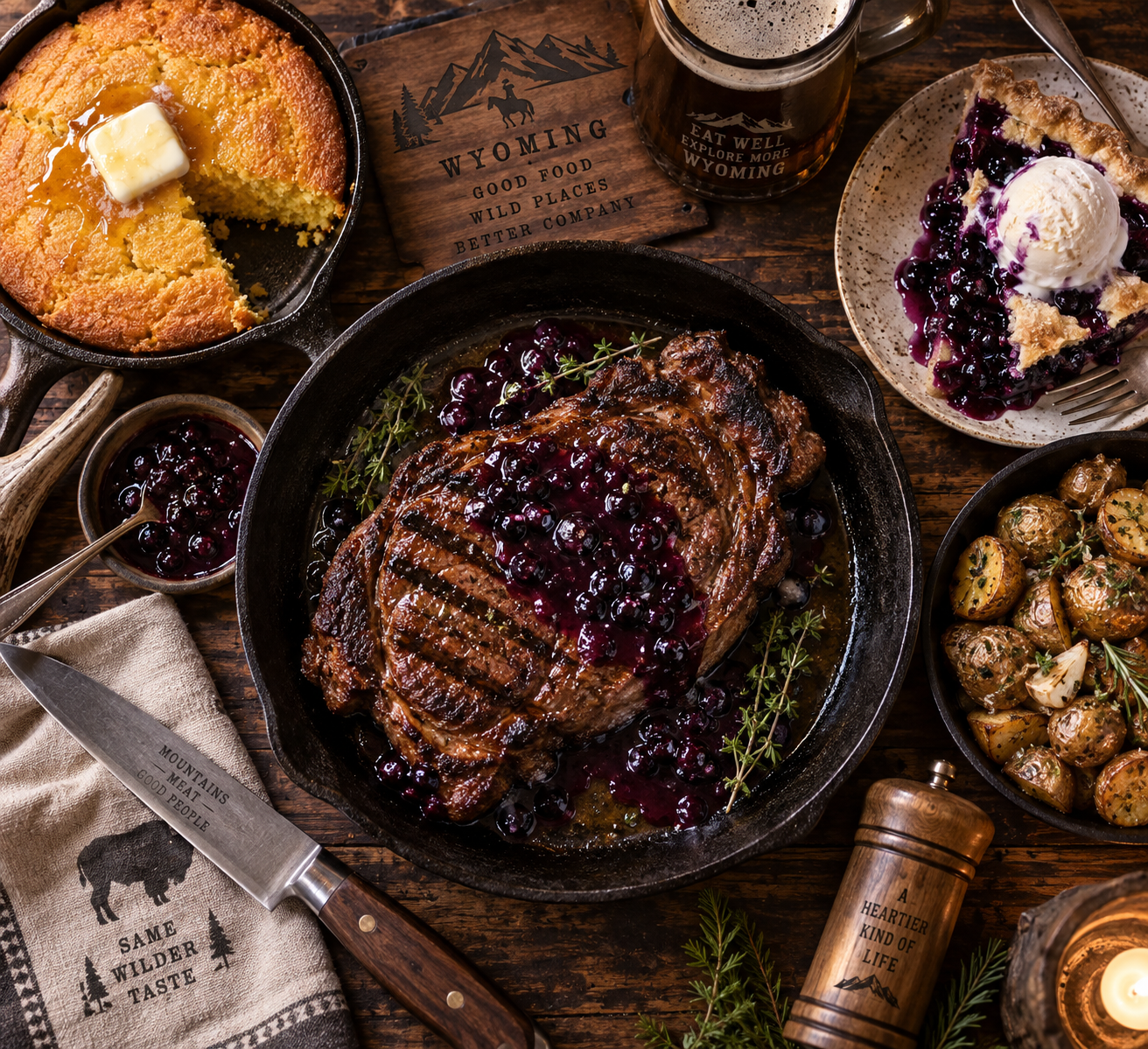
Food lovers traveling between Yellowstone and Jackson Hole should never miss these signature regional specialties:
- Flame-Grilled Wild Bison Ribeye: Naturally lean, tender, and deeply savory with a subtle sweetness, American bison is a nutrient-rich red meat that captures the wild spirit of the Great Plains. Seared quickly over blazing hardwood coals or in a scorching cast-iron skillet to medium-rare perfection, mountain lodges typically finish the steak with a glossy, dark-purple reduction sauce crafted from foraged wild mountain huckleberries and red wine.
- Pan-Fried Snake River Cutthroat Trout: Named for the distinctive slash of vibrant orange-red color beneath its lower jaw, native cutthroat trout pulled cold from the rushing alpine currents of the Snake River is delicate, flaky, and sweet. Pan-fried with browned butter, fresh lemon, toasted sliced almonds, and aromatic sage, it represents freshwater dining at its finest.
- Cast-Iron Skillet Cornbread: Pulled bubbling-hot from the oven in a heavy seasoned cast-iron skillet, this coarse golden cornbread boasts a crunchy, caramelized crust and a moist, buttery crumb, traditionally served slathered with whipped mountain wildflower honey butter.
- Warm Rocky Mountain Huckleberry Pie: The wild huckleberry is the undisputed queen of Northern Rockies flora. Because huckleberries cannot be commercially cultivated and grow exclusively on high-altitude mountain slopes, every berry in your slice of pie was painstakingly hand-foraged by local pickers. Baked inside a golden, flaky double-butter pastry crust, the bubbling filling balances deep tartness with dark berry sweetness, served warm beneath a melting scoop of vanilla bean ice cream.
Grand Teton Majesty & The Western Heritage of Jackson Hole
Just south of Yellowstone’s southern entrance, the landscape transforms from geothermal volcanic plateaus to breathtaking alpine grandeur as the Grand Teton Range pierces the sky.
Carved by ancient glaciers into dramatic granite pinnacles rising nearly seven thousand vertical feet above the valley floor, the Tetons provide a stunning backdrop to the historic pioneer valley of Jackson Hole:
- Mormon Row Historic District: Strolling across the sagebrush flats of Antelope Flats, photographers gather at dawn to capture the iconic weathered wooden John Moulton Barn, whose rustic timber gables stand in poetic harmony against the jagged, snow-capped backdrop of the Grand Teton summit.
- Jenny Lake and Inspiration Point: Board a small scenic shuttle boat across the mirror-like waters of Jenny Lake, then hike the gentle trail alongside churning mountain cascades up to Inspiration Point for panoramic vistas across the entire valley.
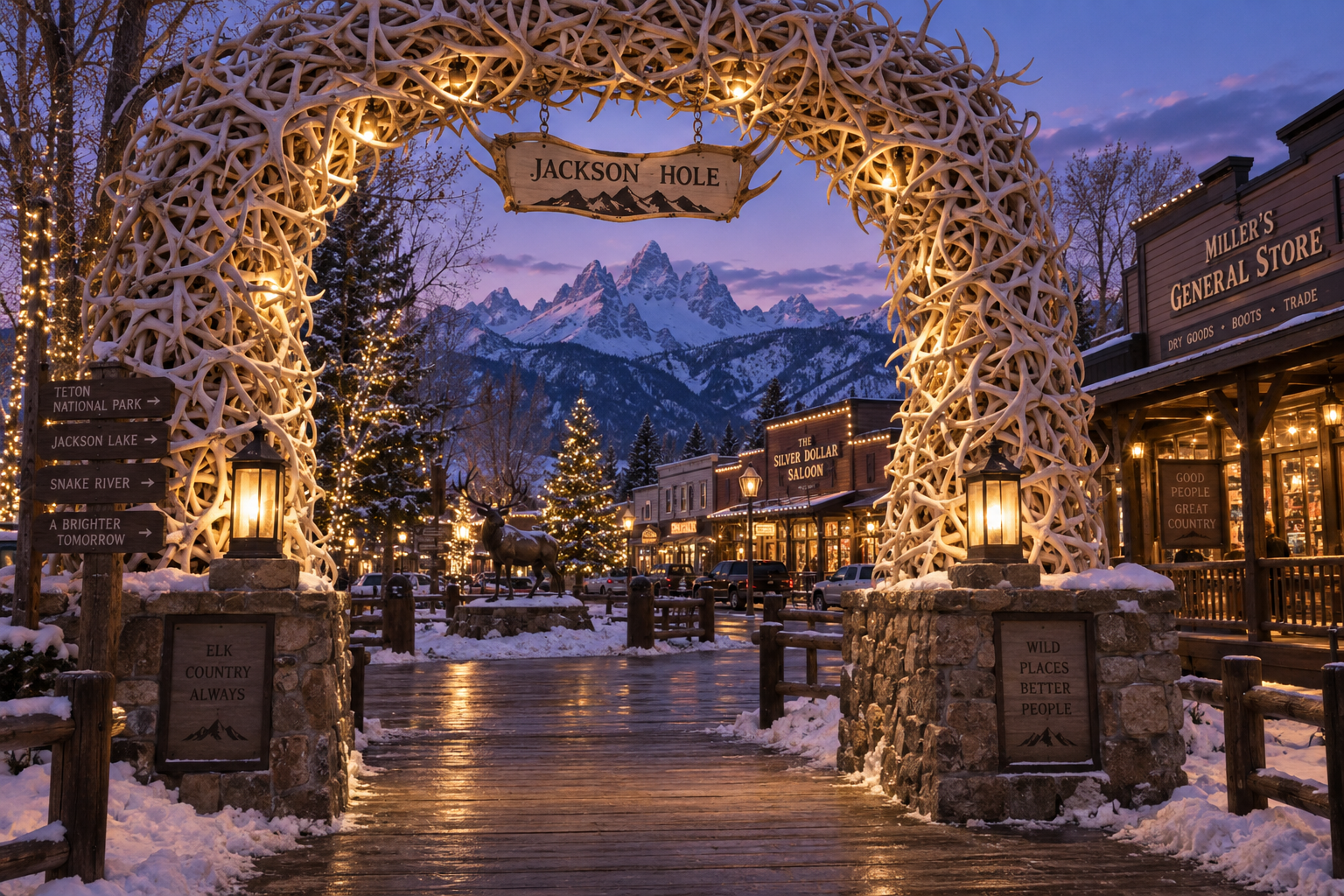
- Jackson Town Square and the Elk Antler Arches: Entering the historic downtown of Jackson, visitors are greeted by four monumental arched gateways framing the corners of George Washington Memorial Park. Each towering arch is constructed entirely from thousands of naturally shed bull elk antlers, collected each spring by local Boy Scouts from the adjacent National Elk Refuge.
- The Million Dollar Cowboy Bar: Operating on Jackson’s wooden boardwalk since 1937, this legendary western saloon features authentic leather saddle barstools, walls adorned with genuine knobbed pine woodwork, vintage western murals, and live country-western bands performing beneath neon signs.
Essential Yellowstone & Grand Teton Travel Advice: Safety, Roads & Seasons
Navigating the high-altitude wilderness of Wyoming requires smart preparation and respect for nature's rules:
- Strict Wildlife Distance Regulations: National Park Service regulations strictly require visitors to remain at least one hundred yards (the length of a football field) away from bears and wolves, and at least twenty-five yards away from all other wildlife, including bison and elk. Carry bear spray in a quick-draw waist or chest holster—never stashed inside a zippered backpack—and know how to operate the safety clip.
- Plan for Grand Loop Road Driving Distances: Yellowstone's figure-eight Grand Loop Road spans one hundred and forty-two miles, and speed limits are typically twenty-five to forty-five miles per hour. A drive that looks short on a map often takes three to four hours due to winding mountain roads, wildlife crossings, and scenic pullouts.
- High Altitude and Hydration: Jackson sits at sixty-two hundred feet above sea level, and Yellowstone's passes regularly exceed eight thousand feet. Drink plenty of water throughout the day, wear high-SPF sunscreen, and give your body twenty-four hours to acclimatize before attempting strenuous uphill hikes.
- Optimal Travel Seasons: July and August bring warm, sunny days, fully open mountain passes, and lively evening rodeos in Jackson, though advance lodging reservations are essential. September and October offer the golden window: blazing yellow aspen trees, bugling bull elk, crisp autumn air, fewer crowds, and light dustings of early mountain snow.