
# Standing Beneath the Giant Granite Monoliths of Yosemite from El Capitan to Ancient Sequoias
Few places on Earth command the immediate, breathtaking reverence of Yosemite National Park. Nestled in the rugged heart of California’s Sierra Nevada mountains, this glacier-carved cathedral of stone and sky defies human scale. As you emerge from the darkness of the Wawona Tunnel into the world-famous Tunnel View overlook, the landscape opens with such dramatic force that it steals the breath straight from your chest.
Before you lies a vast, emerald-carpeted valley flanked by colossal granite monoliths rising thousands of feet straight into the heavens. To your left, the sheer vertical face of El Capitan stands like an impregnable fortress of polished stone. To your right, the delicate silver veil of Bridalveil Fall drifts gracefully in the mountain wind. And rising in the distant haze, the unmistakable fractured crest of Half Dome crowns the valley like a sentinel of the High Sierra.
Yosemite is not merely a scenic drive; it is an elemental wilderness immersion. It is the chill of glacial spray stinging your cheeks beneath thunderous waterfalls, the resinous perfume of ponderosa pine and cedar needles warming in the midday sun, the silent wonder of standing beneath giant sequoia trees that were already ancient when the Roman Empire fell, and the comforting warmth of a roaring fireplace in a historic timber mountain lodge as stars blaze across an ink-black alpine sky.
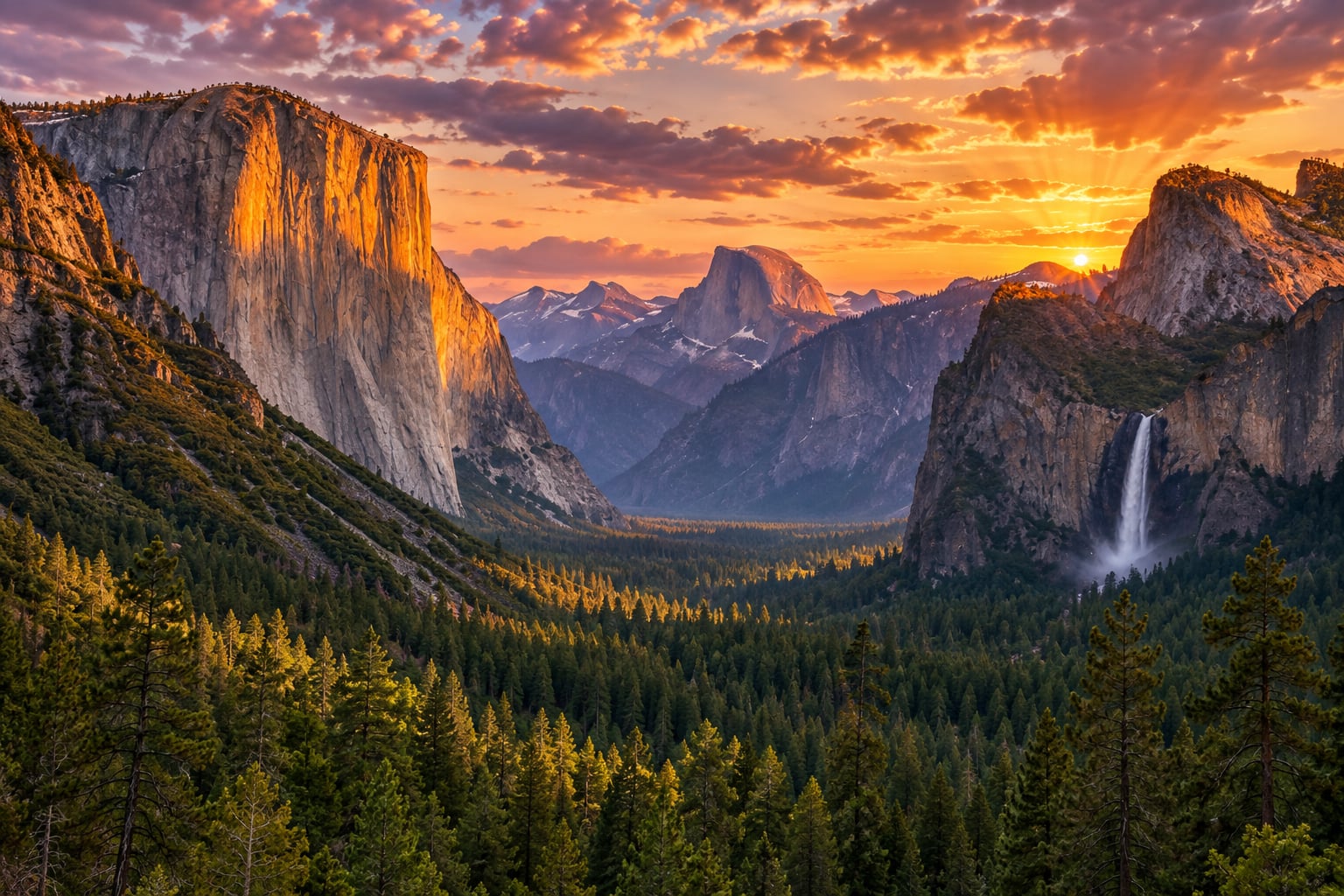
The Unrivaled Geological Wonder of Yosemite Valley and Sheer Granite Walls
Carved by relentless alpine glaciers over millions of years and polished smooth by moving rivers of ice, Yosemite Valley is a masterclass in planetary geology. Seven miles long and barely a mile wide, this enclosed sanctuary contains the highest concentration of dramatic granite formations and towering waterfalls on the continent.
Gazing Up at El Capitan and the Iconic Crest of Half Dome
Exploring the valley floor on foot or by bicycle reveals perspectives that leave you humbled by nature’s sheer power:
- Rising three thousand vertical feet from the valley meadow, El Capitan (The Captain) is the largest exposed granite monolith in the world. Its sheer, near-flawless surface of pale gray granite draws elite rock climbers from across the globe. Standing in El Capitan Meadow with binoculars on a crisp afternoon, you can spot tiny colored specks clinging to legendary climbing routes like The Nose, spending days suspended on hanging portaledges halfway between earth and sky.
- Half Dome rises nearly five thousand feet above the valley floor, standing eighty-eight hundred feet above sea level. Its sheer vertical cliff on one side looks as though a titan cleanly sliced a granite dome in half. The iconic cables route allows intrepid hikers to pull themselves up the smooth rounded spine to stand atop the broad summit, where panoramic vistas stretch across the snowcapped peaks of the High Sierra wilderness.
- Yosemite Falls ranks among the tallest waterfalls in North America, plunging an astonishing twenty-four hundred feet across three distinct cascades. During peak spring snowmelt in May and June, the thunderous roar of the Upper and Lower Falls vibrates the valley floor, casting cool mist hundreds of yards through the pine groves and painting brilliant rainbows against the sunlit spray.
- The gentle loop trail around Mirror Lake offers a tranquil waterside walk beneath the looming shadow of Mount Watkins and Half Dome. In early summer, the glassy surface of the lake mirrors the sheer stone cliffs with razor-sharp clarity, while autumn turns the surrounding dogwood and black oak groves into dazzling hues of yellow and crimson.
- Walking through Cook’s Meadow along elevated wooden boardwalks lets you admire uninterrupted views of the valley rim, where black-tailed mule deer graze peacefully in the tall golden grasses beneath towering ponderosa pines.
Hearty Mountain Lodge Dining with Cedar Plank Salmon and Wild Berry Cobbler
After a long day of hiking alpine trails, mountain air sharpens the appetite. The culinary culture of the Sierra Nevada is rooted in rustic comfort, woodsmoke traditions, and seasonal California bounty. Whether dining in the cathedral-like dining room of a historic stone lodge or sharing a casual meal beside a crackling campfire, dinner in the mountains is a deeply rewarding ritual.

Fireside Comforts and Timber Flavors of the High Sierra
The mountain table celebrates regional game, fresh Pacific fish, and warm hearthside baking:
- The centerpiece of classic mountain dining is wild Pacific king salmon grilled over a smoldering slab of aromatic western red cedar. The wood smoke infuses the rich, flaky fish with earthy cedar notes and sweet caramelized char, complemented by a glaze of pure maple syrup, whole-grain mustard, and fresh rosemary sprigs. Served with roasted baby red potatoes and charred asparagus spears, it is the ultimate alpine comfort.
- Hearty slow-braised bison short ribs and venison stews simmered with dark stout beer, root vegetables, and fresh thyme provide soul-warming sustenance during chilly autumn evenings. The tender meat pulls away from the bone effortlessly, ladled over creamy white cheddar polenta or buttery garlic mashed potatoes.
- For dessert, nothing compares to wild Sierra blackberry cobbler baked in a piping-hot cast-iron skillet. Plump, juicy wild berries simmer beneath a golden, biscuit-like crust until bubbling and rich, crowned with a generous melting scoop of vanilla bean ice cream that swirls into purple cream.
- Morning coffee in Yosemite is a cherished tradition. Steaming mugs of dark French roast coffee or hot spiced apple cider sipped on an outdoor timber terrace while morning mist lifts off the Merced River clears the mind and warms the spirit.
- For backpackers and day hikers, trail provisions lean into artisanal California snacks: thick-cut beef jerky seasoned with cracked black pepper, trail mixes studded with roasted almonds and dried cranberries, sourdough bread smeared with sharp cheddar cheese, and chocolate bars melted over campfires into gooey graham-cracker s'mores.
Wandering Through the Living Cathedral of Ancient Giants at Mariposa Grove
Located near the southern entrance of the park, Mariposa Grove is home to more than five hundred mature Giant Sequoias (Sequoiadendron giganteum). These are not merely large trees; they are the largest living individual organisms on planet Earth by volume, surviving for millennia through thick fire-resistant bark and enduring resilience.
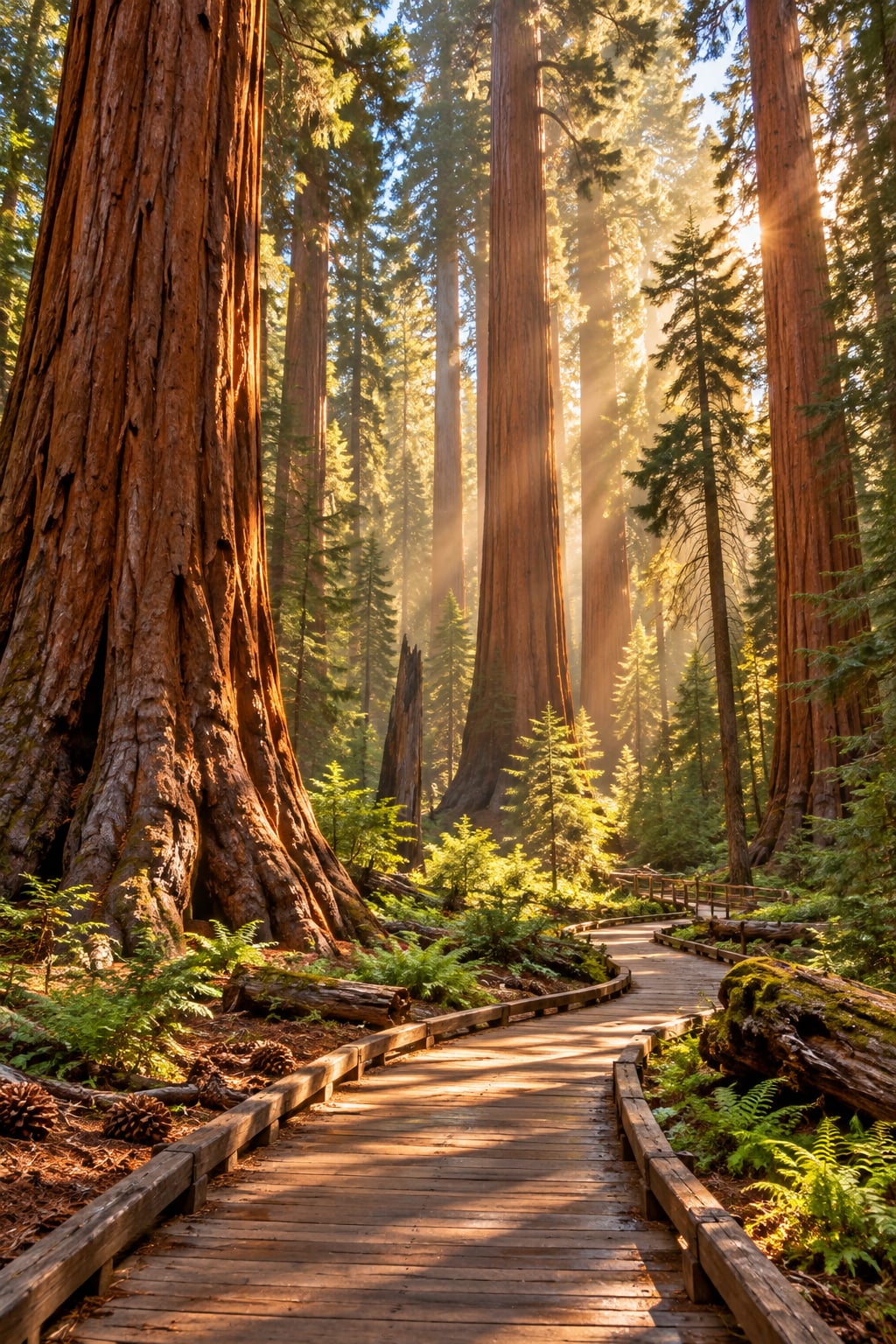
Stepping Beneath Thousand Year Old Cinnamon Trunks and Sunlit Canopy Shadows
Walking the serene, winding wooden boardwalks of Mariposa Grove feels like entering an ancient wooden cathedral where human whispers naturally quiet:
- The Grizzly Giant is one of the oldest living trees in the grove, estimated to be nearly three thousand years old. Standing over two hundred feet tall with a base diameter of thirty feet, its massive lowest branch alone is more than six feet thick—larger than the trunk of almost any typical forest tree. Gazing up at its weathered, lightning-scarred cinnamon bark evokes profound humility.
- The California Tunnel Tree, hollowed out in 1895 to allow horse-drawn stages to pass through its living trunk, stands as an enduring testament to the sheer resilience of sequoias. Today, visitors can walk through the arched opening within the living wood and look straight up into the soaring canopy above.
- The Fallen Monarch, a massive sequoia that crashed to the forest floor centuries ago, reveals its colossal fan-shaped root system exposed to the elements. Because sequoia wood is dense with tannin acids that resist decay and insect damage, the fallen trunk remains remarkably intact after hundreds of years.
- Walking the upper trails toward the Mariposa Grove Cabin leads through quiet pine needle paths where sunlight filters through green canopies in radiant golden beams. The silence here is immense, broken only by the chirping of Douglas squirrels harvesting green sequoia cones and the gentle sigh of wind through evergreen branches.
Sunset Alpenglow Over Glacier Point and the Vast Alpine Wilderness
Perched on the brink of a sheer cliff thirty-two hundred feet directly above Yosemite Valley, Glacier Point provides arguably the most breathtaking panoramic overlook in North America. Accessible by road from late spring through autumn, arriving here an hour before twilight is an unforgettable pilgrimage.
The Magic of Twilight Turning Stone Faces to Rose and Amethyst Gold
Watching the day come to a close from Glacier Point is a celestial spectacle:
- From the stone railing of the amphitheater, you look directly across at the commanding, sheer cliff face of Half Dome, suspended in open space. Below, the tiny ribbons of the Merced River and Vernal and Nevada Falls tumble through mist-filled granite canyons.
- As the sun sinks below the western horizon, the famous Sierra phenomenon known as alpenglow takes over. The cold gray granite monoliths suddenly ignite in radiant shades of amber, fiery apricot, and soft rose-pink, glowing as if heated from within by molten embers.
- As twilight deepens into violet and indigo, the valley floor below sinks into cool shadow while the highest peaks of the Clark Range catch the final golden rays.
- When night falls, Glacier Point becomes a stargazing sanctuary. Far removed from city lights, the Milky Way arches across the sky in a dense, shimmering river of billions of stars, so close and brilliant that the granite landscape glows faintly under starlight.
Essential Practical Advice for Navigating Trails and Seasons in the Sierra
Planning a smooth, successful journey to Yosemite requires mindful preparation and seasonal awareness:
- Yosemite experiences distinct seasons. Late spring (May to June) offers maximum waterfall flow and thundering torrents as snowpack melts. Summer (July to August) provides full access to high-country roads like Tioga Pass and Tuolumne Meadows. Autumn (September to October) brings crisp days, golden foliage, lighter crowds, and ideal hiking temperatures. Winter blankets the granite peaks in pristine snow, transforming the valley into a quiet winter wonderland.
- Check reservation and permit requirements well before your visit. During peak summer months and weekends, the National Park Service frequently requires advance day-use vehicle reservations to manage valley congestion and protect natural habitats.
- Utilize the free Yosemite Valley Shuttle system. Parking inside the valley can be challenging on sunny weekends; leaving your car parked at your lodge or designated day-use lot and riding the shuttle lets you hop on and off effortlessly between trailheads, visitor centers, and scenic viewpoints.
- Respect wildlife and maintain mandatory bear safety. Black bears are native to Yosemite and possess keen senses of smell. Never leave food, scented toiletries, or coolers inside unattended vehicles; always store food in the bear-proof steel storage lockers provided at trailheads, parking areas, and campsites.
- Always pack plenty of water, high-energy snacks, sun protection, and sturdy hiking shoes with strong traction for walking across uneven granite slabs and damp waterfall mist trails.